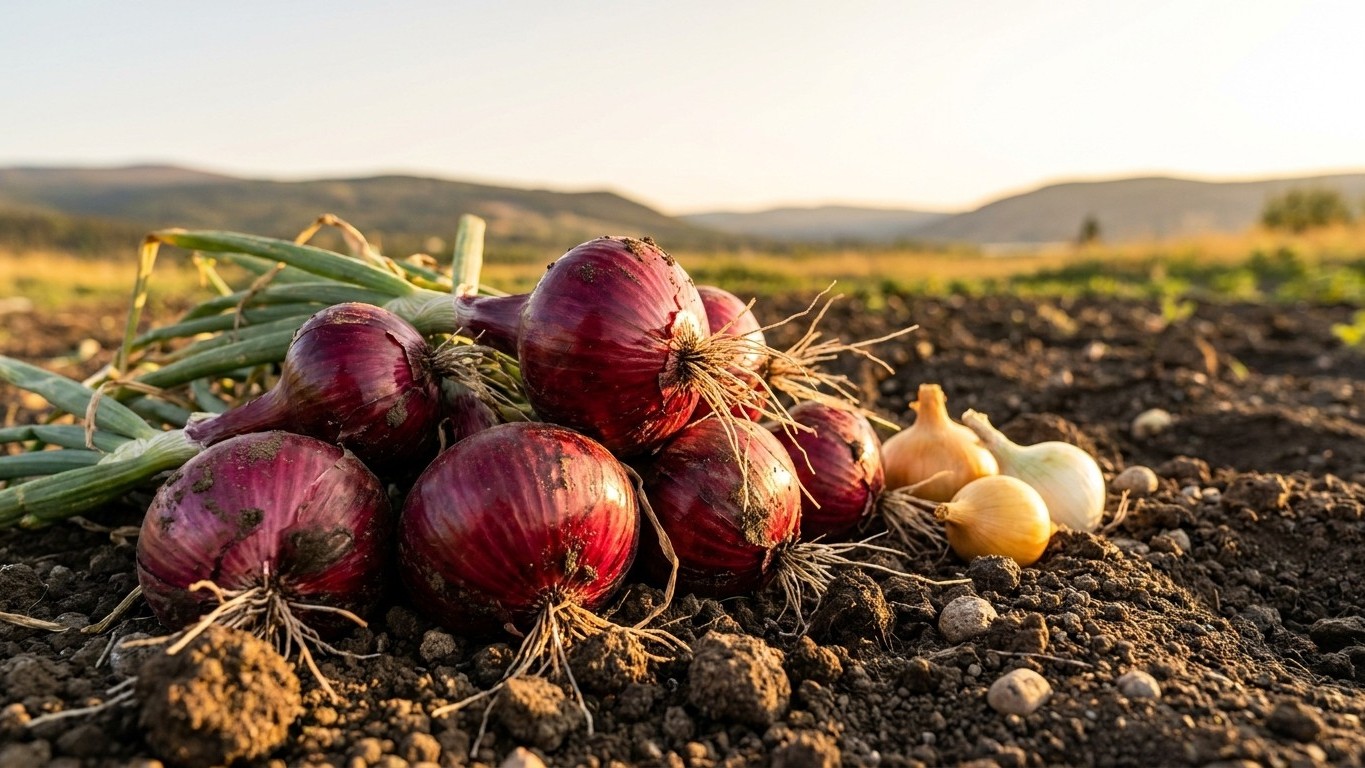

Three things actually chew on onion in Nevada gardens: aphids, earwigs, and Mormon crickets. The rest of what people worry about, cabbage moth, squash bug, tomato hornworm, feeds on other crops and leaves onion alone. Knowing which threat is real changes what you watch for and when you bother looking.
Which pests attack onion in Nevada
University of Nevada, Reno Extension documents nine garden pests for this territory: Aphids, Cabbage moth, Earwigs, Elm leaf beetle, Japanese beetle, Mormon cricket (Anabrus simplex), Shield bugs (stink bugs), Squash bug (Anasa tristis), and Tomato hornworm. Not one of them belongs to onion by default. Sorting the list by what a plant actually offers each insect tells you fast which names to drop.
Cabbage moth larvae are built for brassicas, cabbage, broccoli, kale, and have no reason to touch a tubular onion leaf. Elm leaf beetle does exactly what its name says: it feeds on elm trees, not vegetable beds, and finding one near your onion patch means it’s passing through, not settling in. Japanese beetle prefers broad, flat leaves on roses, grapes, and fruit trees; onion’s narrow, waxy foliage isn’t a preferred host, and the grubs that do damage are in turf, not garden rows. Shield bugs (stink bugs) and squash bug both target fruiting vegetables, tomatoes, peppers, beans for the first, squash and pumpkins specifically for the second, and onion never produces the kind of fleshy fruit or pod they’re built to pierce. Tomato hornworm is a nightshade specialist; it will strip a tomato plant bare before it ever notices an onion bed next door.
That leaves three that genuinely go after onion. Aphids cluster on new foliage and suck sap, leaving sticky honeydew behind. Earwigs chew ragged notches into leaves and seedlings at night, and they’ll hide down in the neck of a bulb where you can’t see them during the day. Mormon crickets are the wild card: they don’t specialize in onion, but when a migrating band moves off dry rangeland and into an irrigated garden, they eat whatever green thing is standing, tops included. Those three are the ones worth checking for; the other six on the list are documented pests of other crops, not of onion.
When each one shows up, and what it does first
Aphids tend to show up early, within the first few weeks after transplants go into the ground, while leaves are still soft and new growth is easy to pierce. You’ll spot them before you spot damage: small clusters, often pale green or gray, tucked into the fold where a leaf meets the stem, with a faint shine of honeydew on the foliage below them.
Earwigs work the night shift the whole season, but they do the most visible harm on young seedlings, when a single night of feeding can take out a plant that’s only a few weeks old. The first sign is usually ragged, irregular holes in the leaf, different from the clean chew marks of a caterpillar, plus the insects themselves turning up if you dig gently at the base of a plant after dark.
Onion’s own clock matters here too. As daylight climbs toward the roughly 14-hour, 27-minute mark this region hits on its longest day, the plant shifts from making leaves to making a bulb. That transition is exactly when foliage stress from aphids or earwig feeding does the most damage, because the plant has less spare leaf tissue to lose while it’s redirecting energy underground.
Mormon crickets are the least predictable of the three. They don’t live in the garden; they arrive in bands, usually when dry conditions push them off rangeland and toward anything green and irrigated. There’s no fixed week to watch for them, but the first sign is rarely subtle: onion tops chewed down to stubs in a single day, often alongside similar damage to whatever else is planted nearby.
Telling the damage apart from everything else
Onion foliage shows stress in ways that have nothing to do with insects, and mistaking one for the other wastes time treating a problem that isn’t there. Yellowing leaf tips can mean aphids, but they can also mean the bed dried out between waterings or the soil is short on nitrogen. Ragged holes look like earwig feeding, but wind-whipped foliage or hail can tear leaves in a similar pattern. A plant that collapses can point to insect damage at the base, or it can point to a fungal rot that has nothing to do with any of the three pests documented for this territory.
| Symptom | Possible cause | What tells them apart |
|---|---|---|
| Sticky residue, curled new leaves | Aphids | Visible clusters on the leaf, usually near the base of new growth |
| Ragged, irregular holes in leaves or seedlings | Earwigs | Damage worse in the morning; insects found at the base after dark |
| Tops chewed to stubs almost overnight | Mormon cricket band | Widespread damage across multiple crops at once, not just onion |
| Yellow tips, no pests visible | Water stress or nutrient shortage | No insects present even on close inspection |
| Sudden collapse, soft base | Rot or disease | Soft, discolored tissue rather than chewed or punctured tissue |
Check the plant in daylight and again after dark before deciding what you’re dealing with, since earwigs in particular hide during the day and only turn up on a night inspection. If the cause still isn’t clear, that’s a question for your local extension office, not a guess made from a photo.
What actually works here, and what is a waste of time
Timing beats treatment on a short growing season, and that’s especially true for earwigs, since a floating row cover set over seedlings before they’re up does more good than anything applied after the damage shows. Aphid populations are usually kept in check by natural predators, ladybird beetles in particular, so a light hand early on tends to work better than an aggressive one. For Mormon crickets, physical barriers, trenches or fencing along the edge of a garden that borders open rangeland, matter more than anything sprayed after a band has already arrived, since a migrating group can strip a bed before a treatment would even take effect.
What doesn’t work: planting earlier to try to dodge these pests. Onion bulbing runs on day length, not on the calendar date you put transplants in the ground, so shifting your planting date doesn’t shift when the plant becomes vulnerable during that daylight-driven transition. Broad-spectrum treatments applied without confirming which of the three pests you actually have are also a poor bet, since they can wipe out the very predators keeping your aphids in check, and this site doesn’t recommend specific products or active ingredients anyway. The one habit worth keeping is a dusk check of new seedlings, because it catches earwig damage before it becomes seedling loss, and it costs nothing but a few minutes with a flashlight.
Where to check this for your own county
University of Nevada, Reno Extension is the source for the pest list on this page, and it’s also the right place to go when a symptom doesn’t match anything described here. County offices see what’s actually active locally, and that can differ meaningfully from the statewide list, since a garden near Las Vegas and one in the high desert further north face different pressure even within the same state.
That difference starts with geography. The daylight figures used on this page are anchored to a reference city sitting at 36.07 degrees north latitude, and day length shifts as you move toward either edge of the state. A reader gardening well north or south of that latitude should check their own local daylight hours rather than assume the bulbing transition happens on the same schedule described here, since it’s day length, not the calendar, that tells an onion when to stop making leaves.
None of this replaces a look at your own rows. A documented pest at the state level tells you what’s possible, not what’s actually in your bed this week. The next step is straightforward: check plants at dusk, note whether damage matches one of the three patterns described above, and if it doesn’t, bring it to your county extension office rather than treating for a guess.