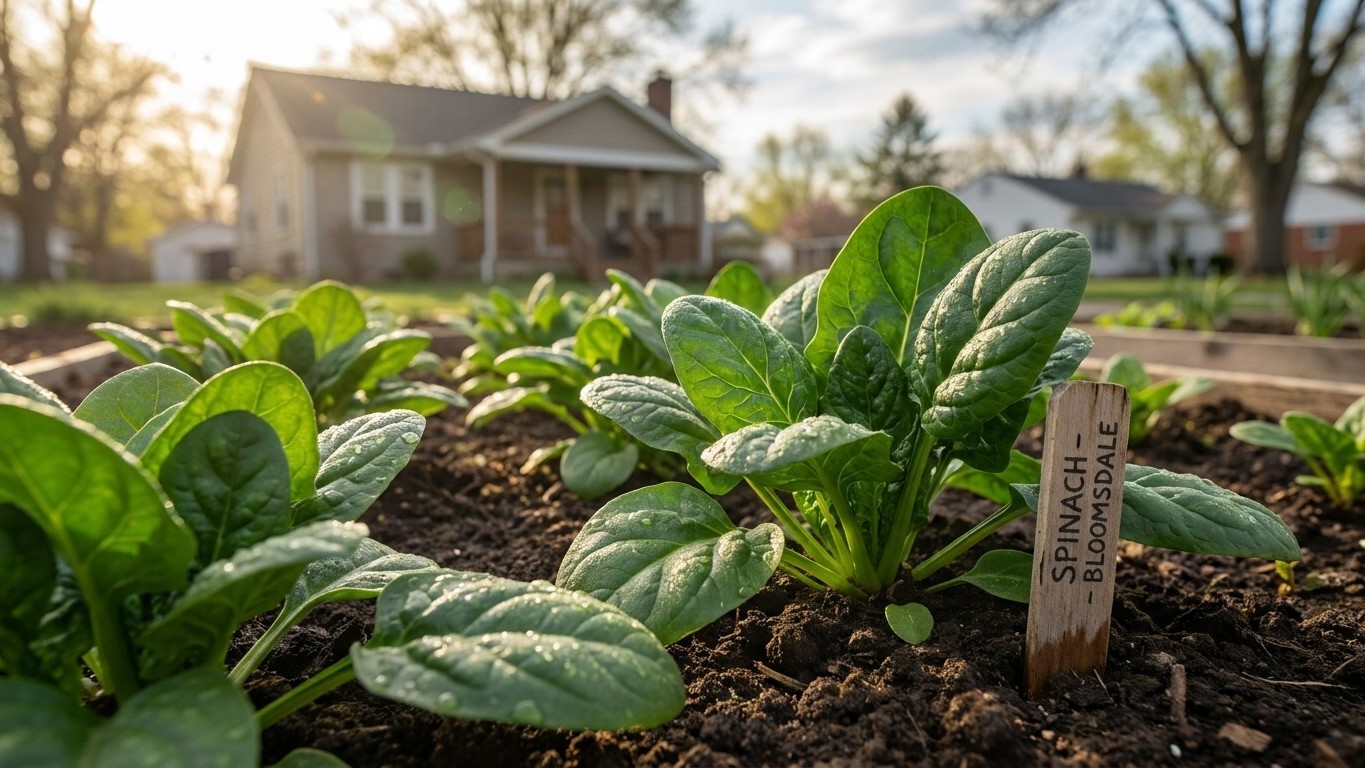

Spinach in Nevada bolts fast because the state’s long summer daylight, not just its heat, tells the plant to flower. In the low desert around Las Vegas, that means a spring crop of a few weeks at most before seed stalks shoot up. At elevation in Reno or Carson City, the same daylight trigger applies, but cooler soil and a later frost stretch the usable window enough to matter. For a deeper look at the timing involved, see Will Spinach Bolt Early in Nevada?
The short answer
Start with the number that actually rules this crop: at the reference city, the longest day of the year holds 14 hours and 27 minutes of daylight. That is well past the point where spinach starts throwing up a flower stalk instead of making leaves. Day length does this on its own, independent of temperature, so a mild or even cool stretch of weather in June does nothing to postpone it. If you have been waiting for a cooler summer to buy your spinach more time, that strategy does not work here, or anywhere the days run this long.
That puts the limit for spinach in Nevada in two places at once. Day length sets the outer boundary no matter what the thermometer says, because once daylight climbs toward that 14-hour-plus peak, the plant is going to bolt regardless of how the soil feels. Heat then closes in from the other direction and makes the whole situation worse. Utah State University Extension notes that spinach grows best where temperatures stay below 75 F, and pushes past that ceiling both slow the plant down and turn the leaves bitter well before an actual flower stalk appears. In Nevada’s low deserts, that ceiling gets crossed early and often. The reference station averages 131.3 days a year at 90 F or above, a measure of just how much heat load the growing season carries once spring ends.
Put those two mechanisms together and the picture is plain. Day length is the hard stop that arrives on a schedule no gardener controls. Heat is the accelerant that arrives earlier in the desert valleys than it does at elevation, and that makes the leaves unpleasant to eat even before bolting technically starts. Neither one is optional to plan around, and in most of Nevada they land close enough together that the spring spinach season simply does not last long. Anyone gardening in Las Vegas, Pahrump, or another low-desert valley should expect the heat ceiling to arrive first. Anyone at higher elevation, where spring stays cooler longer, will typically run into the day-length trigger before the heat becomes the bigger problem. Either way, the plant is working against a calendar it did not choose, and the gardener’s job is to get a harvest in before that calendar runs out, or to shift focus and plan for When to Sow Autumn Spinach in Nevada once the shortening days work in the plant’s favor again.
How long the spring window really is
Working out the real spring window means stacking the frost date, the sowing rule, and the two bolting triggers on top of each other, in order.
- Start with your local last frost. At the reference station near Las Vegas, NOAA’s 1991-2020 climate normals put the last spring freeze between January 7 and February 1, but that figure reflects an extreme desert urban-heat-island station and should not be used as guidance for the rest of Nevada. Reno, Carson City, and most rural valleys at elevation see frost linger months later into spring, so this step only works with your own county’s actual last-frost date, not the Las Vegas one.
- Sow spinach two to three weeks before that local last frost. Spinach seed tolerates cold soil well, so there is no reason to wait for frost-free conditions the way you would with a tender vegetable.
- Track how fast daylight climbs toward the 14-hour-27-minute peak. This climb happens on the same schedule everywhere in the state, and it is the trigger that eventually ends the crop no matter what the temperature does.
- Watch daytime highs against the 75 F ceiling. In low-desert valleys, that ceiling typically arrives within a matter of weeks after the last frost, given how many days a year the region spends above 90 F overall. At elevation, the climb toward 75 F is slower, which is the main reason the spring window runs longer there.
- Close the window at whichever trigger hits first. In most of Nevada’s low desert, heat wins the race and shuts things down early. At higher elevation, day length is more often the deciding factor, arriving after the heat has already stayed mild for longer.
The upshot is that Nevada’s spring spinach season is short almost everywhere, just for different reasons depending on where you garden. Desert valleys lose the crop to heat and bitterness before day length even becomes the main issue. Mountain and high-desert valleys hold on a bit longer, but eventually run into the same daylight ceiling that governs the whole state.
The autumn crop, and when the soil lets you sow
Fall spinach in Nevada is less about frost creeping in early and more about the ground finally cooling down enough to let seed sprout. Two separate obstacles decide the sowing date, and they pull in opposite directions.
Soil still too warm to germinate
Utah State University Extension is specific on this point: spinach seed germination drops off once soil temperatures climb above 80 F. Given that the reference station averages 131.3 days a year at 90 F or higher in the air, soil in Nevada’s low deserts routinely sits well above that 80 F germination threshold through most of summer. Sowing has to wait until the ground itself has cooled, not just until the calendar says fall is near. Gardeners at elevation, where summer heat is milder and shorter, generally see soil drop below that threshold earlier than desert valleys do. Seed catalogs sold across Nevada commonly list spinach varieties such as Bloomsdale, Melody, Teton, and Olympia, but the source behind this page publishes no days-to-maturity or bolt-resistance data for any of them, so treat those catalog names as options to research separately rather than facts that change the timing described here.
The frost that ends the season
Once the soil has cooled enough to sow, the other boundary is the first fall frost, which caps how long the plant has to reach a harvestable size. Utah State University Extension frames fall spinach sowing as 50 to 75 days before the date you want to harvest, which means counting backward from a realistic harvest target rather than from the calendar date of frost itself.
| Frost point | Date range (reference station) | Source |
|---|---|---|
| Last spring frost | January 7 to February 1 | NOAA NCEI Climate Normals 1991-2020 |
| First fall frost | December 8 to December 23 | NOAA NCEI Climate Normals 1991-2020 |
Those two dates come from the same Las Vegas-area station and share the same caution: they describe a desert urban-heat-island extreme, not a statewide Nevada planting calendar. If a gardener there wanted to harvest by early December, working back 50 to 75 days lands the sowing window in mid-September to early October, once soil temperatures have actually dropped below that 80 F germination ceiling. Gardeners at elevation, where the first fall frost lands months earlier, need to shift that whole calculation back accordingly, using their own local frost date rather than the desert one.
Checking this against your own county
Nothing above substitutes for a local check, because Nevada’s range runs from low, hot desert valleys to high mountain basins that behave almost like a different climate entirely. Frost dates, soil warm-up in fall, and how fast spring heat arrives all shift with elevation, sometimes over surprisingly short distances. The most reliable next step is contacting University of Nevada, Reno Extension, which maintains offices across the state and can supply frost and soil-temperature guidance specific to a given county rather than the single desert reference station used throughout this article. Their office locator and county contacts are available at extension.unr.edu.
Common questions
Does shade slow down bolting in Nevada?
Shade can lower leaf temperature and help keep spinach under the 75 F comfort range a little longer, but it does not change day length, which is the trigger that ultimately ends the crop regardless of temperature.
Can spinach be grown through a Nevada summer with irrigation and shade cloth?
Heavy irrigation and shade cloth can offset some heat stress, but they do nothing about the day-length trigger, so a summer planting in most of the state still runs into flowering once daylight stays long.
Is fall sowing easier than spring sowing in Nevada?
Fall sowing avoids the day-length problem almost entirely, since daylight is shrinking rather than growing, but it introduces the separate obstacle of soil that is still too warm to germinate seed well into early fall in the low desert.
Why does Las Vegas frost data not apply to the whole state?
The reference station sits in a desert urban-heat-island setting, so its frost dates run far later in fall and earlier in spring than most of Nevada. Elevation changes the picture by months, which is why a county-level check through University of Nevada, Reno Extension matters more than any single statewide figure.