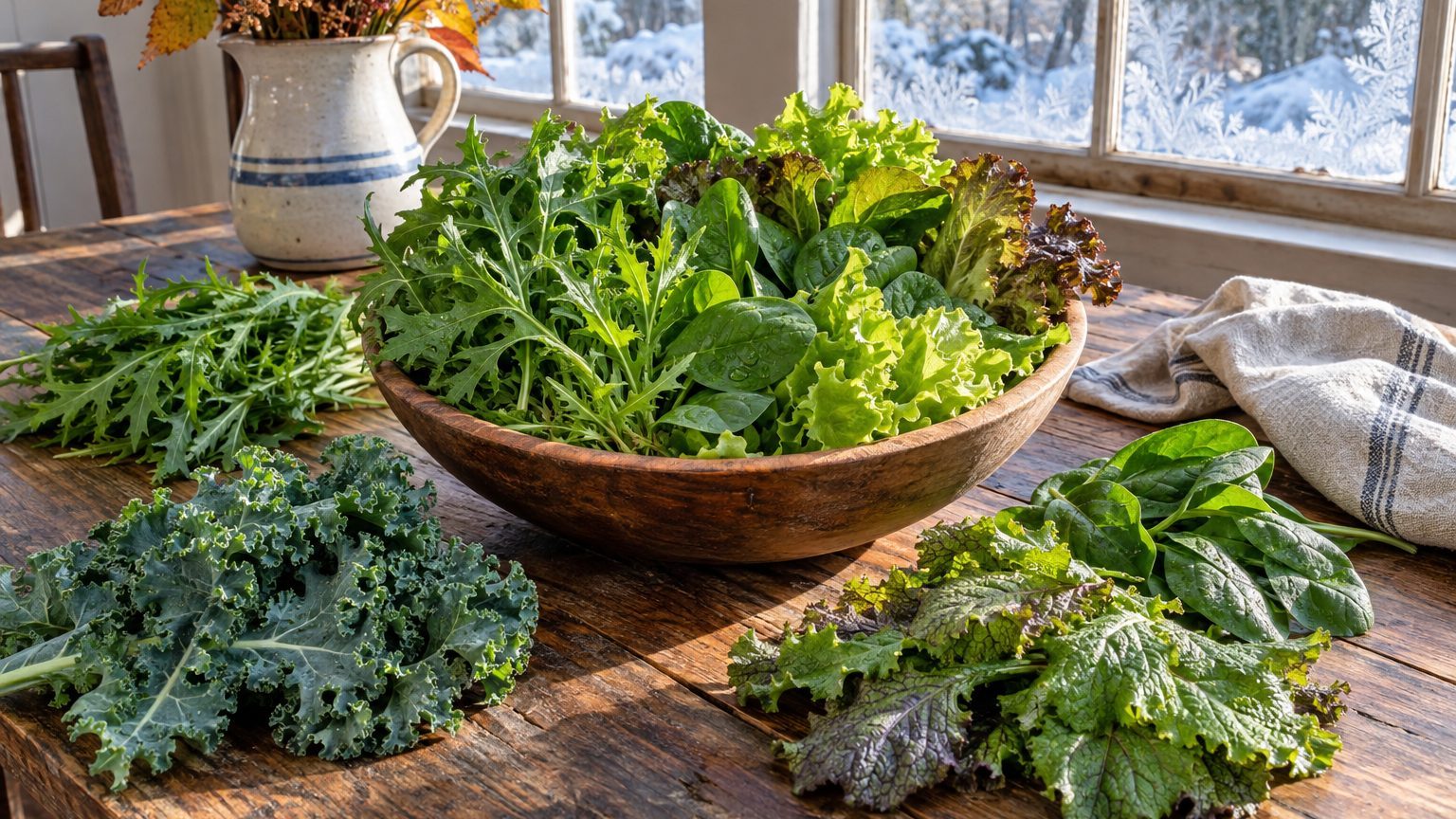

Spinach, kale, mâche, claytonia and the sturdy mustards earn the top spots for Nevada winter salads. Arugula and cold-tolerant lettuces fill in as quick crops. Nevada spans low desert and high mountain valleys, so type and elevation matter more than any single variety. Hardy leaves suit the cold north. Fast greens suit the mild southern desert.
The short answer for Nevada
Sort winter salads by what limits them. In the cold parts of the state, the limit is how low the thermometer drops, so the toughest leaves win: mâche, claytonia, spinach and kale. In the southern desert the limit is heat at sowing time and again in late winter, so quick, bolt-prone greens like arugula, mizuna and loose-leaf lettuce do well if they go in once the soil cools.
The Las Vegas reference station shows how mild the low desert is. The mean daily minimum of its coldest month is 39.6°F. The odds of a 32°F freeze run between 30 and 70 percent from December 8 to December 23 in fall, and from January 7 to February 1 in spring. Those dates come from a desert heat island, an extreme case. Reno, Carson City and any ground at elevation freeze months earlier in fall and months later in spring. Treat the Las Vegas dates as the mild end of the range, never as a statewide window.
| Type | Best choices | Where it fits |
|---|---|---|
| Ultra-hardy small leaves | Mâche (corn salad), claytonia | High valleys and cold yards; also fine in the south |
| Hardy cooking-and-salad greens | Spinach (savoyed types such as Bloomsdale), lacinato kale, mustards | Statewide, with cover in the north |
| Fast peppery greens | Arugula, mizuna, tatsoi | Southern desert all winter; northern fall and tunnels |
| Cold-tolerant lettuce | Winter Density romaine, Rouge d’Hiver, loose-leaf types | Low desert winter; northern cold frames |
| Chicories | Escarole, endive, radicchio | Mild-winter areas; bitterness softens after cold |
A mixed bed beats a single bet. Pair one very hardy green with one fast green and you get a harvest in both a mild December and a hard January. The sowing dates for each type are laid out in When to Sow Winter Salads in Nevada, and the wider overview sits in Winter Salads for Nevada Gardens.
What will not work here

Sowing lettuce in the open ground during a hot southern autumn is the most common failure. Lettuce seed refuses to germinate in soil that has warmed too much, and spinach is nearly as fussy. In the low desert that soil heat can last well into October. Seed that does sprout in a warm bed often stretches, turns bitter and bolts before it gives a decent harvest. Wait for the soil to cool, or start trays in shade and transplant.
Weekly watering is the second failure. Nevada air is dry and the wind is steady, even in winter. A seedling bed that gets one deep soak a week can dry out between waterings, especially in sandy desert soil. Seedlings need the top inch kept evenly damp until they have several leaves. After that, a mulch of straw or shredded leaves lets you stretch the interval, though a bed in full winter sun still dries faster than most people expect.
In the north, the problem is season length. Late fall sowings in the open ground rarely get big enough before short days stall growth. A bed sown in November at a northern Nevada latitude will sit as tiny seedlings until late winter. Slow-heading crops such as radicchio and big-headed chicories are the worst fit, because they need months of steady growth. Any plan that relies on them should be sown in late summer, early enough to size up before the cold arrives.
Mild winters in the south bring another trap. A run of warm afternoons in February can trigger bolting in arugula, spinach and cilantro-type greens that looked perfect in January. Succession sowing every two to three weeks covers the gap, and shade cloth over the south side of a bed buys a few extra weeks of tender leaves.
Finally, the dry, alkaline soils common across the state can hold back leafy crops. Caliche, the hard calcium layer under many southern yards, blocks roots. Raised beds with a few inches of compost sidestep both problems and drain well enough that cold, wet roots are rarely an issue.
What changes across Nevada
The USDA Plant Hardiness Zone Map (2023 edition, based on 1991-2020 normals) places Nevada anywhere from zone 4a to zone 10a. That system rests on a single variable, the average annual extreme minimum temperature, and the spread of 4a to 10a is about as wide as any state offers. No single answer fits a garden in Elko and a garden in Las Vegas. They are practically different climates that happen to share a border.
Gardeners in the north and at altitude should shift in three ways. First, sow earlier, in late summer rather than fall, so plants reach harvest size before growth slows. Second, lean on the tough types: mâche, claytonia, spinach and kale tolerate hard freezes and sweeten after them. Third, add protection. A low tunnel or cold frame with a clear cover lifts the temperature inside on a cold night, and that can be the difference between a salad in January and a bed of frozen leaves.
Gardeners in the low desert face the opposite risk. They can sow later, in October and November, grow nearly everything in the table, and keep harvesting through winter. The effort goes into shade and moisture early on, then into succession sowing as spring warms up.
Where a garden falls between those poles depends on elevation, slope and exposure, and a yard can differ from a neighbor’s a mile away. Look up your own location on the USDA map instead of guessing from the state-wide range, and then treat the zone as a starting point for choosing hardy or fast types.
Where to check this for your own county
Your state extension service holds the local detail. University of Nevada, Reno Extension runs offices and programs across the state, and its horticulture staff know the local frost patterns, soil problems and which crops grow in each area.
Look for two things there. The first is a local planting calendar for your county or nearest town, built on actual frost records for that place. The second is a list of varieties trialed in your county, because a lettuce that thrives in a cold-air basin in the north may bolt in a warmer valley. If the site does not list vegetable varieties for your county, call or email the local office. Master Gardener volunteers often answer these questions directly.
A county recommendation beats a state one every time. A guide written for all of Nevada has to span deserts and mountains, so it can only set the type and the general season. Your county office can tell you whether to sow on the first week of September or the first week of October. When the two disagree, go with the county.
Checking this against your own garden
Your own observations outrank any date in a guide. Three are worth watching, and none needs equipment.
- Soil warmth by feel. Push your hand into the bed in the morning. If it feels warm, like bathwater left to cool, lettuce and spinach seed will probably sit dormant. When it feels cool, you can sow. A bed that stays warm longer than a neighbor’s tells you it has strong afternoon sun or sits against a heat-holding wall.
- First true leaves. The first pair of leaves on a seedling are seed leaves. The second pair are the true leaves. When seedlings reach that stage, they can handle thinning, a lighter watering routine and a frost cover. If they take weeks to get there, the bed is too cold or too shaded for fast growth.
- Where frost shows up first. Walk the yard at dawn after the first cold night. Whitened grass, blackened basil or frosted car windows tell you which corners are cold pockets and which stay sheltered. Plant the toughest greens in the cold pockets and the tender ones near walls.
Write down what you see each year. After two or three seasons you will know your own sowing dates better than any chart can.
Common questions
Can you grow lettuce outdoors all winter in Nevada?
In the low desert, yes, with cold-tolerant varieties sown once the soil cools. In the north and at elevation, lettuce needs a cold frame or tunnel from the first hard freezes onward. Without cover, plan on mâche, spinach and kale instead.
What is the easiest winter salad green for a beginner?
Spinach and kale forgive uneven watering and late sowing better than lettuce does. Arugula is a good first crop in the south because it grows fast and shows quickly whether your bed is working.
Do I need a greenhouse?
No. A low tunnel of clear plastic or a lidded cold frame covers most needs in the north. In the south, a sheet of row cover on cold nights is usually enough.
How often should I water winter greens?
Keep the top inch of soil evenly damp until seedlings have several leaves, then water deeply when the top inch is dry. Dry air and wind can dry a bed quickly even in cold weather, so check by touch instead of following a fixed schedule.