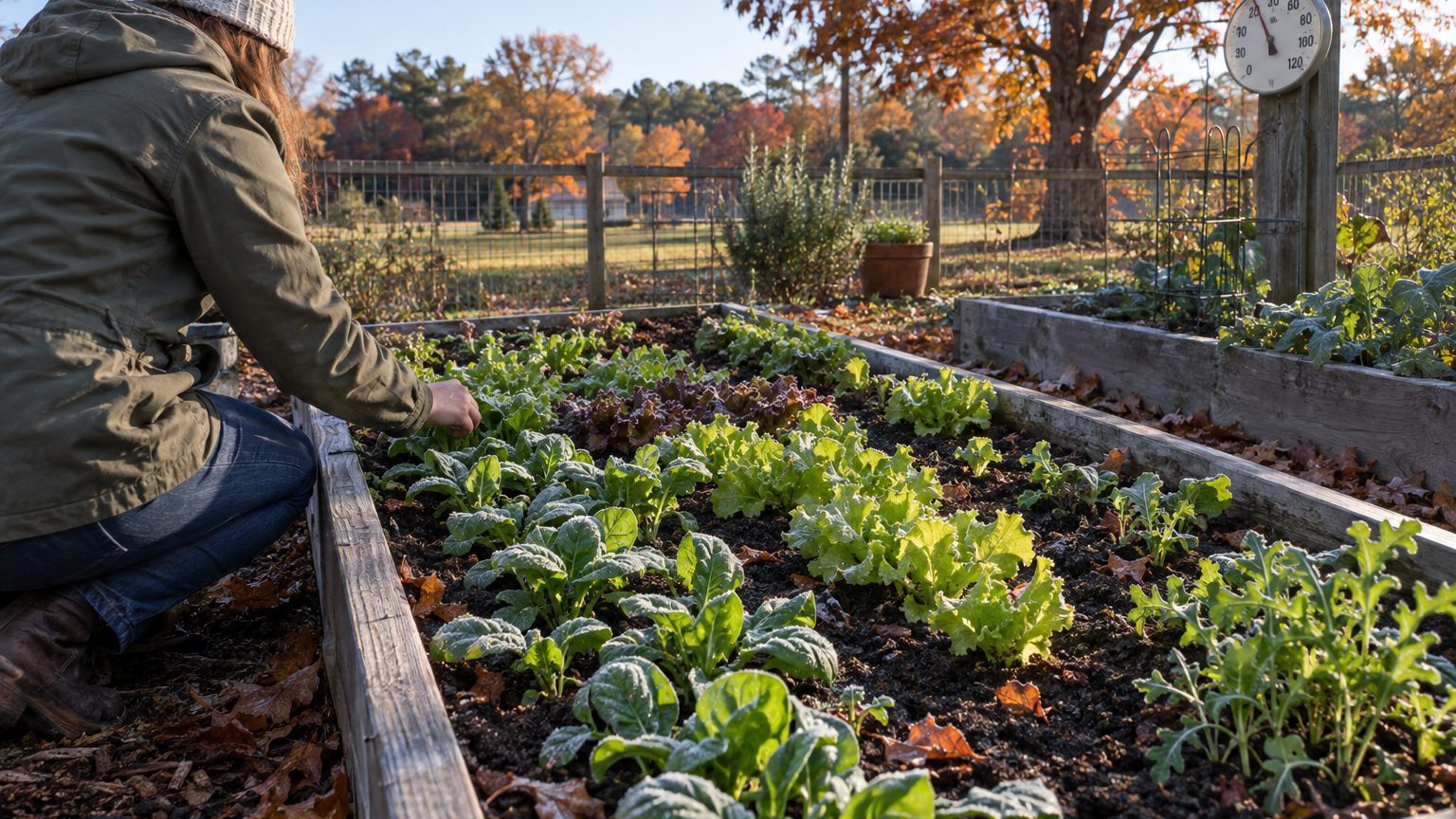

Winter salads go into Nevada ground from late summer through fall, and where you garden decides the date more than any statewide calendar. In the warm low desert around Las Vegas, sowing runs well into fall and the cold barely interferes. At Reno, Carson City or any elevation, the window shuts months earlier. Your county’s first hard freeze sets the deadline.
The short answer for Nevada
Sow winter salads once summer heat has left the soil, and early enough that plants reach harvest size before the coldest, darkest weeks. In the low desert that means fall, with sowings carrying into early winter. In the northern valleys and at altitude it means late summer, because freezes arrive months sooner. For the crops themselves, see Winter Salads for Nevada Gardens.
The Las Vegas airport gives the mild extreme. NOAA’s 1991-2020 U.S. Climate Normals for that station put the last spring freeze between January 7 and February 1, and the first fall freeze between December 8 and December 23. Both ranges are probabilities of the same event, a 32°F freeze. They mark the dates when the odds of that freeze fall between 30 and 70 percent.
The coldest month there has a mean daily minimum of 39.6°F. That is an average night, so individual nights still dip lower, but it explains why greens keep growing through a Las Vegas winter.
When should you sow winter salads in the Las Vegas area?
Start when the soil has cooled and the hottest afternoons are behind you, then keep sowing in small batches through fall. A new patch every couple of weeks spreads out the harvest. Hardy greens sown into the early-winter freeze window still grow, only more slowly as days shorten. The airport sits in a paved-over urban heat island, so a garden on the edge of the valley may freeze earlier than these dates suggest.
When should you sow in Reno, Carson City or at elevation?
Do not borrow the Las Vegas dates. Frost reaches northern and high-elevation gardens months earlier in fall and leaves months later in spring. The working rule is to count back from your own first fall freeze, using the days to maturity on the seed packet (counted from sowing for direct-sown salads). Add a generous margin, because growth slows as nights lengthen. Sow in late summer, and plan on row cover or a cold frame to carry the crop past the first hard freezes. The best winter salads for Nevada are the ones that tolerate that cold.
What will not work here

Copying a single calendar for the whole state will not work. A Las Vegas sowing date applied in Reno leaves seedlings stranded as freezes arrive months before they size up. A Reno date applied in Las Vegas puts seed into soil that is still too warm. Nevada’s range is wide enough that either mistake is common.
Can you sow lettuce in Nevada’s late-summer heat?
Rarely with good results. Lettuce seed often refuses to sprout in hot soil, and what does come up can be bitter and quick to bolt. Where summers are hot and dry, the sowing window for lettuce opens later than the calendar suggests, once the soil feels cool to the hand in the morning. Even then, a seedbed in the low desert dries out fast. Sprouting seeds need light watering every day until the first leaves are up, and a weekly soak will leave bare rows. Shade cloth over the bed in early fall buys a few degrees and keeps the surface from crusting.
Will winter salads survive a high-elevation Nevada winter?
Not unprotected, and not every type. USDA hardiness zone 4a covers part of the state, a zone defined by an average annual extreme minimum temperature far below anything Las Vegas sees. Tender lettuces left uncovered in those places will not make it through hard freezes. Slow-maturing salads are the other casualty. A crop that needs a long stretch of mild weather will still be half-grown when growth stops, and it will sit there until spring.
Protection has its own trap in the low desert. A sealed plastic tunnel that works in the north can overheat on a sunny Las Vegas winter afternoon and cook the greens inside it. Vent it on bright days, or use lighter row cover that breathes. Dry wind is a final hazard statewide. It dries seedlings and thin leaves faster than the cold does, so windbreaks and mulch earn their place.
What changes across Nevada
Nevada has no single answer. The USDA Plant Hardiness Zone Map (2023 edition, built on 1991-2020 climate normals) spans zones 4a to 10a inside the state’s borders. That is a spread of several zones, so check with your county extension office for guidance on your own area. A reader in the Las Vegas valley and one in a high northern basin are growing in different climates.
The zone system rests on one variable, the average annual extreme minimum temperature. It tells you whether a plant survives winter, and it says nothing about the length of the growing season, summer heat or wind. For a dated recommendation, the reference city matters more than the range. That is why the dates above are given for Las Vegas and labeled as such.
How should you shift your sowing if you garden in the north or at altitude?
Move everything earlier and plan on protection. Sow in late summer instead of fall, choose the hardiest salad types over the tender ones, and put cold frames or row cover in place before the first freeze rather than after it. Plant in the warmest spot you have, such as against a south-facing wall. Valley floors and low spots collect cold air at night, so a bed a few feet higher on a slope can stay a little milder.
To see where you fall, look up your location on the USDA Plant Hardiness Zone Map and read the zone for your exact spot. Neighbors a few miles apart can land in different zones.
Where to check this for your own county
The best local source is University of Nevada, Reno Extension, the state’s land-grant extension service. It has offices and educators serving counties across Nevada, and they know which parts of their county run warm, cold or windy.
Look for these on the extension site or by calling your county office:
- A local planting calendar for fall and winter vegetables, with sowing dates for your county or nearest town.
- The average dates of the first fall freeze and last spring freeze where you live.
- Salad greens and varieties that have been trialled or recommended in your county.
- Advice on season extension, such as row cover and cold frames, for your elevation.
A county recommendation beats a state one every time. Any statewide timing, including the Las Vegas dates and the ranges above, is only a rough frame to orient you before you check locally. When the county calendar and the state outline disagree, follow the county.
Checking this against your own garden
Your own observations outrank every date here. Three are worth watching, and none needs equipment beyond your hands and eyes.
What can the soil tell you before you sow?
Push your hand a few inches into the bed in the morning. If it still feels warm, it is too early for lettuce and similar greens. A bed against a wall or surrounded by gravel and pavement will stay warm longer than one in open ground, which tells you which spots to sow first in spring and last in fall.
What do your tender summer plants say about the first freeze?
Note the day basil, squash or tomato leaves first blacken. That is your garden’s real first freeze, and it can differ from the town’s by a week or more. Plants in a low corner that blacken first show you where cold air settles. Hardy salads can handle that corner better than a tender crop can.
How fast do the first true leaves appear?
Seedlings first show two rounded seed leaves, then the first true leaves with the shape of the mature plant. If those true leaves take weeks to show, the bed is too cold or too shaded for fast growth. If they come within days and the seedlings stretch and flop, the bed is too warm. Either result tells you to shift the next sowing in time or location.
Common questions
Can you sow winter salads in Nevada after the first frost?
In the low desert, yes, with hardy greens, though growth is slower. In the colder north and at altitude, sowing outdoors after the first hard freeze needs a cold frame or similar cover, and the crop will be small.
Do winter salads need protection in Las Vegas?
Usually little. The coldest month averages a daily minimum of 39.6°F, but averages hide cold nights, and freeze probabilities are meaningful from December. Keep a light cover on hand for the coldest nights.
Do the Las Vegas frost dates work for Reno or Carson City?
No. Those cities freeze months earlier in fall and later in spring, so their sowing windows start sooner and shut sooner. Use your county’s own dates.
How do you find your hardiness zone in Nevada?
Use the USDA Plant Hardiness Zone Map and enter your ZIP code. Nevada spans zones 4a to 10a, so a neighbor’s zone in another valley may not match yours. Your county extension office can tell you how your site differs.