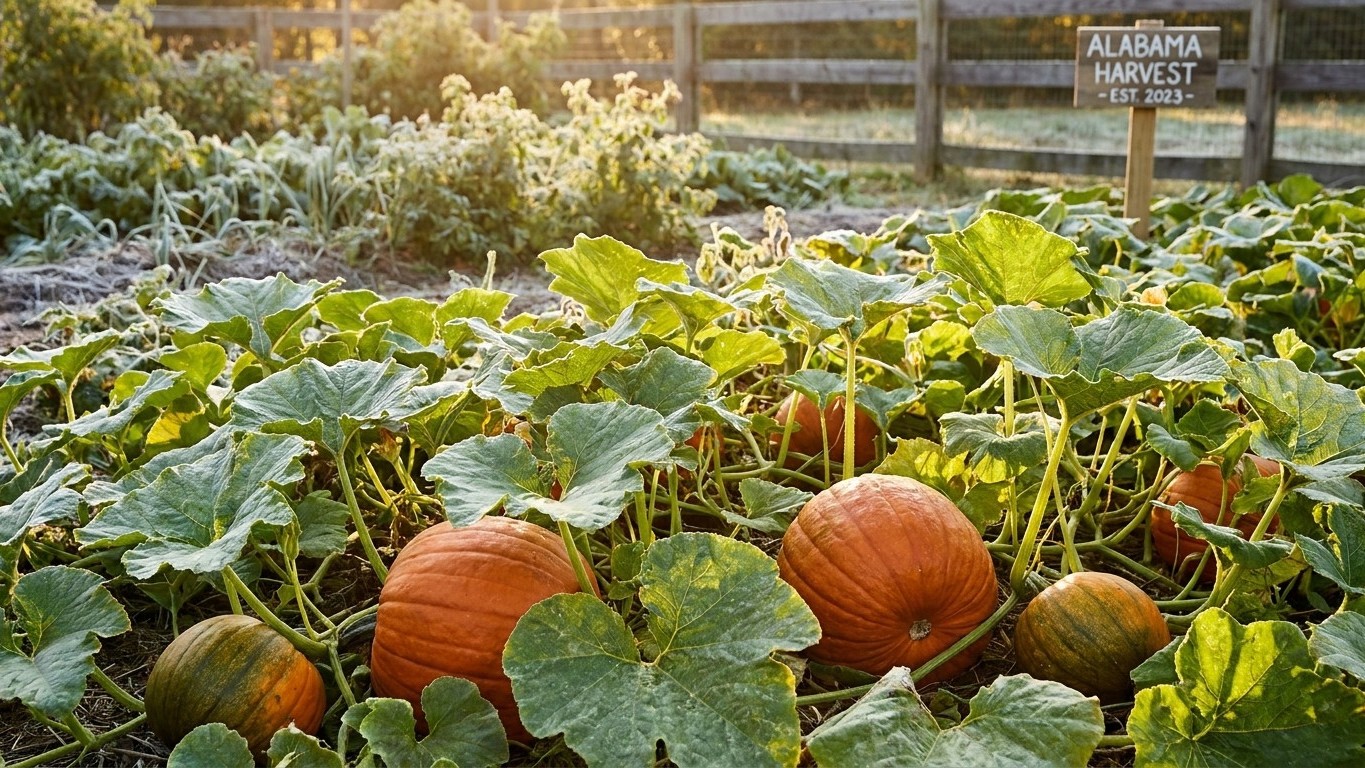

Most years, New Brunswick gives pumpkin vines just enough runway to finish the job, but the timeline is tight rather than generous. The average first fall frost lands around October 2, and a pumpkin needs 45 to 55 days counted from the day its flower opens, not from the day the seed goes into the ground, to reach a hard, colored rind. Work that backward and the flower has to open by early-to-mid August. Miss that window and the fruit is still green when the cold shows up.
The short answer
Start from the frost date and count backward, because that’s the only direction that tells you anything useful about whether a given pumpkin will make it. Environment and Climate Change Canada’s 1981-2010 normals put the average first fall frost at the Moncton station on October 2. Subtract 45 days and you land on August 18. Subtract 55 days and you land on August 8. That’s the window: a pumpkin flower needs to open somewhere between August 8 and August 18 to have a real shot at ripening before the average frost shuts things down.
That window is not a guarantee, and treating it as one is where a lot of gardeners get burned. October 2 is a mean date, which means in roughly half the years on record, frost arrived later than that, and in the other half, it arrived earlier. A gardener who plans right up to the edge of that window, aiming for an August 18 flower, is betting on the generous half of that split. Aim for the earlier end, closer to August 8, and there’s more room if the season turns cold ahead of schedule.
There’s also the matter of where in the province you’re gardening. The Moncton reading is one station’s record, not a province-wide guarantee. New Brunswick runs from coastal lowlands to inland highlands, and the interior and northern districts routinely see frost weeks before the Moncton average. A garden in the Saint John River valley or along the milder coast may have more slack than this figure suggests. A garden in the northern or upland parts of the province should treat the whole window as arriving earlier, and plan flowering time to match.
None of this changes the core mechanism. The 45-to-55-day clock starts ticking the moment a female flower opens on the vine, not when the seed germinates and not when the vine starts running. A vine can look enormous, sprawling, covered in leaves, and still be weeks away from setting a fruit that will finish in time. Watching for that first open bloom, and marking the calendar from there, is the only reliable way to know whether a particular pumpkin has a realistic chance before the average frost date arrives.
When to sow here
- Don’t sow at the last spring frost. The average last spring frost at Moncton is May 23, but that’s an air temperature reading, and pumpkin seed doesn’t care about air temperature. It cares about the soil it’s sitting in.
- Wait for 65-degree soil, not 65-degree air. Soil warms far more slowly than the air above it, especially in spring when the ground is still cold from winter. There’s no published figure here for exactly how many weeks the gap between the last frost and 65-degree soil runs in New Brunswick, but it’s routinely well past May 23, often into June, before the seedbed itself is warm enough to germinate pumpkin seed reliably.
- Use row covers to close some of that gap. A row cover laid over bare soil traps daytime heat and can push effective sowing time earlier by roughly two weeks, which matters in a province where the growing season is already working against a late-August flowering deadline.
- Don’t count days from sowing to guess at flowering. How long a pumpkin plant takes to move from germination to its first open female flower isn’t a figure carried in the source data for this page, and it varies with the plant’s growing conditions. Watching the vine for that first bloom is more reliable than counting days on a calendar.
- Aim for a flower in the August 8 to August 18 window. Whatever sowing date gets a plant to bloom inside that range, worked backward from when soil actually hits 65 degrees in your particular yard, is the sowing date that gives the fruit its best shot at finishing before the average frost.
- Favor the earlier side of that flowering window when possible. Because October 2 is only a mean date, and frost shows up earlier than that in about half of all years on record, a flower that opens closer to August 8 carries more margin than one that opens on August 18.
What goes wrong here
- A late flower that never colors. When the first female flower doesn’t open until late August or into September, the fruit is still counting down its 45 to 55 days when the average frost date arrives. The remedy starts earlier in the season: get the seedbed to 65 degrees as soon as realistically possible, use row covers to buy those extra two weeks, and choose a spot with full sun and good drainage so the plant isn’t stalling out on its way to first bloom.
- A fruit caught by frost before the skin hardens. A pumpkin that’s colored up but still has a soft rind isn’t finished, and a frost that hits before the skin toughens can end the ripening process for good. Because the October 2 date is a mean rather than a floor, this happens even to fruit that was on a reasonable schedule. Keeping a frost cover or old sheet ready in late September, and being willing to throw it over the patch on a cold night, buys extra days for the rind to finish hardening.
- A vine that dies back before the pumpkin is done. Foliar disease, vine borers, or a hard cutback from squash bugs and cucumber beetles can kill the leaves that a ripening pumpkin depends on for continued sugar production, leaving the fruit stalled at whatever stage it reached when the vine gave out. Watching the vine through late summer, rather than assuming it will hold together on its own, catches this early enough to matter; pest pressure and management specific to New Brunswick are covered on the site’s separate pages on squash bugs and cucumber beetles.
Common questions
Can I still get a ripe pumpkin if my flowers didn’t open until late August?
It’s close, and it depends on which end of the frost range shows up. A flower that opens August 18 needs 45 to 55 days to finish, which pushes the harvest into early-to-mid October, right around or past the average first frost of October 2. Some years that fruit makes it because frost arrives later than average; other years it doesn’t. There’s no way to know in advance which kind of year you’re in.
Does the 65-degree soil rule mean I should wait until mid-June to plant?
Not necessarily, and it depends entirely on your particular garden’s soil, exposure, and drainage. The point isn’t a fixed calendar date, it’s a soil temperature target. Some yards, especially raised beds or south-facing plots with sandy soil, will hit 65 degrees well before others. Checking the soil directly with a thermometer beats guessing from the calendar.
Will a light frost kill a pumpkin vine outright?
That threshold isn’t covered in the source data behind this page, which speaks only to harvesting before frost and storing fruit where it won’t freeze. What is clear is that frost damage to the vine can halt ripening on any fruit still in progress, which is why the flowering window matters more than any single frost event.
Should I cut back on watering late in the season to help the pumpkin ripen faster?
That specific technique isn’t addressed in the Utah State University Extension guidance this page draws from. What the source does emphasize is harvesting with the stem attached and moving fruit somewhere it won’t freeze, which is the practical step available once a pumpkin has reached a workable size and color heading into the fall frost window.