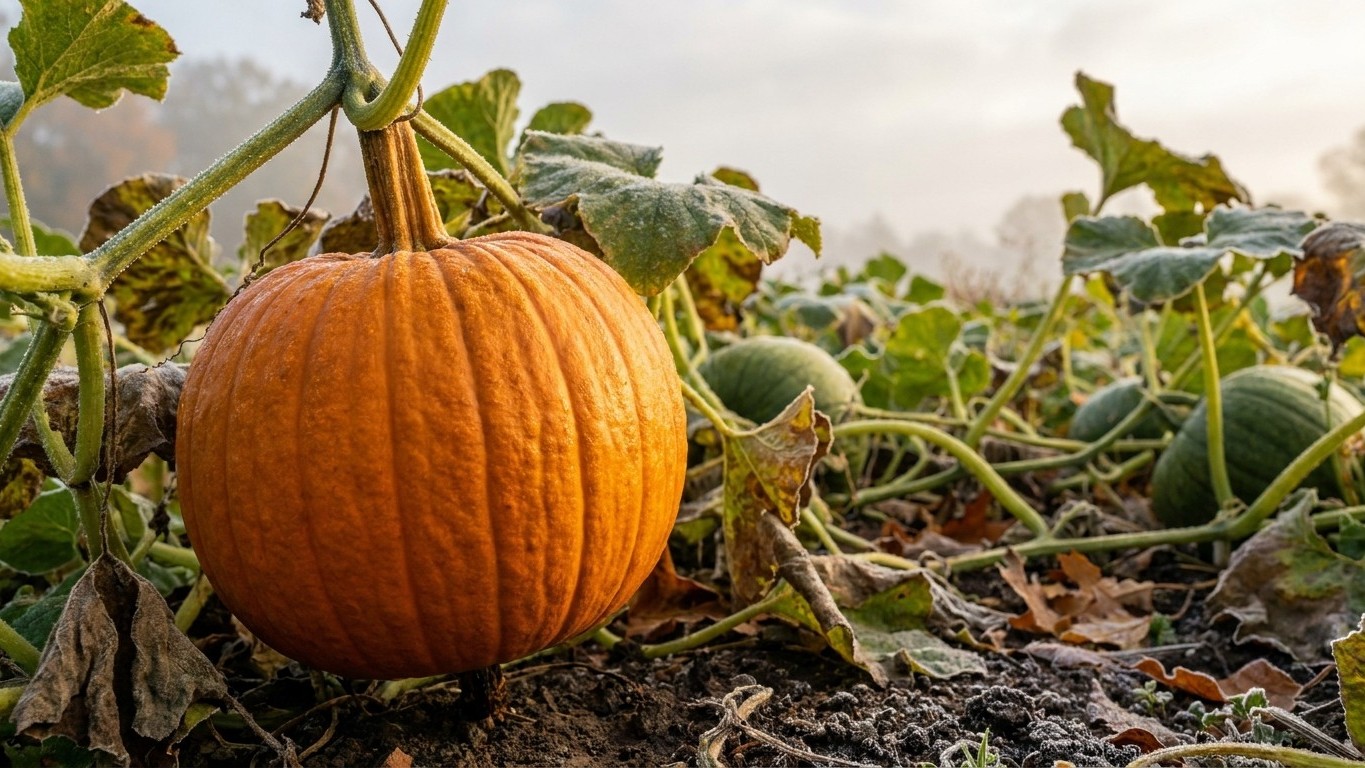

Pumpkins in New Brunswick have a real shot at ripening, but the whole plan hinges on one narrow stretch of days: the vine has to flower by the second or third week of August. Using the Moncton climate station’s long-term normals, the mean first fall frost lands October 2 and the mean last spring frost falls May 23. Count backward the 45 to 55 days a pumpkin needs after flowering, not after seeding, and that season leaves almost no room for a slow start.
The short answer
Start from the frost end of the calendar, not the planting end. The average first fall frost at the Moncton station is October 2. That figure is a mean drawn from the 1981-2010 Canadian Climate Normals, which means it is a midpoint, not a guarantee: in one year out of two, frost arrives later than October 2, and in the other half it arrives earlier. Treat it as the center of a window, never as a date you can plant a flag on.
Work backward from that mean date by the 45 to 55 days a pumpkin needs to mature after its flower opens, and you land on a flowering window between roughly August 8 and August 18. A flower that opens around August 8 gives the fruit the full 55 days it might need, plenty of cushion if the frost holds off past the mean date. A flower that opens closer to August 18 uses the tighter 45-day end of that range, and it is banking on the frost cooperating right on schedule or later. Given that frost beats the mean date in half of all years, the safer target for New Brunswick growers is the earlier edge of that window, not the later one.
This window is anchored to a single station, and New Brunswick is not one climate. The Moncton readings sit in the milder, more coastal-influenced part of the province. Upriver valleys, higher elevations, and northern districts routinely run cooler and see frost arrive sooner, which pushes the safe flowering window back even earlier than August 8. Anyone gardening away from the immediate Moncton area should treat this window as an optimistic upper bound, not a personal forecast.
None of this replaces watching the plant itself. Once a fruit sets, the countdown is 45 to 55 days from that flower, and the harvest signal is practical rather than calendar-based: cut the pumpkin with the stem attached and get it in before frost touches the skin. For a deeper look at whether Will Pumpkins Ripen Before Frost in New Brunswick?, it’s worth weighing your specific planting date against these averages. A pumpkin that colors fully but sits in the field past its window still needs to come off the vine before the first hard cold snap damages the rind.
When to sow here
The single most common mistake in this climate is sowing pumpkins on the last frost date. Knowing exactly When to Sow Pumpkins in New Brunswick makes all the difference, since pumpkin seed wants soil holding steady at 65 F, and soil warms far slower than the air above it. The mean last spring frost at Moncton falls May 23, but that date only tells you when the air has likely stopped freezing. It says nothing about whether the ground four inches down has caught up. Soil lags air temperature by weeks in this region’s cooler spring soils, so treating May 23 as a sowing date usually means seed rotting in cold, damp ground rather than germinating.
- Wait for the ground, not the calendar. Push a soil thermometer four inches into the bed and look for a steady 65 F reading over several consecutive days, not a single warm afternoon. That reading typically comes well after the May 23 last-frost mean, since bare soil warms slower than air.
- Use row covers to buy time. A row cover over the bed traps daytime heat and can advance soil warming by roughly two weeks compared with bare, uncovered ground, letting a grower sow earlier than the open soil would otherwise allow.
- Count forward from the sowing date. Once seed goes in, the plant still has to grow, vine out, and set its first female flower before the 45-to-55-day maturity clock even starts. In a short season like New Brunswick’s, every week gained at sowing is a week of insurance against a late flower missing the August window described above.
- Treat early June as the practical outdoor cutoff. Direct-sown seed going into the ground much past the first week or two of June leaves less margin for the plant to reach flowering before the safe August window closes. Starting seed indoors under lights, then transplanting once the soil has warmed, is the usual workaround for gardeners who want an earlier effective start without risking cold, wet ground.
What goes wrong here
- A late flower that never colors. When the first female flower doesn’t open until late August or September, the fruit runs out of the 45 to 55 days it needs before frost, and it stays green on the vine. The remedy is upstream: sow as early as soil temperature allows, and use row covers or an indoor head start so flowering lands inside the early-to-mid August window rather than after it.
- A fruit caught by frost before harvest. Even a well-timed pumpkin that colors up can sit in the field past its safe window if a grower waits for a slightly bigger fruit or a fuller orange. The fix is to harvest with the stem attached as soon as the rind hardens and colors, rather than gambling on a few extra days of size against an average frost date that could arrive earlier than expected.
- A vine that dies back before the skin hardens. Cool, wet stretches in late summer can knock back foliage from disease or stress before the rind has fully cured, leaving a fruit that looks orange but bruises and rots quickly in storage. Keeping the vine as healthy as possible into September, including watching for the kinds of insect damage covered on this site’s squash bug page and cucumber beetle page, buys the extra weeks the skin needs to harden properly before cutting.
Checking this against your own county
The Moncton normals are a single station’s average, and they will not match every backyard in New Brunswick exactly. A garden in a river valley, at higher elevation, or well north of Moncton should expect a shorter effective season than the numbers above, with an earlier fall frost and a later spring warm-up. Before locking in a sowing date, check current guidance through Agriculture and Agri-Food Canada, the federal department’s site, since the provincial department’s own pages were not reachable for verification at the time this page was checked. Local growers, garden clubs, and county-level extension contacts can also fill in the gap between a province-wide average and what actually happens in a specific yard.
Common questions
Is it too late to sow Pumpkins in New Brunswick in July?
Working backward from the frost figures above, a July sowing leaves very little runway. The plant still needs weeks to reach its first flower, and then another 45 to 55 days after that flower opens before the fruit is ready. A July start pushes flowering close to or past the safe mid-August cutoff, which is exactly the scenario that produces a green pumpkin still on the vine when frost arrives.
What pumpkin varieties are commonly grown in a short season like this?
Home gardeners across short-season regions commonly choose from named varieties such as Jack O’Lantern, Connecticut Field, Howden, Baby Boo, Jack Be Little, Casper, Cinderella, Atlantic Giant, and New England Pie types. No maturity length, size, or color data is being attached to any of these names here; growers should check seed packet information for the specific timing of whatever variety they select.
Can I do anything if frost threatens before my pumpkin has ripened?
Cover the plant on a threatened night, since even a light frost on unripe skin can end the fruit’s chances of finishing properly. If the forecast points to a hard freeze rather than a single cold night, harvesting early and storing the fruit somewhere it will not freeze is the safer move, even if the color isn’t fully finished.
Will a green pumpkin ripen after it’s picked?
The sourced guidance here covers growing and harvest timing, not post-harvest ripening behavior or storage temperatures, so no figure on indoor ripening is given on this page. The safest assumption for a grower in New Brunswick’s short season is to aim the flowering window early enough that the question doesn’t come up.