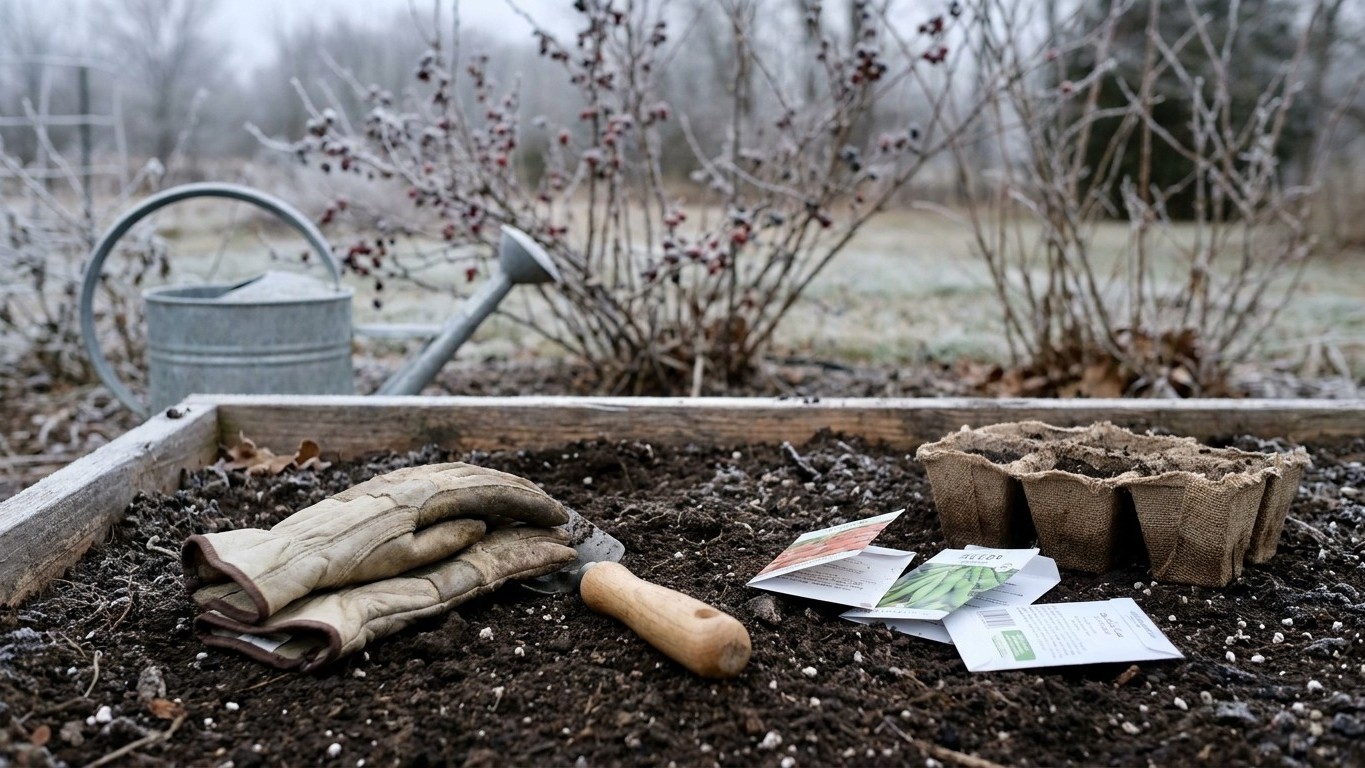

February in New Hampshire keeps every seed and transplant out of open garden soil. Frozen ground and a last spring frost that doesn’t arrive until mid-to-late April rule that out. Real work still happens this month though: garlic checks, cold frames, indoor seed starting, dormant pruning, and locking in seed orders before the popular varieties sell out. That’s where the payoff is right now.
What goes in the ground in February

Soil temperature, not the calendar, decides what a plant can survive. In New Hampshire, NOAA climate data puts the last spring frost between April 16 and April 27 at the reference weather station used for these figures, and the state spans USDA Hardiness Zones 3b to 6a, a range built on average extreme winter minimum temperatures. February sits weeks, sometimes two full months, ahead of that frost window. The honest answer for open garden beds is nothing goes in this month. Frozen or waterlogged soil kills roots faster than cold air ever could, and working wet ground now compacts it for the whole season ahead.
That doesn’t mean the garden is off-limits. A few narrow openings exist for gardeners who look for them.
- Garlic and shallots: if fall planting was missed and a rare thaw leaves the ground workable, cloves can still go in, though a spring crop will lag behind a fall-planted one.
- Cold frames and low tunnels: these buy several weeks of soil warmth, enough to hold overwintered spinach or claytonia and sometimes to start a first outdoor sowing of hardy greens ahead of the open bed.
- Bare-root and dormant stock: fruit trees, berry canes, and roses shipped bare-root can be heeled into a trench of loose soil or damp sawdust in an unheated garage or shed until the ground opens up.
- Forcing indoors: rhubarb crowns and chicory roots lifted from the garden or bought dormant can be forced in a dark, cool spot for tender stalks or chicons within a few weeks.
None of that replaces direct sowing. It just keeps hands busy while the ground finishes thawing.
What to start under cover
Seed starting works backward from the frost window, not forward from a fixed date on a calendar. With the last spring frost landing between April 16 and April 27 at the reference station, a gardener counts back from that range for each crop, and county-level frost can run one to two weeks later than that airport figure, so the safer math leans on the later end.
Long-season crops that need eight to twelve weeks of indoor growth before transplant, like onions, leeks, and peppers, are the ones that can reasonably start under lights this month for many parts of the state. Tomatoes generally want six to eight weeks indoors, which puts most tomato starts later, not now. Starting too early is the more common mistake: six extra weeks under weak light produces rootbound, leggy seedlings that stall out once they finally hit the garden. Starting too late is the opposite failure, and it shows up as a short, disappointing harvest window before fall frost closes things down between October 13 and October 26.
| Crop group | Typical weeks indoors before transplant | Risk if started now |
|---|---|---|
| Onions, leeks | 10-12 weeks | Low; slow growers tolerate an early start |
| Peppers | 8-10 weeks | Moderate; watch for leggy stems under weak light |
| Tomatoes | 6-8 weeks | High; starting now often means overgrown, rootbound plants |
A heat mat and a south-facing window rarely match the light intensity seedlings need. Supplemental grow lights kept close to the foliage, an inch or two above the leaves, do more to prevent stretching than any amount of extra warmth.
What is ready to pick
Little to nothing comes out of an open New Hampshire garden bed this month, and there’s no point pretending otherwise. But a well-planned fall garden and a stocked root cellar still feed a household through February.
Kale and leeks left standing under a foot of snow often taste sweeter after hard cold, since the plant converts starches to sugars as a defense against freezing. Digging them out takes a shovel and patience, but the flavor reward is real. A cold frame that held on through the darkest weeks may still be producing spinach, mache, or claytonia leaf by leaf, cut sparingly so the plant keeps producing.
Indoors, sprouts and microgreens fill the gap in under two weeks from seed, no soil or sunlight required beyond a windowsill, which makes them the fastest fresh crop available this month by a wide margin.
Storage crops need a hands-on check now, not later. Winter squash should feel firm with no soft spots near the stem, a common early sign of rot. Potatoes that have started sprouting or gone soft and dark should come out of the bin before they spread that decay to their neighbors. Onions with a papery, dry neck are fine; onions with any give or smell of sulfur are past their window and belong in the kitchen tonight, not back in storage.
The jobs that matter this month
Winter months carry their own workload, and February’s list is long enough to fill every free weekend before the ground even thaws.
Pruning and planning
Dormant pruning of fruit trees and berry canes is best done now, while there’s no foliage hiding the branch structure and the plant is fully dormant, which limits stress and disease spread compared to pruning cuts made during active growth. Apple and pear trees, raspberry canes, and grapevines all take well to a February cut. At the same time, seed catalogs are moving fastest on their most popular varieties; ordering now beats finding a favorite tomato or pepper sold out by the time March rolls around.
Soil and structure
A soil test taken now gives results back in time to amend before spring planting, rather than guessing after the fact. Compost piles built in fall benefit from a turn this month to keep decomposition moving even in cold weather. Raised beds, fencing, and trellis hardware damaged by winter weight or ice are far easier to repair on a mild February day than to discover broken mid-May when the seedlings are ready to go in.
Tools and storage
Pruners, loppers, and hoes sharpened and oiled now save frustration once the pace of spring work picks up. And storage crops, covered above for eating, also need a rot check purely as garden maintenance: one soft potato left in a bin can take down several pounds of good ones around it within a couple of weeks.
What not to do in February
The biggest mistake this month is confusing air temperature with soil readiness. A stretch of 50-degree afternoons can feel like spring, but soil several inches down often stays near freezing for weeks after the air warms, and seeds sown into that cold, wet ground either rot or simply sit without germinating.
A related error is uncovering mulch or row cover too early after a mild spell. New Hampshire’s frost window runs into late April at the earliest per the reference station data, and county gardens often run later still. Pulling protection off perennial beds or cold frames during a warm week leaves tender new growth exposed when the next cold snap arrives, which it almost always does before spring truly settles in.
Feeding nitrogen too early is a quieter but common misstep. Fertilizing dormant perennials or fruit trees now can push soft, premature growth that a hard freeze will damage weeks later. Nitrogen applications generally wait until visible active growth resumes, not the first warm afternoon.
Indoors, the mistake runs the other direction: starting warm-season seeds like tomatoes and squash far too early. Counting backward from the actual frost window, rather than an arbitrary start date, is the only reliable check against six extra weeks of leggy, stressed seedlings sitting on a windowsill waiting for ground that still isn’t ready.
Checking this against your own county
A statewide February guide is a starting point, not a set of instructions for one particular yard. Elevation shifts frost timing by days to weeks; a garden a few hundred feet higher than the valley floor often sees a later last frost and an earlier first fall frost than the reference figures here. Lake effect near larger bodies of water can moderate or delay those swings further, and the difference between northern and southern New Hampshire regularly spans two to three weeks on either end of the growing season.
For county-specific planting windows and current soil test recommendations, the UNH Extension service publishes guidance built for New Hampshire’s actual microclimates, not just the airport average.
Common questions
Can I direct-sow anything outdoors in New Hampshire in February?
Not in open, unprotected garden soil. Frozen and waterlogged ground makes February direct sowing a losing bet almost everywhere in the state. A cold frame or low tunnel is the only realistic exception, and even then it’s limited to the hardiest greens.
When should I start tomato and pepper seeds indoors for a New Hampshire garden?
Count backward from the local last frost, which runs April 16 to April 27 at the reference station and often later in outlying counties. Peppers generally need 8 to 10 weeks indoors before transplant, tomatoes 6 to 8 weeks, which puts most tomato starts a few weeks past February for many gardens.
Is it too early to prune fruit trees in February?
No. Dormant pruning done before buds break is generally preferred, since the tree faces less stress and disease risk than pruning cuts made once growth is active. February, while trees are fully leafless and dormant, is a solid window for this work.
Why is my stored squash going soft in February?
Soft spots, especially near the stem end, usually signal early rot setting in during long winter storage. Checking bins regularly and pulling affected squash out immediately protects the rest of the batch from spreading decay.