
New Jersey’s Cooperative Extension has not published a state-specific list of carrot pest species in the sourced material behind this page. What the record does show, backed by USDA soil data and university crop guides, is that a lot of what gardeners blame on insects in New Jersey carrot beds actually starts in the ground: soil texture, drainage, and storage temperature drive most of the damage reports that get mistaken for pest feeding.
Which pests attack carrot in New Jersey
Here is the honest starting point: the verified facts behind this page do not carry a documented, species-by-species pest list for New Jersey carrots. No extension bulletin naming individual insects and their New Jersey range is part of the sourced record here, so this page will not invent one. Naming species that aren’t in the source data is exactly the kind of error that makes a reader stop trusting a garden article, and it’s worth being upfront about the gap rather than papering over it.
What the data does show is where most of the visible damage in New Jersey carrot rows actually comes from, and it’s not always a bug. New Jersey’s representative state soil, the Downer series, is mapped by USDA NRCS with a surface layer that runs 79 percent sand, 6 percent clay, and 15 percent silt, with organic matter around 1.2 percent and a surface pH near 6.3, slightly acid. That’s a well-drained, sandy profile, and it matters because carrots are notoriously picky about exactly this kind of structure.
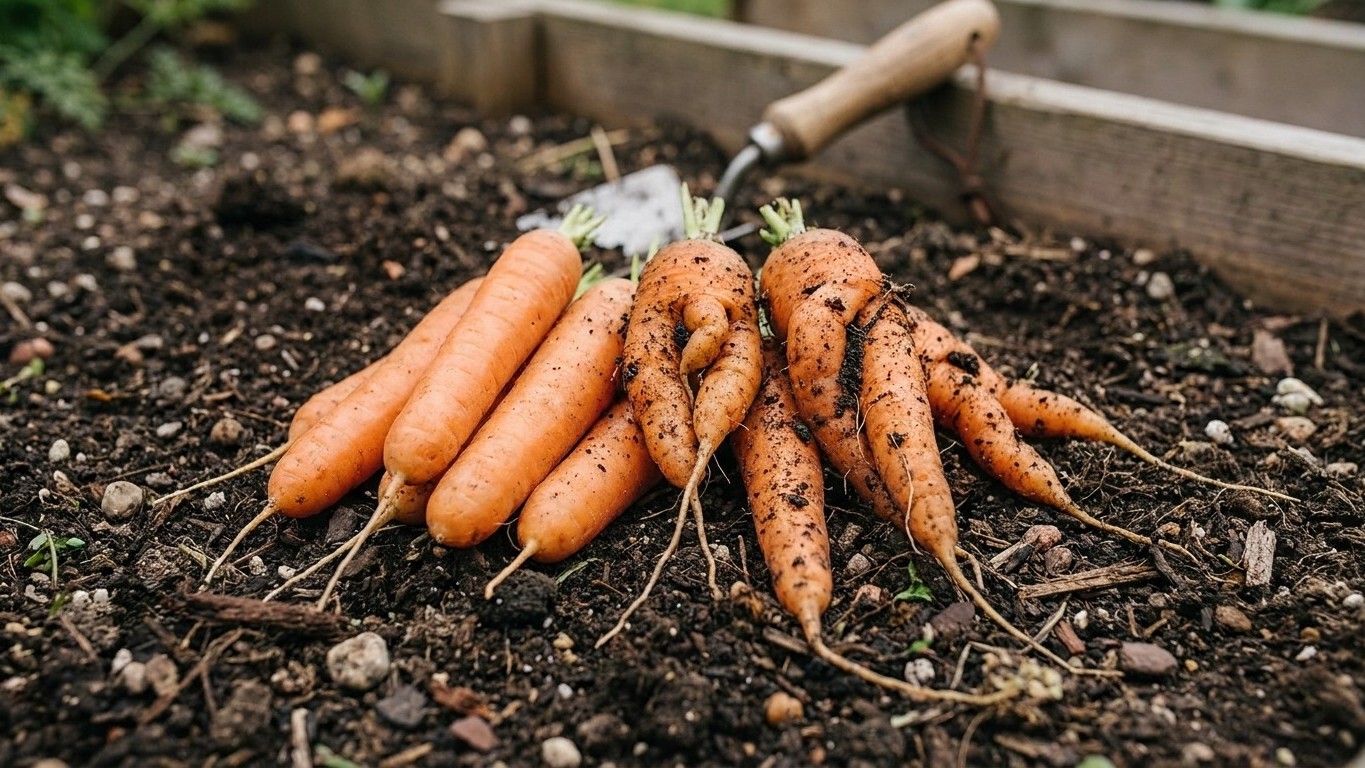
Utah State University Extension is direct about what happens when the ground doesn’t cooperate: carrots want deep, sandy, well-drained soil rich in organic matter, and heavy or rocky soil makes the root fork. A forked, stubby, or split carrot pulled out of a New Jersey garden is frequently a soil-structure problem, not a feeding wound. That single fact does more to sort out a New Jersey carrot bed than any pest chart could, because it tells you to dig before you spray.
None of this rules out insect activity in New Jersey gardens. It means this page won’t manufacture a species list where the sourced record has none. A gardener who sees chewed foliage, tunneled roots, or wilting that looks feeding-related has a real question worth asking, just not one this page can answer with an invented name. The right next move, covered below, is a call to the local extension office, which can identify what’s actually in a given county and a given season.
When each one shows up, and what it does first
Without a sourced pest calendar for New Jersey, the timeline that’s actually verifiable here is the crop’s own growth clock, and it’s still useful for figuring out when to look closely. Carrots are sown directly in the ground, never transplanted, so every day count on this page runs from the seeding date. Utah State University Extension puts the full seed-to-harvest window at 70 to 100 days, while Clemson Cooperative Extension gives a tighter harvest target of 65 to 75 days after planting. Those two ranges overlap in the middle, and that overlap is the window where most New Jersey home gardeners should expect to be pulling roots.
In the first few weeks after seeding, before the root has swelled at all, almost anything unusual above ground is a soil or moisture issue rather than a root problem, since there’s no root yet to attack. Thin, pale, or stalled seedlings on New Jersey’s sandy, low-organic-matter Downer-type ground point toward nutrient or moisture stress before they point toward a pest, simply because the surface layer here averages only about 1.2 percent organic matter and drains fast.
As the root starts to size up, roughly in the back half of that 65-to-100-day window, is when structural problems in the root itself become visible for the first time: forking, stubbing, or a root that splits into two or three legs. That’s the point where the soil texture facts above become directly relevant, because a fork that shows up now was set in motion by rocky or clay-heavy ground weeks earlier, not by anything that happened overnight.
Near the end of the window, as roots approach harvest size, is also when any feeding damage on leaves or root shoulders becomes easiest to spot simply because there’s more plant to look at. This is the stage where a gardener with a real suspicion of insect activity has the clearest evidence to bring to a county extension agent, tops and root both, rather than trying to identify anything from a photo alone.
Telling the damage apart from everything else
Most of what gets reported as pest damage on New Jersey carrots traces back to one of three things: soil structure, moisture and storage temperature, or plain mechanical injury from digging. Sorting those out before assuming an insect is involved saves a lot of wasted effort.
| Symptom | Likely cause | What settles it |
|---|---|---|
| Forked or split root, two or three legs | Heavy, rocky, or compacted soil, or high clay content | Dig test and a soil test; compare clay reading to the state’s 6 percent baseline |
| Stunted or pale tops early on | Low organic matter or acid soil (state surface pH runs near 6.3) | A soil test measuring your own bed’s pH and organic matter |
| Root softening or sprouting in storage | Storage temperature above the target, or tops left attached | Check storage temperature against 33°F; trim tops before storing |
| Scarring or gouges on the root surface | Digging injury, rocks in the row, or possible feeding | Fresh vs. healed wound tissue; send a sample photo to your county extension office if feeding is suspected |
The storage line deserves its own attention because it fools a lot of gardeners into blaming the field for a problem that started in the kitchen or root cellar. Clemson Cooperative Extension is specific that carrots should be held at 33°F and high humidity, and that bunched carrots, meaning the tops are still attached, keep for only 10 to 14 days because the leaves keep drawing moisture out of the root. Cut the tops off before storing, and that window extends considerably. A carrot that goes soft in a week wasn’t necessarily attacked in the garden; it may simply have been stored warm with its top still on.
None of this settles a genuine insect question. It just clears out the false positives first, so that whatever’s left really does deserve a call to the local extension office.
What actually works here, and what is a waste of time
On a soil profile like New Jersey’s representative Downer series, sandy, well-drained, low in organic matter, the single most useful move for a home carrot grower has nothing to do with pest control at all: it’s building the bed before seeding. Utah State University Extension’s fix for heavy or rocky ground, plenty of compost worked in and double digging, applies just as well to sandy ground that’s short on organic matter, since compost addresses both the fork risk and the nutrient shortfall in one pass.
Timing the bed, not the treatment, is what actually pays off on a short growing season. Since carrots run 70 to 100 days from seeding to maturity, and the harvest target sits around 65 to 75 days, working compost into the row before that clock starts is far more effective than trying to fix a problem mid-season. A gardener who waits until roots are already forking has missed the window; the soil structure that caused it was set before the seed went in.
Lightweight fabric row covers, laid over the row at seeding and removed before the canopy fills in, are a standard physical barrier against above-ground feeding and cost nothing in terms of chemistry or guesswork about what’s legal to spray in New Jersey. That’s a genuine time-and-place answer: cover early, remove before crowding becomes an issue.
What’s a waste of effort is guessing at a treatment for an unidentified problem. This page carries no pesticide names, active ingredients, or dosages, and won’t invent any, because what’s legal and registered for use in New Jersey is not something a general gardening article can respond for. Naming a product without knowing New Jersey’s own registration rules just risks a wasted purchase or worse. That call belongs to the state’s own extension service.
Where to check this for your own county
New Jersey’s land-grant extension network is the right first stop for anything this page couldn’t verify, starting with an actual pest identification. A county extension office can look at a sample, tell a gardener whether feeding damage is insect-related or something else, and say what’s currently registered for use in that state, which changes over time and by crop.
A soil test through that same extension network is the other essential step, and it matters more than the state-level soil figures on this page might suggest. The Downer series values, 79 percent sand, 6 percent clay, 15 percent silt, describe what USDA maps as representative of New Jersey overall, not any one garden. A yard two counties over, a river-bottom lot, or a plot where a builder scraped and filled the topsoil can carry entirely different clay content, drainage, and pH than the state figure implies. The 6 percent clay number is a starting point for comparison, not a diagnosis of what’s under a specific row of carrots.
That gap between state-level data and one backyard is exactly why a local soil test, not a state average, should be the number a gardener actually acts on. Pull a sample from the actual carrot bed, send it through the county extension office, and use that result, not the Downer series baseline, to decide whether compost, double digging, or nothing at all is the next move.
Common questions
Does New Jersey have a published list of carrot pests?
Not in the sourced material behind this page. No species-specific pest list for New Jersey carrots appears in the verified facts here, and this page has not invented one. A county extension office is the right place to ask for anything current and location-specific.
Why does my carrot fork instead of growing straight?
Forking is a soil-structure problem far more often than an insect one. Utah State University Extension attributes it to heavy or rocky soil, which is fixed with compost and double digging, not a pesticide.
How long can I store home-grown carrots?
Clemson Cooperative Extension puts bunched carrots, tops still attached, at 10 to 14 days, because the leaves pull moisture from the root. Trim the tops before storing at 33°F and the roots keep considerably longer.
When should I harvest carrots planted in New Jersey?
Count from the seeding date, since carrots are never transplanted. Clemson gives 65 to 75 days after planting as the harvest target, while Utah State University Extension puts the full range at 70 to 100 days depending on conditions.