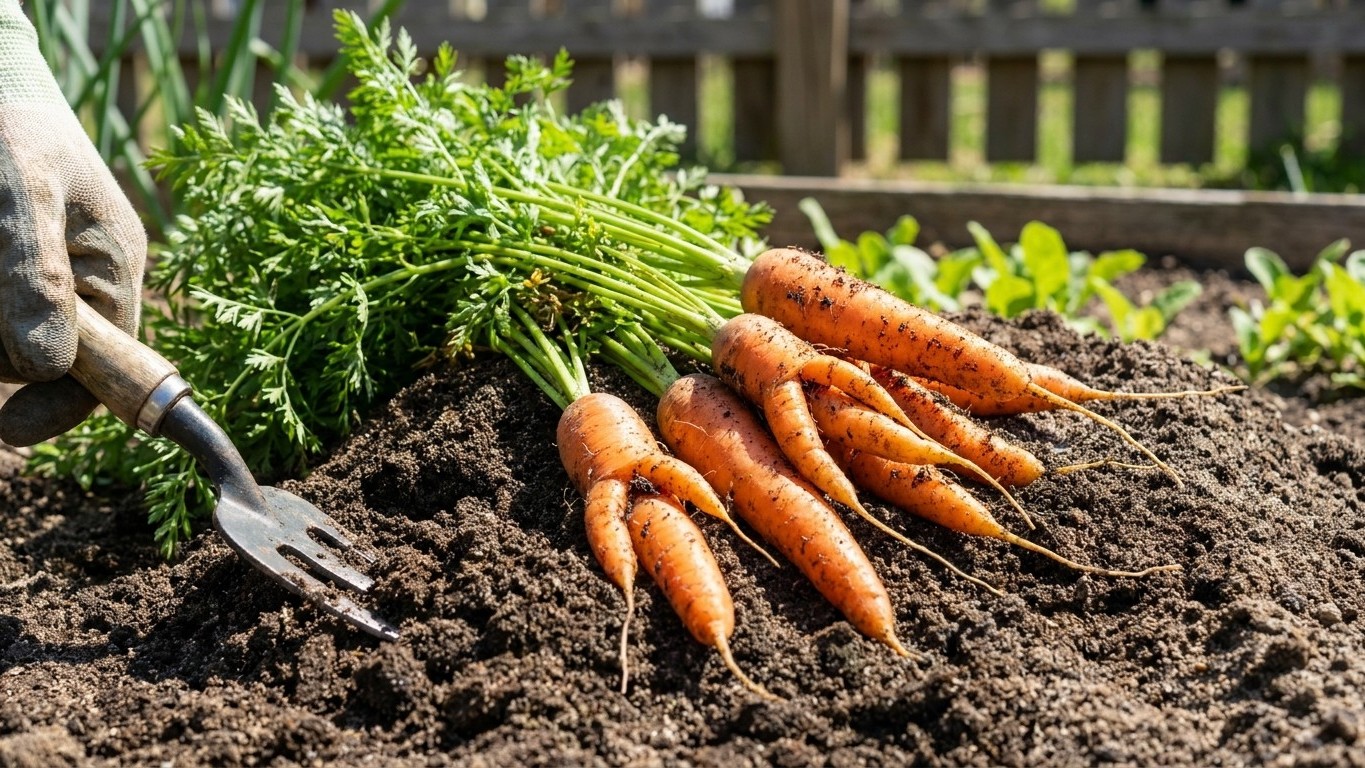

Will Carrots Fork in New Jersey Soil? New Jersey’s benchmark soil, the sandy Downer series, drains well and holds little clay, so carrots planted in it are less likely to fork than in a heavy-clay garden. But that’s a state-level average, not your backyard. The real answer depends on your own dirt: dig a test hole, check for rocks and compaction, and follow the guidance on When to Sow Carrots in New Jersey, sowing two to three weeks before your local last frost, once soil hits at least 40 F.
The short answer
The USDA’s representative soil for New Jersey is the Downer series, an Ultisol, which is a category of old, heavily weathered and leached soil that tends to run naturally acid and short on nutrients. Its surface horizon measures 79 percent sand, 6 percent clay and 15 percent silt, with organic matter around 1.2 percent and a surface pH near 6.3, slightly acid. It’s classified as well drained.
For a carrot grower, that mix is mostly good news. Utah State University Extension is blunt about what causes forked, twisted roots: heavy or rocky soil. A carrot pushing through dense clay hits resistance, splits around a stone, or curls sideways looking for the path of least resistance. Sand-dominant soil like Downer offers little of that resistance. The roots have room to run straight and deep, and water moves through fast enough that the carrot isn’t sitting in a soggy pocket that would encourage rot or misshapen growth.
That doesn’t mean the ground is carrot-ready straight out of the gate. Low organic matter, just 1.2 percent, means the soil is light on the humus that holds moisture and feeds the fine root hairs a carrot depends on early. And an acid, nutrient-poor Ultisol won’t hand a carrot much to work with unless you feed it. So the fix here isn’t the double-digging Utah State recommends for heavy ground. It’s compost, worked into the top 8 to 10 inches, to build organic matter and buffer that acidity before you sow.
Where Downer-type soil does turn against you is when it’s been disturbed. Any lot where a builder scraped topsoil and brought in fill, or compacted the ground with heavy equipment during construction, can behave like a completely different soil regardless of what the county survey says grows there naturally. In that case, a raised bed with a loose, sand-and-compost mix is the more reliable route than trying to loosen compacted fill by hand every spring.
None of this is a diagnosis of the dirt under your own tomato cage. New Jersey spans hundreds of mapped soil series, from river-bottom silt in the Delaware and Raritan valleys to rockier upland soils in the northern hill country, and the Downer series is simply the one USDA lists as representative of the state as a whole. It’s a starting point for what the region’s ground tends to do, not a stand-in for a soil test on your own property.
The test that settles it in your own garden
State-level data can only tell you what’s typical. Your garden might sit on filled ground, a river terrace, or a patch of clay a previous owner trucked in for a lawn. The only way to know for certain is to look at your own soil directly, before you commit a row of carrot seed to it.
- Dig a hole at least 12 to 14 inches deep where you plan to sow. Carrots need that much loose depth to grow straight; if you hit a hardpan, dense clay layer, or a shelf of rock well before 12 inches, that’s your answer right there.
- Look at what comes out. Note the color changes between layers, and count how many stones, roots, or chunks of construction debris turn up. Frequent stones at root depth are a common cause of forked or forked-and-branched carrots.
- Feel the texture. Take a handful of moist soil from the top few inches and roll it between your fingers. Sand feels gritty and won’t hold a shape. Clay feels slick and smears into a ribbon. Silt feels smooth, almost like flour. Most garden soil is a blend, so pay attention to which sensation dominates.
- Watch how water drains. Fill the hole with water and time how long it takes to disappear. Water sitting for hours points to poor drainage and a soil that will need raised beds or heavy compost amendment. Water gone in under an hour suggests fast, sandy drainage, which is friendlier to carrots but may need more frequent watering to keep germination even.
This test costs nothing but an afternoon and tells you more about your specific carrot row than any statewide soil report can. If you want a lab-verified pH and nutrient reading to go with it, that’s a separate step your county extension office can walk you through.
When to sow here
Carrots are sown directly in the ground, there’s no transplanting step to plan around, so every date here counts from the day seed goes into soil, not from any seedling stage.
- Start with the local frost window. For the New Jersey reference weather station, NOAA’s 1991-2020 Climate Normals put the last spring frost between March 29 and April 6.
- Count backward two to three weeks. Carrots tolerate cool soil better than many vegetables, so the recommended sowing window falls before that last frost date, not after it. Two to three weeks earlier than late March to early April lands most sowing in the middle of March.
- Check soil temperature before you trust the calendar. Carrot seed needs soil at a minimum of 40 F to germinate at all. If a cold snap keeps the ground colder than that past your target date, wait; the calendar date matters less than the thermometer reading in your own bed.
- Aim for the real sweet spot, 55 to 65 F, where germination rates climb noticeably. Early sowings in barely-40-degree soil will germinate, just slower and less evenly than a bed that’s already warmed into the mid-50s.
- Adjust for where you actually garden. The frost dates above come from an airport weather station. Suburban yards and rural properties away from pavement and heat-retaining buildings typically see their last spring frost later, often by one to two weeks, and gardens at higher elevation can lag further still. Treat mid-March as a reference point, then push your own date back if your property tends to run cold.
What goes wrong here
- Forking in heavy or disturbed ground. Even in a state where the representative soil is sandy, plenty of individual lots carry compacted fill or clay-heavy pockets. A carrot root meeting that resistance splits or curls instead of growing straight. The fix is working compost deep into the bed, or building a raised bed with a loose sand-and-compost mix if the native ground won’t cooperate.
- Poor germination during a hot spell. Carrot seed germinates best between 55 and 65 F. A stretch of unseasonably warm days after sowing can push soil temperature well past that range, and germination rates drop off. Mulching lightly to shade the soil surface, or timing sowing for a cooler stretch in the forecast, helps keep the seed bed in range.
- Splitting from uneven watering. Roots that dry out and then get a heavy soak swell too fast and crack open along their length. Sandy, fast-draining soil like the state’s representative Downer series makes this more likely, not less, because it holds moisture for a shorter window between waterings. A steady, regular watering schedule matters more here than in a slower-draining clay bed.
- Low vigor in nutrient-poor, low-organic-matter soil. An Ultisol-type soil with organic matter around 1.2 percent doesn’t hold fertility well on its own. Carrots that germinate fine but grow thin or pale often need compost worked in ahead of sowing, not more water or more seed.
Checking this against your own county
Everything above describes the soil USDA lists as representative of New Jersey as a whole, and a reference frost window from a single weather station. Neither one is a guarantee for your specific address. New Jersey’s counties run from sandy coastal plain to rockier northern hill country, and frost timing shifts with elevation and distance from the coast.
The most reliable next step is contacting your county’s Rutgers Cooperative Extension office. Rutgers New Jersey Agricultural Experiment Station maintains local offices that can point you to soil survey data specific to your township, help interpret a soil test if you send one in, and confirm frost timing that reflects your actual growing conditions rather than an airport several miles away.
Common questions
Can I grow carrots in clay soil in New Jersey?
You can, but expect forked or stubby roots unless you amend heavily. Utah State University Extension recommends compost and double digging for heavy soil, or building a raised bed filled with a lighter, sandier mix if the native clay is too dense to work by hand.
How deep does my soil need to be for straight carrots?
There’s no single published depth figure to cite here, but the test-hole method above, digging at least 12 to 14 inches and checking for a hardpan or rock shelf, tells you directly whether your bed has room for a full-length root before you sow.
Why did my carrots come out forked or split?
Forking typically traces back to resistance in the soil, rocks, dense clay, or compacted fill, that forces the root to grow around an obstacle instead of straight down. Splitting is different: it usually comes from uneven watering, where the root dries out and then swells too fast after a heavy soak.
What month should I plant carrot seed in New Jersey?
Based on the state’s reference last frost window of March 29 to April 6, sowing two to three weeks earlier lands most plantings in mid-March, once soil has warmed to at least 40 F. Gardens away from the reference weather station, especially at higher elevation or inland, may need to wait a week or two longer.