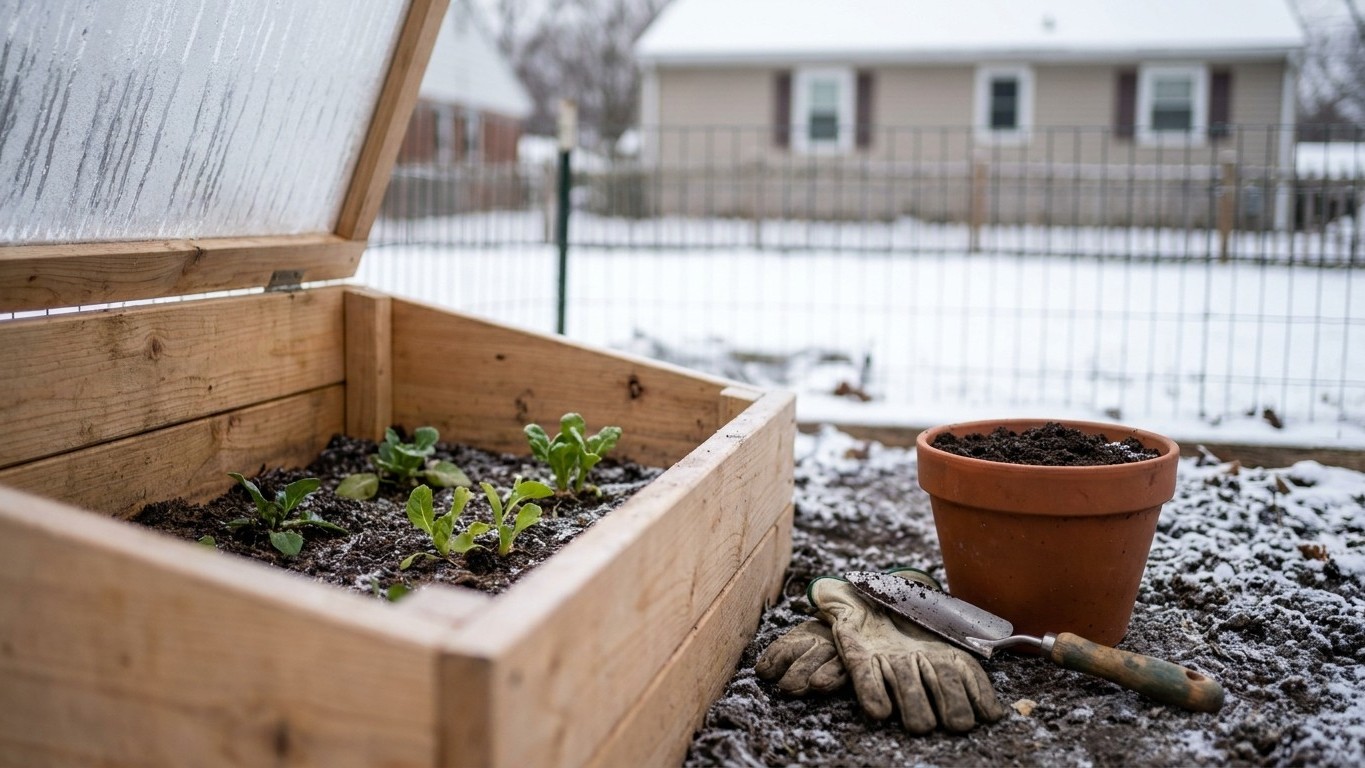

Short answer: almost nothing goes into open ground in a New Jersey garden in January. Soil is frozen or too cold to work across most of the state, and the last spring frost doesn’t arrive until March 29 to April 6 in the Newark area. What you can do is plant garlic and shallots where the ground is still workable, sow hardy greens under cover, put in dormant bare-root stock, and start onions and leeks indoors under lights.
What goes in the ground in January

For most of New Jersey, the honest answer is that nothing new goes into open, uncovered ground this month. The state sits in USDA hardiness zones 6a to 7b, and the reference frost data from the Newark airport station shows the last spring frost falling somewhere between March 29 and April 6. That’s nine to eleven weeks out from the start of January, and the ground itself, not the calendar, decides what’s possible. If soil is frozen solid or waterlogged from snowmelt, seeds sit and rot rather than sprout.
There is one real exception. Garlic and shallots ideally go in during October or November, but if you missed that window and a mild stretch has left the ground workable, both can still be tucked in now, especially in the milder zone 7b pockets of South Jersey along the Delaware Bay. Push the cloves in, mulch heavily with straw, and let them sit dormant until spring.
Beyond that, cold frames and low tunnels change the equation. Under a sheet of poly or a cold frame lid, you can direct-sow spinach, mache (corn salad), and claytonia, all of which germinate at soil temperatures most other crops won’t tolerate. These aren’t fast growers in January light, but they hold and slowly size up.
Dormant and bare-root planting
Bare-root fruit trees, raspberry and blackberry canes, and roses can go into the ground whenever the soil isn’t frozen or saturated, because the plant is fully dormant and isn’t asking for warmth, just a settled root zone. Many mail-order nurseries ship bare-root stock in late winter specifically for this window. If your ground is too hard to dig, heel the roots into a bucket of damp mulch in an unheated garage until conditions improve.
One more option that costs almost nothing: forcing rhubarb or chicory (Belgian endive) indoors in a dark box or basement corner. Both push tender, blanched growth in a matter of weeks using roots you already have.
What to start under cover
Seed starting this month has nothing to do with the date on the wall and everything to do with counting backward from that late March to early April frost window. Onions and leeks are the main candidates: they need 10 to 12 weeks of growth before transplanting, and because both go into the garden right around the last frost date rather than well after it, sowing them indoors under lights in early to mid-January lines up correctly.
Cole crops for an early spring planting, cabbage, broccoli, and their relatives, run 8 to 10 weeks from seed to transplant-ready size. Since these can go into the garden a couple weeks before the last frost (they tolerate light freezes), sowing in mid-to-late January puts transplants at the right size for a late-March or early-April planting date.
Peppers and eggplant are trickier. They need warm soil to go outside, so transplanting typically waits until two to three weeks after the frost window closes, pushing that date into late April or early May. Backing up 8 to 10 weeks from there lands seed-starting in late January to February, not right at the start of the month.
Tomatoes are the classic mistake. They only need 6 to 8 weeks indoors, and transplant timing is even later than peppers. Starting them in January means 12-week-old, rootbound, leggy seedlings by the time it’s safe to plant, stretched toward the nearest window and stressed before they ever see the garden. That’s the first failure mode: too early, and the plant outgrows its pot and its own stem strength. The second failure mode runs the other way, waiting so long that transplants go into the ground undersized and never catch up before the heat of summer stresses them.
What is ready to pick
Open, uncovered garden beds in New Jersey aren’t producing much in January, and there’s no point pretending otherwise. But a garden that was planned for winter isn’t empty either.
Kale, leeks, and Brussels sprouts that were left in the ground and mulched heavily in fall often survive under snow cover and can be harvested as needed, even after a hard freeze, since cold actually sweetens many of these crops. If the ground beneath the mulch isn’t frozen rock-hard, a fork will still lift leeks and parsnips. Check that the crown of each plant hasn’t rotted before you rely on it for dinner.
Cold frames and low tunnels sown back in fall are the more reliable source: spinach, mache, arugula, and tatsoi planted in September or October keep producing small harvests through winter, slowing down but not stopping, as long as the cover keeps wind and hard freezes off the leaves.
Indoors, sprouts and microgreens fill the gap completely on their own schedule, ready in days rather than months, and they don’t care what the thermometer outside says.
This is also the month to go through the root cellar or pantry stash. Potatoes, winter squash, and onions in storage should get a hands-on check: soft spots on squash, green sprouting on potatoes, or a papery onion that’s gone soft at the neck are all signs to use that item now rather than let it take down its neighbors in the bin.
The jobs that matter this month
A garden without fresh growth is not a garden with nothing to do. January carries some of the most consequential jobs of the whole year, precisely because they have to happen before the plants wake up.
Dormant pruning tops the list. Apple, pear, and stone fruit trees, along with grape vines and raspberry canes, are pruned while leafless and dormant, when you can actually see the branch structure and won’t be cutting into active sap flow or fresh growth. Wait too long and swelling buds make every cut riskier for the plant.
Seed ordering belongs here too, and it’s not a minor errand. Popular varieties, especially open-pollinated and heirloom types, routinely sell out by February. Ordering now means getting the varieties you actually want rather than whatever’s left.
Soil testing is worth doing while there’s nothing growing to disturb. New Jersey gardeners can send samples to the Rutgers Cooperative Extension soil testing lab and get results back in time to amend beds before spring planting, rather than guessing.
Round out the month with the jobs that keep getting pushed off: turning the compost pile so it keeps working through the cold, cleaning and sharpening pruners and shovels before the spring rush, patching fencing and raised bed frames while the ground is bare, and sketching out crop rotation so beans and squash don’t land in the same spot as last season’s legumes and vine crops.
What not to do in January
The most common mistake this month is trusting a warm afternoon over the soil itself. A 55-degree day in January can feel like spring, but four inches down the soil is still cold and often still wet from snowmelt. Direct-sowing beans, corn, or squash into that soil doesn’t get you an early start, it gets you rotted seed and a bare patch to resow later.
A related mistake: pulling mulch or row cover off overwintered crops the moment a mild stretch arrives. Warmth under cover, plus the mild air, wakes plants up and pushes tender new growth, which then gets hit hard when the next freeze rolls back in, and it will. Leave the winter protection in place until the frost pattern actually shifts, not after one warm week.
Nitrogen fertilizer is the other trap. Dormant plants, whether fruit trees, garlic, or overwintered greens, aren’t in an active growth phase and can’t use nitrogen applied now. It either leaches away with winter rain and snowmelt or, worse, pushes a flush of soft new growth that a hard freeze then kills outright. Hold nitrogen applications until plants are visibly active again in spring.
Starting warm-season transplants too early rounds out the list, covered above but worth repeating here as a standalone warning: a tomato or pepper seedling started in January, well ahead of the 8-to-10-week window that actually applies to it, spends an extra month cramped in a small pot, and that stress shows up later as a weaker, slower-fruiting plant.
Checking this against your own county
Every figure in this article comes from one reference point, the Newark airport weather station, and New Jersey is too varied a state for one station to speak for all of it. The USDA hardiness range for the state runs from 6a to 7b, and that spread alone means several weeks of difference in frost timing between the higher, colder ridges of Sussex and Warren counties in the north and the milder Delaware Bay shore counties in the south. Elevation, and how close a garden sits to open water, both shift the real frost window at your own address, later in spring and earlier in fall than the airport figures suggest.
Before committing to a planting date based on this page, check the Rutgers Cooperative Extension for county-level guidance and planting calendars tuned to your part of the state.
Common questions
Can I plant garlic in New Jersey in January?
It’s not the ideal window, fall planting is preferred, but if the ground remains workable and unfrozen, garlic and shallots can still go in, particularly in the milder South Jersey counties. Mulch heavily right after planting.
What vegetables can survive winter in a New Jersey garden?
Kale, leeks, and Brussels sprouts often make it through under a heavy mulch layer, and spinach, mache, arugula, and tatsoi can keep producing small harvests under a cold frame or low tunnel through the coldest months.
When should I start seeds indoors in New Jersey?
It depends entirely on the crop’s number of weeks to transplant size and how that lines up with the last frost window of March 29 to April 6 at the Newark reference station. Onions and leeks (10 to 12 weeks) and cole crops (8 to 10 weeks) are the earliest candidates, generally starting in January; tomatoes need only 6 to 8 weeks and are better started in February.
Is it too late to prune fruit trees in January?
No, January sits right in the middle of the ideal dormant pruning window. Prune before buds swell and while you can clearly see branch structure on a leafless tree.