
Answer: in December, New Jersey’s ground is closed for new outdoor seeding across nearly the entire state. First fall frost has already passed for most gardens (the reference-station window runs November 4 to November 16), and soil temperatures are too cold for germination. What actually happens now is dormant planting, protected structures, and indoor sowing timed off the coming spring, not the calendar.
What goes in the ground in December

Soil temperature, not the date on the wall, decides what survives. By December, ground temperatures across New Jersey’s USDA zones 6a to 7b have dropped well below the 40-50F range most seeds need to germinate, and in the state’s northwest highlands the top few inches are often frozen solid. So the honest answer for most of the state, most of the month: nothing new goes into open, unprotected ground.
That doesn’t mean the garden is finished. A few things still move dirt this month, and where they work depends heavily on which part of the state you’re in.
- Garlic and shallots — if you missed the fall window and the ground in South Jersey or along the coast (zone 7b) is still workable, a late planting can still root before hard freeze. In the northwest highlands (zone 6a), skip it; the soil is likely already locked.
- Cold frames and low tunnels — hardy greens sown back in fall (spinach, mache, claytonia) keep growing slowly under cover, and you can still set out started transplants of the same crops if the frame’s interior soil hasn’t frozen.
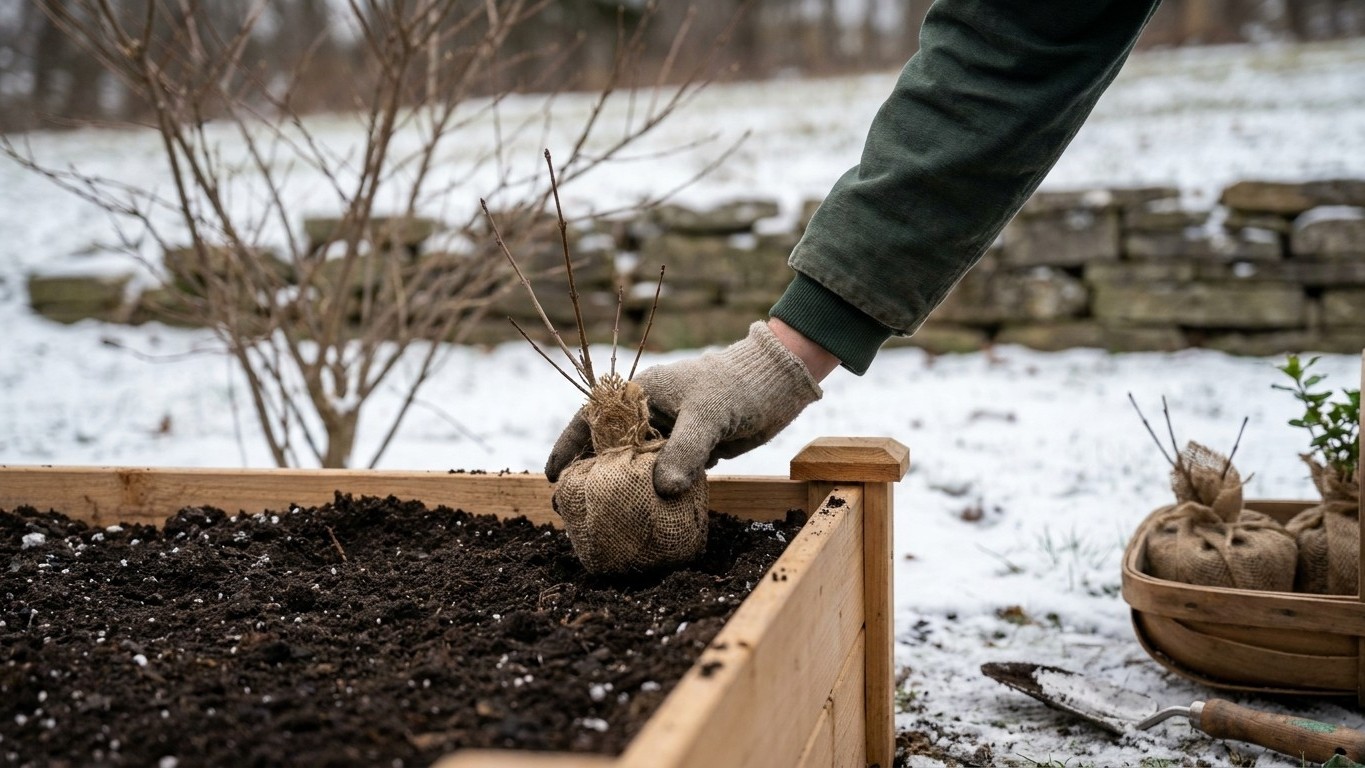
- Bare-root and dormant stock — bare-root fruit trees, roses, and brambles can go in on any day the ground isn’t frozen, mostly a South Jersey option this late in the year.
- Forced chicory and rhubarb — dig dormant roots dug earlier and force them indoors in a dark, cool spot for a harvest of Belgian endive or early rhubarb stalks with no outdoor risk at all.
Everything else waits. Trying to push a direct-sown crop into December ground in New Jersey is a fight against frozen soil the seed simply can’t win.
What to start under cover
December sowing indoors isn’t timed by the calendar either. It’s timed backward from the reference last-spring-frost window of March 29 to April 6, and that arithmetic changes what makes sense to start now versus what should wait.
Onions and leeks are the two crops where the math points to December or January. Both need 10 to 12 weeks of indoor growth before they’re sturdy enough to transplant, and both go outside a few weeks before the last frost date since they tolerate cold soil. Counting back from early April, that lands seed-starting squarely in the December-January window, especially for gardeners in the state’s colder interior who want transplants ready the moment the ground thaws.
Peppers, eggplant, and other heat-lovers are a different story. They transplant only after all frost risk has passed and the soil has genuinely warmed, weeks later than onions. Starting them now, in December, sets up the classic failure mode: an 8-week-old pepper seedling has nowhere to go for months, and it becomes rootbound and leggy on a windowsill long before the garden is ready for it.
The other failure mode runs the opposite direction. Wait too long to start long-season crops like leeks or celery, and there isn’t enough calendar left between the last frost and the demands of a New Jersey summer to bring them to size. December’s short days also mean natural light alone rarely cuts it; supplemental grow lights keep onion and leek starts from stretching thin as they reach for a weak winter sun.
What is ready to pick
Outdoors, December harvests are thin across New Jersey, and that’s simply the season, not a failure of planning. What’s still coming out of the ground is what was planted months ago and built to take a freeze.
Overwintered kale, leeks, parsnips, and Brussels sprouts can still be dug or cut as long as the soil around them isn’t frozen rock-hard; a light snow cover actually insulates roots and can make digging easier than a bare, iron-hard bed. Parsnips in particular sweeten after a freeze, so a December dig often tastes better than one from October.
Cold frames carry the rest of the fresh picking: lettuce, spinach, mache, and claytonia sown in fall keep producing small, steady cuttings through the month if the frame is vented on sunny days to avoid cooking the plants inside. Indoors, sprouts and microgreens fill the gap for households wanting something fresh and fast, ready in one to two weeks with no outdoor risk at all.
The other job this month is checking what’s already in storage. Squash, potatoes, and onions put up in fall need a walk-through every couple of weeks: soft spots, a sweet fermented smell, or sprouting eyes mean that item gets used now, before it takes the rest of the bin with it.
The jobs that matter this month
December carries plenty of weight even without new plantings, and skipping these jobs costs real ground come spring.
In the orchard and berry patch
Dormant pruning of apple, pear, and peach trees, along with brambles, is best done once leaves are fully down and the plant is truly asleep, and December delivers exactly that window across New Jersey. Pruning now, while wood is bare and structure is easy to see, sets the shape and fruiting wood for the coming season; wait until buds swell in late winter and you’re cutting into growth the tree has already invested in.
Planning and soil work
This is also the month to order seed. Popular varieties, especially onions and other slow starters gardeners are sowing right now, sell out by late winter, and ordering early avoids settling for a second-choice cultivar. Pair that with planning next season’s crop rotation on paper while the beds are empty and the mistakes of the last season are still fresh.
Soil testing fits naturally into a quiet month. New Jersey gardeners can send samples through Rutgers NJAES for a read on pH and nutrient levels, giving amendments time to work into the soil before spring planting instead of scrambling in March.
Maintenance that pays off later
Turning the compost pile keeps it breaking down instead of freezing solid into an unusable block. Tools cleaned, sharpened, and oiled now avoid rust damage from a winter left in a damp shed. Raised beds, fencing, and cold frame hinges are easier to repair with no crops in the way, and it’s far less frustrating than discovering a broken bed frame in the middle of spring planting.
What not to do in December
The classic December mistake in New Jersey is reading a mild, sunny afternoon as a green light. Air temperature in the 50s doesn’t mean the soil has warmed to match; ground several inches down holds cold far longer than the air above it, and any seed sown on the strength of a warm afternoon usually just rots in place.
A close second: uncovering mulched garlic, perennials, or cold frames too eagerly after a warm stretch. New Jersey winters swing hard, and a plant or shoot exposed during a mild spell can be caught by the next freeze with no protection left. Once mulch is down for winter, it stays down until active spring growth is clearly underway, not until the weather feels nice for a day or two.
Nitrogen fertilizer is another trap. Feeding beds or overwintering greens now pushes soft, tender new growth right when a hard freeze is most likely to hit it, wasting both the fertilizer and the plant tissue it produced. Hold nitrogen until active growth resumes in spring, when the plant can actually use it.
Finally, don’t ignore snow load on cold frames and low tunnels. Heavy, wet snow left to accumulate can collapse hoops and frames overnight; a quick brush-off after a storm costs five minutes and saves a rebuild.
Checking this against your own county
A state-wide December guide is a starting point, not an instruction for your specific yard. New Jersey spans USDA hardiness zones 6a to 7b, and the frost windows cited here come from a single reference weather station; elevation in the northwest highlands, coastal moderation along the Shore, and the general north-south split across the state can shift real frost dates by a week or two in either direction, and suburban and rural gardens away from that station often see frost earlier in fall and later in spring than the airport-based figures suggest.
For county-level guidance and New Jersey’s own planting calendars, the Rutgers Cooperative Extension (NJAES) is the reliable next stop.
Common questions
Can I still plant garlic in New Jersey in December?
Only where the ground remains workable, mainly in South Jersey and coastal zone 7b areas. In the colder northwest highlands (zone 6a), soil is typically already frozen by December, and garlic should have gone in during fall.
Is it too late to start onions from seed in December?
No. Onions need 10 to 12 weeks indoors before transplanting, and counting back from the last-frost window of March 29 to April 6, a December or January start lines up well for gardeners with grow lights.
Why shouldn’t I fertilize my beds in December?
Nitrogen applied now can trigger tender new growth right before a hard freeze, damaging the plant and wasting the fertilizer. Wait until spring growth resumes so the plant can actually use it.
What can I still harvest in a New Jersey garden in December?
Overwintered kale, leeks, and parsnips if the soil isn’t frozen solid, plus anything growing under a vented cold frame, like mache, spinach, or claytonia. Check stored squash, potatoes, and onions regularly for soft spots or sprouting.
Gardeners who plant by the Moon can check the December 2026 moon planting calendar, a tradition rather than a proven method.