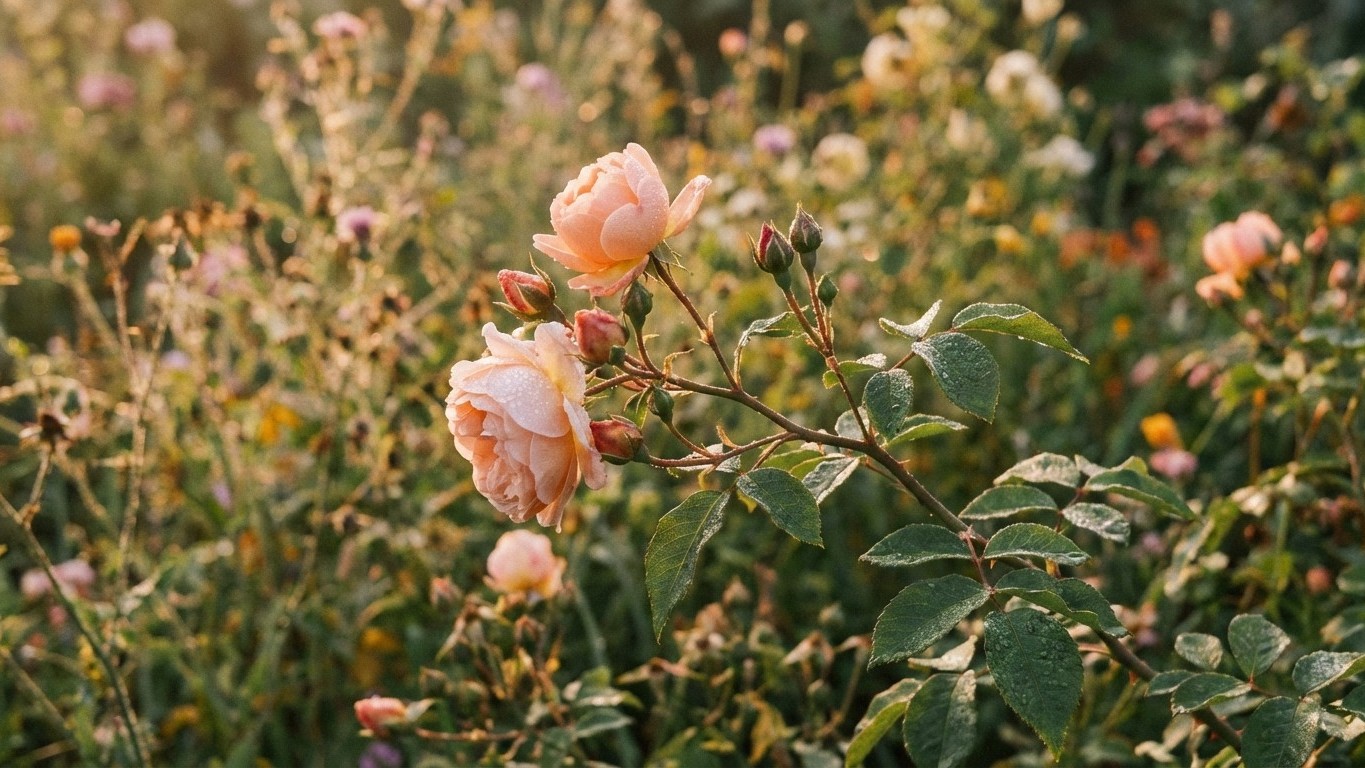

Plant bare-root roses in New Jersey as soon as the soil can be worked, usually March into early April. Set out container roses from mid-April, after the last frost has passed. Choose disease-resistant shrub or climbing types, give them at least six hours of direct sun, and expect two Rutgers-listed pests, spotted lanternfly and cucumber beetles, to show up between May and frost. The details below follow the calendar. For the broader plant profile, see How to Grow Roses: The Complete Guide.
When to plant Roses in New Jersey
The reference point here is Newark, where the NOAA NCEI U.S. Climate Normals for 1991-2020 put the last spring freeze (32°F) between March 29 and April 6. That range is the 30 to 70 percent probability band at the Newark airport station, so it describes a typical year at one weather station, not a promise for the whole state. Suburban and rural yards usually see the last spring frost one to two weeks later, and northern or higher-elevation parts of New Jersey run later still. Your county’s date, not Newark’s, is the one to plan around. You can see the raw numbers in the NOAA NCEI normals file.
Roses break the usual vegetable-garden script in one way: there is no seed-starting stage. Named garden roses are grafted or grown from cuttings, and roses grown from seed rarely match the parent plant and take years to bloom. So the planting calendar has two tracks, bare-root and container.
Bare-root roses: plant while dormant
Bare-root plants arrive leafless and dormant from late winter into spring, and they want to go into the ground before the buds swell. Dormant canes tolerate a frost, so you do not have to wait for your last frost date. The real test is the soil: if a handful crumbles instead of smearing into a wet ribbon, and the ground is no longer frozen, plant. In practice that means late March to mid-April for most of the state, later in the northern counties. Soak the roots in a bucket of water for several hours (overnight is fine) before planting. Do not leave them there for days.
Container roses: count back from your frost date
Roses sold in pots are already leafed out, so they should go in after the last frost. Start with the Newark figure of April 6, add one to two weeks for a typical suburban yard, and you land on roughly April 13 to April 20. Nursery plants often come from a greenhouse or sheltered sales yard, so harden them off for 7 to 10 days. Counting back, begin setting pots outdoors around April 3 to April 13, starting with a few hours in shade and working up to full sun and wind. Farther north or at elevation, shift every date later by the same extra week or two.
Fall planting and today’s date
A common rule of thumb is to get roses in the ground at least six weeks before the first hard freeze, so roots can establish. Newark’s first fall freeze falls between November 4 and November 16 in the same NOAA normals. Counting back six weeks gives about September 23 to October 5 at that station, and earlier for suburban yards that freeze sooner. With today being October 9, that window has mostly closed for this year. A container rose bought now can still go in the ground (water it well and mulch it), but a spring planting will usually give better results.
Soil and site preparation
Six hours of direct sun is the minimum, and morning sun matters most. It dries dew off the leaves early, which is the single best defense against black spot and powdery mildew in New Jersey’s humid summers. A spot against a south or east wall works, provided there is a foot or two of air space behind the plant.
Drainage decides more than soil type. Roses tolerate clay, loam and sandy soil alike, but they will not tolerate standing water around the crown. To check, dig a 12-inch hole, fill it with water, let it drain, then fill it again. If water is still sitting there after several hours, either plant in a raised bed or choose another site. Heavy clay, common in parts of central and northern New Jersey, drains better when you mix in compost across the whole bed rather than only in the planting hole. A hole of amended soil in unamended clay behaves like a flowerpot with no drainage hole.
Roses generally prefer a slightly acidic soil, around pH 6.0 to 6.5. A soil test tells you where you stand and whether lime or sulfur is needed, and amendments take weeks to months to shift pH, so test in the fall or in March, not the week you plant. Rutgers handles soil testing through the county offices (see Local help below). Dig the bed 12 to 18 inches deep, work in two to three inches of compost, and let it settle for a couple of weeks before planting.
Spacing depends on the type. Compact shrub and groundcover roses do well about 3 feet apart, large shrub roses and hybrid teas 3 to 4 feet, and climbers about 8 feet from the next climber or tall shrub. Crowding turns into a mildew problem. Keep roses a few feet from big trees as well, since tree roots win every contest for water and nutrients.
On planting day, dig the hole wide, about 18 inches across and deep enough for the roots to spread without bending. On grafted roses, set the bud union (the knob where the canes meet the rootstock) an inch or two below the soil line in New Jersey winters, which gives it some insulation. Firm the soil, water slowly and deeply, and mound mulch around the canes of a bare-root plant until buds push.
Varieties that suit New Jersey
Four traits count most for New Jersey: disease resistance, since black spot and powdery mildew thrive in humid summers; winter hardiness, which varies with how far north you are; repeat bloom, so you get flowers from late spring to frost; and growth habit, because a rose that outgrows its spot gets pruned hard and sulks. Check the hardiness zone on the plant tag against your own county before you buy.
The varieties below are widely sold in nurseries and online. The notes describe traits as breeders and growers commonly report them, not any institution’s recommendation.
| Rose | Type | Traits | Good for |
|---|---|---|---|
| Knock Out (and related series) | Shrub | Repeat bloom, strong resistance to black spot, self-cleaning blooms | Low-maintenance borders, beginners |
| Carefree Beauty | Shrub | Cold hardy, repeat bloom, hips in fall | Mixed beds, northern counties |
| Iceberg | Floribunda | Prolific white blooms, vigorous, may need mildew watching in humid years | Cutting, hedging, front beds |
| Drift series | Groundcover | Compact and spreading, repeat bloom, tolerates being cut back | Slopes, container plantings, edging |
| William Baffin | Climber | Very winter hardy, once-heavy bloom with some repeat | Fences and trellises in colder areas |
| New Dawn | Climber | Vigorous, healthy foliage, repeat bloom | Arbors and porch posts |
| Rugosa roses | Shrub | Tough, tolerant of salt spray and poor soil, reliable hips | Shore properties, sandy ground |
One caution on the disease-resistant shrub roses: resistance to black spot is not immunity to everything. Rose rosette disease, spread by a tiny mite, affects many roses in the eastern United States, including the popular shrub types, and no variety is a guarantee. Resistant varieties lower your workload, but you still need to look at your plants every week.
What to plant alongside
Good companions for roses work mostly through structure, not chemistry. Low, spreading perennials such as catmint, hardy geraniums and lavender cover the bare soil at the base of the plant, shading the roots and cutting down the mud that splashes black spot spores onto lower leaves. Catmint blooms at the same time as early roses and draws pollinators into the bed. Lavender wants even better drainage than roses do, so give it a raised corner.
Alliums, including garlic, chives and ornamental onions, are the classic rose companion, and the story goes that their smell confuses aphids. The evidence is thin, so treat it as a pleasant bonus and not a pest plan. French marigolds have shown some ability to suppress certain soil nematodes when grown as a full cover crop before planting, but a few tucked around an established rose will not do much.
What to avoid is easier to defend. Do not plant anything aggressive within the root zone, since tall grasses, mint and vigorous ground covers will outcompete a young rose. Keep other plants prone to powdery mildew (phlox, bee balm and some zinnias) from crowding the canes, because they share the disease. Anything tall and dense in front of the rose cuts airflow and keeps leaves wet. Leave a gap of a foot or more around the base of the plant so you can mulch, prune and inspect.
Watering, feeding and support
Water deeply and infrequently. One inch per week, from rain plus the hose, is a good starting point for established roses, and new plants may need it twice as often during their first summer. Put the water at the base, in the morning, and keep it off the leaves. A soaker hose or a slow trickle from a hose end does this well. A frequent light sprinkle keeps the roots shallow, which makes the plant weaker in the first dry spell.
Mulch matters as much as watering. Two to three inches of shredded bark or compost holds moisture, moderates soil temperature and suppresses weeds. Keep it a few inches back from the canes so the base stays dry. Refresh it each spring after pruning, and clear old leaves out from under the plant in fall, since black spot overwinters on fallen foliage.
For feeding, a balanced rose or all-purpose fertilizer goes on when new growth starts in spring, and again after the first flush of bloom. A third light feeding in midsummer is fine for repeat bloomers. Stop by early September in New Jersey, since late feeding pushes soft growth that winter will kill. Compost worked into the soil in spring covers a lot of the nutrition for little effort.
Pruning follows two rules. For most roses, prune in late winter or early spring, when buds begin to swell, taking out dead, damaged and crossing canes and cutting the rest back to just above an outward-facing bud. Roses that bloom only once a year, including many old garden roses and ramblers, should be pruned right after flowering, since they bloom on last year’s wood. Climbers also need support: tie canes to a trellis or wire as close to horizontal as practical, because horizontal canes produce more flowering shoots than vertical ones.
On grafted plants, shoots that rise from below the bud union are rootstock suckers. They typically have seven or more leaflets and different foliage than the rest of the plant. Pull them off at the base instead of snipping them mid-stem, and do it early.
Common problems
Black spot is the one most New Jersey rose growers meet. It shows as round black patches with fringed edges on the upper leaf surface, followed by yellowing and leaf drop, usually from midsummer on. It spreads when leaves stay wet. Remove affected leaves, clean up fallen ones, water at the base, and open up the plant for airflow. Resistant varieties help, and fungicide is a backup for susceptible types.
Powdery mildew looks like white, flour-like dust on young leaves and buds, which often curl and distort. It likes warm days, cool nights and crowded plants. Better spacing and morning sun do most of the work, and a spray of fungicide at the first sign helps if that fails.
Rose rosette disease has no cure. Look for witches’ broom (a dense cluster of distorted shoots), unusually red, oversized new growth, and an excess of thorns. Infected plants should be dug out, roots included, and discarded rather than composted. Pruning does not clear it.
Few or no blooms usually come down to too little sun, too much nitrogen (lots of leaves, few flowers) or hard pruning at the wrong time on a once-blooming rose. Dieback on canes after winter is usually cold damage, and the fix is to cut back to green wood in spring. Yellowing leaves with green veins point to poor drainage or a pH problem, which is where the soil test pays off.
Aphids cluster on soft new growth and buds and can usually be knocked off with a strong spray of water. Japanese beetles and spider mites are common rose pests in the eastern United States more broadly, though they are not on the Rutgers list used in this guide, so ask your county office how heavy they run near you.
Pests that actually show up in New Jersey
The Rutgers NJAES publication FS1123, Vegetable Insect Control for Home Gardens names Colorado potato beetle, tomato and tobacco hornworm, bean leaf beetle, striped and spotted cucumber beetles, common and spotted asparagus beetles, Mexican bean beetle and spotted lanternfly. It is written for vegetable plots, so most of that list is about crops roses are not. Two entries do matter in a rose bed. Pressure varies across the state, and your county office can identify anything unusual.
Spotted lanternfly
Nymphs hatch around mid-May. The first thing you see is small, black, white-spotted insects hopping on stems and leaves, turning red and black as they grow. Adults arrive in late July and stay until frost, and they leave sticky honeydew that grows sooty black mold on canes and leaves. Roses are not the favorite host, but they do get visited. The control that works best is to scrape egg masses off bark and walls in winter, before the May hatch. Adults and nymphs can be squashed by hand or knocked into soapy water.
Spotted and striped cucumber beetles
Cucumber beetles emerge in early May once temperatures are above 60°F, with a second generation in midsummer. What you see are yellow-green (spotted) or yellow and black-striped (striped) beetles inside open blooms, chewing ragged holes in petals. The simplest control is hand-picking in the cool morning, when they are sluggish, and dropping them into soapy water. Cut blooms that are already damaged and discard them, since beetles are attracted to them.
If something is chewing your rose and you cannot name it, take a photo or sample to the county extension office before you reach for a spray.
Harvest and end of season
Cut roses in the early morning, when stems are full of water. Pick buds that are just starting to open, with petals loosening but not flat, and cut at a slant just above a five-leaflet leaf. That placement encourages a new flowering shoot from the node below. Plunge stems into a bucket of lukewarm water right away, strip leaves that would sit below the waterline and recut under water at the vase. Most cut roses last several days to a week indoors.
On varieties that make hips, such as rugosas and Carefree Beauty, leave the last flush of blooms uncut in early fall. The plant will set hips, which are colorful, feed birds and signal the rose to slow down for winter. Deadheading through late summer is fine. Stop around a month before your first frost.
The first fall freeze at Newark falls between November 4 and November 16 in the NOAA NCEI normals, and suburban and rural gardens often see it one to two weeks earlier. Get ahead of it. Clear fallen leaves, give the bed one deep watering if fall has been dry, and wait for the ground to cool and a few hard freezes before mounding. Pile 8 to 10 inches of mulch or compost over the base of grafted roses to protect the bud union. Tie up long climber canes so winter wind does not whip them. Save the pruning for spring.
Local help
Dates and conditions shift from county to county, and a spot a few miles inland can be a week behind the coast. Rutgers Cooperative Extension offers county offices that can confirm your planting window, test your soil and identify pests from a photo or sample. For more state-level information, see our New Jersey guides.
Common questions
What is the best month to plant roses in New Jersey?
For bare-root roses, late March to mid-April, as soon as the soil can be worked. For container roses, mid-April to early May, once the last frost has passed. Newark’s last freeze falls between March 29 and April 6, but suburban and northern gardens run later.
Can I plant roses in the fall in New Jersey?
Yes, but earlier is better. A common rule is at least six weeks before the first hard freeze. Newark’s first fall freeze falls between November 4 and November 16, so late September to early October works at that station and earlier in colder areas. Planting later is a gamble, so mulch heavily if you do.
Which roses need the least care in New Jersey?
Disease-resistant shrub roses such as the Knock Out and Drift series, plus rugosas, are the usual low-maintenance choices. They still need sun, airflow and water in dry spells, and resistance does not cover every disease.
Are spotted lanternflies a problem for roses?
They can show up, and Rutgers lists the insect among the pests for home gardens. Nymphs hatch around mid-May and adults appear from late July until frost. Scraping egg masses before hatch is the most useful control. Roses are rarely their preferred host.
Why are my rose leaves covered in black spots?
That is almost certainly black spot, a fungus that spreads when leaves stay wet. Remove infected leaves, clear fallen ones, water at the base and thin crowded canes. If it recurs every year, move to a more resistant variety.