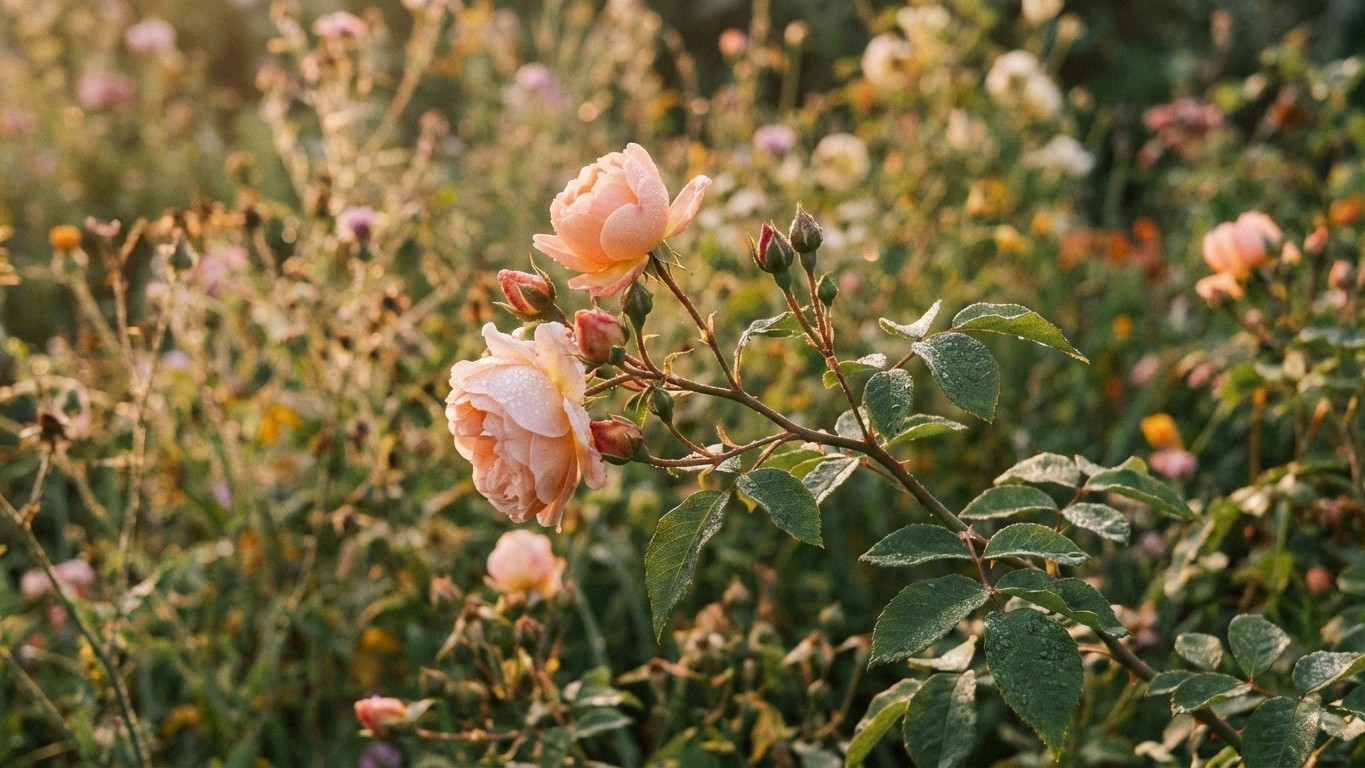

In Albuquerque, the reference city for the frost dates below, container roses can go into the ground once the last spring freeze has passed, somewhere between March 31 and April 12. Bare-root roses go in earlier, while still dormant. Cold is rarely the real obstacle here. Alkaline soil, dry air, wind and strong sun decide whether a rose thrives, which makes site and variety matter more than the calendar. This page is part of our New Mexico guides and builds on How to Grow Roses: The Complete Guide.
When to plant Roses in New Mexico
The frost numbers come from the weather station at the Albuquerque airport. The NOAA NCEI U.S. Climate Normals 1991-2020 put the last 32°F freeze between March 31 and April 12 (the 30-70% probability band). The first fall freeze lands between October 29 and November 9. Those are reference-city figures, not a statewide promise. Suburban and rural gardens usually freeze later in spring and earlier in fall than an airport does, often by one to two weeks, and more at elevation. Gardeners in Santa Fe, Los Alamos, Taos and other northern or high-elevation spots should push every date below later. Your county Extension office can tell you how far.
Bare-root and container roses
Most New Mexico gardeners buy plants rather than raise them from seed. Bare-root roses, sold dormant in late winter, should go in before they leaf out. In the reference city that means the weeks leading up to the frost band, when the soil is workable but the plant is still asleep. The roots establish while the weather is cool, so the first summer heat doesn’t hit a plant with no root system.
Container roses are more forgiving. Plant them after the late end of the frost band (April 12 in Albuquerque), or a week or two later in a colder garden. Fall planting also works if it’s early enough for roots to settle before the ground freezes, which in the reference city means well ahead of October 29.
Starting from seed: the count-back
Seed is the slow road, and a hybrid tea grown from seed won’t match its parent. If you want the experiment, the arithmetic runs backward from the transplant date. Say you plan to set seedlings out on April 15, a few days after the late edge of the frost band. Hardening off takes 7 to 10 days, so start moving the trays outdoors on April 5: a few hours of shade, then longer stretches, then sun. Seedlings need roughly eight weeks indoors, so sowing lands around February 18. Rose seed also needs a cold, moist rest first. Eight weeks in a refrigerator puts the start of that chill near December 24.
Expect a small plant by April and flowers later, maybe not until the following year. Treat the whole project as a hobby.
Soil and site preparation
Roses want six or more hours of direct sun, but New Mexico’s afternoon sun is harsh. An east-facing spot with morning sun and some late-day relief keeps blooms from bleaching and leaves from scorching. A wall that blocks prevailing wind helps just as much. Wind dries canes faster than a hose can refill them.
Texture comes next. Many New Mexico soils run sandy, rocky or heavy with clay, and they tend to be alkaline with little organic matter. Alkaline soil locks up iron, which shows up later as pale leaves with green veins. Sand drains too fast and clay holds water too long, so the fix for both is the same: compost, and plenty of it. Do not trust a quick guess about your soil. A lab test through your New Mexico State University Extension county office gives you a real pH and nutrient reading for a few dollars.
Start the work four to six weeks before planting. Loosen the bed about 18 inches deep, wider than the root ball, and fold in several inches of finished compost. If the test calls for sulfur or iron, applying it early gives it time to act. Dig the hole wide, not deep, and keep amendments mixed through the whole bed so roots don’t circle in a rich pocket and refuse to leave it.
Test drainage before you commit. Fill the hole with water, let it drain, then fill it again. If it still stands after several hours, build a raised bed or choose another spot.
Space hybrid teas and floribundas about 3 feet apart, shrub roses 4 to 5 feet, and climbers 6 to 8 feet from the next plant. Crowding traps humid air around the leaves, and even dry states get powdery mildew from that. Set the graft union (the swollen knob on grafted roses) at or just above the soil line in warmer areas. In colder gardens, bury it an inch or two for winter protection.
Varieties that suit New Mexico
Start with traits, because the catalog photo tells you nothing about how a rose handles a 95°F afternoon or a January night in the teens. Four traits matter most here: heat and sun tolerance, cold hardiness (especially at elevation), disease resistance, and bloom habit. Repeat bloomers flower from late spring until frost, while once-bloomers put on one big show. Own-root roses (grown on their own roots, not grafted) send up the same rose even if the top dies back in a hard winter. Grafted plants don’t.
The table below lists widely sold roses that carry those traits. It reflects general horticultural reputation, not an endorsement from any university or agency. Check your own elevation before buying.
| Rose | Type | Trait that matters | Good for |
|---|---|---|---|
| Knock Out series | Shrub, repeat bloom | Heat tolerance, strong disease resistance | Low-fuss hedges and beginners |
| The Fairy | Polyantha, repeat bloom | Tough, compact, tolerant of neglect | Borders, containers, slopes |
| Carefree Beauty | Shrub, repeat bloom | Hardy, disease resistant | Cooler, higher-elevation gardens |
| Mutabilis | China rose, repeat bloom | Loves heat, changing flower color | Warm, sunny, low-elevation yards |
| Zephirine Drouhin | Climber, repeat bloom | Thornless canes, fragrance | Fences and walkways |
| Hansa (a rugosa hybrid) | Shrub, repeat bloom | Cold hardiness, fragrance, hips | Colder, higher gardens |
| Rosa woodsii | Native shrub, once-blooming | Adapted to the region, low water once established | Wild-looking plantings, pollinators |
Hybrid teas such as Peace can do well in New Mexico, but they ask more: regular feeding, deep watering and winter protection. If you want a tight rose garden that photographs beautifully, they’re worth the work. If you want flowers without weekly attention, lean toward shrub roses and own-root plants.
Heat-tolerant picks overlap with what works farther south, as we cover in Growing Roses in Arizona: Planting Dates, Varieties and Local Pests. Humid-climate gardeners deal with a different set of fungal problems, which Growing Roses in North Carolina: Planting Dates, Varieties and Local Pests covers.
What to plant alongside
Good neighbors for roses share their appetite for sun and well-drained soil. Lavender, catmint (Nepeta), sage, Russian sage and yarrow all like the same dry, bright conditions and tolerate summer heat. Their flowers draw bees and beneficial insects such as lady beetles and lacewings, which prey on aphids. Catmint is especially useful: it blooms for weeks, spills over the base of a rose, and shades bare soil that would otherwise bake.
Low ground covers like creeping thyme do some of the same work. They shade the soil, hold moisture, and keep weeds from taking hold. Keep them a foot or so from the crown so air can still move through the base of the rose.
Garlic and chives get cited for repelling aphids, and the folk wisdom is old. The evidence is thin, mostly anecdotal. Plant them if you like the flowers and the harvest, but don’t count on them as pest control. The same goes for marigolds, whose proven value (against certain nematodes) comes from dense plantings in vegetable beds, not a few plants beside a rose.
Some neighbors cause trouble. Lawn is the biggest. Turf competes for water and nitrogen, and sprinkler overspray on rose leaves invites mildew. Keep grass at least 2 to 3 feet from the canes, or use a mulched border. Large trees with greedy roots take moisture the rose needs. Plants that need frequent irrigation, such as many annuals, will push you to water the rose on the wrong schedule.
One pairing deserves caution. Spotted cucumber beetles, on the NMSU pest list for home gardens, chew flowers as well as vegetable foliage. Putting a squash patch right beside your best roses gives them an easy move from one to the other. Give the two some distance.
Watering, feeding and support
New Mexico roses die more often from shallow, frequent watering than from drought. A good soak reaches 12 to 18 inches down and pulls roots deep, where the soil stays cooler. In summer heat, a deep soak once or twice a week usually beats a daily sprinkle, though sandy soil needs more frequent watering than clay. Drip irrigation or a soaker hose keeps water at the roots and leaves dry. Water in the morning. A new rose needs more attention for its first season, with the soil checked by hand a few inches down before each watering.
Mulch is cheap insurance in a dry state. Spread 3 to 4 inches of wood chips or shredded bark over the root zone, then pull it back a few inches from the canes so the crown doesn’t stay damp. Mulch slows evaporation and keeps roots cooler, and it suppresses the weeds that shelter some pests.
Feed when growth starts in spring, with a balanced rose fertilizer or compost, and again after the first big flush of bloom. Because alkaline soil ties up iron, a chelated iron product can green up pale leaves faster than extra nitrogen will. Stop feeding about six weeks before the first fall freeze. In the reference city that lands around mid-September (the freeze band begins October 29), and sooner for northern gardens. Late feeding pushes soft growth that frost will kill.
Prune in late winter, as buds swell and the worst cold has passed. Cut out dead, damaged and crossing canes, then shape the plant. Wait until after the show to prune once-blooming roses, since they flower on last year’s wood. Deadhead repeat bloomers through the season to keep them producing.
Watch for suckers. On grafted roses, shoots arising from below the graft come from the rootstock and have different leaves, usually seven leaflets instead of five. Pull them from their base, not snipped at the surface. Tie climbers loosely to a trellis or wire, training long canes closer to horizontal to encourage flowering along their length.
Common problems
Yellow leaves with green veins are the classic New Mexico rose complaint. That’s iron chlorosis, caused by high pH, not by a lack of iron in the soil. Chelated iron gives a quick fix, and sulfur and compost work on the cause over a longer stretch.
White powder on young leaves and buds is powdery mildew. It likes cool nights and warm days, and thrives in crowded, still air even where rainfall is low. Thin crowded canes, water at the base, and treat early with a labeled fungicide if it keeps returning. Black spot, with dark, fringed blotches and yellowing leaves that drop, needs wet foliage. It’s less common in dry areas but shows up in wet summers or with overhead watering. Pick up fallen leaves and avoid wetting the foliage.
Blind shoots, stems that grow but never make a bud, come from low light, cold nights, or damage to the growing tip. Cut them back to the next healthy five-leaflet leaf. A rose that produces mostly leaves is usually telling you it needs more sun or more consistent water.
Brown, crisp leaf edges often mean wind scorch or uneven watering, especially during hot, dry spells. A windbreak and deeper soaking help. Canes that blacken or die back after winter reflect cold damage, sometimes helped along by winter dryness. Wait until leaves emerge, then cut back to green wood. If a rose dies to the ground, an own-root plant will usually regrow true to type, while a grafted one may come back as the rootstock.
Flower buds that open misshapen or never open deserve a close look for insects, which is the next section. For any odd symptom that doesn’t fit, bring a cutting to your county Extension office for a firm diagnosis.
Pests that actually show up in New Mexico
New Mexico State University Extension’s Guide H-176, IPM Strategies for Common Garden Insect Pests of New Mexico, lists the insects that matter for home gardens in the state. It is a general garden guide, not a rose manual, so the four below are the ones from that list known to damage roses. Pressure varies across the state, so your county office is the final word on identification.
Aphids. You’ll see clusters on soft new shoots and buds, with sticky honeydew on the leaves below and new growth that curls or stunts. They arrive with the first flush of spring growth. A strong spray from the hose knocks them off, and repeating it every few days keeps ahead of the next wave. That’s the one control worth reaching for first.
Thrips. The first sign is petals with brown, papery edges, or pale streaks on light-colored blooms, and buds that open ragged or not at all. They show up as flowering gets going. Clip off damaged blooms and discard them, since they harbor the insects, and keep weeds around the bed in check.
Lygus bugs. They overlap in three to four generations, so the pressure builds through the season. What you notice are buds that are blasted, dimpled or one-sided, and blooms that open lopsided. Control comes from managing nearby weeds, but time it. Mowing or clearing weeds while your roses are in bud can push the bugs onto them. Clear the weeds earlier.
Grasshoppers. They have one generation a year, but in a bad year they strip plants fast. You’ll see ragged leaf edges and large chewed gaps before you see the insect. Fine netting or floating row cover over small bushes is the control that works, because spraying a mobile adult rarely catches up.
Spotted cucumber beetles (two generations) also chew blooms. Pick them off by hand in the morning when they’re sluggish. The rest of the NMSU list, such as bagrada bug, beet leafhopper, squash bug and corn earworm, is mostly a vegetable-garden story.
Harvest and end of season
Cut roses for the vase in the morning, when stems are full of water. Choose blooms when the outer petals have just begun to unfurl, and cut above a leaf with five leaflets so the new shoot grows from a strong node. Plunge stems into cool water right away and recut them at an angle indoors. A bud cut too tight may never open, whereas one cut at the half-open stage will finish opening in the vase. Most arrangements last about a week with fresh water every couple of days, and longer in a cool room.
In late summer, ease up. Stop deadheading repeat bloomers a few weeks before frost so they form hips and the canes begin to harden. Rugosa hips, high in vitamin C, can be harvested for tea or jelly after they turn bright red, and many gardeners wait until after the first frost.
Plan around the freeze dates, remembering they are for the Albuquerque airport. Its first fall freeze falls between October 29 and November 9, and gardens usually freeze one to two weeks earlier, more at elevation. Water deeply a few days before the freeze, then mound mulch or compost over the crowns once the ground has cooled. Skip heavy pruning until late winter. Winters here are dry, so water established roses once a month when there’s no snow or rain.
Local help
Frost dates, soil tests and pest identification vary by county. New Mexico State University Extension has county offices that can test your soil, identify an unknown insect from a sample, and tell you when your area typically clears its last freeze. Start there before you buy plants.
Common questions
When is the best time to plant roses in New Mexico?
Bare-root roses go in while dormant in late winter, and container roses after the last freeze. For the Albuquerque reference station, that freeze falls between March 31 and April 12. Northern and higher-elevation gardens run later, so check your county.
What is the easiest rose for a beginner here?
Shrub roses such as the Knock Out series are among the most forgiving, with strong heat tolerance and disease resistance. The Fairy is another low-maintenance choice. Either does well with deep watering and a spot with morning sun.
Why are my rose leaves yellow with green veins?
That pattern points to iron chlorosis, common in alkaline soil. Chelated iron brings quick improvement, while compost and, where a soil test supports it, sulfur address the underlying pH over time.
How often should I water roses in summer?
Deep and infrequent works best: a soak reaching 12 to 18 inches once or twice a week in hot weather, more often in sandy soil. Check the soil a few inches down before watering, and mulch to slow evaporation.
Which insects are most likely to damage my roses?
From NMSU’s home-garden list, aphids, thrips, Lygus bugs and grasshoppers are the ones that commonly harm roses, and spotted cucumber beetles chew blooms. Pressure varies across the state, so take a sample to your county Extension office if you can’t identify the culprit.