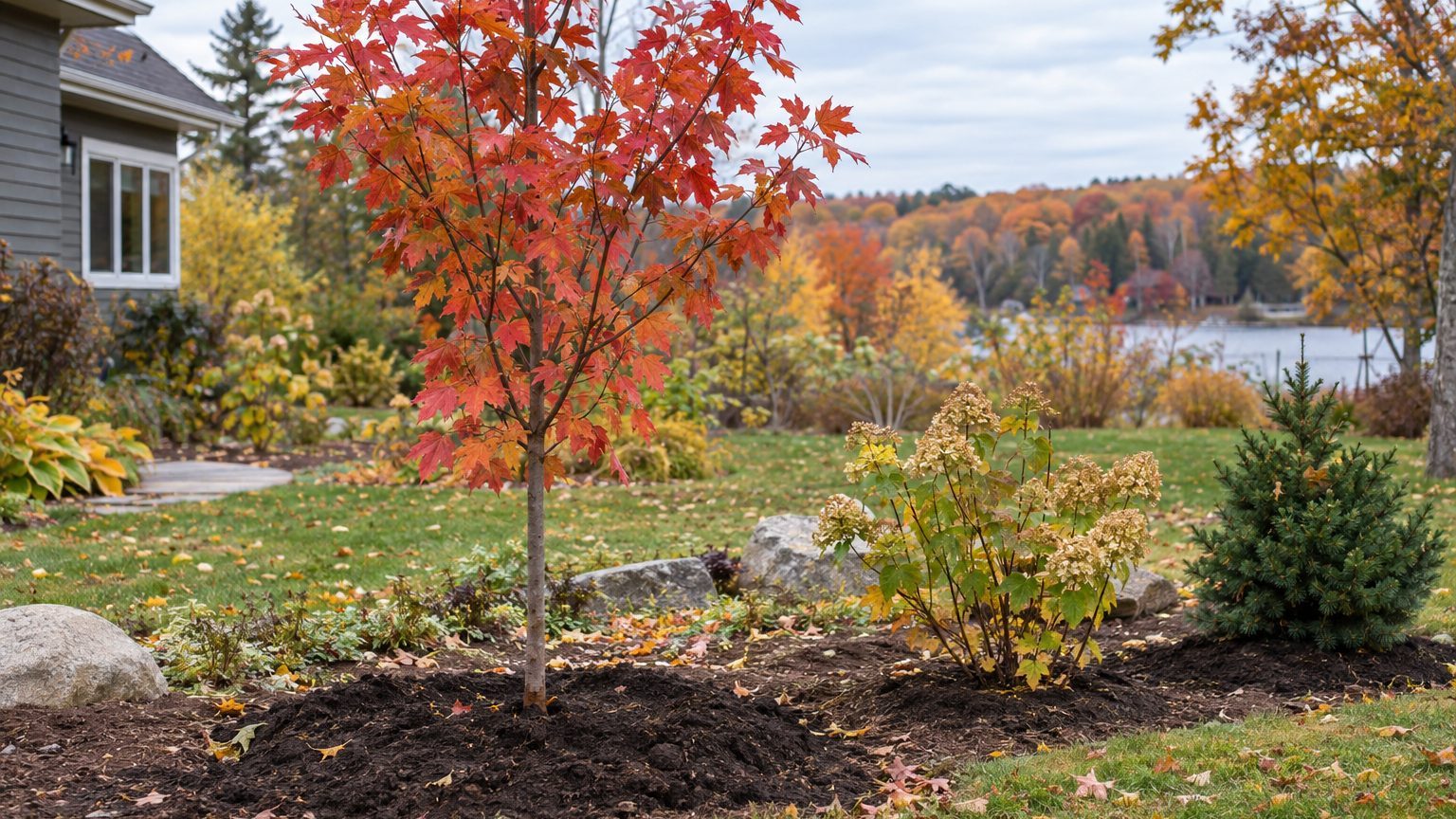

Aim to have trees and shrubs in the ground by September 17 to September 28, which is six weeks before the first fall frost at the Albuquerque airport weather station (October 29 to November 9). That is the conservative target, not a cliff. Roots keep working after the leaves quit, so a planting in early October is far from doomed. How much slack you get depends on your elevation, and your own county’s frost date matters more than the airport’s.
The deadline in New Mexico
Roots don’t follow the calendar the way leaves do. They keep growing as long as the soil is workable and above freezing, which can mean weeks after the first frost has blackened the basil. Air cools in a day. Soil holds summer heat and gives it up slowly. That lag is the whole reason fall planting works, and it explains why the practical deadline sits well before winter arrives rather than on the day the temperature first dips.
Why the ground matters more than the air
Cornell Cooperative Extension states the rule this way: “Fall is an excellent time for transplanting, provided you get them to their new home at least 6 weeks before the ground freezes, allowing them time to establish roots before winter dormancy.” Notice what it counts back from. It is the freezing of the ground, not the first frost of the air. Ground freezes later than the first frosty morning, so a rule built on the first frost is a cautious version of Cornell’s.
Cold nights are not in doubt in the reference city. The NOAA NCEI Climate Normals for 1991-2020 put the mean daily minimum of Albuquerque’s coldest month at 26.4°F. That is below freezing, so freeze-up is a real event at the reference station, and the six-week logic applies. This is not a place where you can plant all winter and ignore the calendar.
Doing the math for Albuquerque
The NOAA NCEI U.S. Climate Normals 1991-2020 (32°F freeze probabilities, 30-70% band) place the first fall frost at the Albuquerque airport station between October 29 and November 9. Count back six weeks and you get the safe target: September 17 to September 28. Write that range down. It is the date by which a tree or shrub has had a fair run at growing roots before the soil turns hard.
It is a safe date, not the last possible one. Since the ground freezes after the first air frost, the true limit falls later than that range. A hardy shrub planted in early October is taking a modest gamble, not committing a blunder. Still, the later you go, the less margin you have if the fall turns dry or a hard freeze arrives early.
Your county is not the airport
The figures above describe one airport weather station. Suburban and rural gardens typically see the first fall frost earlier than that, often by one to two weeks, and more at elevation. Colder ground means an earlier deadline, so if you garden in the foothills or on a high plateau, move the whole window earlier. Do not push it later.
The USDA Plant Hardiness Zone Map (2023 edition, built on 1991-2020 normals) lists 4b-9a for the state. That range tells you how cold the extremes get, based on one variable: the average annual extreme minimum temperature. It is a statewide spread, not a planting date, which is why the dates here use the reference city. For a closer read on your area, check First and Last Frost Dates in New Mexico, and browse the other New Mexico guides for local conditions.
What to plant late, and what to wait on
Not every plant treats a late start the same way. The ones that cope best are fully hardy for your site, sold in a container or balled and burlapped, and shed their leaves for winter. They have little foliage to support, so the roots can focus on spreading into new soil. The ones that struggle are borderline for the local cold, or hold their needles all winter and keep losing water while the soil is too cold to resupply it.
Plants that handle a late start
Container-grown deciduous trees and shrubs that are rated hardy to your zone are the easiest bet. Their root systems arrive intact, they go dormant on schedule, and they spend fall settling in. Balled-and-burlapped trees do well too, provided the ball stays moist and the tree goes in promptly after purchase. If the tag lists a hardiness rating, compare it with the USDA zone for your own site, not the statewide spread. A plant rated for milder winters than yours may handle a gentle year and fail in a normal one, since the reference city alone sees a coldest-month mean minimum of 26.4°F.
Plants to hold until spring
Evergreens are the awkward group. Pines, junipers and broadleaf evergreens keep transpiring through winter, and New Mexico’s fall and winter air is often dry and windy. A freshly planted one has a small root system trying to feed a full canopy. The same goes for anything near the edge of its hardiness. For those, treat September 17 to September 28 as a hard cutoff, and wait for spring if you miss it.
| Plant type | Late-fall outlook | Reason |
|---|---|---|
| Container-grown deciduous, hardy for your zone | Good, even into the weeks after the safe target | Intact roots, no leaves to support in winter |
| Balled-and-burlapped deciduous trees | Good if planted promptly and kept moist | Roots disturbed less than bare-root stock, but the ball can dry out |
| Evergreens (needled or broadleaf) | Best planted by the safe target, otherwise wait | Foliage keeps losing water in dry winter wind |
| Borderline-hardy plants | Wait for spring | A young root system gives little protection against a normal winter |
General planting technique, from hole width to root flare height, is covered in Planting and Caring for Trees, Shrubs and Perennials. Timing helps only if the planting itself is sound.
Watering and mulch until the ground freezes
The first winter is about roots, not growth. A newly planted tree may look dead and still: no new leaves, no new shoots, nothing to show. Underneath, the plant is extending roots into the surrounding soil while it still can, building the system that will feed spring leaf-out. Top growth in the first spring is paid for by those fall roots. If you cut the water early because the foliage has quit, you starve the only part of the plant that is still working.
Water deeply until freeze-up
Keep watering until the ground freezes, and water deeply instead of often. A slow soak that reaches below the root ball encourages roots to follow the moisture downward, while frequent sprinkles wet only the top inch or so and invite shallow roots. Much of the state is dry through fall and winter, so natural moisture can’t be counted on. Check the soil with a trowel or screwdriver before watering: if it is still damp a few inches down, wait. After the leaves drop, a dry stretch with unfrozen ground still deserves a drink.
Mulch in a ring, not a volcano
Mulch evens out soil temperature and slows water loss, both of which help a young root system. The NC State Extension Gardener Handbook (chapter 11, Woody Ornamentals) gives two figures that agree. On weeds: “A 2-inch to 3-inch layer of mulch suppresses most annual weed seeds and makes it easy to hand-pull any that do germinate.” On trees: “Provide a 3-inch layer of mulch to reduce water loss and maintain uniform soil moisture and temperature around roots.” That means a 2-inch to 3-inch layer, spread wide over the root zone.
More is not better. A mound piled against the trunk, the so-called volcano, holds moisture against the bark, invites rot and gives rodents a sheltered place to chew. Spread the mulch flat in a ring and pull it back so the trunk flare stays visible. The full reasoning is in Mulching Without Killing the Plant.
What goes wrong
Most fall-planting failures come from a short list of causes, and nearly all trace back to timing or water. Knowing them lets you decide before the shovel goes in whether a given plant belongs in the ground now or in a nursery pot until spring.
Planting too late for this climate
A shrub planted just ahead of freeze-up has had almost no time to anchor itself. The Cornell rule exists because the roots need weeks, not days, to get established. The safe target of September 17 to September 28 is built on that. Go much later, and you are betting on a mild, wet fall that this part of the country doesn’t reliably supply. Gardeners comparing climates can see how a different state handles the same question in How Late Can You Plant Trees and Shrubs in Fall in North Carolina?
Winter burn, heaving and drying out
Winter burn shows up as brown, scorched needles or leaf edges on evergreens, usually in late winter. The plant loses water through its foliage in sun and wind while frozen or dry soil keeps the roots from replacing it. Shelter from prevailing wind and a deep soak before freeze-up are the main defenses.
Heaving is a different problem. Where the ground freezes and thaws repeatedly, shallow or poorly anchored root balls can be pushed upward, exposing roots to air. Late plantings are the most vulnerable, since the roots haven’t gripped the soil yet. If you see a plant sitting higher after a thaw, press the soil back around it, then top up the mulch.
Drying out is the quietest failure of all. A dry fall can leave the soil dusty while the plant looks fine above ground. Once the leaves are down, nothing signals thirst. If your fall is dry and the ground is unfrozen, water anyway, and plan to keep doing so until freeze-up.
Common questions
Can I still plant a tree in New Mexico in November?
Sometimes. The first fall frost at the Albuquerque reference station falls between October 29 and November 9, and the ground freezes later than that, so soil may still be workable. A hardy, container-grown deciduous tree is the best candidate. Evergreens and borderline plants should wait for spring. Colder, higher places will be frozen sooner than the airport figures suggest.
Is the Albuquerque frost date right for my yard?
Probably not exactly. Those numbers come from an airport weather station. Suburban and rural gardens usually see the first fall frost one to two weeks earlier, and elevation pushes it earlier still. Check your own county’s frost dates and shift the planting window earlier if you are colder than the reference city.
Is spring planting better than fall?
Neither is automatically better. Cornell calls fall an excellent time for transplanting when the six-week rule is met, and fall-planted trees get a head start on roots. Spring planting avoids winter risk altogether, which makes it the safer choice for evergreens and plants at the edge of their hardiness.
Does my hardiness zone tell me when to plant?
No. The USDA zone, built on the average annual extreme minimum temperature, tells you whether a plant can survive your winters. Timing comes from the frost date and the freeze-up of the soil. A plant that is hardy for your site and planted by the safe target gets both: the right cold tolerance and enough time to root.