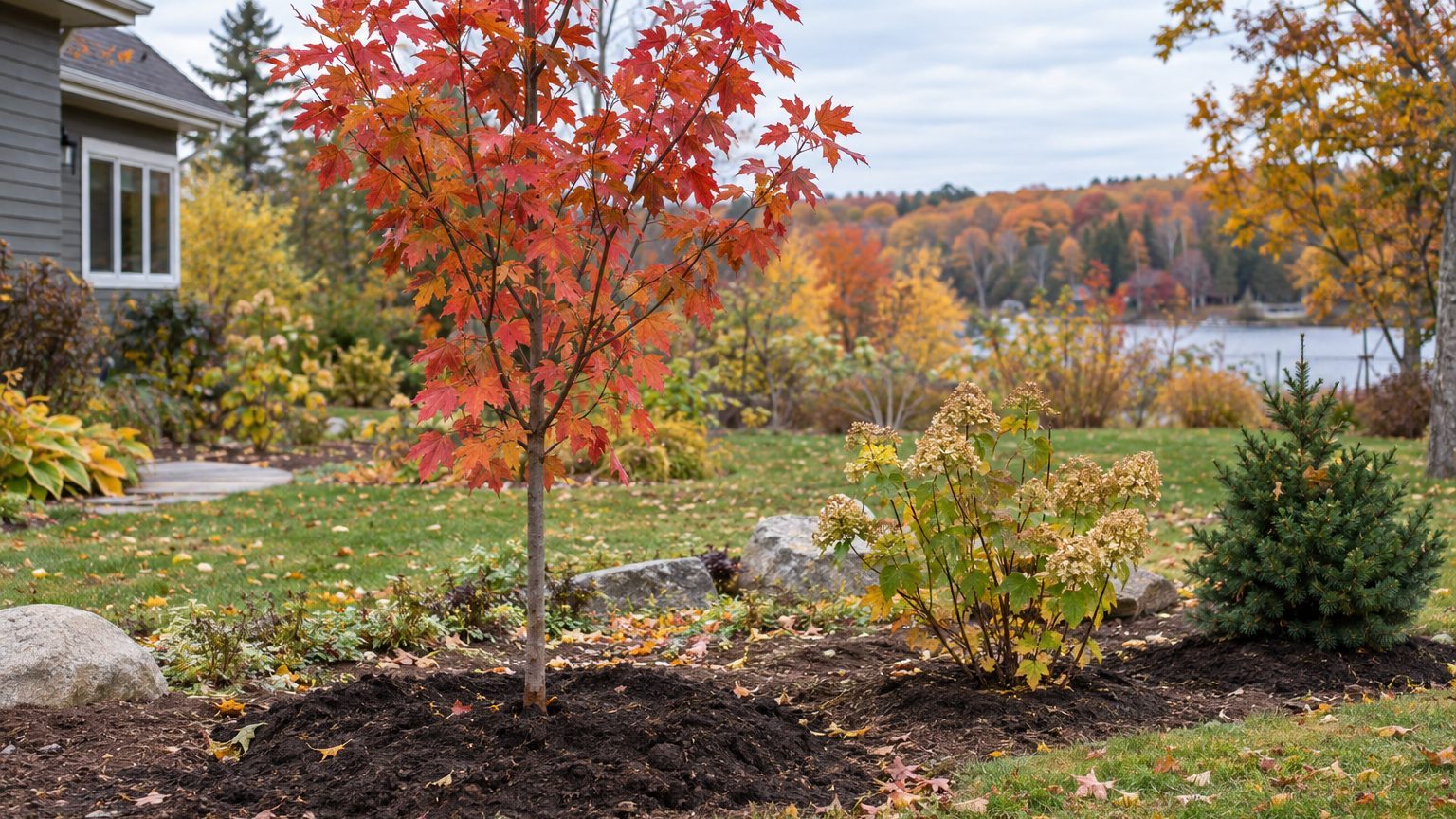

In North Carolina, the safe target for planting trees and shrubs is September 18 to September 27, six weeks before the first fall frost of October 30 to November 8 in Charlotte (NOAA NCEI Climate Normals, 1991-2020). That is the cautious date, not a hard stop. Roots keep growing in workable soil long after the air turns cold, and in much of the state October, November and even December planting works well for the right plants.
The deadline in North Carolina
Air temperature and soil temperature run on different clocks. A frost on a clear November night nips tender leaves, but the soil under mulch holds its heat for weeks, and roots on a newly planted tree or shrub keep reaching outward as long as that soil is workable and above freezing. Top growth stops with the first hard cold. Root growth does not.
How the six-week rule becomes a date
The most quoted guideline comes from Cornell Cooperative Extension in Orleans County, New York: “Fall is an excellent time for transplanting, provided you get them to their new home at least 6 weeks before the ground freezes, allowing them time to establish roots before winter dormancy.” Notice what it counts back from: the day the ground freezes, not the first frost. Frost is an air temperature, and the ground freezes later.
To turn that into a safe North Carolina target, count six weeks back from the first fall frost instead. NOAA’s 1991-2020 normals for Charlotte put the first 32°F freeze between October 30 and November 8, based on the 30 to 70 percent probability band. Subtract six weeks and you get September 18 to September 27. Plant by then and you are on the conservative side of the rule, with a cushion built in.
Why the real limit falls later
Because Cornell’s rule is tied to frozen ground, and because the ground freezes after the first frost, the true limit sits later than that September window. How much later depends on where you garden. In Charlotte the coldest month’s mean daily minimum is 31.8°F (NOAA, 1991-2020). That is a hair under freezing. Cold nights hover right at the line, and a deep, lasting freeze is not the usual winter story there.
So here is the plain version. Where winters are this mild, fall and even early winter are the best time to plant hardy trees and shrubs. The soil stays workable, the roots keep working, and the plant gets its first summer already established. The September window is for gardeners who want a guarantee. It is not a reason to put the shovel away on October 1.
Charlotte sits in the Piedmont, and the rest of the state differs. The Blue Ridge mountains run colder, with an earlier first fall frost, so the safe target moves earlier there. The coastal plain gets its first frost later, which stretches the window. For local frost ranges, the first and last frost dates in North Carolina are worth checking before you settle on a date.
What to plant late, and what to wait on
Not every plant gets the same pass. The ones that handle a late fall planting best are container-grown and balled-and-burlapped trees and shrubs that are fully hardy in your zone. Their root systems come intact, they are dormant or close to it, and a few cool weeks in the ground is all they need to start anchoring in. Deciduous trees such as maples and oaks, and deciduous shrubs, are the classic examples.
Hardiness matters more than the calendar here. The USDA Plant Hardiness Zone Map (2023 edition, built on 1991-2020 normals) places North Carolina in zones 5b through 8b, so a plant rated for Charlotte may not be rated for a mountain county, and a coastal favorite may sulk in the Blue Ridge. Check the tag against your own zone, then be honest about whether it is rated for that zone or merely rated near it.
| Plant type | Late fall verdict | Reason |
|---|---|---|
| Hardy deciduous trees and shrubs, container or balled | Go ahead | Dormant tops, roots keep growing in cool soil |
| Hardy perennials in containers | Go ahead, earlier is better | Need time to settle before cold nights deepen |
| Needled and broadleaf evergreens | Plant early or wait | Leaves keep losing water all winter |
| Plants at the edge of their hardiness | Wait for spring | No margin for a cold snap in the first winter |
Evergreens deserve the extra caution. A maple drops its leaves and stops losing water. A holly, a boxwood or a pine keeps its foliage, and that foliage keeps pulling moisture out of the plant on every windy, sunny winter day. A root system that has had only a few weeks in the ground cannot always keep up. Planted early in the fall window, evergreens do fine. Planted in late November, they are a gamble.
Borderline plants are the other group to hold back. A shrub that survives most winters but not all of them needs a full season of root growth before its first cold test. A spring planting gives it that. A fall planting does not. Wait on borderline plants and evergreens that lose water all winter until spring, and put the fully hardy container and balled stock in the ground while the soil is workable. For the planting technique itself, the guide to planting and caring for trees, shrubs and perennials covers hole depth, root flare and backfill.
Watering and mulch until the ground freezes
A fall-planted tree has no leaves to feed and nothing to flower, so the whole first winter is about roots. Everything the plant does between planting and spring goes into pushing roots out of the original root ball and into the surrounding soil. Growth above ground can wait. If roots do not get established, the plant has nothing to push leaves with in April.
Water deeply, then keep checking
Water deeply at planting, soaking the root ball and the soil around it. Then keep it up through fall and into winter, until the ground freezes. Check by pushing a trowel or finger into the soil near the root ball. If it is dry down there, water, even if the top looks damp and the calendar says December. In a dry fall, a new planting can run short of moisture within days of the last rain.
Winter watering matters most for evergreens, which keep losing water through their foliage. On a mild day with no rain in the forecast and soil that is not frozen, a good soak is cheap insurance. Skip it when the ground is frozen, since the water will not soak in. Skip fertilizer too. Feeding in fall pushes tender new growth that the first hard freeze will burn, and the plant should be spending its energy underground.
Mulch in a ring, not a volcano
Mulch evens out soil temperature and slows moisture loss, both useful in a first winter. NC State Extension’s Extension Gardener Handbook gives the depth in two places. For weeds: “A 2-inch to 3-inch layer of mulch suppresses most annual weed seeds and makes it easy to hand-pull any that do germinate.” For trees: “Provide a 3-inch layer of mulch to reduce water loss and maintain uniform soil moisture and temperature around roots.” The two purposes call for about the same depth, so a 2-inch to 3-inch layer is the target.
More is not better. Spread the mulch in a wide, flat ring around the plant, and keep it pulled back from the trunk or stems so bark is not sitting in damp organic matter. A cone piled against the trunk, the so-called mulch volcano, invites rot and gives pests a sheltered place to chew. The full method is in the guide to mulching without killing the plant.
What goes wrong
The most common mistake is simply planting too late for the local climate. A tree that goes in with only days of warm soil left has not anchored itself, and the first hard freeze finds it unprepared. Count back from your own first frost. Anything planted well after October 30 to November 8 in the Piedmont, or after the equivalent date in the mountains, needs extra care, and the mountain date comes earlier than Charlotte’s. The Charlotte numbers are only a reference.
Winter burn is the second problem, and evergreens take the hit. Brown, scorched-looking needles or leaf edges in late winter usually mean the foliage lost more water than the roots could replace, often on a dry, windy day with cold soil. Late-planted evergreens are the usual victims. Watering through winter whenever the soil is workable and dry is the best protection, and mulch helps too.
Heaving is the third. Where nights dip below freezing and days thaw, repeated freezing and thawing can push a shallow, poorly anchored root ball up out of the soil. The plant looks perched on the surface by late winter, with roots exposed to dry air. If you see it, press the root ball back down gently and add mulch. Heaving is mainly a hazard in the colder parts of the state, where the ground freezes and thaws repeatedly.
Last is drying out. A dry autumn is easy to ignore because the weather feels pleasant, but a young tree in dry soil is struggling anyway. Gardeners who also have ground on the southern plains can see how a drier, harsher climate shifts the same rule in How Late Can You Plant Trees and Shrubs in Fall in Oklahoma?
Common questions
Can I still plant in December or January in North Carolina?
In milder areas such as Charlotte, yes, for fully hardy container or balled plants, as long as the soil is workable and not frozen. September 18 to September 27 is the conservative target, built from six weeks before the first fall frost. The true limit is when the ground freezes, which usually comes later. Plan on watering through winter dry spells.
Does the date change in the mountains?
Yes. The figures here come from Charlotte, in the Piedmont. The Blue Ridge mountains get their first fall frost earlier, so the safe planting target moves earlier there too. The coastal plain goes the other way, with later frost and more room on the calendar. Use your own local first-frost range and count six weeks back from it.
Is fall better than spring for planting?
For hardy trees and shrubs, often yes. Roots grow through the cool months, and the plant meets its first summer with a root system already in place. Spring planting means the plant has to establish itself while summer heat arrives. Borderline-hardy plants and evergreens are the exception, and spring is the safer choice for them.
Which hardiness zone should I use?
Use the zone on the USDA Plant Hardiness Zone Map for your location. North Carolina runs from 5b to 8b on the 2023 map, so statewide advice only goes so far, and the North Carolina guides break down local conditions further. Keep in mind that the USDA zone is built on a single variable, the average annual extreme minimum temperature. It says nothing about summer heat, drought or soil, which also decide whether a plant thrives.