
New Mexico’s short-season growing window rewards pepper varieties that set fruit fast and ripen before heat stress or fall frost cuts the season short. The reference station in Albuquerque logs 42.5 days a year at or above 90°F, a number that shapes when peppers flower, when they stall, and how much of the crop actually ripens before the first freeze.
The short answer

Start with the number that matters most for fruit set: 42.5 days a year at or above 90°F, averaged from the Albuquerque reference station over the 1991-2020 period, according to NOAA NCEI Climate Normals. That’s not a handful of scorching afternoons scattered across summer. It’s more than six weeks, cumulatively, when daytime highs cross the threshold where pepper blossoms stop setting fruit. Pollen becomes sterile, flowers drop, and a plant that looked loaded with buds in June can sit stalled through July with nothing to show for it.
Utah State University Extension’s guidance on peppers is blunt about this: fruit set fails at both ends of the temperature scale, not just the hot one. Days above 90°F shut it down on one side. Nights below 55°F shut it down on the other. New Mexico gardeners tend to fixate on the heat, and with 42.5 days a year justifying that worry, it’s a fair instinct. But the cool-night failure is just as real, and this site does not carry summer night minimum data for New Mexico. That gap matters. Night temperatures don’t track cleanly with latitude, elevation, or how hot the days feel, so there’s no shortcut here. A garden at 5,000 feet outside Albuquerque can drop into the 50s on a clear August night while a garden thirty miles away in a lower valley stays warmer. The only reliable fix is watching your own thermometer through the season, not assuming a number based on where you sit on a map.
This is also why naming specific pepper varieties as “the best for New Mexico” runs into trouble fast. Utah State University Extension’s pepper guidance names six varieties gardeners commonly grow, but it doesn’t attach a heat tolerance rating, a days-to-maturity figure, or a mature size to any of them. That’s not an oversight, it reflects how variable performance is depending on the two thresholds above. A variety that thrives in a garden with mild nights can underperform in a spot where nights regularly dip below 55°F during flowering, and the reverse is true where daytime heat runs high. Rather than chase a name, track your own days above 90°F pattern and your nighttime lows, then choose varieties with shorter days-to-maturity so more of the crop ripens in the stretch between the two failure points.
When to start seed here
Working backward from transplant date is the most reliable way to time pepper seed-starting in New Mexico, and the math holds regardless of which county you garden in.
- Find your last spring frost window. At the Albuquerque reference station, NOAA NCEI’s 1991-2020 climate normals put the 32°F freeze probability window between March 31 and April 12. That’s the airport station figure, not a statewide guarantee. Suburban and rural gardens typically see their last frost land later, often by one to two weeks, and more at higher elevation. Check your own county’s frost history before locking in a date.
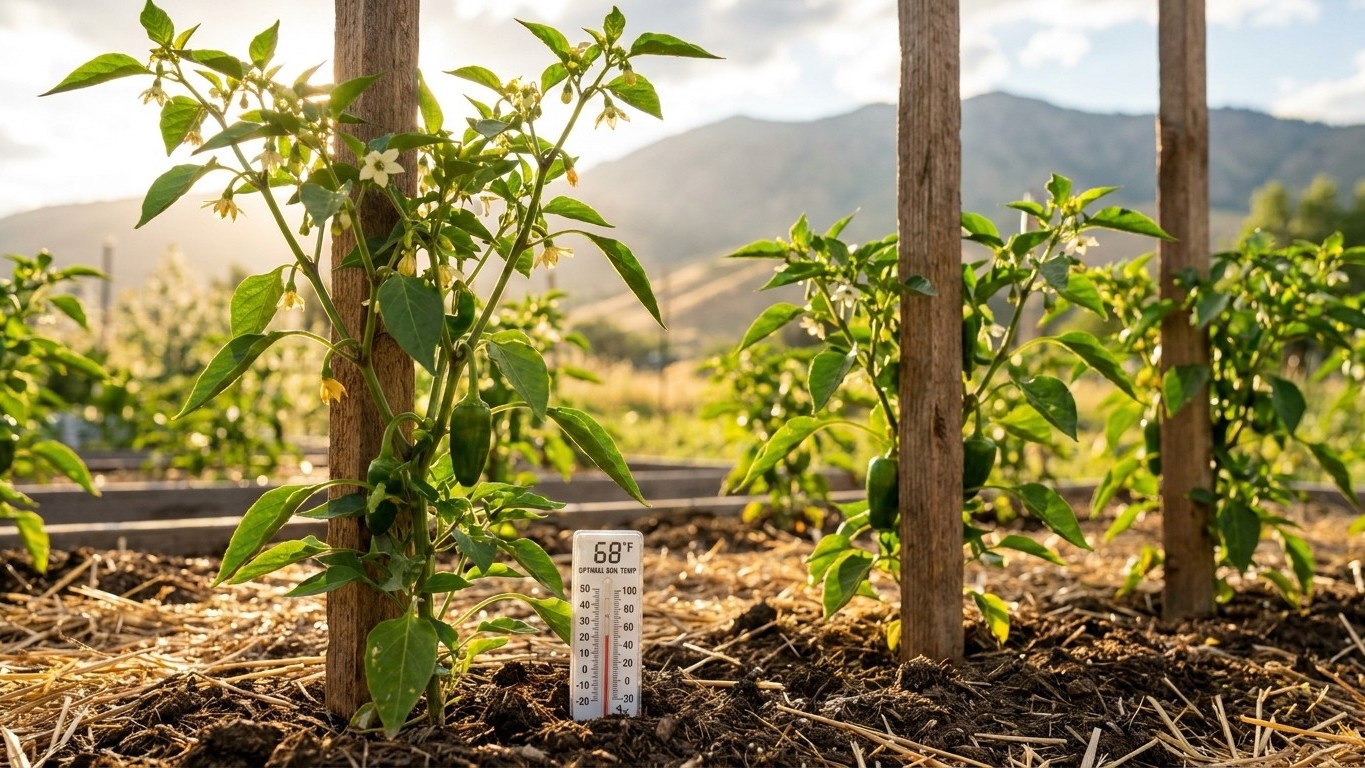
- Confirm soil temperature, not just the calendar. Utah State University Extension is specific that pepper transplants should go into the ground only after frost risk has passed and once soil temperature reaches 60°F. Air temperature can feel warm enough while soil several inches down still sits in the 40s or low 50s, especially after a cold winter. A simple soil thermometer pushed to a 4-inch depth in the morning gives a more honest read than guessing from the weather app.
- Count backward 8 to 10 weeks for indoor sowing. If your last frost falls around April 12 and your soil is slow to warm, transplant might realistically land in late April or early May. Counting back 8 to 10 weeks from that date puts seed-starting indoors somewhere in late February to early March. Gardeners at elevation, where frost lingers longer, should lean toward the 10-week end of that range and expect a transplant date pushed further into May.
- Adjust for your own microclimate before committing. A garden in a low-lying frost pocket, a north-facing yard, or a site above 6,000 feet will run behind the reference station’s numbers. Rather than transplant on a fixed date, use the frost window and 60°F soil threshold together as a checklist, and delay if either condition isn’t met yet.
What goes wrong here
Most pepper failures in a New Mexico garden trace back to the same handful of stress points, and each one has a workaround that doesn’t require replacing the plant.
- Blossom drop during a hot spell. When daytime highs push into the 90s, and Albuquerque averages 42.5 such days a year, flowers can abort before pollination even happens. There’s no way to cool the air, but afternoon shade cloth over the row during the hottest stretch of summer reduces the stress enough that later flushes of blossoms have a better shot at setting.
- Blossom drop from a cool night. The flip side gets less attention but is just as disruptive. Nights below 55°F interfere with pollen viability the same way extreme heat does. Since this site doesn’t track New Mexico’s summer night minimums, the fix starts with observation: log your own overnight lows during flowering, and if a stretch of cool nights lines up with a drop in fruit set, that’s the likely cause rather than disease or poor pollination.
- Sunscald on exposed fruit. New Mexico’s high-elevation sun is intense, and peppers that lose leaf cover, from pruning, wind damage, or disease, end up with pale, papery patches on the side facing direct sun. Keeping the plant’s natural canopy intact is the simplest prevention; avoid heavy pruning during peak summer, and stake plants instead of removing foliage to control sprawl.
- Blossom-end rot on the fruit tip. This shows up as a sunken, leathery brown patch at the blossom end, and it’s a calcium uptake problem tied to inconsistent watering rather than a soil deficiency in most cases. Irregular watering, common when a hot week is followed by a skipped irrigation, interrupts the plant’s ability to move calcium into developing fruit. Even, consistent soil moisture through a drip line or soaker hose does more to prevent it than any additive.
Common questions
How many pepper varieties actually ripen fully in a New Mexico season?
There’s no published figure here for how many varieties complete a full ripening cycle statewide, since that depends on each garden’s own frost window, soil warm-up date, and summer night lows, none of which this site tracks for New Mexico. Choosing varieties with shorter days-to-maturity improves the odds regardless of which ones you pick.
Does 42.5 days above 90°F mean I should give up on peppers in midsummer?
No. It means expecting a slowdown in fruit set during the hottest stretches, not a total loss. Plants often resume setting fruit once temperatures ease, so a mid-summer lull followed by a strong late-summer flush is a normal pattern, not a sign of a failed plant.
Can I just plant earlier to dodge the heat entirely?
Only within limits. Utah State University Extension’s guidance ties transplant timing to both frost risk and 60°F soil, not the calendar alone. Pushing transplant earlier than those two conditions allow risks cold soil stress, which can stunt the plant more than a hot spell would later on.
Where do I find my own summer night lows since this site doesn’t cover them?
A minimum-recording outdoor thermometer placed in the garden bed itself is the most direct way to track this. Don’t substitute a nearby city’s average low or an assumption based on elevation, since night temperatures can vary meaningfully between two gardens just a short drive apart.