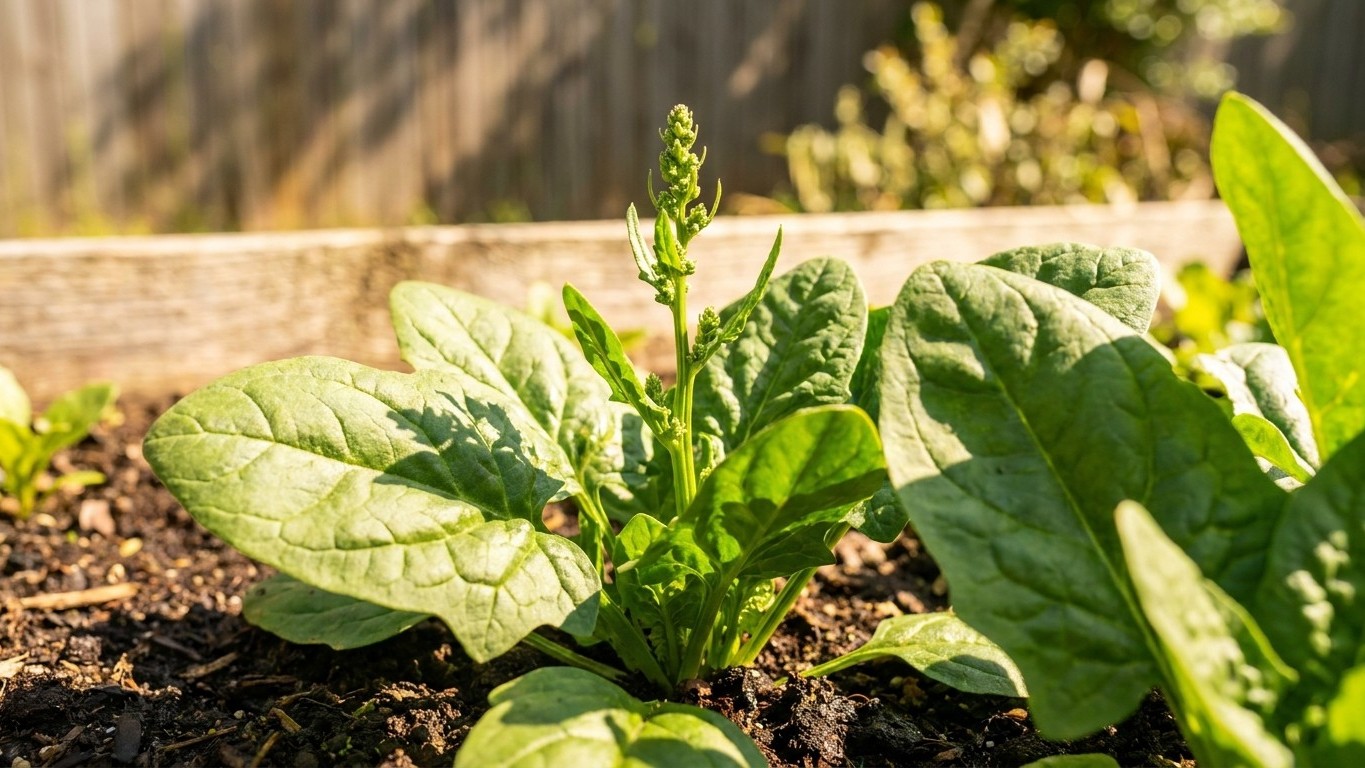

Spinach in New Mexico gets visited by three kinds of feeders: chewers that leave holes, sap-feeders that leave curled and sticky leaves, and tunnelers that mine the inside of a leaf. They arrive in step with warming weather, so they hit hardest in late spring and in a fall crop that starts too early. Which one you have depends on your elevation and your county, and the damage is easy to confuse with heat stress.
Which pests attack spinach in New Mexico
The service that documents garden pests for the state is the New Mexico State University Cooperative Extension Service, and its county offices are where an identification gets settled. Pests that matter on spinach fall into a few groups, sorted by how they feed. Chewing insects take bites out of the leaf blade or clip off seedlings at the soil line. Sap-feeding insects cluster on new growth and underneath the leaves, and they leave curling, stunting, and a sticky film behind. Leaf-tunneling insects live between the two surfaces of the leaf and leave pale winding trails or blotches.
Larger animals count too. A plant clipped cleanly to a short stub overnight has been bitten off by something with teeth, and insects do not leave that kind of cut. Insect feeding is ragged, speckled, or tunneled. The shape of the damage tells you which group to suspect before you ever see an insect.
When each one shows up, and what it does first
At the Albuquerque reference station, the last spring frost falls between March 31 and April 12, according to NOAA NCEI U.S. Climate Normals, and the first fall frost falls between October 29 and November 9. Insects follow that frost-free window. They are scarce while nights are freezing, and they build as nights warm. A spinach crop sown at the very start of the window meets few of them. A crop that is still standing as the weather warms meets many.
Chewers announce themselves first on seedlings. Within days of emergence you may see tiny shot-hole punctures in the first true leaves, or a row that thins out with stubs left at the soil line. In spring this happens right after thaw, when the first warm spell wakes up overwintering insects. In fall it happens when seedlings come up while summer insects are still active, which is the main reason a fall sowing made too early takes losses.
Sap-feeders arrive as the weather warms, and the first thing you see is the plant, not the insect. The small center leaves cup downward or twist, the leaf surface looks glossy or sticky, and the plant grows more slowly than its neighbors. The insects sit on the undersides and in the crown, so a quick look from above misses them. They tend to build up in a spring crop that is already stressed by heat.
Tunnelers show up on mature leaves. The first sign is a light, papery blotch or a thin trail that you can see through when you hold the leaf up to the sun. These marks appear after the plant has put on size, so they are more a problem for a crop kept past its prime than for young plants.
Timing the crop against the weather helps more than anything you do later. Fall spinach is sown once the soil has cooled, because germination drops once soil is above 80 F. Our guide to when to sow autumn spinach in New Mexico walks through that window. Sowing when the soil has cooled also puts the seedlings in the ground after summer insect numbers have started to fall.
Telling the damage apart from everything else
Most spinach problems in a hot, dry state look like insect damage and are not. The daylight hours alone push the plant toward flowering: the longest day brings 14 h 22 of daylight at the reference station, and long days trigger bolting along with warmth. Spinach grows best where temperatures stay below 75 F, and Albuquerque averages 42.5 days a year at 90 F or higher. A plant under that kind of stress yellows, wilts, and turns bitter with no insect involved.
| What you see | Other causes to rule out | What settles it |
|---|---|---|
| Holes in the leaf | Hail tears, wind whipping against a fence, or a larger animal | Insect holes are rounded with chewed edges. Hail tears are torn and show up across the whole bed after a storm. |
| Yellowing leaves | Low nitrogen, soil that stays too wet or dries out, or a leaf disease | Nitrogen shortage yellows the oldest leaves first and evenly. Look under the leaf for insects before deciding it is anything else. |
| Limp plants at midday | Heat and thirst, or damaged roots | Plants that perk up by evening are short of water or hot. Plants that stay limp may have root trouble. |
| Tall center stalk, bitter taste | Bolting from heat and long days | A stalk rising from the crown is the plant flowering, whatever else is on the leaves. See Will Spinach Bolt Early in New Mexico? |
| Spots with a fuzzy or water-soaked look | A leaf disease | Insect damage leaves no fuzz and does not spread in rings. Take a leaf to the county office. |
When you cannot find an insect and the leaves are still yellow, do not reach for a spray. Check water, feeding, and heat first, then take a sample to the extension office.
What actually works here, and what is a waste of time
A physical barrier does more than any treatment. Lightweight row cover laid over the bed at sowing keeps chewers, sap-feeders, and egg-laying adults off the plants, and it works only if it goes on before they arrive. Seal the edges to the soil, because a cover added after the first holes appear usually traps the insects inside with the crop. In spring, lift or remove the cover once daytime temperatures near the 75 F ceiling, because a covered bed runs hotter and pushes the plants toward bolting.
The calendar does the next most useful work. A fall sowing that waits for the soil to cool, with harvest timed 50 to 75 days later, comes up after the worst of the summer insect pressure. A spring sowing made as soon as the ground can be worked finishes before the heat and the long days arrive.
Smaller habits add up. Water at the base so the leaves dry quickly. Clear old plant debris and weeds from the bed edge, because they shelter insects between crops. Walk the row every few days and check the undersides of the center leaves. Pinching off a few insects by hand is enough when you catch them early, and it costs nothing.
Spraying at the first sign of a hole wastes money, since a few holes on outer leaves rarely cut the harvest. Sowing a second or third round into warm soil hoping to outlast the pests fails for another reason: seed germination falls once soil is above 80 F, and what does come up bolts quickly. Home-mixed sprays give uneven results and can burn leaves in strong sun. Which products are legal on a leaf crop, and how long you must wait before eating it, depends on the state label and on the product. The county extension office is the place to ask, because it knows what is registered in New Mexico.
Where to check this for your own county
The New Mexico State University Cooperative Extension Service has a county office serving gardeners across the state. That office knows which insects are active in your area, which ones have been reported this season, and which products are registered for leafy vegetables. Call or visit with a leaf, a photo, and the date you sowed.
Pest pressure varies widely inside the state. Frost dates in this article come from the airport weather station in Albuquerque, and they are reference-city numbers. Suburban and rural gardens typically see the last spring frost one to two weeks later and the first fall frost one to two weeks earlier, and more so at elevation. A pest that is common in the Rio Grande valley may be rare in a mountain town, and a statewide list cannot say what is in your garden. For the full growing picture, see Growing Spinach in New Mexico.
Common questions
Do I need to spray spinach for insects?
Often not. A few holes on outer leaves rarely reduce the harvest. A barrier laid at sowing and good timing prevent most trouble, and the county extension office can advise on any product that is legal for a leaf crop in the state.
Does a tall center stalk mean pests?
No. A stalk rising from the crown means the plant is bolting. Long days and warm weather trigger it, and spinach does best where temperatures stay at or below 75 F.
When should I sow fall spinach to avoid early pest pressure?
Wait for the soil to cool, because germination drops above 80 F, and count back 50 to 75 days from the harvest date you want. First fall frost at the Albuquerque reference station falls between October 29 and November 9, and gardens at higher elevations see it sooner.
How long does harvested spinach keep?
Two weeks is the ceiling, and only at 32 F with high humidity. A refrigerator door runs warmer, in the 41 to 50 F range, where leaves yellow in days. Put it at the back of the bottom shelf, and plan to eat it well before two weeks.