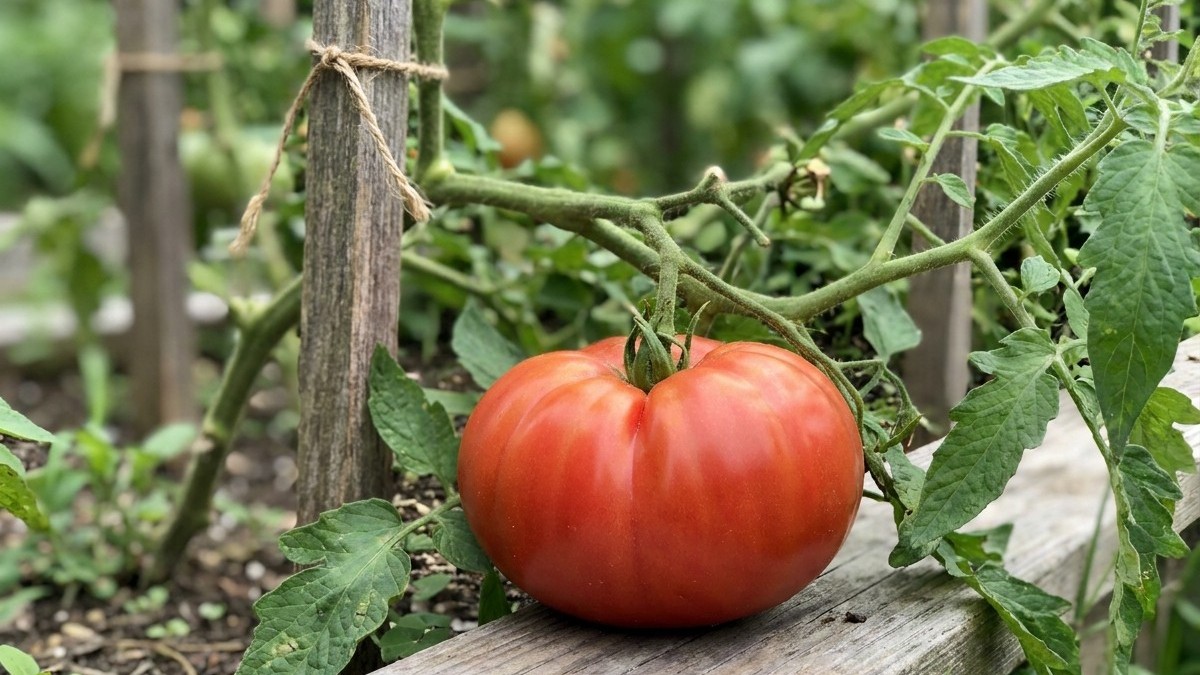

The short answer: pull green tomatoes before your area’s first fall freeze, which lands somewhere between October 29 and November 9 at the reference station used for New Mexico’s climate normals, then finish them on a counter indoors. What changes the answer is where you garden. A backyard in a canyon or at higher elevation can see frost weeks earlier than that window suggests.
When to pick tomatoes in New Mexico
Tomato vines don’t die the moment a thermometer hits 32 degrees. What actually happens is more gradual: as nights cool through fall, the plant’s ability to push sugar and color into the fruit slows down, and a hard freeze kills the leaves outright, which stops ripening on the vine for good. That’s the mechanism behind every “pick by” recommendation you’ll read. It’s not about the fruit itself getting frostbitten so much as the plant losing its ability to finish the job.
NOAA’s climate normals for the period 1991 to 2020 put the first fall freeze at the reference weather station, generally recognized as Albuquerque’s, in the window of October 29 to November 9. That’s a 30 to 70 percent probability band for a 32-degree freeze, not a single date, and it’s built from one airport’s temperature record. If you garden in a suburb outside that station’s immediate area, or anywhere with more elevation, expect frost to show up earlier, sometimes by a week or two. Cold air pools in low spots and drains downhill at night, so a garden tucked against a north-facing slope or in a valley bottom can freeze well before a nearby weather station does.
The state’s hardiness range, 4b through 9a on the USDA Plant Hardiness Zone Map, tells you how cold your coldest winter night is likely to get on average. It says nothing directly about your first fall frost date, but it’s a useful reminder that New Mexico isn’t one climate. A garden near the reference city sits in a different zone than one at elevation in the north, and the fall frost timing follows the same pattern of local variation.
The practical move is to watch your own forecast starting in mid-October and treat the October 29 to November 9 window as a planning guide, not a guarantee. Once nighttime lows are dipping into the 40s on a regular basis, ripening on the vine has already slowed. That’s your cue to start harvesting anything showing even a hint of color, and to think seriously about the green fruit still hanging on. Your county Cooperative Extension office, reachable through New Mexico State University’s Cooperative Extension Service, keeps more localized frost data than any statewide figure can offer.
What to do with the green ones
Not every green tomato is the same green tomato. A fruit that’s still hard and glossy, dark green all the way through, isn’t going anywhere useful indoors, it’ll likely just rot. What you’re looking for is what growers call “mature green”: the fruit has stopped growing, the skin has taken on a slightly paler, almost waxy look, and the blossom end may show the faintest blush. Those are the ones worth saving. A quick trick is to slice one open. Mature green fruit shows fully formed seeds and a jelly-like coating around them; immature fruit looks solid and underdeveloped inside.
When frost is imminent, harvest in a sweep rather than picking selectively. Twist or clip every tomato larger than a golf ball, since even fruit you’d normally leave for another week isn’t going to get that week. Small, marble-sized green tomatoes rarely ripen well and are better used fresh, fried, or pickled rather than saved for the windowsill.
Sorting before you store
Once they’re inside, sort by size and firmness rather than trying to guess ripening speed by eye alone. Bruised, cracked, or soft fruit should be set aside for immediate use since damaged tomatoes are the ones that rot and take their neighbors down with them. Wash off garden soil and let the fruit air dry completely before storing; damp skins invite mold in a way that dry skins don’t.
Some gardeners pull the whole plant before a freeze and hang it upside down in a garage or shed, letting fruit ripen while still attached to the vine. It works, and it saves the step of handling each tomato individually, but it also takes up a lot of space and the vine itself will wilt and drop leaves within days. For most home gardens, picking the fruit individually and storing it in shallow layers is the more practical route, especially if you’re dealing with more than a few dozen tomatoes off a handful of plants.
Ripening indoors, and how long they keep
Mature green tomatoes ripen through the same process they’d use on the vine, they just need warmth, not necessarily light, to do it. That’s worth knowing because it contradicts the old advice to line them up on a sunny windowsill. Direct sun and heat from a window can actually cause uneven ripening or soften the fruit faster than it colors, and it does nothing to speed the process along. A spot at normal room temperature, out of direct sun, works better: a kitchen counter, a pantry shelf, the top of a bookcase.
Spacing matters more than most people expect. Tomatoes packed tightly together in a bowl or box will ripen unevenly, and one soft spot can spread rot to its neighbors overnight. Spread the fruit out in a single layer, not touching, in a shallow box or on a tray lined with newspaper. Checking every couple of days lets you pull anything that’s turned or gone soft before it affects the rest of the batch.
Paper bags and the ethylene trick
Wrapping individual tomatoes in newspaper, or placing a few in a loosely closed paper bag, traps the ethylene gas the fruit naturally gives off as it ripens, which speeds the process along compared to leaving them exposed on a tray. Tucking a ripe banana or apple into that same bag adds more ethylene to the mix and can nudge stubborn green fruit along faster. This is standard practice for finishing green tomatoes and doesn’t require anything beyond what’s already in most kitchens.
How long they last once ripe depends heavily on how they were stored beforehand and how ripe they get before you eat or process them. Fruit that ripens slowly at cooler room temperature tends to hold its texture and flavor better than fruit rushed along in a warm spot. A cooler storage area, like an unheated porch or garage before the season’s first hard freeze arrives there too, can stretch out the ripening window considerably, letting you spread your harvest over weeks rather than having everything turn ripe, and then overripe, all at once. Checking the batch regularly and pulling ripe fruit as you find it is the only reliable way to avoid losing a chunk of your harvest to mold overnight.
What goes wrong here
The most common mistake isn’t picking too early, it’s picking too late because a gardener trusted a single frost date instead of watching their own yard. The October 29 to November 9 window is drawn from one weather station’s data, and plenty of New Mexico gardens, especially those at higher elevation or in low-lying cold pockets, see frost well before that range even opens. Waiting for a calendar date instead of a forecast is how entire plants get caught overnight.
Refrigeration is another common misstep. Putting green or partially ripe tomatoes straight into the fridge stops the ripening process and damages the texture, leaving fruit mealy and flavorless even after it’s brought back to room temperature. The cold breaks down the internal structure of the fruit in a way that can’t be undone. Refrigeration is fine for fully ripe tomatoes you plan to eat within a day or two, but it’s the wrong tool for anything still working toward ripe.
Storing tomatoes in a sealed plastic bag or airtight container is a third problem. Without airflow, moisture builds up on the skin and speeds rot rather than ripening, and one bad tomato in a closed container can take down the whole batch within a day. Loose paper, a shallow open box, or a tray gives the fruit the airflow it needs while still letting ethylene do its job.
Frost damage on fruit still on the vine is the last trap. A light frost can leave green tomatoes looking fine on the outside while the internal tissue has already broken down, and those tomatoes will rot in storage instead of ripening, sometimes within a day or two of being brought indoors. Any fruit that was on the plant during a freeze, even a light one, is worth using or discarding quickly rather than setting aside for long-term ripening.
Common questions
Can I pick green tomatoes weeks before the first frost just to be safe?
You can, but fruit pulled too early, before it reaches the mature green stage, generally won’t ripen well and tends to shrivel or rot instead. It’s better to let tomatoes develop as long as the weather allows and harvest in a final sweep only when frost is genuinely close.
Do I need sunlight to ripen tomatoes indoors?
No. Ripening runs on warmth and the fruit’s own ethylene, not light. A shaded countertop or pantry shelf works as well as a windowsill, and avoiding direct sun actually helps prevent uneven softening.
Why did some of my green tomatoes rot instead of ripening?
That’s usually a sign the fruit was still immature when picked, or that it was damaged by frost before harvest, or that it was stored in a sealed container without airflow. Any one of those can cause rot instead of the slow color change you’re hoping for.
Is the statewide frost window the same everywhere in New Mexico?
No. The October 29 to November 9 range comes from one reference weather station, and gardens at higher elevation or in cold-air pockets often see frost earlier. Checking with your local Cooperative Extension office through NMSU’s Extension Service gives a better sense of timing for your specific county.