
New Mexico’s tomato pest lineup runs from cutworms and flea beetles at transplant time through spider mites and beet leafhoppers in the dry heat of early summer, then tomato hornworms by mid-summer and whiteflies as the season winds down. The state’s aridity and intense sun favor a different mix than a humid state’s garden would see. Check the underside of a few leaves and the base of a few stems every week through the growing season bounded by Albuquerque’s frost window, since catching any of these early is what actually makes control possible.
What this comes down to in New Mexico

New Mexico’s dry heat quietly cancels half the pest list you’ll find in a general tomato guide. Hornworms and blight-loving fungi that dominate humid-region warnings barely register here, while cutworms, flea beetles, and spider mites thrive in our low humidity and sandy soil. The elevation and aridity change which insects actually threaten your plants, and when. What follows only covers the seven that consistently show up in New Mexico gardens, ordered by the point in the season you’ll meet them.
Each of the seven pests below is ordered by when it typically shows up relative to that frost window, from the seedling stage through the last weeks before fall frost. Identify the pest before you spray anything, since a product aimed at chewing insects does nothing against a sap-sucker, and vice versa.
Cutworms

Cutworms strike right at transplant, often within the first week or two after you set plants out following the last spring freeze. They hide in the soil during the day and come out at night to chew through a stem at ground level, dropping the whole seedling overnight. A collar of cardboard or a paper cup with the bottom cut out, pushed an inch into the soil around each stem, stops them cold. Older, sturdier plants generally outgrow the risk.
Flea Beetles

Flea beetles arrive alongside cutworms, feeding on the first true leaves of young transplants before the plants have hardened off. The shot-hole feeding pattern rarely kills an established plant but can stunt a small one badly. Floating row cover put down at transplanting and left on until the plant is flowering keeps adults off without any spray at all.
Aphids

Aphids build up on new growth through late spring as tender shoots multiply. Small clusters are mostly cosmetic, but heavy infestations distort leaves and leave behind sticky honeydew that grows sooty mold. A strong jet of water knocks most colonies down, and insecticidal soap handles the rest. Ladybugs and lacewings usually show up on their own if you haven’t sprayed anything broad-spectrum.
Spider Mites

Spider mites become the bigger threat once daytime heat sets in, since they multiply fastest in hot, dry, dusty conditions rather than needing moisture the way many garden pests do. Stippled, dusty-looking yellow leaves and fine webbing between stems are the tell. A forceful spray of water on leaf undersides every few days, or a horticultural oil, sets them back. Letting plants sit under a coating of dust from a dirt driveway or a dry bed makes an outbreak worse.
Beet Leafhoppers

Beet leafhoppers migrate off drying rangeland grasses and weeds into gardens as the surrounding countryside browns off in early summer, and they matter far more for the virus they carry than for any feeding damage of their own. Curly top virus causes leaves to curl upward, thicken, and turn yellow or purple, followed by the whole plant wilting and dying within days. There’s no cure once a plant is infected. Shade cloth over young plants during the leafhopper’s peak movement and pulling infected plants promptly are the only real responses.
Tomato Hornworms

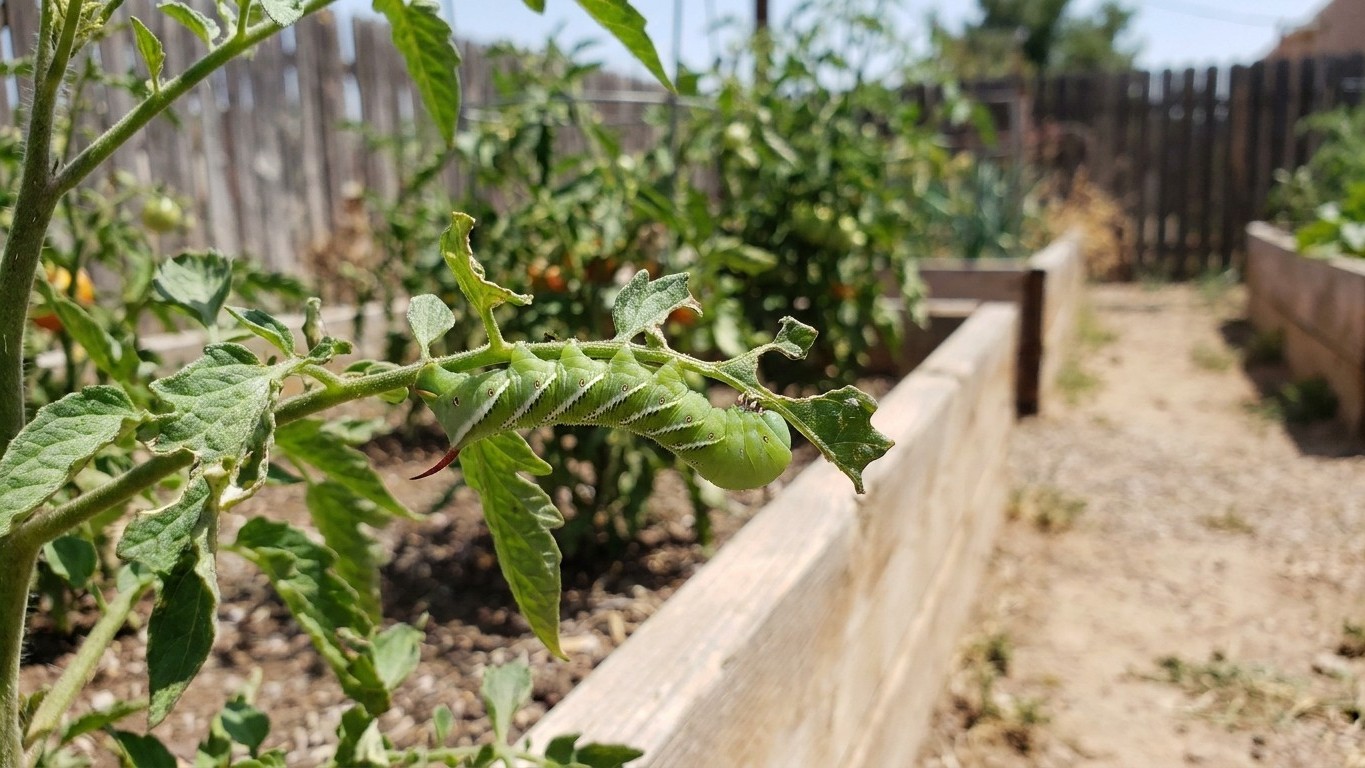
Hornworms show up by mid-summer, and their size makes them look far more alarming than the damage usually justifies on an established plant, though a small transplant can be stripped fast. Look for dark green or black droppings on leaves below the feeding site before you spot the caterpillar itself, since its coloring blends in perfectly. Hand-picking works fine at garden scale. A caterpillar covered in small white cocoons has already been parasitized by a beneficial wasp and should be left alone to finish the job.
Whiteflies
Whiteflies build up late in the season as heat persists, clustering on leaf undersides where they suck sap and excrete honeydew much like aphids. Yellow sticky traps catch adults and give you an early warning before numbers climb. Heavy infestations late in the season, close to the first fall freeze, often aren’t worth treating aggressively since the plant’s productive life is nearly over anyway.
Working it out for your own garden
Before treating anything, work out which pest you actually have by asking three questions: where on the plant is the damage, what does the damage look like, and when in the season did it appear. A chewed stem at soil level right after transplant is almost certainly a cutworm; stippled, dusty leaves in the heat of early summer point to spider mites. A leaf that curls and yellows without any visible insect on it is the signature of curly top virus carried in by a beet leafhopper that has already moved on. Matching symptom to timing narrows the list fast, which matters because treatments aren’t interchangeable.
| Pest | Where to look | Typical timing | Signature damage |
|---|---|---|---|
| Cutworms | Soil line at stem base | Right after transplant | Stem severed, seedling toppled |
| Flea beetles | Young leaves | Right after transplant | Small round shot-holes |
| Aphids | Leaf undersides, stem tips | Late spring | Curled new growth, sticky residue |
| Spider mites | Leaf undersides | Early to mid summer heat | Stippled leaves, fine webbing |
| Beet leafhoppers | Whole plant (virus symptom) | Early to mid summer | Leaf curl, yellow/purple color, wilt |
| Tomato hornworms | Foliage, droppings below | Mid to late summer | Large sections of leaf stripped |
| Whiteflies | Leaf undersides | Late summer | Fluttering white insects, honeydew |
The frost window itself is useful here too. If you transplanted using the guidance in Tomato Planting Dates in New Mexico: Counting Back From Your Frost Window, count forward from that date: cutworm and flea beetle pressure clusters in the first few weeks, mite and leafhopper pressure builds as the frost-free stretch moves into its hottest middle third, and hornworms and whiteflies dominate the last third before the first fall freeze closes things out.
What changes across the state
New Mexico’s elevation range does more to shift this pest lineup than latitude does. USDA’s Plant Hardiness Zone Map lists the state anywhere from zone 4b in the high northern mountains to zone 9a in the low desert of the south, and that same elevation gradient changes which pests dominate. Higher, cooler gardens in the north see a shorter, milder heat spell, which holds spider mite and whitefly populations down but stretches the window during which aphids stay active on cooler nights. Low desert gardens in the south face a longer, more intense hot season, which favors more generations of mites and whiteflies packed into a single summer.
Distance from irrigated cropland versus dry rangeland matters too, particularly for beet leafhoppers. Gardens near large expanses of drying wild grasses and weeds tend to see heavier leafhopper movement as that vegetation browns off, since the insects relocate toward anything still green. A garden surrounded by irrigated fields or heavily watered lawns sees less of that pressure simply because the leafhoppers have less reason to leave. None of this changes which pests are possible here, only how heavily each one leans on a given garden, so treat the reference-city figures and the pest order above as a starting point rather than a fixed schedule for your particular yard.
The mistakes this state punishes

The costliest mistake with beet leafhoppers is treating curly top virus like a nutrient problem or a watering problem and losing a week figuring that out, time the virus uses to spread further through the row. There’s no spray that cures an infected plant, so the fix is prevention with shade cloth during the leafhopper’s peak movement and fast removal of anything showing the curl.
The second mistake is assuming spider mites need damp conditions the way many pests do, and responding to a dusty, dry bed by doing nothing. Mites do their worst damage in exactly those hot, dry, dusty conditions, which is the norm across most of New Mexico’s growing season. Skipping a periodic water rinse of leaf undersides because “it’s not humid enough for pests” is how a mild infestation turns into a defoliated plant.
The third is choosing a long-season variety without accounting for the pest pressure that builds in the second half of the growing season, since a plant still ripening its main fruit set when whiteflies and hornworms peak faces more stress on top of the heat it’s already fighting. Picking a cultivar that finishes earlier, as laid out in Tomato Varieties That Ripen in Time in New Mexico, sidesteps a chunk of that late-season pressure entirely rather than requiring more spraying to fight through it.
Checking this against your county
Everything above is a starting point built on the frost window and climate pattern of one reference city, and pest pressure shifts with elevation, irrigation and what’s growing in the surrounding land. Confirm what’s actually active in your county through your local New Mexico State University Cooperative Extension office and the state’s tomato resources at aces.nmsu.edu before you commit to a treatment plan, especially for anything involving a pesticide product, since label restrictions and current local outbreaks are best confirmed there rather than assumed from a state-wide list.
Common questions
Why are my tomato leaves curling up but there’s no bugs on them?
That’s the classic sign of curly top virus, spread by beet leafhoppers that may have already fed and moved on before you noticed anything. There’s no cure once a plant shows the curl, thickening and yellow or purple color, so pull it to protect the rest of the row.
Do I need to spray for tomato hornworms every year?
Not necessarily. Hand-picking handles most home garden infestations, and a hornworm covered in small white cocoons has already been parasitized by a beneficial wasp and should be left in place to finish that job rather than killed.
Can spider mites survive a New Mexico winter?
They mostly die back or go dormant with cold, but populations rebuild quickly once hot, dry weather returns, especially on dusty or stressed plants. Starting the season with regular water rinses on leaf undersides keeps early populations from building up unnoticed.
Is it worth treating whiteflies late in the season?
Often not. If whiteflies show up close to the first fall freeze for your area, the plant’s productive life is nearly over anyway, and the effort of ongoing treatment usually outweighs the benefit compared to simply finishing out the harvest.