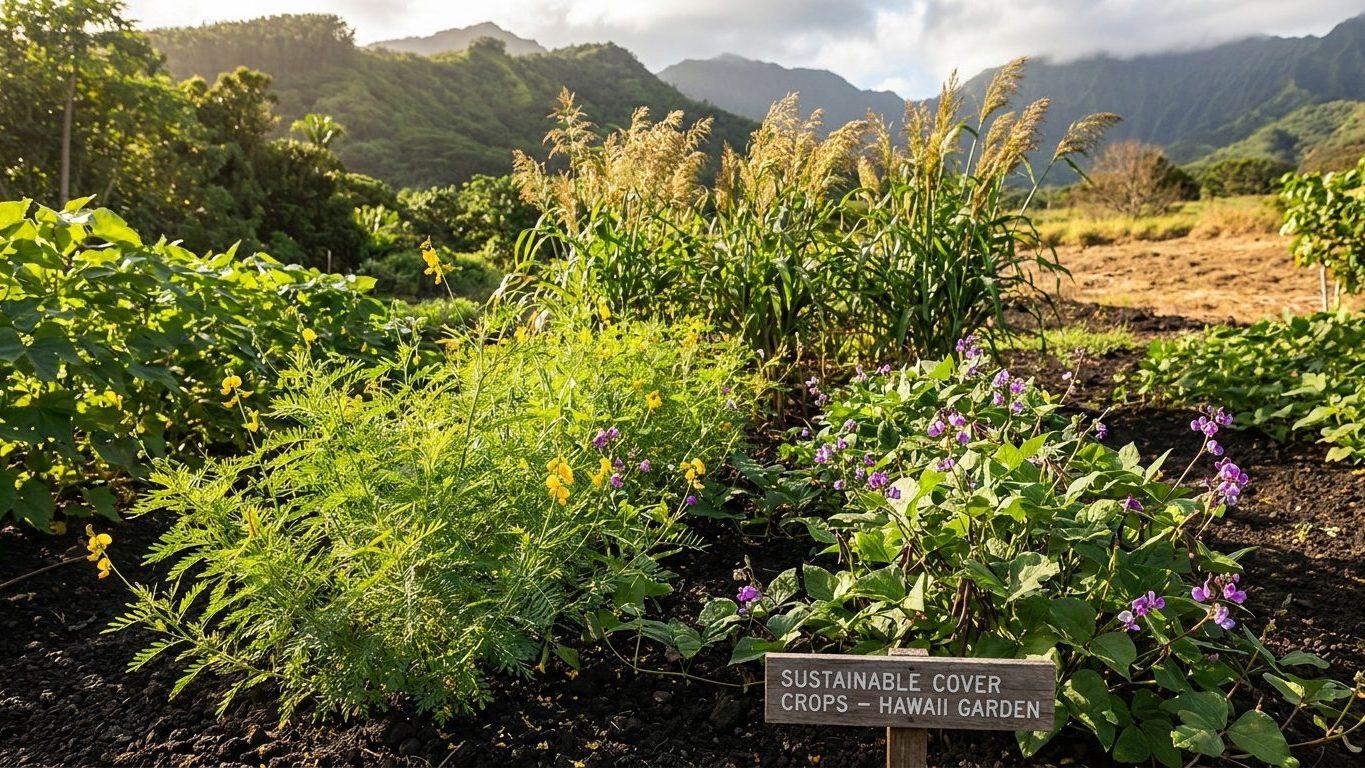

North Carolina’s growing season runs long enough for both winter and summer cover crops, but which one wins depends on where in the state you’re standing. A cereal rye and crimson clover mix carries most Piedmont and coastal gardens through winter, while buckwheat or a summer legume fills the gap between cash crops. The mountains play by a different clock entirely.
The short answer for North Carolina
Winter cover crops make the most sense across most of North Carolina, and the reason is written into the frost dates themselves. The first fall frost doesn’t show up until October 30 to November 8, and the last spring frost clears out by March 23 to April 5, based on NOAA’s 1991-2020 climate normals for the Charlotte reference station. That’s roughly seven months of open ground between frosts, which is more than enough time to seed a cereal grain and legume mix in October, let it establish before the cold sets in, and terminate it the following spring before your cash crop goes in.
The cereal-legume combination works because of one specific number: the coldest month’s mean daily minimum sits at 31.8°F at the Charlotte reference station. That’s not a record low, it’s the average low night after night during the coldest stretch of winter, and it’s the figure that actually decides whether a plant survives the season. Cereal rye, winter wheat, and crimson clover all shrug off a mean minimum in the low 30s without trouble. That’s why they’re the default recommendation for winter cover across the Piedmont and much of the coastal plain.
Summer cover crops fit into shorter windows, usually between a spring harvest and a fall planting, or vice versa. Buckwheat, cowpeas, and sorghum-sudangrass all grow fast enough to squeeze into six to ten weeks of warm weather, which North Carolina has in abundance during the stretch between the last spring frost and the first fall frost. The catch is timing the planting so the crop finishes its job and gets terminated well before that fall frost date arrives, not after.
What this page can’t tell you is which USDA hardiness zone your own yard sits in. North Carolina spans 5b to 8b under the USDA Plant Hardiness Zone Map, and that six-zone spread changes the answer enough that a single statewide recommendation doesn’t hold for the mountains the way it does for the coast. More on that below.
What will not work here
Tropical and subtropical cover crops are the first casualty of North Carolina’s fall frost timing. Sunn hemp and forage soybean both need warm nights straight through to maturity, and if you plant them late in the season hoping to squeeze out one more cutting, the first fall frost arriving between October 30 and November 8 will cut the season short before the plant has done anything useful for your soil. These species need to go in the ground early enough in summer to finish their cycle well ahead of that date, not push right up against it.
Winter-tender legumes are the second problem, and it’s specific to where you garden. A mean coldest-month minimum of 31.8°F at the Charlotte reference station tells you crimson clover and hairy vetch survive fine in the Piedmont. But that number describes Charlotte, not the Blue Ridge. Higher elevations in the western mountains run consistently colder through the coldest month, and a cover crop rated for survival at a mean minimum in the low 30s can winterkill outright where the real local minimum runs several degrees lower. Growers at altitude need a hardier legume, or they need to accept that their clover functions as a winter-killed mulch rather than a living stand that resumes growth in spring.
Dense, tightly spaced legume stands run into a different failure mode across the humid Piedmont and coastal plain. North Carolina summers are wet and heavy with humidity, not dry, so the usual advice to worry about drought stress and weekly watering doesn’t apply here the way it might further west. What does apply is fungal pressure. Crown and root rot organisms thrive in the still, damp air trapped inside an overly thick clover or vetch stand, and thinning airflow through wider row spacing does more good than any watering schedule. If your cover crop mats down and yellows from the inside out in July, that’s humidity finding the gaps in your planting density, not thirst.
Short-day legumes that depend on a precise trigger to flower can also stumble here, simply because the swing in frost dates across the state (spring frost alone ranges from March 23 to April 5) means the calendar doesn’t line up the same way from one county to the next. A planting date copied from a neighboring county’s guide can miss the flowering window by enough to matter.
What changes across North Carolina
A hardiness range of 5b to 8b means North Carolina isn’t one growing region, it’s several stacked on top of each other. That’s a six-zone spread inside a single state’s borders, which is unusual, and it comes from elevation, not just latitude. The Blue Ridge Mountains in the west sit at the cold end of that range, the coastal plain sits at the warm end, and the Piedmont, where the Charlotte reference station lives, falls somewhere in the middle.
The practical effect shows up at both ends of the growing season. NOAA’s frost data notes explicitly that the Blue Ridge Mountains run several weeks later than the Piedmont in spring, which pushes back the safe date for terminating a winter cover crop and seeding a warm-season one. The coastal plain runs the opposite direction, warming earlier and staying frost-free later into fall, which stretches the window for both winter and summer covers.
What that means for planting decisions: a gardener at elevation in the mountains should expect to delay warm-season cover crop seeding by a couple of weeks compared to the Piedmont dates on this page, and should terminate winter covers later too, since spring arrives later there. A coastal grower can generally push both ends of the calendar in the other direction, planting summer covers a bit earlier and winter covers a bit later, because their frost-free window runs longer on both sides.
This page can’t tell you which of those zones your own property falls into. The USDA Plant Hardiness Zone Map is built for that exact purpose, using the average annual extreme minimum temperature as its one variable, and it’s worth five minutes to look up your ZIP code there before locking in a cover crop choice based on the Piedmont figures above.
Where to check this for your own county
North Carolina State University’s Cooperative Extension is the state’s land-grant extension service. This is the resource that turns a statewide answer into a county-specific one, and the distinction matters more than it sounds. This page works from a single reference station’s frost dates and hardiness data. County extension offices work from field trials and local observation, often going back decades, in the exact soil and microclimate you’re planting in.
Once there, look for two things specifically. First, the local planting calendar for cover crops, which will list seeding windows tied to your county rather than to the Charlotte reference point used throughout this page. Second, any variety trial results for cover crop species in your region, since extension agents regularly test how different cereal, legume, and brassica varieties perform under local disease pressure, soil type, and winter severity, information no statewide page can capture.
A county recommendation will always outperform a state one, for the simple reason that it’s built from data collected closer to your actual garden. This page draws its numbers from a single Piedmont reference station and a hardiness zone range that spans six zones, which is useful for orientation but not a substitute for what your local extension office has measured on the ground. Treat this as the starting point, and let your county’s data adjust it before you commit a season’s worth of seed to the plan.
Checking this against your own garden
Every date on this page describes a probability, not a guarantee, and your own soil will tell you more than any calendar once the cover crop is actually in the ground. Three things are worth watching, none of which require anything beyond your own hands and eyes.
Soil warmth by feel comes first. Push a finger a few inches into the bed before seeding a warm-season cover like buckwheat or cowpeas. If the soil still feels cool and slightly damp-cold rather than mild, germination will be slow and uneven no matter what the fall frost date says, because these species need consistently warm soil, not just warm air, to get going.
The first true leaves on your cover crop seedlings are the second signal. A quick, even flush of true leaves within a week or two of germination means the soil temperature and moisture matched what the seed needed. A slow, patchy emergence, with some seedlings stalling at the cotyledon stage, usually points to soil that was colder or wetter than the calendar assumed for your specific plot.
Third, watch for the first bloom on a legume cover like crimson clover. Flowering is a reliable marker that the plant has logged enough accumulated warmth to move past vegetative growth, and it tends to arrive earlier in a warm microclimate (a south-facing slope, a spot shielded from wind) than the county average would suggest. If clover in one corner of your property blooms noticeably ahead of clover in another, you’ve found a microclimate difference worth remembering for next season’s planting dates.