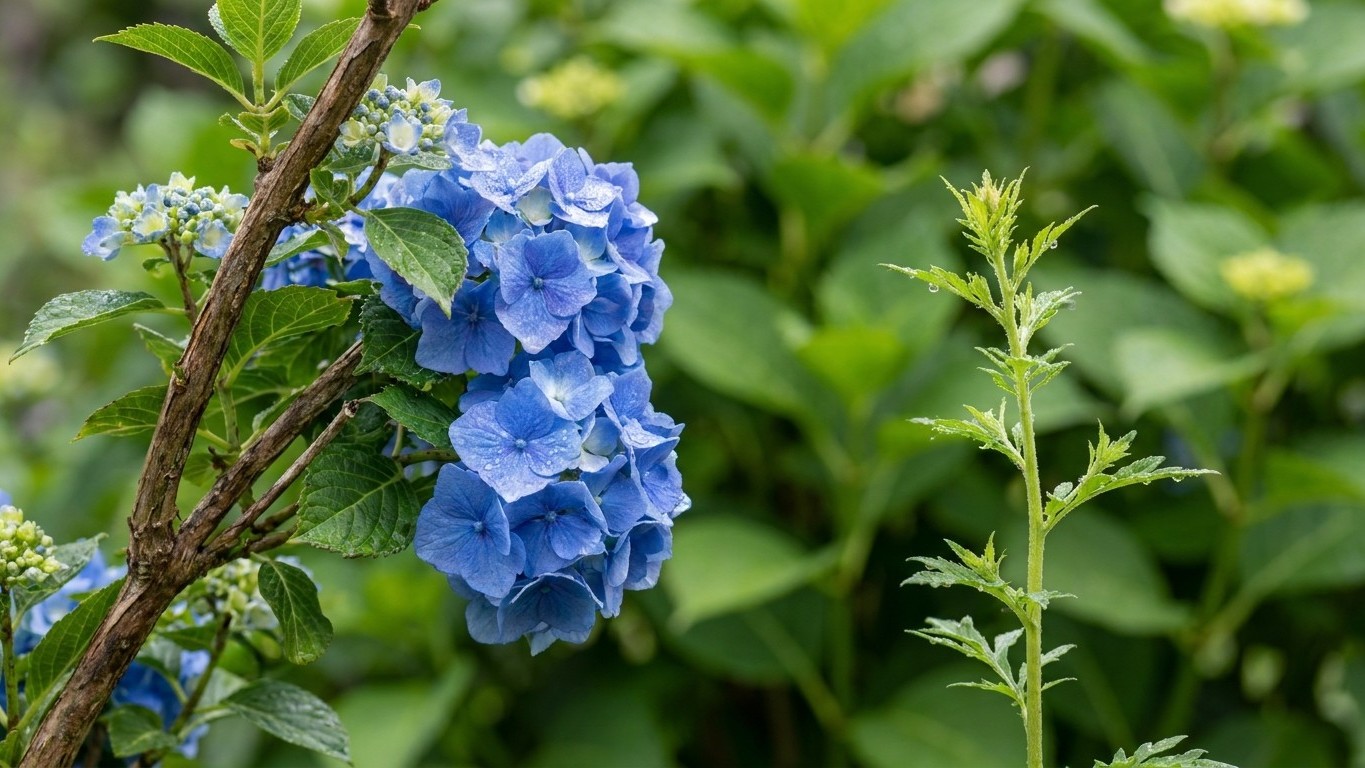

Plant potted hydrangeas in North Dakota after the last spring frost, which at the Fargo airport station falls between May 4 and May 15, and pick types that bloom on new wood: panicle and smooth hydrangeas. Bigleaf varieties often lose their flower buds to winter. Seeds are not worth the wait. Everything below is built on those three decisions, and it fits into the broader How to Grow Hydrangeas: The Complete Guide.
When to plant Hydrangeas in North Dakota
Read the frost dates the right way
NOAA’s 1991-2020 U.S. Climate Normals put the last 32°F freeze at the Fargo airport station between May 4 and May 15, and the first fall freeze between September 25 and October 5. That is one weather station, not a state-wide guarantee. Suburban and rural yards usually see the last spring frost later and the first fall frost earlier than an airport, often by one to two weeks, and more at elevation. Northern counties and the higher ground in the west run later still. Treat the May 15 end of the band as your earliest safe planting date, and add a week or two if you live outside a city. Your county extension office can narrow it down (more on that at the end).
Hydrangeas are tougher than that date implies, since a dormant, hardy shrub tolerates cold nights. The tender part is the new growth. Leaves that have already pushed out in a heated greenhouse get blackened by a 30°F night, and the plant spends June rebuilding instead of growing roots. Planting after the frost band passes avoids that setback.
Seeds, nursery plants and the count-back
Starting hydrangeas from seed indoors is possible but almost nobody does it. The seed is tiny, germination is slow, and a seedling needs years to reach flowering size. Unnamed seedlings also will not match the named variety you saw at the garden center. Buy a container plant instead. Garden centers in North Dakota stock them from April, and that early purchase is where the count-back arithmetic comes in.
Work backward from your planting date. Say your yard clears frost by May 15. Hardening off takes 7 to 10 days, so a plant bought in April should start spending a few hours outdoors in a sheltered spot around May 5 to May 8, building up to a full day and night outside before it goes in the ground. Bring it in or cover it if a frost shows up in the forecast. A plant that has sat on a sunny windowsill needs this slow introduction, because wind and direct sun scorch soft leaves within a day.
Fall planting is a second option, with a tighter deadline. Roots need roughly four to six weeks to settle before the ground freezes. Counting back from the earliest end of the Fargo fall band (September 25), that means finishing by mid to late August. Spring is the safer choice for a first shrub. A plant that goes in late and thin-rooted is the one that heaves out of the ground in March.
Soil and site preparation
Light matters more here than in Georgia or Ohio. Morning sun with some afternoon shade suits most hydrangeas, but panicle types (the Limelight family) tolerate full sun well in a northern climate and bloom better for it. Smooth hydrangeas such as Annabelle prefer the softer light of an east-facing bed. The other site factor is wind. North Dakota winters dry out exposed stems, so a spot on the lee side of a house, fence or hedge protects flower buds better than a bare lawn in the open.
Soil should drain and still hold moisture, which sounds contradictory until you pick up a handful. A good bed crumbles in your hand and stays damp an inch down a day after rain. Heavy clay stays wet and rots roots in spring thaw. Sandy ground dries out and stresses plants in July. Fix both the same way, with compost worked into the top 8 to 12 inches across a wide area, not just in the planting hole. A small hole in a hard clay bed turns into a flowerpot with no drain, and roots circle inside it.
Start the work a few weeks ahead. Once the ground has thawed and dried enough to crumble (not clump) when squeezed, spread 2 to 3 inches of compost over the bed and fork it in. Send a soil sample to a lab through your county extension office at the same time. It tells you the pH, which is the one number that matters for hydrangea color, and it will show whether anything else needs adding. Don’t guess at lime or sulfur.
On planting day, dig the hole twice as wide as the root ball and no deeper. Set the crown level with the surrounding soil, backfill, and water slowly. Space panicle and smooth types 4 to 6 feet apart, and give bigger varieties the upper end. A shrub that looks tiny in a 3-gallon pot will fill that space within a few seasons, and crowded stems invite mildew by midsummer.
Varieties that suit North Dakota
The trait that decides everything is whether a hydrangea blooms on old wood or new wood. Old-wood bloomers set next year’s flower buds in late summer and carry them through winter on last year’s stems. A hard North Dakota winter kills those stems back, and the plant leafs out in June with lovely foliage and no flowers. New-wood bloomers grow their flower stems in spring and bloom the same summer, so dieback costs you height but not flowers. Hardiness ratings follow the same pattern, and most panicle and smooth selections are sold as hardy to zone 3. Check the tag against your own zone on the USDA Plant Hardiness Zone Map.
| Type | Blooms on | Examples | Good for |
|---|---|---|---|
| Smooth (H. arborescens) | New wood | Annabelle, Incrediball, Invincibelle Spirit II | Shade and part shade, dependable bloom after hard winters; Incrediball has thicker stems than Annabelle |
| Panicle (H. paniculata) | New wood | Limelight, Quick Fire, Bobo, Little Lime, Vanilla Strawberry | Full sun, wind tolerance, late summer bloom that fades from white to pink; Bobo and Little Lime stay compact |
| Bigleaf (H. macrophylla) | Old wood (some reblooming types also on new) | Endless Summer series | Blue or pink flowers, but only with winter protection, and bloom is never guaranteed |
| Climbing (H. petiolaris) | Old wood | Species | Walls and fences in shade; slow to establish |
Two of those rows carry most of the load in this state. Smooth types such as Annabelle are the workhorses, and panicle types such as Limelight are the showpieces. If you want blue flowers, the reblooming bigleafs bloom on both old and new wood, so a cold winter doesn’t wipe out the whole show, but expect fewer flowers than the catalog photo promises. In a cold climate they are worth a try only if you are willing to mound mulch around them each fall.
Color works differently by species. Only bigleaf hydrangeas shift between blue and pink with soil pH and available aluminum. Smooth and panicle flowers keep their own colors (white, then pink in panicle types as the season cools) regardless of what you do to the soil. Gardeners in wetter, acidic states have more options, as the guides for Growing Hydrangeas in Washington: Types, Colour and Winter and Growing Hydrangeas in California: Types, Colour and Winter show. In North Dakota, the reliable palette is white, cream, green and pink.
What to plant alongside
The best neighbors for hydrangeas are shade-tolerant perennials with shallow, polite roots. Hostas, astilbe, ferns, heuchera and brunnera grow well in the same moisture and light, and their foliage covers the bare lower stems that smooth hydrangeas show by August. Spring bulbs such as daffodils and tulips bloom before the hydrangea leafs out and then disappear under its canopy, which gives the bed two seasons of interest from one footprint.
Ground covers help for a practical reason. A living layer of sweet woodruff or lamium shades the soil, which keeps roots cooler and slows evaporation, similar to mulch. Pollinators are a modest bonus. Panicle hydrangeas with fertile flowers draw bees and other insects, but many showy mophead types are mostly sterile florets with little to offer them. Pair them with native perennials that bloom at different times if pollinators matter to you.
What competes? Lawn grass, for one. Turf grows right up to a shrub’s drip line and takes water and nitrogen, so keep a mulched circle at least 2 to 3 feet across. Large shade trees with shallow roots, such as maples, are the other offenders, since hydrangeas lose the contest for water in a dry August. Avoid planting a hydrangea against a foundation where a roof overhang keeps the soil dry, and keep it out of low spots where meltwater pools.
Beware of folklore here. The idea that marigolds or garlic planted at the base repel hydrangea pests is popular online, but there’s no solid research behind it for these shrubs. The same goes for coffee grounds and aluminum sulfate “recipes” sold as companion tricks. Neither hurts a bed if used sparingly, though nothing guarantees a color change in a species that doesn’t respond to soil chemistry.
Watering, feeding and support
Water deeply and less often. A newly planted hydrangea needs a slow soak, roughly a gallon or two per foot of shrub height, two or three times a week for the first month and then weekly through its first summer. Check by pushing a finger into the soil near the roots, because the surface can look dry while the root zone is fine. The name comes from Greek roots meaning “water vessel,” and it holds up: large leaves wilt hard on a hot, windy afternoon and usually recover by evening if the soil is moist. If a plant is still limp the next morning, it needs water, not shade.
Mulch does half the work. Spread 2 to 3 inches of shredded bark or compost over the root zone each spring, keeping it a couple of inches away from the stems. It holds moisture through July dry spells and moderates soil temperature, and in the fall it becomes winter insulation.
Feeding should be light. A slow-release shrub fertilizer in early spring, as growth starts, is plenty for most established plants. Heavy nitrogen later in summer pushes soft growth that won’t harden before frost, and it produces leaves instead of blooms. Stop all feeding by midsummer. Compost under the mulch ring covers most of what a modest garden needs, and your soil test will say if anything is missing.
Support matters mostly for Annabelle, whose huge flower heads flop after rain. Plant a sturdier selection such as Incrediball, or ring the shrub with a peony-style grow-through hoop in spring before the stems get tall. Staking after the stems have already bent is awkward and rarely works.
Pruning follows the old-wood and new-wood divide. Cut smooth and panicle types back in late winter or very early spring before growth starts, to about 12 to 24 inches for smooth types (they bloom on new growth and tolerate hard cuts) and by about a third for panicles. Leave the faded blooms standing over winter, where they trap snow and add structure. Bigleaf and climbing types get only dead-wood removal, after you can see which stems leafed out. Cutting them in fall removes next summer’s buds.
Common problems
No flowers is the most frequent complaint, and in North Dakota the cause is almost always winter. Old-wood bloomers lose their buds, which shows up as healthy leaves and nothing else. Other causes are too much shade, too much nitrogen, or pruning at the wrong time. Compare the plant to its type before blaming the soil. If it’s a bigleaf or climbing type, move to a new-wood variety.
Wilting in afternoon heat is normal if the plant perks up by evening. Wilting that persists after watering suggests the roots are either bone dry or sitting in waterlogged clay, and the finger test separates the two. Brown, crisp leaf edges point to sun scorch, wind, or irregular watering. Yellow leaves with dark green veins usually mean iron isn’t reaching the plant, a pattern common in alkaline soils; your soil test will confirm the pH before you spend money on iron chelate or sulfur.
Powdery mildew and leaf spots appear as white film or brown blotches in humid, crowded conditions. Thin stems for airflow, water at the soil line in the morning, and rake up fallen leaves in autumn. Most of these are cosmetic and don’t threaten the shrub.
Insects
NDSU Extension publishes no single hydrangea pest list. It does document six species for North Dakota yards and gardens, and none of them is a classic hydrangea feeder. The Colorado potato beetle (covered in an NDSU Dakota Gardener column) goes after potato-family vegetables. Corn earworm and apple maggot fly target sweet corn and apples. The emerald ash borer kills ash trees, and the yellowheaded spruce sawfly strips spruce needles. Boxelder bugs swarm on sunny walls and are a nuisance more than a plant threat. They matter to a hydrangea gardener mainly as neighbors: if you have an ash or spruce near the bed, watch the tree. Anything chewing or sucking on the hydrangea itself that you can’t identify should go to your county extension office, with a photo or a sample.
Harvest and end of season
Cutting hydrangeas for bouquets is best in the morning. Choose stems with flowers that are fully open and slightly firm, and put them in water right away. Smooth hydrangea blooms wilt quickly unless you slit the stem ends and condition them in deep water for a few hours.
Drying is where hydrangeas shine, and timing decides success. Wait until late summer, when petals have a papery feel and the colors have shifted to dusty rose, green or antique burgundy. Cut the stems, strip the leaves, and hang them upside down in a dark, dry, airy place for two to three weeks. Flowers cut too early shrivel and brown. Dried heads keep for a year or more in a dry room.
Fall preparation starts before the first frost. At the Fargo airport station that is September 25 to October 5, and rural yards often get it sooner, so don’t wait for a calendar date. Stop fertilizing by midsummer, ease off the extra watering in September, and let the shrub harden off. After the ground begins to freeze (usually late October or November, depending on your area), water deeply once and mound 6 to 8 inches of shredded leaves or bark over the base of the crown. For a bigleaf you plan to coax through winter, a cylinder of chicken wire filled with dry leaves, or burlap wrapped loosely around stakes, protects the buds. Leave the cut until spring. Snow is the best insulation you’ll get, so don’t shovel it off the bed.
Local help
County dates, soil testing, and the identification of any insect or disease not covered above are best handled through NDSU Extension, which has an office in each county. For other regional guides, see our North Dakota guides.
Common questions
Can you grow hydrangeas in North Dakota?
Yes, if you choose smooth or panicle types that bloom on new wood. Annabelle, Incrediball and Limelight-type varieties are sold as hardy to zone 3 and flower after winters that destroy the buds on bigleaf types. Always check the hardiness rating on the tag against your own zone.
When is the safest time to plant?
After the last spring frost. At the Fargo airport station that falls between May 4 and May 15, and rural or higher-elevation gardens run one to two weeks later. Harden off any plant bought earlier for 7 to 10 days before it goes in the ground.
Can I make my hydrangeas blue?
Only bigleaf types respond to soil pH and aluminum, and they are the least dependable in this climate. Smooth and panicle hydrangeas keep their own colors regardless of what you add to the soil. A soil test will tell you the pH before you try to change anything.
Why did my hydrangea leaf out but never bloom?
Winter most likely killed the flower buds, which bigleaf and climbing types form on last year’s stems. Too much shade, heavy nitrogen, and pruning at the wrong time are the other usual causes. Replacing it with a new-wood bloomer fixes the pattern.
Do I need to protect hydrangeas in winter?
Smooth and panicle types generally don’t, beyond a mulch layer over the roots after the ground starts to freeze. Bigleaf types do better with mounded leaves or a wire cage filled with dry leaves around the plant, and they may still lose some buds.