
Melons can be grown successfully in North Dakota, but the state’s short, cool season means the calendar does most of the work. Between a frost-free window of roughly four to five months, only about 12 days a year hot enough to push real heat into the vines, and a modest summer rainfall, the choice of melon type and the way you warm the soil matter more here than almost anywhere else in the country.
When the soil is warm enough in North Dakota

Around Fargo, the last spring frost falls somewhere between May 4 and May 15, according to NOAA’s 1991-2020 Climate Normals for freeze probability at station USW00014914. That’s a 30-70% probability band, not a fixed date, and it applies to the airport weather station itself. Suburban yards and rural gardens across the state typically see their last frost later, sometimes by one to two weeks, more if there’s elevation or a low spot that traps cold air. Check your own county’s extension office before trusting a calendar date over what your own backyard tells you.
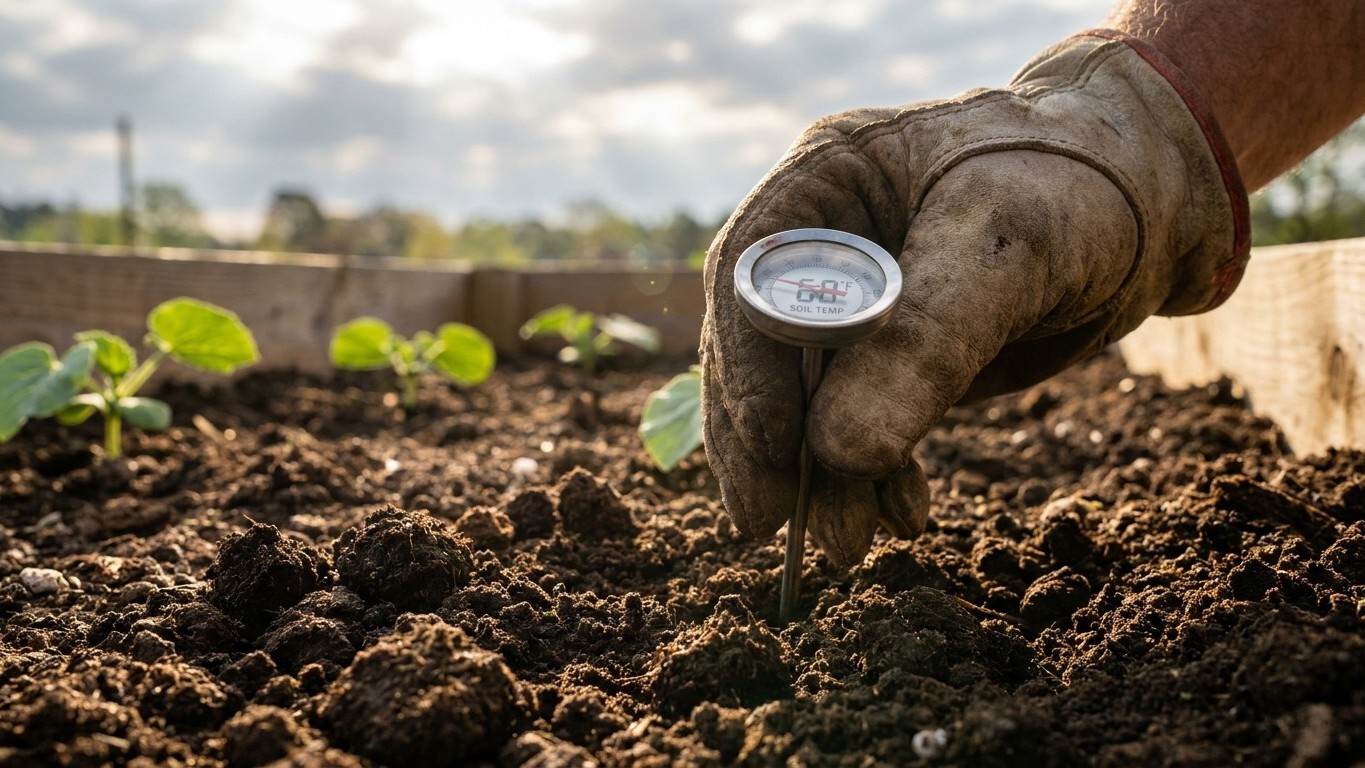
Frost is a proxy, and a slightly misleading one. What actually stops a melon seed from germinating isn’t the risk of frost, it’s cold soil. Melon roots sulk in cool ground even when the air has warmed past danger, and soil takes longer to catch up than the thermometer does. That gap between “frost risk is over” and “soil is actually warm” can run one to three weeks in a northern climate, which is exactly the stretch a lot of first-time growers lose a season to by planting too early.
North Dakota sits mostly in USDA Hardiness Zone 3a to 4b, based on the 2023 USDA Plant Hardiness Zone Map (built on 1991-2020 averages of extreme minimum winter temperature). That zone number tells you almost nothing about melon-growing risk directly, since it measures winter cold, not spring warm-up. But it’s a fair shorthand for how far north and how continental this climate is: short summers, a hard winter reset, and a narrow gap between “too cold” and “already fall.”
The practical fix growers here lean on is warming the soil artificially before they trust the date at all. Black plastic mulch laid a week or two ahead of planting, raised beds that drain and warm faster than flat ground, and floating row cover over young transplants all push soil temperature up without waiting on the calendar. None of that changes the frost date. It just buys the plant a head start once the frost date arrives.
How long the season lasts here
Put the two frost windows together and North Dakota’s frost-free season runs somewhere between 133 and 154 days, depending on where spring and fall frost actually land in a given year. The short end comes from pairing the latest likely spring frost (May 15) with the earliest likely fall frost (September 25); the long end comes from pairing the earliest spring frost (May 4) with the latest fall frost (October 5). Both dates come from the same NOAA reference station near Fargo, so treat the range as a planning tool, not a guarantee for your own plot.
That’s a moderate window by national standards, long enough to grow melons but with little margin for error. It changes two decisions right away. First, whether transplanting is worth the trouble: with a season this tight, most growers here start melons indoors three to four weeks before the last frost date rather than direct-seeding, since a head start of even two weeks can be the difference between fruit that ripens and fruit that doesn’t. That means paying attention to root disturbance, since melons dislike having their roots disturbed at transplant more than most vegetables do, and using biodegradable or peat pots that go into the ground intact is standard practice for exactly this reason.
Second, it settles the succession-sowing question. A window over 150 days can sometimes support a second sowing of a fast crop after an early one finishes. A window closer to 130 days generally can’t, not for melons, which need most of the season just to mature once. In North Dakota, the honest answer is that the first sowing is usually the only sowing, and the resources otherwise spent on a second planting are better spent on protecting and pushing along the first one. Gardeners weighing succession sowing for faster crops in a garden that also grows melons can compare timing strategies in our succession sowing guide.
Heat and water in North Dakota

The Fargo reference station averages just 11.7 days a year at or above 90°F, per NOAA’s 1991-2020 Climate Normals. That’s a small number, and it matters more than the frost dates for how a melon vine actually performs. Melons don’t ripen on calendar days, they ripen on accumulated warmth, and a territory with fewer than a dozen truly hot days a year is one where every one of those days counts. It also means the sowing date itself is less decisive than the techniques used to squeeze extra warmth out of an ordinary day: black plastic under the vines, wind protection to stop cool breezes from stripping heat off the leaves, and siting the bed against a south-facing wall or fence where reflected heat adds up over a season.
Summer rainfall averages about 10.0 inches across June, July, and August, with June the wettest at 4.29 inches and August the driest at 2.6 inches, based on the same NOAA station’s monthly normals. That’s not a drought figure, but it’s not generous either, and it never reads alone. What matters just as much is how that rain arrives and what it lands on. A thunderstorm that dumps an inch in twenty minutes runs off a clay soil and barely wets a sandy one below the surface; a slow soaking rain behaves completely differently on the same ground. Melon roots want deep, even moisture, not a wet crust over dry subsoil, so a rain gauge on your own plot tells you more than the regional average ever will.
This is not a hot, dry climate, and it’s worth saying plainly because a lot of general melon advice assumes it is. North Dakota’s risk runs the other way: a cool, occasionally damp summer that slows ripening, favors powdery mildew and other foliar disease on crowded vines, and leaves fruit short on the sugar that only comes from sustained heat in the final weeks before harvest. Airflow between plants, morning watering rather than evening, and resisting the urge to overcrowd the bed all do more good here than anywhere warmer.
Which melons suit North Dakota
Given a season in the 133 to 154 day range and barely a dozen days of real heat, the types that make sense here are the earliest-maturing selections within each melon category, whether that’s a cantaloupe-type, a watermelon-type, or a smaller honeydew-type melon. All three categories include early-maturing options; the goal in this climate is picking from the early end of whatever category you want, not chasing a specific brand or name.
Given the summer’s modest rainfall and the risk of a cool, humid stretch, disease resistance, particularly to powdery mildew, deserves to be the first filter applied, ahead of size or flavor claims. Airflow matters as much as variety selection: melons spaced too tightly trap humidity at leaf level and invite exactly the mildew problems a cool summer already sets up.
This page won’t name a specific cultivar, and that’s deliberate rather than an oversight. Seed catalogs change their offerings yearly, regional performance varies by soil and microclimate even within one state, and a variety that thrives in a trial plot near Fargo may underperform fifty miles away on different ground. The one recommendation that actually means something is the list of varieties trialled locally by North Dakota State University Extension, which tests melon performance against this exact climate every season and updates its guidance as new selections prove themselves. That’s the list worth checking before buying seed, not a generic name pulled from a national gardening article that was never tested against a Fargo frost date or a Fargo August.