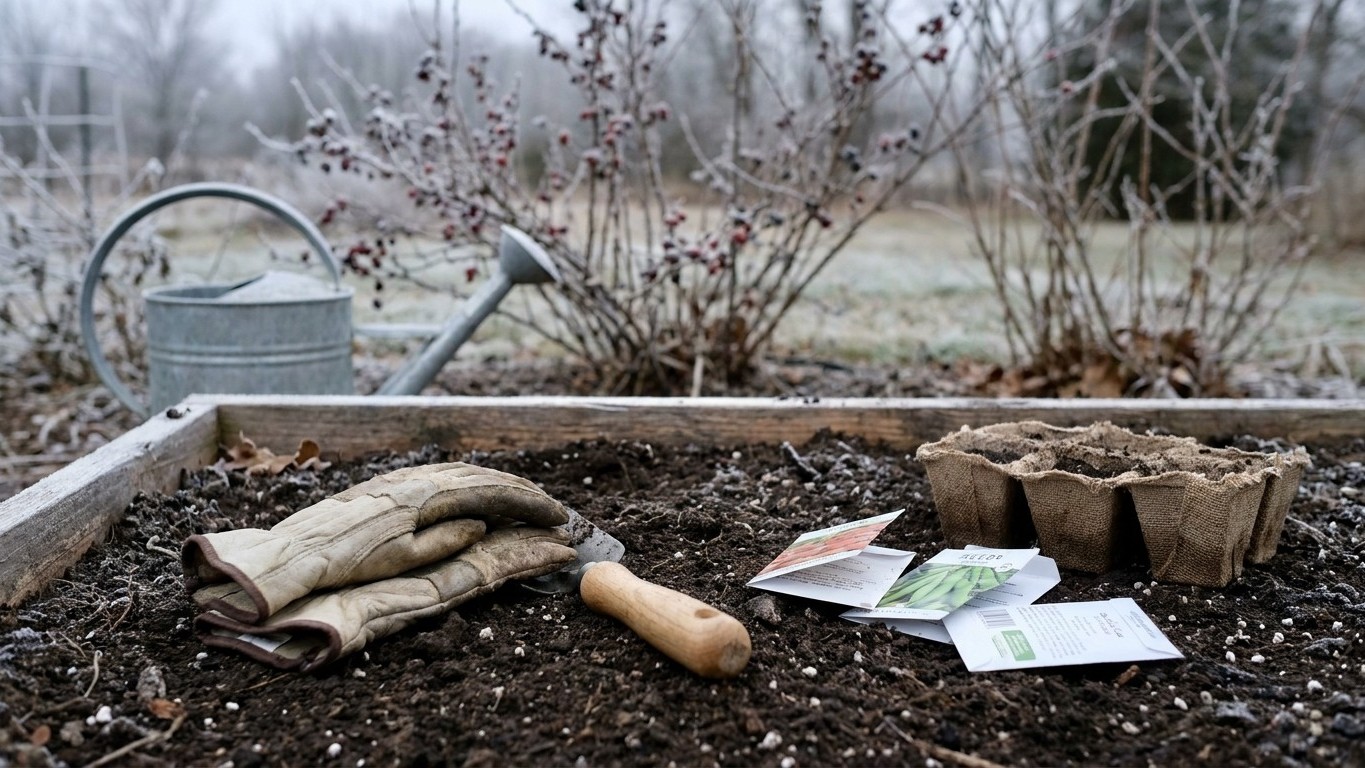

Open ground in North Dakota stays locked in February, so nothing goes into outdoor soil this month. Zone 3a-4b winters keep frost several feet deep well past the calendar page. What actually happens now is garlic planted last fall finishing its cold stretch, seed orders landing, dormant pruning, and the first indoor sowings for the slowest crops of the year.
What goes in the ground in February

The ground itself makes the decision here, not the date on the wall. Soil in North Dakota in February sits frozen solid, often to a depth that makes a shovel useless without a pickaxe. Seeds and transplants need workable, thawed soil to root, and that condition simply doesn’t exist statewide this month. Anyone who tells you otherwise is guessing from a warmer zip code.
That said, a handful of things are already underway or can still happen with the right setup. Garlic and shallots planted in fall are sitting under mulch right now, vernalizing through the cold the way they need to in order to bulb properly come summer. If a mild stretch has exposed cloves or heaved them out of loosened soil, press them back down and add mulch, but don’t plant new cloves into frozen ground now, that window closed months ago.
Cold frames and low tunnels change the math slightly. If you built one in fall and it’s been holding hardy greens (spinach, mâche, claytonia) through the winter, those plants may still be alive and even putting on slow growth on sunny days when the frame traps heat. That’s not new planting, though, it’s overwintered stock hanging on.
Bare-root fruit trees, shrubs, and canes are sometimes shipped or purchased this month, but they go into pots indoors or into a heeled-in trench in a heated garage rather than straight into frozen ground. Rhubarb crowns and Belgian endive roots can be dug from cold storage and forced indoors in a dark, cool space for a harvest of tender stalks or chicons weeks before anything outdoors even thinks about growing. That’s the honest list. Padding it with lettuce or peas direct-sown outside this month would set a reader up to lose seed and time for nothing.
What to start under cover
Indoor seed starting in February works backward from the last spring frost window, which for the reference station runs May 4 to May 15. Rural and suburban gardens, especially those away from town or at higher elevation, often see frost linger later than that, so treat May 15 as the safer anchor for your own math rather than May 4.
Onions and leeks are the classic February start in this climate because they’re slow from seed, needing roughly ten to twelve weeks of indoor growth before they’re sturdy enough to harden off and move outside. Counting back from mid-May puts the sowing date for these squarely in February. Peppers, needing eight to ten weeks, and some early cabbage-family crops also make sense to start now under lights, especially in the northern and higher-elevation parts of the state where the frost window skews later.
Tomatoes are the crop most gardeners jump the gun on. Started too early, in February for a May 4-15 transplant date, they turn into leggy, rootbound plants sitting in cups on a windowsill for weeks longer than they should, stressed and stunted before they ever see garden soil. Six to eight weeks before the last frost is the usual window for tomatoes, which for most of North Dakota lands in March, not February.
The two failure modes run in opposite directions and both cost a season. Start too early and you’re nursing overgrown, weak seedlings that never fully recover once transplanted. Start too late and warm-season crops don’t have enough growing time to produce before the first fall frost arrives, which for the reference station falls between September 25 and October 5. Onions, leeks, and peppers are the safe February bets; save tomatoes, squash, and cucumbers for later.
What is ready to pick
Outdoors, the honest answer is nothing. Snow cover and frozen ground rule out any fresh harvest from open garden beds this month, and pretending otherwise does a disservice to anyone checking this page before heading out with a basket.
What still feeds a household comes from a few specific sources. Kale, and sometimes leeks, planted in fall and left in the ground under a thick blanket of snow can survive the winter in sheltered spots and be dug or cut on a mild day, snow acting as surprisingly good insulation against the harsher air temperature above it. A cold frame with hardy greens can offer a steady trickle of leaves on sunny afternoons even in February, though growth is slow and yields are modest.
Indoors, sprouts and microgreens are the fastest fresh food a North Dakota gardener can produce this month, ready in as little as a week or two from seed on a countertop, no soil-thaw required. Forced rhubarb and Belgian endive, started from dormant roots pulled from storage, also come ready to harvest on a similar timeline.
Stored crops need a hands-on check now rather than a wait-and-see approach. Squash, potatoes, and onions held in a root cellar or cool basement should be inspected for soft spots, sprouting, or a musty smell, all signs that one bad specimen is starting to affect its neighbors. Pull anything questionable before it spreads rot through the whole bin, and use those items first rather than letting them go to waste in storage.
The jobs that matter this month
Dormant pruning is the single biggest task with a real deadline attached. Apple, plum, and other fruit trees, along with raspberry and currant canes, can be pruned while they’re fully dormant and the structure of the plant is visible without leaves in the way. Wait too long and buds start swelling, at which point pruning cuts into wood the plant has already invested energy into, setting back the season’s growth and fruiting.
Ordering and planning
Seed catalogs move fast, and popular varieties, especially short-season ones bred for a zone 3a-4b climate, sell out before spring planting season even opens. Ordering now guarantees the varieties actually suited to a short North Dakota summer rather than whatever’s left on the shelf in April. This is also the natural time to sketch next season’s rotation on paper, tracking which beds grew heavy feeders like squash or tomatoes so they can rest under legumes or get compost worked in before anything goes back into that soil.
Soil, tools, and structures
A soil test sent off now, if the sample can be pulled from an unfrozen pocket or was collected in fall, comes back with results in time to plan amendments before spring planting rather than after. Turning an outdoor compost pile, even a frozen one, keeps it from going anaerobic under a crust of ice, and adding kitchen scraps through winter builds volume for spring. Garden tools benefit from a real cleaning and sharpening session now, pruners and hoes work better and last longer with rust scraped off and edges honed before the rush of spring work begins. Raised beds, fencing, and trellis structures damaged by winter weight or freeze-thaw heaving are easier to repair now, before soil thaws and before plants are in the ground competing for attention.
What not to do in February
The most common mistake is treating a warm afternoon as a signal that spring has arrived. A 45-degree day in February doesn’t mean the soil underneath has thawed, and it certainly doesn’t mean the frost risk has passed, since the reference station’s last spring frost window runs all the way to May 4-15. Planting or moving anything into open ground based on air temperature alone is a bet against months of climate data.
Uncovering cold frames or removing mulch from garlic and perennial beds after one mild stretch is a related error. North Dakota winters swing hard, and a warm week is routinely followed by a hard freeze that catches exposed crowns and cloves off guard. Leave protective mulch in place until the thaw is consistent, not just present for a day or two.
Feeding nitrogen to dormant perennials, fruit trees, or overwintered garlic this month is also a wasted, sometimes harmful, move. Plants that aren’t actively growing can’t use that nitrogen, and applying it now can push soft, tender growth right before a freeze snaps it back, or simply leach away before the plant ever needs it in spring. Hold fertilizer until active growth resumes and the plant can actually take it up.
Starting warm-season seeds like tomatoes, squash, or cucumbers indoors this early is the last trap. It feels productive, but with a last frost window that doesn’t open until May, those seedlings will be leggy and stressed long before they can safely go outside. Stick to onions, leeks, and peppers for February starts and save the rest for March.
Checking this against your own county
Everything above is a state-wide starting point, not an instruction tailored to one address. North Dakota’s elevation changes, the moderating effect near larger lakes, and the real gap between the state’s northern and southern counties can shift these frost windows by two weeks or more in either direction. A garden in the Red River Valley doesn’t run on the same clock as one in the western Badlands.
The North Dakota State University Extension service publishes county-level guidance and localized planting calendars that account for these differences far better than any statewide figure can. Before committing seed or transplants based on the dates here, check that resource against your own county’s growing conditions.
Common questions
Can I plant garlic in North Dakota in February?
No. Garlic goes into the ground in fall so it can vernalize through winter cold. By February, cloves are already in the ground under mulch or the window has closed for the season; new cloves planted now into frozen soil won’t establish properly.
Is it too early to start tomato seeds indoors in February?
For most of North Dakota, yes. Tomatoes need about six to eight weeks indoors before transplanting near the last frost window of May 4 to May 15, which points to a March start, not February. Starting in February typically produces leggy, rootbound plants by transplant time.
What can I harvest from a North Dakota garden in February?
Little to nothing from open ground. Overwintered kale under snow cover, greens from a cold frame, forced rhubarb or endive from dormant roots, and indoor sprouts or microgreens are the realistic options this month.
When should fruit trees be pruned in North Dakota?
While they’re still fully dormant, which typically means before buds begin swelling in late winter. February is a common window for this, done while the branch structure is visible and before the tree redirects energy into new growth.