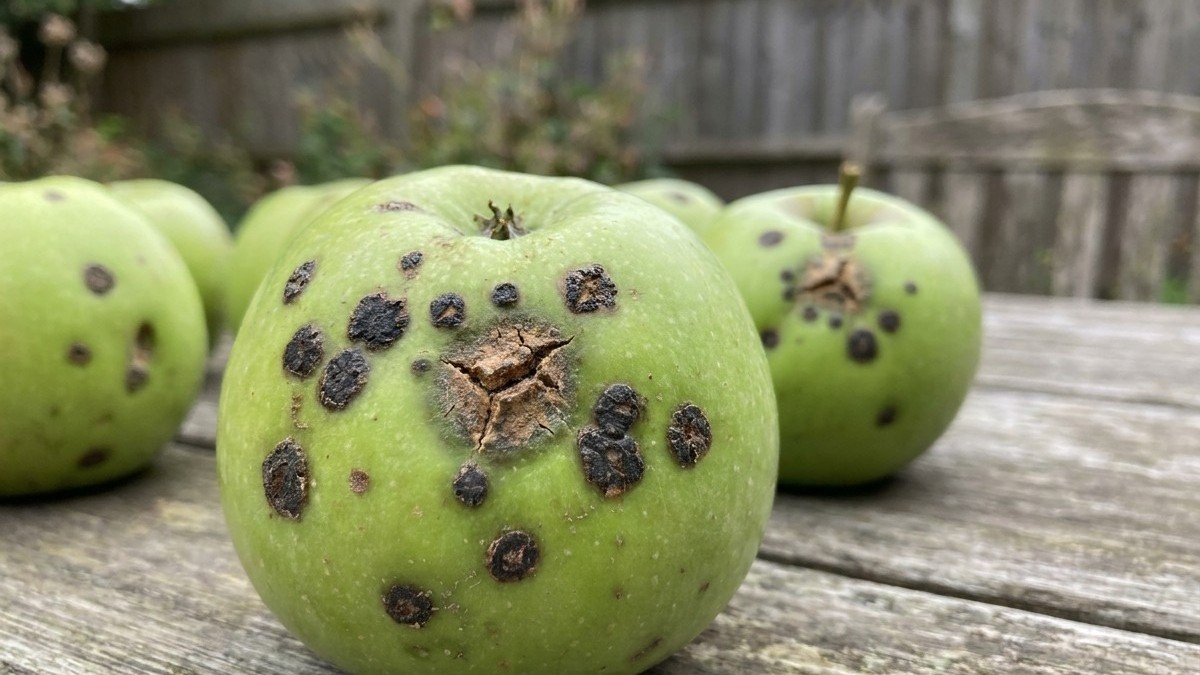

In the mildest pockets of the Northwest Territories, hardy crab apples and a handful of prairie-bred apple varieties ripen in a narrow window between late August and mid-September, right up against the territory’s early fall frost. Pick as soon as fruit separates easily from the branch, because there’s little cushion before cold arrives. Most of what survives here doesn’t store long: expect weeks, not months, unless you have a cellar or fridge space holding a steady few degrees above freezing. Commercial-scale storage guidance for apples in the NWT simply doesn’t exist.
When apples are ready to pick in Northwest Territories
Forget the calendar. In a territory this size, the tree tells you when fruit is ready, not a date on a seed catalog. Look for full color development for the variety, a background skin that’s lost its green cast, and fruit that twists free from the spur with a gentle lift instead of a tug. Bite one. If the flesh is starchy and the seeds are still pale, give it another week if the weather allows it.
The weather rarely allows much. At the Yellowknife A station, Environment and Climate Change Canada’s 1981-2010 climate normals put the average last spring frost at May 25 and the average first fall frost at September 18, a frost-free window of roughly 116 days. That’s an average, not a guarantee: in one year out of two, the spring frost lingers past May 25, and in one year out of two, the fall frost lands before September 18. A tree carrying fruit that isn’t finished by the second week of September is racing a coin flip it loses about half the time.
That squeeze is why timing here comes down to choosing the earliest-maturing hardy stock available and siting it somewhere the frost date runs a little later than Yellowknife’s. The South Slave region, around Hay River and Fort Smith, sits at a lower latitude and lower elevation than Yellowknife and tends to see a milder shoulder season, though no station-level normals as detailed as Yellowknife’s are cited here for those communities. A dooryard tree tucked against a south-facing wall, out of the wind, buys extra days on both ends of the season that an open, exposed planting never gets.
Winter chill, the accumulated cold that tells a fruit tree when it’s safe to break dormancy, is a separate question from whether the tree survives the winter at all, and in the NWT, survival is the harder test by far. A tree that gets plenty of chill but freezes to the ground in January never reaches the ripening question. That’s covered next.
Which ones keep, and which must be eaten
Two different fruits show up when people say “apple” this far north. There are hardy crab apples, bred for cold survival more than eating quality, and there’s a short list of true apple cultivars developed for the Canadian prairies that occasionally get planted in NWT dooryards on the strength of a zone 2 or zone 3 hardiness rating. They don’t behave the same way once picked.
Crab apples such as Dolgo ripen earliest, often before the average September frost date even arrives, and that’s their whole advantage: they finish the job while there’s still time. The fruit is small, tart, better suited to jelly or cider than the fruit bowl, and it softens fast once picked. Treat it as a use-it-in-days crop, not a keeper.
Prairie-hardy dessert apples like Norland ripen early too and share the same fate: soft flesh, quick to turn mealy, gone within a few weeks even under decent conditions. Slightly later, firmer cultivars sometimes grown for their zone 2 or 3 rating hold a bit longer in a cold room, but nothing in this territory’s climate produces the dense, late-season fruit that keeps for months the way a Honeycrisp or a Northern Spy does farther south. The growing season simply ends before that kind of fruit can finish developing.
On any given tree, sort as you pick. Fruit that’s slightly underripe, firm, and free of bruises can go into cold storage for a trial run. Anything overripe, dropped, or blemished should go straight to the kitchen. It won’t improve waiting on a shelf, and one soft apple in a box spreads rot to its neighbors within days.
No variety-by-variety storage data for apples grown in the Northwest Territories is published by the territorial government or any other local source found for this page. What follows next is drawn from general cold-storage principles, not a documented NWT trial, and should be read that way: a reasonable approach, not a tested one.
Storing them through a Northwest Territories winter
Everything about winter storage changes once you’re this far north. Across the reference period, the coldest month at Yellowknife averages a daily minimum of -29.5°C (-21.1°F), according to Environment and Climate Change Canada’s 1981-2010 climate normals. That’s not the record low for the worst night of the year, it’s the average low across the whole coldest month, which means an unheated shed or an uninsulated porch spends weeks below that mark. Apples stored in a space like that don’t chill. They freeze solid, and a frozen apple turns to mush the moment it thaws.
The traditional cold cellar that works for a grower in a milder province needs real insulation and often a small heat source here, not just distance from the house. The target for apple storage anywhere is a space that holds steady between about 0°C and 4°C with high humidity, cold enough to slow ripening, warm enough to stay clear of the deep freeze that outdoor temperatures reach for months at a stretch. A root cellar dug into ground that itself freezes several feet down has to be built with that in mind, or the fruit inside fares no better than fruit left on the porch.
For most households, a spare refrigerator set in a garage or basement does the job more reliably than a cellar, because it holds its own temperature regardless of what’s happening outside. Store apples away from potatoes and other vegetables that give off ethylene at different rates, wrap or bag them loosely, and check the box every couple of weeks for any fruit turning soft, since one going bad speeds up the rest.
None of this is covered in territorial extension material aimed specifically at tree fruit. The Government of the Northwest Territories publishes a general agriculture services page through the Department of Industry, Tourism and Investment, but it isn’t built around apple storage guidance the way a horticulture office farther south might be. Growers here are largely working from general food-storage principles adapted to a climate the published guidance doesn’t address directly.
What goes wrong here
The two frost dates cut both ways, and that’s where most disappointment starts. Blossom that opens before the average last frost of May 25 gets caught by cold nights in roughly half the years on record, since that date is a midpoint, not a safe cutoff. A grower who plants for early flowering to squeeze in a longer season is also planting for a higher chance of losing that year’s crop to a late frost. The trade-off runs the other way too: wait for safer conditions before expecting bloom, and the window left before the September 18 average fall frost shrinks even further.
Fall brings the same math in reverse. Fruit that hasn’t finished ripening by the second week of September is exposed to a frost that arrives on time or early in about half the years this territory has recorded. There’s no cushion built into a 116-day season, and pushing harvest a week or two past what the tree can safely handle is a common way to lose a crop overnight.
Winter is the deeper problem, and it’s often underestimated by anyone used to a milder province. A coldest-month average minimum of -29.5°C is enough to kill wood on apple stock that isn’t rated for genuinely severe cold, and even hardy cultivars planted without wind shelter or snow cover for root insulation can suffer dieback that a sheltered, mulched tree of the same variety survives nearby. Site selection matters more here than variety selection in many cases.
- Blossom lost to a late frost after an early bloom
- Fruit caught unripe by an early fall frost
- Winter dieback on wood not suited to the coldest-month minimum
- Wind exposure or thin snow cover leaving roots unprotected
- Stored fruit freezing in an unheated shed instead of a temperature-controlled space
Common questions
Can apples actually be grown in the Northwest Territories?
In sheltered sites, mostly in the South Slave region around Hay River and Fort Smith, hardy crab apples and prairie-bred zone 2 or 3 apple cultivars are the realistic options. No local source documents commercial-scale apple production in the territory.
What’s the best time to pick apples in NWT?
Go by the tree’s stage rather than a date: full color, skin that’s lost its green tone, and fruit that separates easily. Aim to finish before the September 18 average first fall frost, keeping in mind that frost arrives earlier in about half of all years.
How long do NWT-grown apples keep in storage?
Early-ripening hardy varieties and crab apples typically hold for weeks rather than months, and only in a space kept steadily between about 0°C and 4°C. An unheated shed or garage will freeze the fruit given a coldest-month average minimum of -29.5°C.
Does the Government of NWT publish apple-growing guidance?
The territory maintains a general agriculture services page through the Department of Industry, Tourism and Investment, but it doesn’t include apple-specific variety or storage guidance. Growers rely on general cold-climate practices adapted to local conditions.