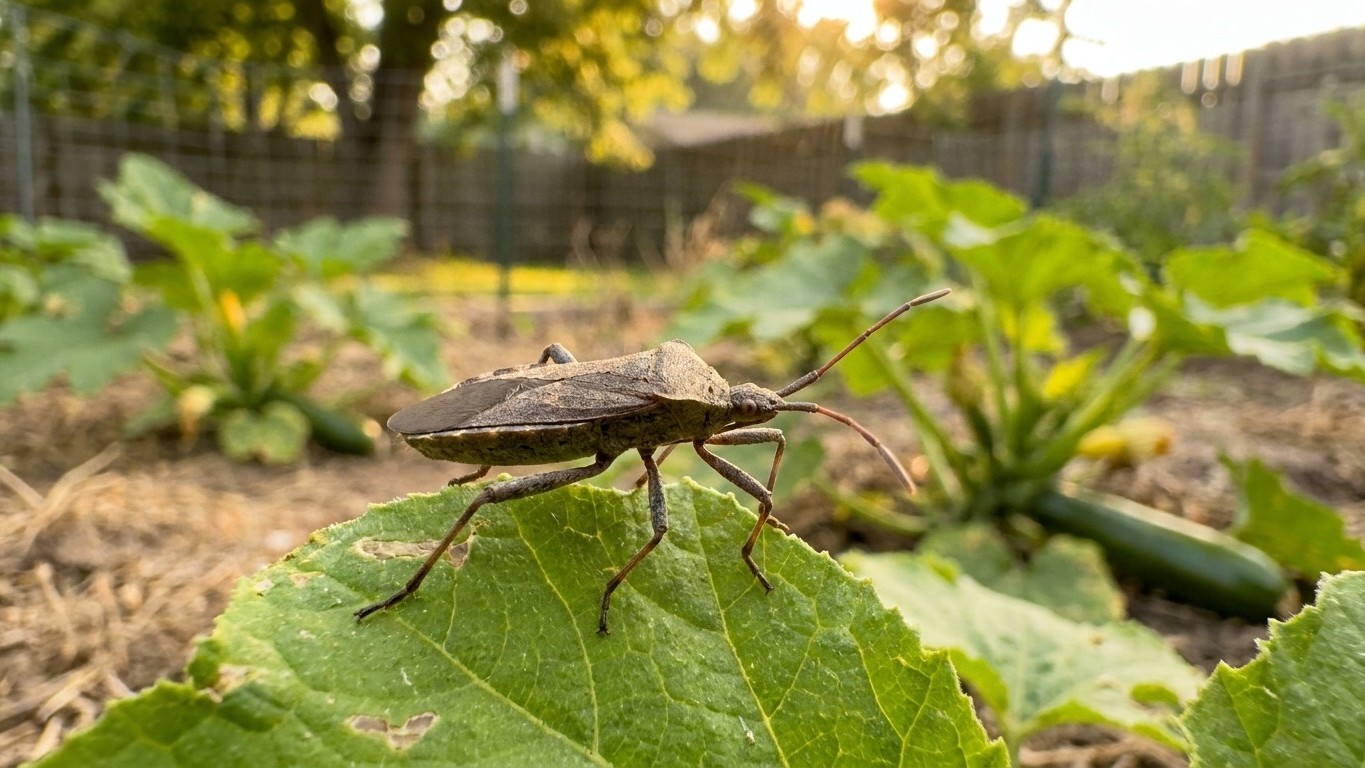

Four insects account for the squash damage gardeners report across the Northwest Territories: aphids, cutworms, root maggots, and slugs. None of them work off a fixed calendar date. They follow the frost-free window instead, which runs from a mean last frost of May 25 to a mean first frost of September 18. That window is the frame for everything below: what shows up first, how to tell it apart from other trouble, and what’s worth doing about it.
Which pests attack summer squash in Northwest Territories

UAF Cooperative Extension, working just across the border in a climate close enough to serve as the region’s reference point, documents five insects for gardens at this latitude: aphids, cutworms, root maggots, slugs, and spruce beetle. That’s a short list on purpose. The far north doesn’t carry the pest pressure of warmer growing regions, and there’s no reason to pad the count to make the page look busier than the territory’s own conditions warrant.
One name on that list doesn’t belong anywhere near a squash bed. Spruce beetle attacks the bark of mature spruce trees, not vegetable foliage or fruit, so seeing it listed for the territory tells you nothing about what’s chewing on your squash plants. If you’re looking at pitch tubes or boring dust on a nearby conifer, that’s a forestry question for a different page entirely. Cross it off and move on.
That leaves four candidates worth watching in a summer squash planting:
- Aphids — small, soft-bodied insects that cluster on the undersides of leaves and along new growth, feeding by piercing the plant and drawing out sap.
- Cutworms — soil-dwelling caterpillars that curl up near the base of a plant during the day and feed at night, often severing a young stem right at soil level.
- Root maggots — small white larvae that develop in the soil and tunnel into roots and the base of stems, usually after a fly lays eggs near a young plant.
- Slugs — soft-bodied mollusks that rasp irregular holes in leaves and fruit, most active in cool, damp conditions and largely absent during dry stretches.
Four confirmed players is not a long list, and that’s consistent with a territory sitting in Canadian hardiness zone 1b, one of the coldest classifications a garden can carry. Fewer generations of insects fit into a short, cool season, which is exactly why the list stays this size rather than growing the way it might for a garden further south.
When each one shows up, and what it does first
Everything here keys off the frost-free window rather than a named month, because a mean date is not a guarantee. The mean last spring frost sits at May 25 and the mean first fall frost at September 18, which gives a stretch of roughly 116 days between them. But a mean is a midpoint, not a safe edge: in about half of all years, frost arrives later than either of those dates, on both ends of the season. Anything timed to “late May” or “mid-September” should really be timed to your own local sign of frost clearing or returning, not the date on a chart.
Cutworms tend to be the first problem a gardener notices, and it shows up fast. Within the first week or two after seedlings go into the ground, or after direct-seeded squash sends up its first true leaves, a plant that was standing yesterday is lying flattened at the soil line today, the stem chewed clean through. That’s the signature: sudden, total collapse of one plant while its neighbors look fine.
Root maggots work on a similar early timeline but produce a slower, sneakier symptom. Flies lay eggs near the stem base not long after planting, and the larvae spend the following couple of weeks tunneling into roots and the lower stem. The first sign isn’t a severed plant, it’s a seedling that wilts in the heat of the day even though the soil underneath is clearly moist, because the root system feeding it has already been compromised.
Aphids build up later, once vine growth is running and there’s more tender new tissue for them to colonize. The first sign is usually at the growing tips, not the older leaves: new growth curls, looks slightly distorted, and often carries a faint sticky residue where the insects have been feeding.
Slugs track the moisture in the season rather than the calendar. Damage clusters around the wetter stretches of summer, and the giveaway isn’t just the ragged holes in leaves and fruit, it’s finding fresh damage at dawn alongside a slime trail, since slugs feed overnight and tuck away during the day.
Telling the damage apart from everything else
Squash plants in a short, cool-season territory pick up plenty of stress that has nothing to do with insects, and mixing the two up leads to fixing the wrong problem. A wilting seedling, a yellow leaf, or a hole in a squash blossom can point to at least four different causes, and only one of them is a pest from the list above.
| What you see | Could be | What settles it |
|---|---|---|
| Seedling toppled, stem severed at soil level | Cutworm | Dig gently in the top inch of soil right next to the stem; a curled gray or brown caterpillar confirms it. Wind or Transplant shock bends a stem, it doesn’t cut it clean through. |
| Wilting seedling, soil still moist | Root maggot | Loosen soil at the base of the wilting plant and look for small white larvae around the roots. Drought wilt responds within hours of watering; root maggot damage doesn’t. |
| Curled, yellowing new growth, faint sticky film | Aphids | Turn a leaf over and check the underside of the growing tip for clusters of tiny insects. A nutrient deficiency yellows leaves evenly and doesn’t leave a sticky residue. |
| Ragged holes in leaves or fruit, slime trail | Slugs | Check at dawn, before the slime dries. Hail or wind tears leaf edges in a single event and leaves no trail behind. |
| Overall stunted plant, no visible insects anywhere | Soil or nutrient issue | None of the four pests documented for this territory produces uniform stunting without any visible feeding sign; that pattern points toward soil, not insects. |
The single most useful habit is checking the plant, not guessing from across the garden. A pest and a growing condition can produce a similar-looking wilted or yellowed leaf from ten feet away, and the difference only shows up once you’re down at soil level looking at the stem, the roots, or the underside of a leaf. When the cause still isn’t obvious after that close look, that’s the point to bring a sample or a photo to a local extension office rather than treat for a pest that might not be there.
What actually works here, and what is a waste of time
In a season this short, timing does more work than any product ever could. Cutworm collars, cut from cardboard or a similar material and pushed an inch into the soil around a young stem, stop the most common early-season loss cold, but only if they go on before the seedling is damaged, not after. Floating row cover put down at transplanting keeps cutworm moths, root maggot flies, and early aphids off the plant entirely during the vulnerable first weeks, though it has to come off once flowers open so pollinators can reach them, since squash depends on insect pollination to set fruit.
Hand removal still earns its place, especially for slugs. A quick check at dusk or early morning, when slugs are active and visible, and simply removing them by hand deals with a light population faster than any barrier or trap. Clearing garden debris and mulch away from the stem base also removes the daytime hiding spots both cutworms and slugs rely on.
What tends to waste an already short season is waiting. Treating an entire bed after damage is already widespread, rather than acting on the first severed seedling or the first curled leaf, means losing more plants than the problem ever needed to cost. Reaching for a treatment before confirming which of the four pests is actually present is the other common misstep, since a product aimed at the wrong life stage or the wrong insect does nothing but burn time in a growing window that’s already tight.
What’s legal to use, and in what form, is a question for the territory’s own agriculture service, which knows current registrations far better than a general gardening page ever could.
Where to check this for your own county
Pest pressure inside the Northwest Territories doesn’t sit still from one community to the next. A garden along the Mackenzie Valley and one further north can see different timing, different pest loads, or a pest from this list showing up in one yard and never in another a few miles away. What’s documented at the territorial level is a starting point, not a guarantee of what’s actually in a specific garden.
The territory’s own agriculture service, listed by the Government of the Northwest Territories at iti.gov.nt.ca/en/services/agriculture, is the right next stop for anything a photo or a description can’t settle. That’s also the place to confirm current, legal options for a confirmed pest, since that answer changes by jurisdiction and by year.
If a plant is showing damage that doesn’t match cleanly to any of the four pests or the non-pest causes above, the next useful step isn’t another search. It’s a sample, or a clear photo of the stem base, the roots, and the underside of a few leaves, brought or sent to that agriculture service before deciding on a course of action.