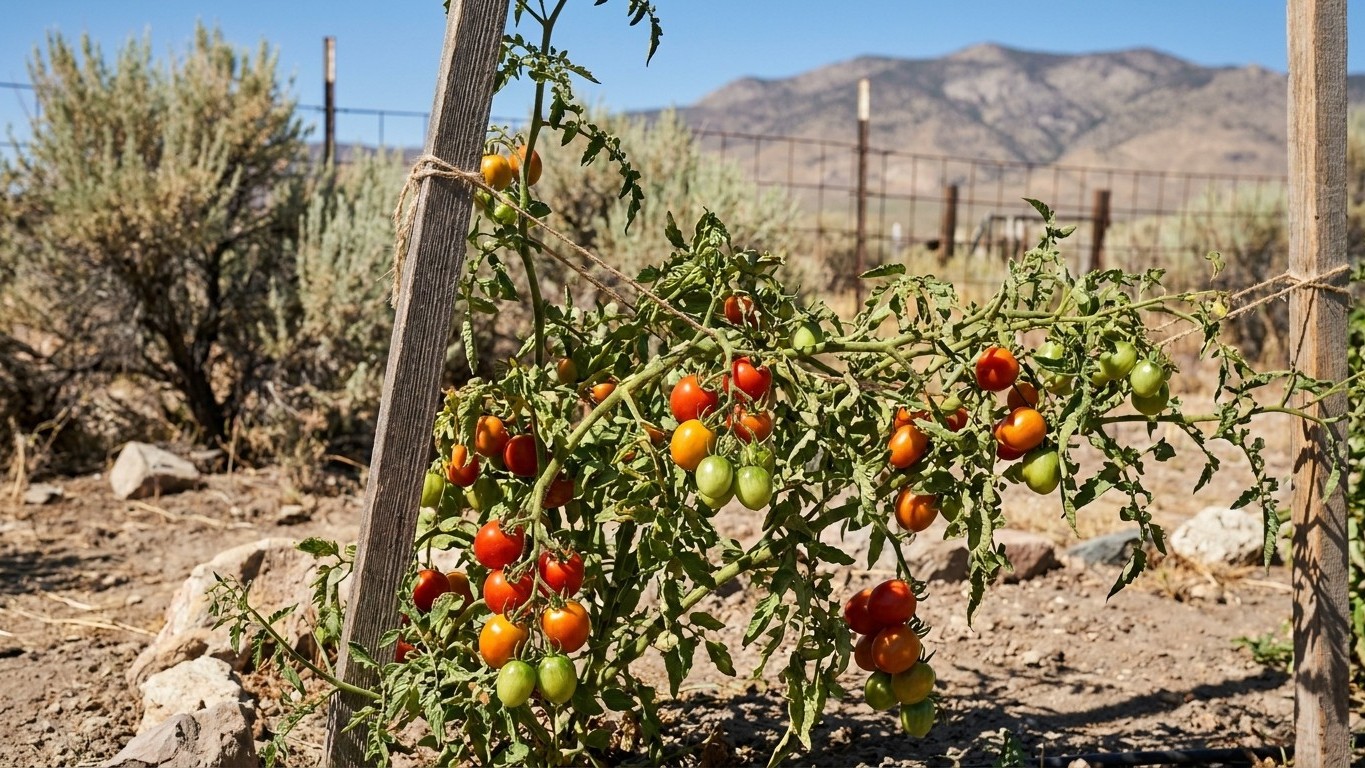

Pick tomatoes in Nunavut whenever frost is forecast, not on a set date. The fall frost average for the Rankin Inlet area sits at September 13, but that’s a midpoint, not a guarantee, and with a growing season this short, most fruit coming off the vine will still be green. That means the real skill here is sorting and ripening indoors, not timing a perfect harvest.
When to pick tomatoes in Nunavut
The frost-free window around Rankin Inlet runs from an average last spring frost of June 19 to an average first fall frost of September 13. That’s roughly 86 days between the two, and both dates come from Environment and Climate Change Canada’s Canadian Climate Normals, based on the 1981-2010 period at station RANKIN INLET A. Neither date is a safe cutoff. These are means, which means in one year out of two, frost arrives later than September 13. Some seasons buy you extra time. Others don’t, and a hard freeze can show up in late August.
Rankin Inlet falls in Canadian hardiness zone 0a, a rating that has nothing to do with the USDA zones used across the border. The Canadian system weighs seven climate variables, not one, and Natural Resources Canada is explicit that there’s no clean conversion between the two scales. Don’t try to match zone 0a to a US zone number. It simply tells you this is about as short and cold a growing window as it gets on this continent.
Given that math, picking by the calendar makes little sense. A better approach is picking by the forecast. Once nighttime lows are dropping into the mid-30s and a frost advisory shows up for your area, that’s the signal to strip the plants, whatever the calendar says. Waiting for September 13 as if it were a finish line risks losing the whole crop if that particular year runs on the early side of the average.
Watching the weather instead of the date
Because the fall frost date is a statistical middle point rather than a promise, the safest habit is tracking short-range forecasts through late summer and into early fall. A single clear, calm night with a temperature dip is often all it takes at this latitude. Growers who wait until the average date arrives are, by definition, betting against half the historical record.
What to do with the green ones
With a season this compressed, expect the bulk of the harvest to come in green, and that’s not a failure of technique. It’s math. Tomatoes commonly need well beyond 86 frost-free days to move from transplant to a full flush of ripe fruit, and Nunavut’s window rarely allows for more than a partial ripening period even in a favorable year.
Not all green tomatoes are equal, though, and sorting them takes about ten seconds per fruit. Mature green tomatoes have reached full size for their variety, the skin has turned from dark green to a lighter, slightly glossy green, and the blossom end (opposite the stem) often shows a faint whitish or pinkish blush starting to form. These are the ones with a real shot at ripening off the vine. Immature green tomatoes are smaller, feel rock-hard, and stay a uniform dark green all over, including at that blossom end. Those rarely ripen well no matter what you do with them, since the internal sugar and color development hasn’t started.
Using the ones that won’t ripen
Immature green tomatoes aren’t wasted, they’re just destined for a different kitchen use than a fresh slice. Fried green tomatoes, green tomato relish, chutney, and pickled green tomatoes all lean on that firm, tart, unripe flesh. Salsa verde made with tomatillos can also take a green tomato substitute in a pinch. Treat this fruit as a savory or preserved ingredient rather than something you’re waiting to turn red.
Mature green fruit is the batch worth setting aside separately, because that’s the group that benefits from the ripening methods below. Mixing mature and immature green tomatoes in the same box just means checking each one individually later, so a quick sort at picking time saves effort down the line.
Ripening indoors, and how long they keep
Mature green tomatoes ripen off the vine using the same ethylene gas process that happens naturally on the plant, just relocated to a countertop or a cardboard box. The simplest method is a single layer of tomatoes in a shallow box, stems up, spaced so they don’t touch, stored somewhere out of direct sunlight at room temperature. Direct sun doesn’t speed ripening, it just risks scalding the skin, so a cupboard or a shaded counter works better than a windowsill.
Adding a ripe banana or apple to the box speeds things along, since both fruits give off extra ethylene that nudges the tomatoes toward color change. Some growers wrap each tomato individually in newspaper instead, which slows ripening for a more staggered supply rather than everything turning red at once. Either method works. The choice comes down to whether you want a batch all ready together or a trickle of ripe fruit over several weeks.
Checking on them and dealing with the losers
Whatever method is used, the tomatoes need regular checking, ideally every couple of days. Not every mature green tomato ripens cleanly. Some soften and spoil before they color up, especially any fruit that was bruised or had a split skin at picking time. Pull those out as soon as you spot soft spots, discoloration, or mold, since one rotting tomato in a box can speed spoilage in the ones next to it.
Cooler storage, around 55 to 60 degrees Fahrenheit if you have a root cellar or an unheated porch, slows the whole process down and can stretch the usable window for the less-ripe fruit, while warmer room temperature speeds ripening for tomatoes you want to use sooner. Either way, once a tomato is fully red and ripe, treat it like any fresh tomato: use it within a few days, and keep it off the fridge shelf until then, since cold storage dulls flavor and texture once it’s already ripe.
What goes wrong here
The most common frustration isn’t disease or pests, it’s simply running out of season. A short frost-free window between an average June 19 last frost and an average September 13 first frost leaves little margin, and because both figures are means rather than guarantees, a grower can lose a week or two of ripening time in a year when frost lands earlier than usual. That’s the nature of an average: half the years are worse than it.
Indoors, the main failure mode is rot rather than a stalled ripening process. Overcrowded boxes, fruit stacked in layers instead of spread out, or damaged skin from a rough picking session all raise the odds of mold taking hold before the tomato colors up. Checking the box every couple of days and pulling suspect fruit early prevents one bad tomato from taking down the rest.
Cold snaps before the average frost date catch some growers off guard, since it’s tempting to treat September 13 as a safe number rather than a midpoint. Watching short-term forecasts through August and into September, rather than counting on the calendar, is the more reliable habit given how far this region sits from milder growing zones. For broader guidance on managing a short-season crop like this, Agriculture and Agri-Food Canada publishes general resources worth checking alongside local forecasts.
Common questions
Can tomatoes ripen on the vine in Nunavut at all?
Some can, particularly early-picked, fast-setting fruit in a season where the last spring frost falls on the early side of its average. But given the roughly 86-day frost-free window around Rankin Inlet, plenty of fruit set later in the season won’t have time to color up before the first fall frost arrives.
Does picking tomatoes early hurt the flavor?
Mature green tomatoes that are picked deliberately for indoor ripening develop reasonably close to their full flavor, since the sugar conversion process is already underway even before the color changes. Immature green fruit picked too early won’t develop that same flavor no matter how it’s stored, which is why sorting by maturity matters more than the exact picking date.
How do I know if a green tomato is mature enough to ripen indoors?
Look for full size for the variety, a lighter, slightly glossy green skin rather than a dark, matte green, and a faint blush starting at the blossom end. Fruit that’s still small, hard, and uniformly dark green across the whole surface is unlikely to ripen well off the vine.
Is hardiness zone 0a comparable to a US zone?
No. Zone 0a comes from the Canadian system, which factors in seven climate variables rather than the single minimum-temperature measure the USDA system uses. Natural Resources Canada notes there’s no direct conversion between the two, so this number shouldn’t be matched up against a USDA zone rating from south of the border.