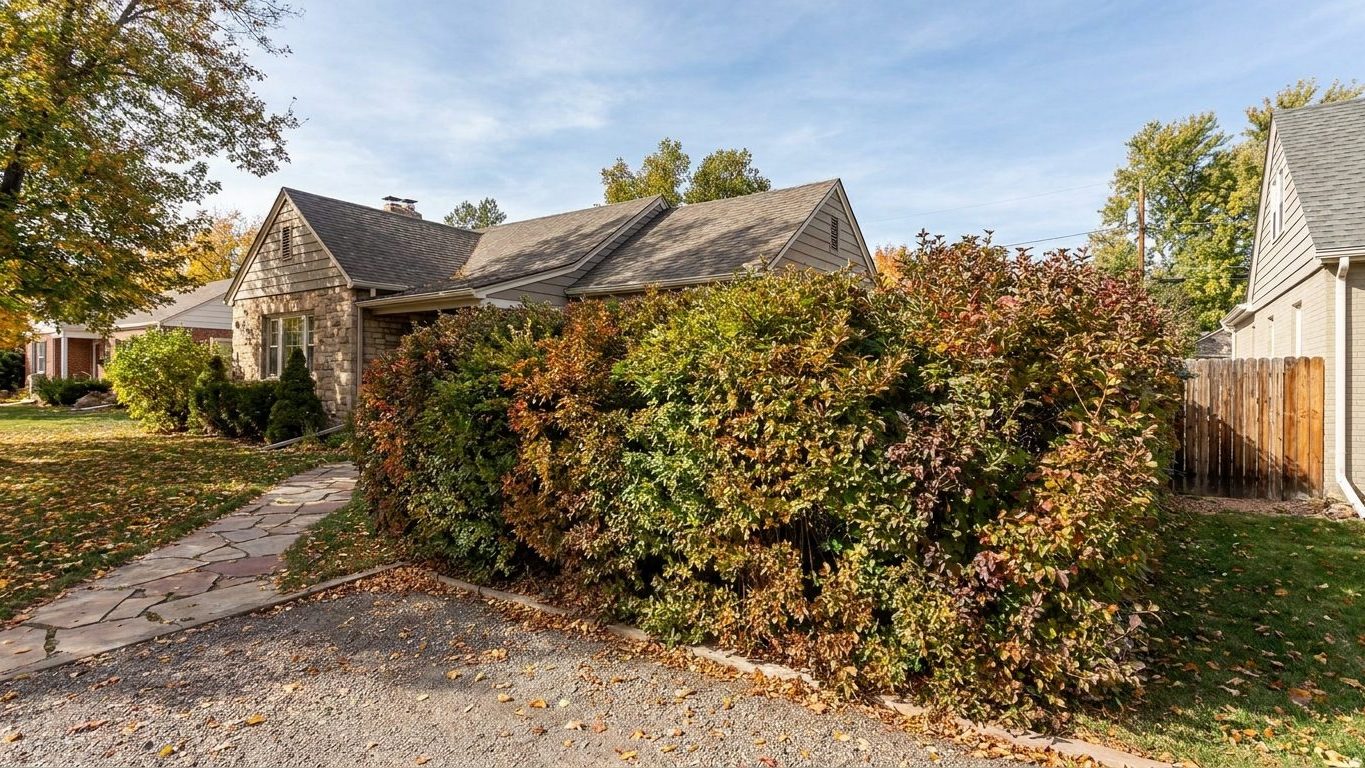

Ohio has no statewide hedge height limit. Search all you want through the Ohio Revised Code and you won’t find a number that tells you how tall your privet or arborvitae can grow. That authority belongs to your city or township, which means the real answer to “how tall can my hedge be” depends entirely on your mailing address, not on any law passed in Columbus at the state level.
There is no Ohio hedge height law
This surprises a lot of homeowners, and it’s worth sitting with for a second. States regulate plenty of things about your property: building setbacks in some cases, septic systems, sometimes tree removal on protected land. But hedge height isn’t one of them. Ohio’s legislature has never passed a statute capping how tall a living screen of shrubs can get on residential land. That silence is deliberate, in a sense, because it reflects how zoning power works in Ohio and in most of the country: it’s delegated down to municipalities and townships, each of which writes its own zoning code.
What that means in practice is that Cleveland, Cincinnati, Columbus, Dayton, and the thousand smaller villages and townships scattered across the state can all set different rules, and they do. A hedge that’s perfectly legal in one suburb could technically violate a neighboring city’s code a few miles down the road. There’s no contradiction there, just local control doing what it’s designed to do.
Columbus offers a useful window into how this plays out on the ground. The city’s Department of Building & Zoning Services publishes a plain-language information sheet on fences, and it draws a clean line at 6 feet: a fence at or below that height isn’t regulated as a structure at all, and it can sit right at the property line in a rear yard with no setback required. Cross that 6-foot threshold, or put the fence in a front yard, and you’re now inside the zoning code’s jurisdiction, with additional review and standards to meet. That rule is codified through Ordinance No. 0923-2026, enacted April 20, 2026, so it reflects current law, not something on the books for decades.
Notice what that Columbus example does not tell you. It doesn’t tell you what Dublin allows, or Westerville, or Whitehall, or any township that hasn’t incorporated into a city at all. It’s one data point showing how a municipality handles the question, useful precisely because it shows how much local rules can vary, not because it’s a stand-in for “the Ohio rule.” Any source that hands you a single height figure and calls it Ohio law is skipping a step, and it’s usually the aggregator sites that do this, because a single tidy number is easier to publish than an honest “it depends.”
How to find the rule that actually applies to you
The good news is that finding your actual local rule doesn’t require a law degree or a trip to city hall, most of the time. Nearly every incorporated city and township in Ohio has its municipal code published online, and that code almost always sits with one of three publishers: Municode, at library.municode.com; American Legal Publishing, at codelibrary.amlegal.com; or eCode360, run by General Code. A quick search of your city’s name plus “municipal code” will usually land you on one of these three platforms within the first couple of results.
Once you’re there, the height rule for hedges and fences isn’t filed under some obvious “hedges” tab. It lives inside the zoning chapter, and the section you want is usually labeled “fences” or “accessory structures,” sometimes both, since many codes treat a wall, a fence, and a hedge as adjacent but distinct categories within the same part of the ordinance. Skimming the table of contents for the zoning title, rather than searching the whole code for the word “hedge,” tends to get you there faster.
Why the wording matters more than you’d think
This is where a lot of homeowners trip up. Many zoning codes regulate fences as physical structures, subject to height limits, setback requirements, and sometimes a permit. But a living hedge is plant material, not a structure, and plenty of codes either regulate it under a completely separate heading or don’t mention it by name at all. That gap matters. If your city’s fence ordinance caps structures at 6 feet but never uses the word “hedge” or “vegetation,” you can’t automatically assume the same 6-foot ceiling applies to your boxwoods. It might. It might not. The only way to know is to read the actual text and see which term the ordinance uses, then check whether there’s a separate section addressing landscaping, screening, or vegetative buffers.
If the code is genuinely silent on hedges as such, or if the language is ambiguous, the next move isn’t to guess. Call the city or township’s building and zoning department directly. Most Ohio municipalities have a planning or zoning office that fields exactly this kind of question, and a five-minute phone call clears up what an hour of reading legal text might not. Ask specifically whether living hedges are treated the same as fences under local code, and whether there’s a different rule for front yards versus rear or side yards, since that distinction shows up constantly in Ohio zoning codes.
The branches that cross the line
Height limits aside, there’s a separate and near-universal rule that trips up more Ohio homeowners than any zoning height ever does: the sight triangle. At intersections, and often at driveway entrances too, most municipal codes prohibit any obstruction, fence, hedge, sign, or otherwise, that blocks a driver’s line of sight within a defined triangular area at the corner. This isn’t a matter of local preference the way a general fence height cap is. It shows up almost everywhere because it’s rooted in basic traffic safety, and it tends to sit at a height well below whatever the general hedge or fence limit happens to be in that same town.
A hedge that’s perfectly compliant at 5 feet in your backyard could still violate the sight triangle rule if it’s planted near a corner lot’s intersection, because the applicable limit there is often something closer to 2 or 3 feet, precisely so a driver backing out of a driveway or approaching a stop sign can see cross traffic. If your property sits on a corner, or borders a driveway that other vehicles use, this is the rule to check before you check anything else, because it can override the general height allowance entirely in that specific zone of your yard.
What happens when a hedge grows past the property line
Height rules cover how tall a hedge can stand. They don’t address what happens when the branches themselves grow sideways, over a fence or across a boundary, into a neighbor’s yard. That’s a separate question, and in most states, Ohio included by the same general principle, it’s governed not by a specific statute but by longstanding case law on encroaching vegetation. The general rule that courts have applied across the country is straightforward: a neighbor whose property is being encroached upon by overhanging branches or invasive roots may trim back that growth, but only up to the property line, never past it, and only at their own expense. They can’t demand the hedge owner do the cutting, and they can’t kill the plant in the process, whether by over-pruning or by poisoning the roots.
Treat this as a general principle rather than a fixed Ohio statute, because it comes from case law and varies in its details from one jurisdiction to another. If a dispute over encroaching branches escalates, especially where a valuable tree or a shared fence is involved, the practical step is to bring it to a local attorney who handles property disputes, not to rely on a blog’s summary of “the rule.” Neighbor disputes over vegetation are common enough that most municipalities and small-claims courts see them regularly, and a lot get resolved before anyone sets foot in a courtroom simply because one side reads the property line correctly and starts trimming.
What to check before you plant
Before you put a single hedge plant in the ground, there’s a short list worth working through, and it takes less time than picking out the plants themselves.
- Pull up your city or township’s municipal code on Municode, American Legal Publishing, or eCode360, and find the zoning chapter’s fence and accessory structure section.
- Note whether the code uses the word “hedge” or “vegetation” separately from “fence,” since that changes which height limit, if any, applies to living screens.
- Check whether your lot touches a corner or a driveway entrance, and if so, look for the sight triangle rule, which usually sets a lower height limit than the general residential cap.
- Call the local zoning or building department if the code’s language is unclear, especially about front-yard versus rear-yard treatment.
- If you’re planting near a shared property line, think ahead about mature width and height, since a hedge that starts compliant can grow into a sight-triangle or encroachment issue years later.
That last point deserves a beat of its own. Zoning enforcement in most Ohio municipalities is complaint-driven, meaning nobody from the city is likely to show up with a tape measure unless a neighbor calls in a concern. But that also means a hedge that was fine at planting can quietly grow past a limit over several seasons, and the complaint, when it comes, often lands years after the shrubs went in the ground. Checking mature height and spread against your local rule before planting saves you from a mature hedge you’d have to cut back hard, or in some cases remove, well after it’s established.
Common questions
Does Ohio have a statewide hedge height limit?
No. Height limits on hedges and fences in Ohio are set at the municipal or township level, not by state statute, so the applicable limit depends entirely on where the property sits.
Where do I find my city’s actual hedge or fence height rule?
Search your city or township’s municipal code on Municode (library.municode.com), American Legal Publishing (codelibrary.amlegal.com), or eCode360, then look in the zoning chapter under fences or accessory structures. If the code doesn’t clearly address hedges as vegetation, call the local zoning department directly.
Is a hedge treated the same as a fence under local codes?
Not always. Some ordinances regulate fences as structures with a specific height cap and treat hedges under a separate landscaping or screening section, or don’t address them explicitly at all. Confirm which term your code actually uses before assuming a fence limit applies to your plants.
Can my neighbor trim my hedge if it grows onto their property?
Under the general principle followed in most states, a neighbor may cut back branches or growth that crosses onto their side of the property line, up to the line itself and no further, at their own expense, and without killing the plant. This comes from case law rather than a specific statute and varies by jurisdiction, so for an active dispute, consult a local attorney.