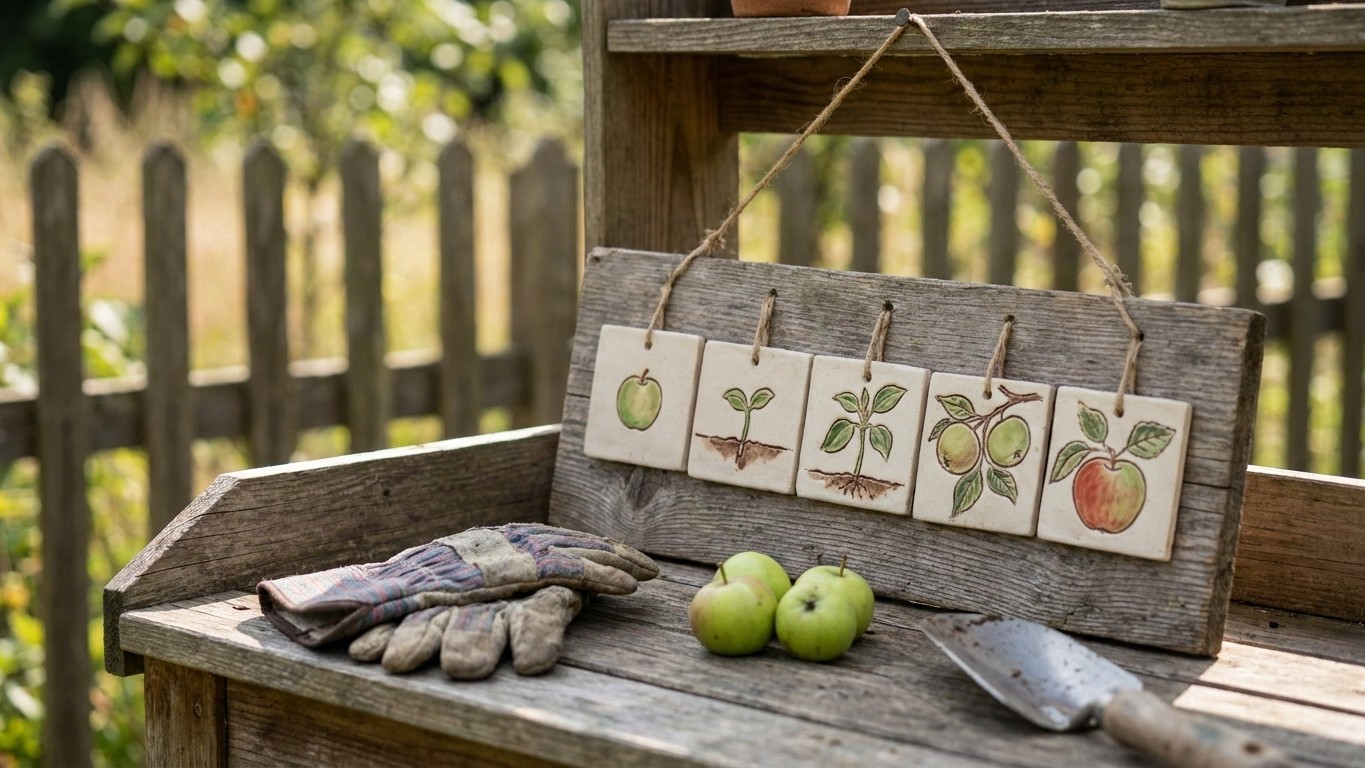

An Oklahoma apple calendar runs off frost, not a fixed month. NOAA’s 1991-2020 climate normals put the Oklahoma City area’s last spring freeze at March 28 to April 10 and the first fall freeze at October 29 to November 8, and every stage from dormancy to harvest slides against those two windows. Bloom is the stage that actually decides the year, since an open flower is what a late freeze kills. Check your own county’s frost record against the Oklahoma City reference before you count backward for pruning or forward for harvest.
The short answer for Oklahoma
Oklahoma City’s frost dates get treated as gospel for the whole state, but that reference station sits in the mildest pocket NOAA measures. A creek-bottom orchard or a panhandle planting can see spring frost linger and fall frost arrive weeks off that schedule. What actually governs a given tree isn’t one calendar date but two separate limits — winter hardiness, which this state’s mild lows rarely test, and winter chill, which decides whether bloom holds together at all.
What this depends on
NOAA’s figures come from the Oklahoma City reference station, and the same NOAA record notes that suburban and rural gardens typically see the last spring frost later and the first fall frost earlier than the reference, often by one to two weeks and more at elevation. A creek-bottom orchard or a panhandle planting should treat these dates as a starting point, not a guarantee.
Two separate things decide whether a given cultivar works on your ground. Winter hardiness decides whether the tree survives the cold at all, and Oklahoma City’s coldest month has a mean daily minimum of 28.8°F under NOAA’s 1991-2020 normals, mild enough that hardiness rarely kills an established apple tree anywhere in the state. Winter chill is a different filter. It decides whether the tree flowers evenly once spring arrives, and it is the harder limit in the state’s warmer south. For cultivar-level detail on which apples handle Oklahoma’s chill and frost pattern best, see The Best Apple Varieties for Oklahoma.
Working through it

If you’ve already sited and planted a tree using the steps in Growing Apples in Oklahoma, the calendar from here is a sequence of stages, each one keyed to the Oklahoma City frost window NOAA’s 1991-2020 normals report: last spring frost March 28 to April 10, first fall frost October 29 to November 8.
Dormancy

The tree is bare from leaf drop through late winter. This is the pruning window: cut for shape and airflow while the wood is asleep and the cut has all winter to callus before growth starts. Prune too early and a hard cold spell can still injure the fresh cut. Prune closer to the tail end of dormancy, near when buds start to swell, and the wound has less exposed time to be damaged.
Green tip

The first sliver of green shows at the tip of each bud scale. This is the last easy window for a dormant-oil spray against overwintering insect eggs, before the tissue underneath is soft enough to burn from the oil. Green tip in most years arrives before the Oklahoma City last-frost window closes, so a hard freeze at this stage checks growth for a few days but rarely kills the buds outright.
Pink

Flower buds swell and show color before they open. This is the point to finish any preventive fungicide program ahead of bloom, since spraying open flowers risks the bees that do the pollinating. Buds at pink are more frost-tender than green tip but still tougher than an open flower.
Bloom

White blossoms open fully. This is the single most frost-sensitive stage in the whole calendar, and it is also the stage most likely to overlap the tail end of NOAA’s March 28 to April 10 last-frost window for Oklahoma City. An open flower damaged by frost does not set fruit. Growers who choose a cultivar that blooms late enough to clear the window most years, or who cover small trees on a forecast frost night, protect the crop that everyone else loses.
Petal fall

Petals drop and a small green swelling remains where the flower was. Frost is still a risk here but a smaller one than at open bloom. This is when the fruit is officially set, and it is the point growers start watching for scab and fire blight, since the wet, mild springs common in the eastern part of the state favor both diseases.
Fruit set

Fruitlets the size of a marble hang in clusters. Thin them down to one per cluster now, spaced by hand, so the tree isn’t carrying more fruit than it can size properly. This is also the last practical window for a balanced feeding, since nitrogen applied later pushes soft new growth into the fall.
Harvest
Ripening runs from late summer into fall depending on the cultivar, and every cultivar’s days-to-maturity figure on the tag or catalogue page is counted from bloom, not from a calendar date. Pick before NOAA’s first-fall-frost window for Oklahoma City, October 29 to November 8, closes in on a late-hanging crop, and earlier than that if your ground runs colder than the reference station.
What changes across Oklahoma
Oklahoma is not one climate, and the Oklahoma City figures above describe one reference point near the center of the state. Elevation, low ground, and large bodies of water all shift the practical frost window in one direction or another, sometimes by more than the one to two weeks NOAA’s own caution allows for.
Regions that run behind or ahead
The panhandle around Guymon sits at meaningfully higher elevation than Oklahoma City and carries a longer, colder winter, which tends to push the last spring frost later and the first fall frost earlier than the Oklahoma City reference NOAA reports. Eastern Oklahoma, in the Ozark foothills around towns like Tahlequah, gets more winter chill and more spring rainfall, which suits higher-chill cultivars but raises pressure from scab and fire blight during the wet bloom-to-petal-fall stretch. Southern Oklahoma along the Red River runs milder in winter, and it is the part of the state most likely to fall short of the chill a traditional apple needs to break dormancy evenly.
Low ground matters as much as latitude. A creek bottom or a river valley anywhere in the state collects cold air on a clear, calm night and can run several degrees colder at bloom time than a slope fifty feet above it, the same effect described in the expert note above. A large body of water such as Grand Lake in the northeast or Lake Texoma on the southern border moderates its immediate shoreline and can delay the first freeze there, though no station-level NOAA figure for those shorelines is included in the reference above, so treat that as a general tendency rather than a date.
The mistakes this climate punishes
Three mistakes account for most of the crop failures reported informally around Oklahoma orchards, and all three trace back to matching a cultivar or a task to the calendar instead of to the frost dates above.
Where each one shows up
- An early-blooming cultivar in a late-frost year: bloom opens on a warm early-spring run, then a freeze lands inside NOAA’s March 28 to April 10 Oklahoma City window, or later at a colder site, and kills the open flowers along with the crop for that year.
- A high-chill cultivar in a mild winter, especially in southern Oklahoma: the tree never fully breaks dormancy in step, and bloom shows up patchy and stretched over weeks instead of in one flush, with a thin, uneven fruit set to match.
- Feeding nitrogen too late in summer: it pushes soft new shoot growth that is still green and unhardened when the first fall freeze arrives on NOAA’s October 29 to November 8 Oklahoma City schedule, and that growth blackens and dies back from the tip.
- Pruning cuts made too early in dormancy: a hard cold snap after the cut, before it has had time to callus, can injure the wood around it and invite disease in that spot come spring.
Each of these shows up at a specific, recognizable stage rather than a random point in the season. A thin, patchy bloom in April points back to a chill mismatch from the winter before. Blackened shoot tips discovered in late fall or the following spring point back to a July or August feeding. Both are corrected by moving the decision, cultivar choice or feeding date, to the next season, rather than trying to fix the tree already in front of you.
Checking this against your county
The Oklahoma City figures are a reference point, not a guarantee for your address. OKSTATE Extension maintains county-level offices across the state that can confirm local frost history, chill-hour estimates, and cultivar performance closer to your actual ground. Start at the OKSTATE Extension website and find the office serving your county before you commit to a bloom-date-sensitive cultivar or a spray schedule built only on the figures above.
That office can also tell you whether your part of the state carries enough winter chill for a traditional cultivar or whether a low-chill selection is the safer bet, a distinction the statewide figures above cannot settle on their own.
Common questions
What month do apple trees bloom in Oklahoma?
There isn’t one month that fits the whole state. Bloom follows the tree’s own stage, which follows the local frost pattern, and for the Oklahoma City reference that generally puts bloom in the weeks after NOAA’s last-frost window of March 28 to April 10 closes. Colder ground, higher elevation, or distance from the reference station can push it later.
Do I need to cover my tree every time there’s a frost warning?
Only when the tree is at a frost-sensitive stage, mainly open bloom or the newly set fruit right after petal fall. A dormant tree in January shrugs off far colder temperatures than an open flower in April, so match the response to the stage, not to every frost advisory on the forecast.
How many apple trees do I need to get fruit?
Most apple cultivars need a second, different cultivar blooming nearby at the same time for reliable pollination, since a single tree of one cultivar often sets little or no fruit on its own. Check the pollination notes for your specific cultivars before assuming one tree is enough.
Why did my tree bloom but never set fruit?
The likeliest culprits are a frost that hit the open flowers, a lack of a compatible pollinator cultivar nearby, or a stretch of cold, wet weather during bloom that kept bees from working the flowers. A chill mismatch from a mild winter can also cause a stretched, patchy bloom that never lines up well enough for good pollination.