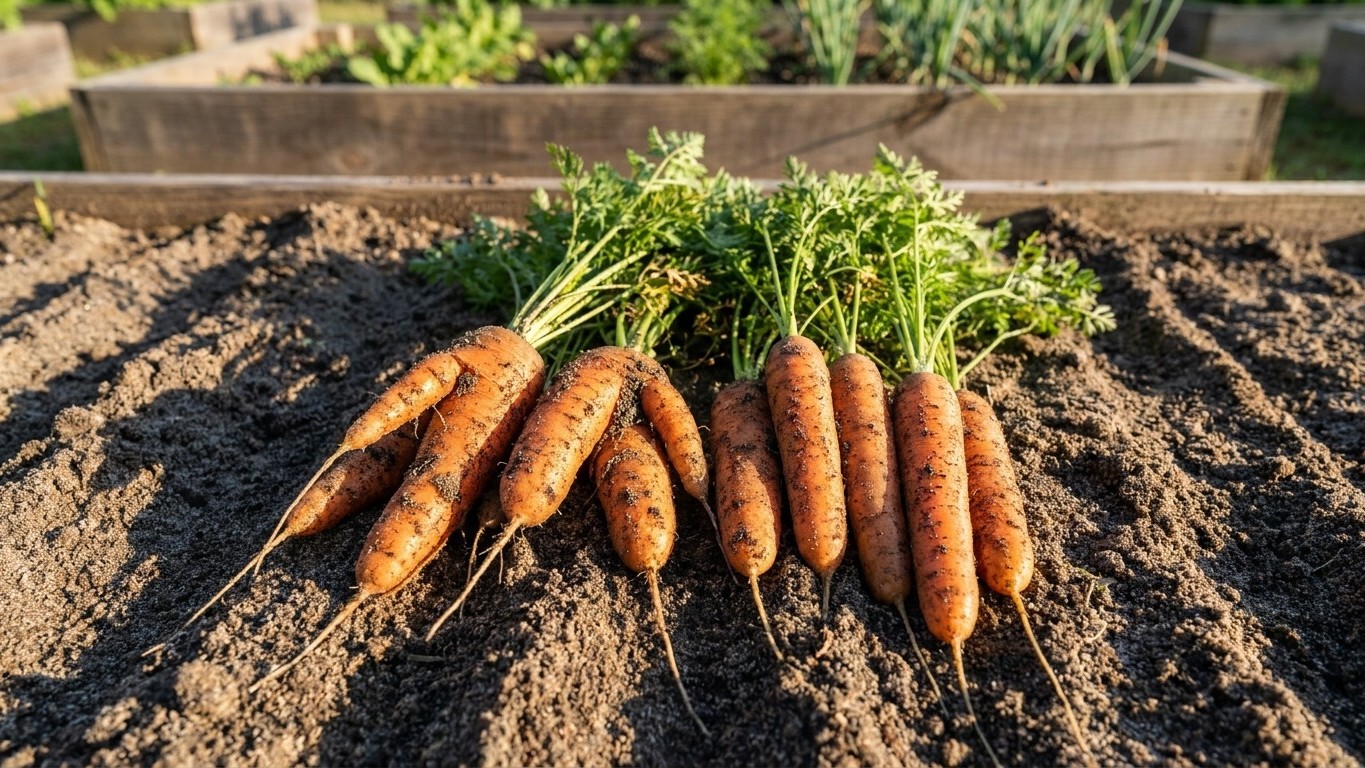

Pull Oklahoma carrots when the roots have sized up, which means somewhere between 70 and 100 days from seeding. Carrots are sown in place, so the clock starts the day the seed goes in the ground, not at some transplant date. Clemson Extension puts harvest at about 65 to 75 days after planting, so start test-pulling at the early end. To keep them, cut the tops off first, then hold the roots at 33 °F with high humidity. The full growing picture is in Growing Carrots in Oklahoma.
The short answer
Oklahoma’s official state soil is the Port series, a Mollisol. That’s the deep, dark prairie ground of the kind that built the Corn Belt. USDA records the surface layer of its major components (93 of them, queried through NRCS Soil Data Access) at 12 percent sand, 19 percent clay and 69 percent silt. That puts it in the loam-to-silt range. It is well drained, sits near neutral at a surface pH of about 7.0, and carries about 2.0 percent organic matter. Oklahoma law named it the state soil.
Utah State University Extension describes the carrot’s ideal as deep, sandy, well-drained soil rich in organic matter, and says heavy or rocky ground makes the root fork. Hold the Port numbers up against that. Sand is low at 12 percent, so this is not the loose, sandy ground carrots love. But clay is only 19 percent, and the drainage class is well drained. Those are the two things that usually produce forked, stubby roots: a heavy clay that grips the tip and water that sits around it. On texture and drainage alone, a carrot should not fork in ground like this. The thin spot is organic matter. At about 2.0 percent, a bed of Port-type soil gains from compost worked in ahead of seeding.
Now the caveat, and it matters. A state spans hundreds of soil series, and the Port is the one chosen to represent Oklahoma, not the one under your tomatoes. River bottoms, hill country, and any lot a builder has scraped or filled can be nothing like these figures. The numbers also describe the mapped surface layer, not a worked garden bed. Treat them as a starting point, not a diagnosis. The pH is the series’ value, not yours, and a soil test is the only way to get your own.
If your ground turns out heavy, Utah State’s advice is plain: plenty of compost and double digging. A raised bed also solves it. A different variety does not, since the cure for forking is the ground itself. There’s more on that in Will Carrots Fork in Oklahoma Soil?.
For harvest, count from seeding and trust the root over the calendar. Pull one carrot at the early end of the window and look at it. If it has colored up and reached a size you would eat, the row is ready. If it hasn’t, give the rest more time.
The test that settles it in your own garden
You don’t need a lab to learn most of what matters. An afternoon with a spade and a hose will tell you whether your bed leans toward the state soil or away from it. Work through these in order.
- Dig a test hole where the carrots will go. Cut straight down with a spade and lift out a clean block of soil so you can see the layers on the side of the hole.
- Look at depth. Carrots need loose ground the length of the root. Note where the soil changes color or turns hard. A pale, dense layer just below the surface is where roots stop or twist.
- Look for stones. Crumble the dug soil in your hands and pick out what you find. Rocks and hard clods in the root zone are what make a carrot split into legs.
- Feel the texture. Squeeze a handful of slightly damp soil. Sandy soil gritty and falls apart. Silt feels smooth and soft, almost floury. Clay holds a tight ball and rolls into a long, shiny ribbon between your fingers. A sticky ribbon is the warning sign.
- Watch the water. Fill the hole with water and see how it drains. Then fill it again. The second fill is the honest one, because the first mostly wets dry soil. Water that stands in the hole long after you’ve finished other chores means poor drainage.
- Check again after a real rain. Look at the bed a day later. Standing puddles, a sealed crust, or soil that sticks to your boots all tell you something the dry test hole can’t.
- Send a sample for a soil test. Your local county Extension office can tell you how to collect and submit one. That gives you your actual pH and nutrient picture, which no state figure can.
If the hole shows loose, stone-free soil that drains, you’re probably in good shape. If it shows hard layers or slow water, plan on compost, double digging, or a raised bed before you sow.
What goes wrong here
Oklahoma gardeners get a particular set of carrot failures, some from the ground and some from the weather. Most are fixable once you know which one you’re looking at.
- Forking in heavy or rocky ground. Roots that split into legs or stub out short are reacting to resistance. Utah State Extension ties this to heavy or rocky soil. The remedy is to work in plenty of compost and double dig, or build a raised bed and fill it with loose mix. Pull stones out before seeding, and don’t count on a variety to fix a hard bed.
- Poor germination in a hot spell. Carrot seed is slow and small, and a dry, hot stretch can leave a seedbed bare. Silty ground like the state soil can also seal into a crust after a hard rain, which traps seedlings. Keep the seedbed evenly damp until sprouts show, water lightly and often rather than rarely and hard, and break up any crust gently. If the row stays blank, reseed. Don’t wait and hope.
- Splitting from uneven water. A bed that dries out and then gets soaked can crack roots open. Aim for steady moisture through the whole season, and mulch to even out the swings. The point is consistency more than volume.
- Storage loss from leaving the tops on. Leaves keep drawing moisture out of the root, so carrots go limp quickly. Cut the tops off first. Clemson Extension says bunched carrots, tops attached, keep only about 10 to 14 days, while trimmed ones hold for months in the right conditions. Store them at 33 °F and high humidity to prevent wilting. A warm cellar won’t do the job.
Holes, tunnels and chewed tops are a different kind of trouble. For that, see What Eats Carrot in Oklahoma, and When.
Common questions
How do I know when carrots are ready to pull?
Count from the day you seeded, since carrots are never transplanted. The window runs from 70 to 100 days, and Clemson Extension puts harvest at about 65 to 75 days after planting. Pull a single carrot near the early end and check its size and color. If it isn’t there yet, leave the rest in the ground.
Will carrots fork in Oklahoma’s state soil?
Probably not from texture. The Port series is 12 percent sand, 19 percent clay and 69 percent silt, and it drains well. That is a long way from the heavy clay that causes forking. Still, your own garden may differ from the state soil, so do the dig-and-feel test before assuming anything.
Do I really have to cut the tops before storing carrots?
Yes. The leaves keep pulling moisture out of the root, which is why bunched carrots with their tops on keep only about 10 to 14 days. Cut the tops off before storage and the roots hold for months.
What temperature should stored carrots be kept at?
Clemson Extension says 33 °F with high humidity to prevent wilting. That is just above freezing, colder than most basements or root cellars. Carrots held at 50 °F will sprout and soften in a fraction of the time, so a cool spot isn’t enough. It needs to be that cold.