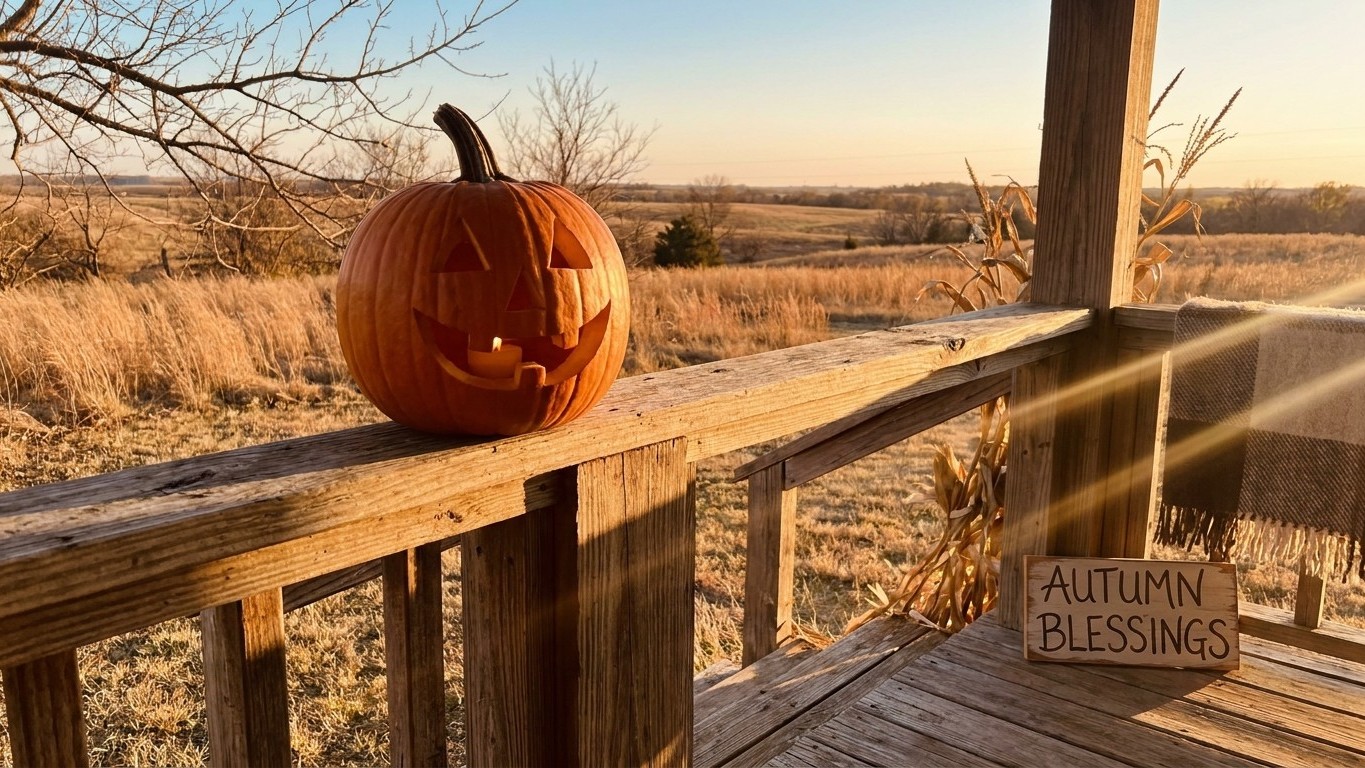

Oklahoma’s mean first fall frost lands somewhere between October 29 and November 8, which means Halloween sits right at the front edge of that window. For a pumpkin sitting on a porch, that’s good news: most years, frost holds off until Halloween has already come and gone, giving you a real carving window that runs right up to the holiday itself.
The short answer

Around October 29, the earliest edge of Oklahoma’s average frost window opens. The latest edge, around November 8, is more than a week past Halloween. That’s a wide band, and it means the calendar doesn’t hand you a single hard deadline the way it might farther north. In most years, the reference data suggests frost arrives on or after Halloween rather than before it, which takes freezing weather largely off the table as your main worry when you’re deciding when to pick up the knife.
That doesn’t mean you can carve whenever you feel like it and forget about it. A mean frost date is an average, not a promise, built from three decades of records at one weather station. Some years lean early, some lean late, and a stretch of unusually cold air in late October isn’t out of the question even if it’s not the norm. Treat the October 29 edge as a soft caution line rather than a countdown clock.
What actually threatens a carved pumpkin in Oklahoma has less to do with frost and more to do with the opposite problem: warmth. This is a state where late October afternoons routinely stay mild, and a cut pumpkin exposed to open air, sunlight, and lingering warmth breaks down faster than one sitting somewhere cool and shaded. So the practical window isn’t “carve before frost hits.” It’s “carve close enough to Halloween that heat and air exposure don’t get a long head start.”
Given all that, a reasonable approach for most of Oklahoma is to carve within the last handful of days before Halloween rather than a week or two out. There’s no published research on exactly how many days a carved pumpkin lasts, so nobody can hand you a precise countdown. What you can control is timing your cut to land close to the day you plan to display it, which limits how long the exposed flesh sits in open air before trick-or-treaters show up.
Keep the whole, uncarved pumpkin somewhere cool until then. Once it’s carved, the clock changes entirely, and no amount of clever storage location turns back that shift. The safest strategy in this climate is simple: buy early if you want, store it whole and cool, and save the actual carving for the final stretch before Halloween.
Frost or heat: which one gets it here
The cold end
Oklahoma’s coldest month runs a mean daily minimum of 27.0 degrees Fahrenheit, based on the Oklahoma City reference station. That figure describes the depth of winter, not late October, so it’s not something you should mentally paste onto Halloween week. It does tell you the state gets genuinely cold once winter sets in, and it explains why the mean first fall frost window (October 29 to November 8) is where it is on the calendar. But a 27-degree January minimum has no bearing on how warm or cool your porch is on October 28. Don’t let the hardiness zone number stand in for an actual frost date. They measure different things, and mixing them up is how people end up either panicking too early or getting caught off guard.
The warm end
The bigger practical concern in Oklahoma isn’t the cold edge, it’s the warm one. A whole pumpkin keeps best between 45 and 50 degrees Fahrenheit, and that’s a temperature band Oklahoma often doesn’t reach outdoors until fairly late in fall, if a given stretch of days even gets there at all before Halloween. Warmer air speeds up softening, and a pumpkin sitting somewhere too warm ages faster than one held closer to that 45-50 range, regardless of whether frost is anywhere in the forecast. This is the reason heat, not freezing, is the factor that actually governs your timing decision in this state. In the northern half of the country, gardeners are racing a freeze. In Oklahoma, you’re racing warmth and the general pace of decay that comes with it, which is a slower, quieter threat but a more constant one through most of October.
Where to keep it until you carve
Getting a whole pumpkin close to that 45-50 degree range, and keeping it dark, is the single biggest thing you control before carving day. In an Oklahoma home, a few spots come closer than others.
- An unheated garage, if it’s not getting direct afternoon sun through a window or door gap, usually runs cooler and darker than most rooms in the house, especially once October settles in.
- A basement or storm shelter, common in much of Oklahoma given the region’s tornado risk, tends to stay both cool and dark year-round, making it one of the better options if you have one.
- A covered, shaded porch works if it’s out of direct sun for most of the day. A porch baking in southern exposure sun by afternoon defeats the purpose.
- Keep it away from any ripening fruit or vegetables, apples, potatoes, tomatoes included. Ripening produce gives off a gas that ages a pumpkin faster, which makes the classic front-porch display next to a crate of apples one of the worst combinations you can choose.
- Avoid direct heat sources indoors, meaning skip the spot next to a sunny window, a heat vent, or an appliance that runs warm, even if the room itself feels comfortable to you.
Handle it by the base, not the stem. That 1 to 2 inches of stem left on the pumpkin isn’t a handle, it’s the seal over the spot where the vine once attached. Break it off, and that exposed section becomes an open door for early spoilage. Buy a pumpkin with an intact stem and treat it as fixed in place until you’re ready to cut.
Checking this against your own county
The frost figures here come from one Oklahoma City area weather station, and that’s a reasonable statewide reference point, but it’s not your backyard. Rural and suburban gardens routinely see their first fall frost arrive earlier than an airport station reports, sometimes by a week or two, and elevation shifts that further still. Panhandle counties and higher terrain in the state’s western reaches tend to cool off sooner than the central and eastern lowlands.
For a number specific to where you actually live, contact Oklahoma State University Extension. County extension offices track local frost patterns and can tell you how your area typically compares to the statewide average, which is worth knowing whether you’re timing a pumpkin carve or planning any other fall garden task around the first freeze.
Common questions
Does Oklahoma usually get frost before Halloween?
Based on the mean first fall frost window of October 29 to November 8, most years the frost lands on or after Halloween rather than before it, though the early edge of that window falls just two days ahead of the holiday, so it’s not impossible in a colder-than-average year.
How long does a carved pumpkin actually last in Oklahoma’s climate?
There’s no published research from university extension sources on exactly how many days a carved pumpkin holds up, and no verified preservation method to extend it. The reliable approach is choosing a good pumpkin, keeping it whole and cool until you’re ready, and carving as close to Halloween as you can manage.
Is heat or frost the bigger risk for pumpkins in Oklahoma?
Heat. The state’s coldest month minimum of 27 degrees Fahrenheit describes deep winter, not late October, and Oklahoma’s fall afternoons often stay well above the 45-50 degree range recommended for whole pumpkin storage, which speeds up softening faster than any early frost risk would.
What’s the single best thing to check before buying a carving pumpkin?
Look for 1 to 2 inches of intact stem, along with a heavy feel and no blemishes or soft spots. Shape doesn’t matter, but a broken or missing stem leaves an open spot where spoilage can start early, regardless of how well you store it afterward.