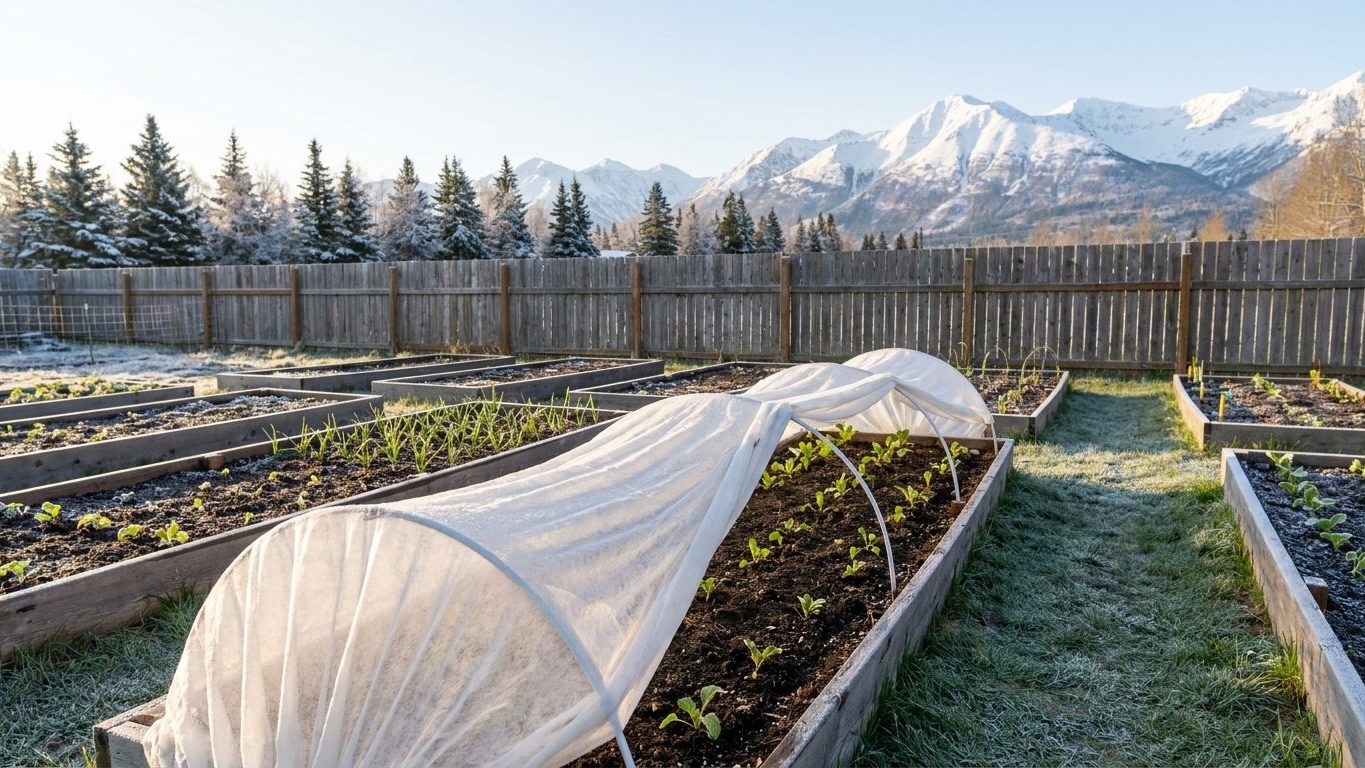

Cover tender plants on any night the forecast low reaches 32°F, and keep the covers within reach from mid-March through mid-April, then again from mid-October into early November. Oklahoma City’s reference dates for the last spring freeze run from March 28 to April 10. Its first fall freeze comes October 29 to November 8. Gardens outside the city usually freeze later in spring and earlier in fall.
The short answer for Oklahoma
The forecast decides, and the calendar only tells you when to start paying attention. A cover goes on at dusk when the predicted low is 32°F or colder, and it comes off the next morning once the air warms. Everything below explains how to read the dates and what they leave out.
What are the Oklahoma frost dates a probability of?
They come from NOAA’s 1991-2020 climate normals for the Oklahoma City airport station, and they mark the 30 to 70 percent band of the odds of a 32°F freeze. In spring, March 28 to April 10 is the stretch where another freeze is still a toss-up. The fall window, October 29 to November 8, works the same way in reverse. No date inside either band is safe, and no date outside it is a guarantee.
The figures describe one airport in a big city, which holds heat. Suburban and rural gardens typically see the last spring frost one to two weeks later and the first fall frost one to two weeks earlier. A rural gardener may be pulling covers out in mid-October, and a spring freeze can arrive well into April.
How do you time covers by the forecast?
Covers work by trapping heat the soil released during the day. That makes them most useful on clear, calm nights, when the ground loses heat fastest and frost forms on a still field. Put the cover on in late afternoon while the soil is still warm. Water the bed the day before, since moist soil holds more heat than dry soil. Pull the cover off by mid-morning.
The reference station’s coldest month has a mean daily minimum of 27.0°F. Winter nights here sit only a few degrees under freezing on average, which is why hardy crops such as spinach, kale and garlic often get through with a light cover or none. Tomatoes, peppers, squash, beans and basil are the plants that need the covers, and they need them during the spring and fall windows. The full toolkit is laid out in Extending the Growing Season in Oklahoma.
What will not work here
Planting tender crops on March 28 and trusting the date will not work. That date is the early edge of a coin-flip band, so a freeze after it is ordinary. Gardeners who set out tomatoes in the first week of April with nothing in reserve lose plants in a fair share of years. The fix is cheap: set transplants out when you like, but keep fabric, buckets or frost cloth next to the bed until the forecast stays above freezing.
Why does a single light cover fail in a hard freeze?
Lightweight row cover adds a few degrees of protection. That is plenty for a night at 31°F or 30°F, and not enough for a hard freeze well below that. Oklahoma gets both kinds of cold snap, and the late-season ones that follow a warm spell are the ones that surprise people. For a deep dip, double the layer or add a rigid support so the cover holds an air pocket over the plants. Leaves that touch frozen fabric can freeze right through it.
Wind is the other spoiler. The southern Plains are windy in March and April, and a cover held down by a few small rocks ends up in the neighbor’s yard by midnight. Pin the edges, bury them in soil, or weight them along their whole length. A cover that is loose at one corner lets the heat out as fast as it lets the wind in.
What goes wrong with plastic and cold frames on warm days?
Spring afternoons in Oklahoma can jump 30 degrees or more from the morning low. A closed cold frame or a clear plastic tunnel on a sunny day in April gets hot enough to scorch seedlings, and a plant that survived a 30°F night can die at noon under glass. Vent them early, before the sun hits, and close them again in late afternoon. Fabric covers breathe and forgive more, which is one reason to start with them, as the rundown in Which Season Extenders Work in Oklahoma explains.
Fall has its own trap. Covers can hold a tomato plant past the first freeze, but they cannot bring back the warm nights that fruit needs to ripen. Once nights run cool for weeks, the plant lives and the crop stalls. Covers pay off in fall for cool-season crops like lettuce, kale and carrots, which want cold and only need protection from hard freezes.
What changes across Oklahoma
Oklahoma is not one climate. The USDA Plant Hardiness Zone Map (2023, built on 1991-2020 data) puts the state in zones 6a through 8a, a spread of several half-zone steps. There is no single answer for the whole state, only a range, and the reference-city numbers sit somewhere in the middle of it.
The zone is built on one variable, the average annual extreme minimum temperature. It tells you whether a perennial survives winter, and it does not set your frost dates. Two gardens in the same zone can still have spring freezes a week or two apart. Use the zone for plants that stay in the ground over winter, and use the local frost dates for covers.
How should a gardener in northern Oklahoma or at higher elevation adjust?
Oklahoma City sits at 35.39 degrees north. The Panhandle and the northern tier of counties near Kansas are colder and farther north, and land at higher elevation runs colder still. A gardener there should expect the last spring freeze to come later and the first fall freeze to come earlier than the Oklahoma City dates. Start with a week or two of margin on each end, then adjust by what the local extension office says.
Farther south and in the southeast, winters are milder and the frost-free stretch is longer. Covers there are mostly for the occasional late freeze in spring and the first hard freeze of fall. Day length matters too. An onion decides when to form a bulb by the length of the day, and that shifts with latitude, so a gardener near the northern or southern edge should look at their own latitude rather than lean on Oklahoma City’s. To see where your own garden falls, check the USDA Plant Hardiness Zone Map for your address, and avoid assuming from a neighbor’s or a relative’s.
Where to check this for your own county
Start with Oklahoma State University Extension. Every county has an office, and the staff there know the local frost history and the soil, wind and heat patterns that no statewide guide captures. A county recommendation beats a state one. Dates drawn from a single airport station are a starting point for the reference city, and your county extension office knows more about your end of it.
Look for the local planting calendar for your county, which gives sowing and transplanting windows for cool-season and warm-season crops based on local records. Find the median last spring freeze and first fall freeze, then notice how far they sit from the Oklahoma City figures. That gap is your own adjustment.
Checking this against your own garden
Your own observations outrank every date above. A garden on a south-facing slope, next to a brick wall or on a low spot where cold air pools will each behave differently from the airport, and the plants and soil will tell you how. Three signals do most of the work.
Soil warmth by feel. Push your hand a few inches into the bed in the morning. If it feels cold and damp, warm-season seeds and transplants will sit and wait. Soil that feels mild to the touch is ready. A bed that warms days ahead of a neighbor’s has good sun and drainage, and you can plant earlier there with a cover on hand.
The first true leaves. Seedlings first show seed leaves, then the true leaves that look like the adult plant. If your seedlings under a cover keep their seed leaves for weeks without making true ones, the soil or air is still too cold for them. If they put on true leaves fast, the cover is paying off and the bed is warm enough.
The first flush of male flowers. Squash, cucumbers and melons open male blooms before the females. When the first male flowers open on your plants, the bed is warm enough for them to be growing steadily. Compare dates from year to year, and you will see how much your own garden runs ahead of or behind the regional dates.
Common questions
What temperature should I cover plants at in Oklahoma?
Cover tender plants when the forecast low is 32°F or below. On clear, still nights frost can form a few degrees above that reading, because the ground and leaf surfaces get colder than the air. If the forecast shows 34°F or 35°F with no wind and no clouds, cover tomatoes, peppers and squash anyway.
Can I leave row cover on all the time?
Light fabric row cover can stay on for days, and many gardeners leave it through a cold stretch. Clear plastic and cold frames need venting on sunny days to keep from overheating. Remove covers from squash, cucumbers and melons once they flower so bees can pollinate them.
Do I need to cover plants in winter?
Hardy crops like spinach, kale and garlic usually handle Oklahoma winters, since the coldest month’s average low is 27.0°F at the reference station. A light cover helps them through the sharpest cold snaps. Check Which Season Extenders Work in Oklahoma for matching covers to crops.
When can I stop covering in spring?
Stop when the forecast has stayed above freezing for about a week and your local county calendar shows the last freeze behind you. Oklahoma City’s reference band ends around April 10, and rural and northern gardens usually run later. Keep the cover folded nearby for another week or two.