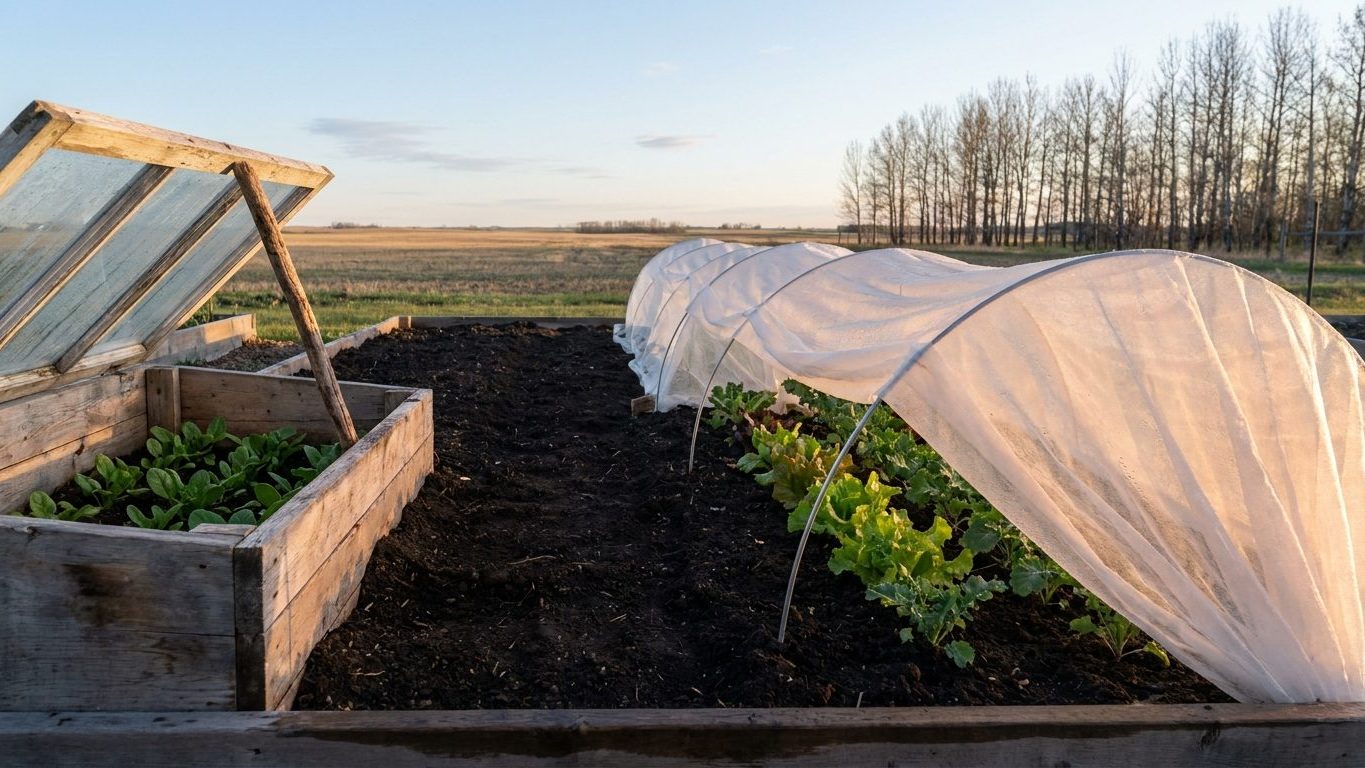

Floating row cover, low tunnels and cold frames do the most for New Jersey gardeners, because the state’s limit is rarely the length of the season. At the Newark reference station, the last spring freeze falls between March 29 and April 6, and the first fall freeze between November 4 and November 16. Covers stretch both ends by a few weeks. A heated greenhouse is overkill for most backyards.
The short answer for New Jersey
Start with row cover and low tunnels, add a cold frame for greens and early transplants, and consider a high tunnel only if you want to harvest through January. Black plastic mulch can warm cold spring soil for heat-loving crops. Those tools suit a state where the growing season is already long and the gaps to fill are a few weeks in spring and a few in late fall. For the broader planning picture, see Extending the Growing Season in New Jersey.
What do the frost dates actually mean?
The dates come from NOAA’s 1991-2020 climate normals for the Newark airport station. They are the 30 to 70 percent band of 32°F freeze probabilities. Across March 29 to April 6, the odds of one more freeze fall from roughly seven in ten to roughly three in ten. The fall window from November 4 to November 16 works the same way in reverse. The station’s last spring freeze dates and first fall freeze dates leave a long frost-free stretch, though gardens away from the airport often see it shorter.
Those are airport numbers, and the airport sits in a warm, paved corner of the state. Suburban and rural gardens typically see the last spring frost later and the first fall frost earlier, often by one to two weeks, and more at elevation. A garden in the hills may have a window several weeks shorter than Newark’s.
Which extender fits which job?
A cover adds only a few degrees on a cold night. That is enough for the light frosts that dominate the edges of the season, and it is why covers pay off here. Winter is a different matter. The coldest month at Newark has a mean daily minimum of 25.5°F, and a single layer of fabric will not hold a tender crop through that. The table matches each tool to a job. For timing the covers on a given night, read When to Cover Your Garden in New Jersey.
| Extender | Best job in New Jersey | Main thing to watch |
|---|---|---|
| Floating row cover | Light-frost protection for spring transplants and fall greens | Pin the edges against wind and lift it for pollination |
| Low tunnel (hoops plus fabric or plastic) | Early lettuce, spinach and brassicas; late fall carrots and kale | Vent on sunny days |
| Cold frame | Hardening off, winter salad greens, early starts | Overheating under glass |
| Black plastic mulch | Warming soil before tomatoes, peppers, squash | Soil dries out under it |
| High tunnel | Cold-hardy crops well into winter | Snow load, wind and summer heat |
What will not work here
The mistakes in New Jersey come from the climate’s two habits: warm, humid summers and sudden mid-winter swings. Both punish the same few choices.
Why does a sealed cold frame or tunnel fail?
A closed frame on a sunny March day can climb far above the outside air. A seedling that survived a cold night can cook by the next afternoon. Gardeners who cannot vent daily (a job, a long commute) are better off with breathable row cover than with glass or clear plastic. The same logic applies in fall, when Indian-summer afternoons can run warm while nights approach freezing.
Why won’t one layer of fabric carry tender crops through winter?
With a coldest-month mean minimum of 25.5°F, an average January night is already well below freezing, and cold snaps go lower. A light fabric adds a few degrees. That helps against a cold night in fall and does nothing for tomatoes or peppers in winter. Cold-hardy crops such as spinach, kale, mache and carrots can ride out these nights under a cover. Warm-season crops cannot, and trying to push them past the first hard freeze mostly wastes the last of the harvest.
Latitude adds a second limit. Newark sits at 40.68 degrees north, where midwinter days are short. Under cover in December and January, plants largely hold what they have rather than grow. Sow fall crops early enough that they reach harvest size by the time days shorten, then use the cover to keep them in good condition and pick as needed.
What fails in New Jersey’s humid summers?
Leaving plastic over warm-season crops through July is a recipe for scorched leaves. Tunnels closed at both ends in humid weather also encourage gray mold and other fungal trouble, especially when plants are crowded. Keep covers for the cool ends of the season, and take plastic off, or open the ends fully, once nights stay mild.
Snow is the last trap. New Jersey gets wet, heavy snow that can flatten a low hoop or tear a high tunnel’s plastic, and nor’easter winds on the coast will lift unpinned fabric. Pin down edges with soil, boards or sandbags, and brush snow off a tunnel promptly.
What changes across New Jersey
New Jersey is not one garden. The USDA Plant Hardiness Zone Map (2023, based on 1991-2020 data) spans 6a to 7b across the state, so no single answer fits everyone. The map builds each zone from one variable, the average annual extreme minimum temperature. That tells you what survives winter. It does not tell you when the last frost ends.
Gardeners in the northwestern hills sit toward the colder end of that spread. Spring there tends to open later, fall closes earlier, and cold air settles in valleys on clear nights. Shift every date in the Newark window later in spring and earlier in fall, and lean harder on covers at both ends. Gardeners near the coast or in the southern part of the state usually get a longer, milder run, so row cover and low tunnels can push harvests further into winter. At those latitudes, which sit south of Newark’s 40.68 degrees north, days are also slightly longer in winter.
Elevation and local setting matter as much as latitude. A garden on a low spot where cold air pools may frost before a neighbor on the slope above. A south-facing wall or fence can take the edge off the cold. A bed in the shade of tall trees warms slowly in spring and may need black plastic mulch more than a sunny bed does.
Look up your location on the USDA hardiness zone map rather than guessing from the state range. Then treat the zone as a guide to winter survival and your local frost dates as a guide to timing.
Where to check this for your own county
Your county office at Rutgers New Jersey Agricultural Experiment Station and Cooperative Extension is the best place to confirm what applies to you. Statewide advice, including everything above, is a starting point. A county recommendation beats it, because county staff know local frost pockets, soil types and which varieties have been tried in nearby gardens.
What should you look for there?
Two things matter most. The first is the local planting calendar, which gives sowing and transplanting windows for your part of the state rather than a single statewide window. Compare its spring and fall dates with the Newark band above. If your county calendar runs later in spring or earlier in fall, trust it.
The second is the list of varieties trialled in your county. Cold-hardy lettuces, spinach, kale and carrots differ in how they handle freezing nights under cover, and varieties that do well in a Rutgers trial near you are better bets than a random catalogue pick. Extension publications also cover cover-crop timing, high-tunnel basics and disease problems tied to humid New Jersey weather.
You can also call or email your county office with specific questions, such as whether your area is a frost pocket or how early you can safely plant under cover. Master Gardener volunteers often staff these lines and hold local records that never reach a statewide chart.
Checking this against your own garden
Your own observations outrank every date on the page. Three of them tell you a lot, and none needs an instrument.
What should you watch for?
- Soil warmth by feel. Push your hand a few inches into the bed in the morning. If the soil feels cold and clammy, hold off on tomatoes and peppers. A bed that feels noticeably warmer under black plastic or a low tunnel than an uncovered one next to it shows how much a cover is giving you.
- The first male flowers on squash or cucumbers. These appear before the female flowers. If your covered plants flower days ahead of uncovered ones, the cover is working. If both flower together, the extra warmth is small and the effort may not be worth it in that spot.
- The first true leaves. The first pair of leaves a seedling shows are seed leaves. The second set, which looks different, are the true leaves. Seedlings that reach true leaves quickly under cover tell you the bed is warm enough to grow. Seedlings that stall at that stage suggest the bed runs cold or shaded.
Keep notes for a season: the date of the last frost on your lawn, the date your covered bed first needed venting, the first leaf frost in fall. After a year or two, your own notes will describe your garden better than the airport numbers do.
Common questions
Do I need a greenhouse to extend the season in New Jersey?
No. Most gardeners get the extra weeks they want from row cover, low tunnels and a cold frame. A greenhouse or high tunnel makes sense if you want regular winter harvests or start many transplants, and it comes with more cost and more attention to venting and snow.
How much earlier can I plant with row cover?
Light row cover adds a few degrees, which lets you plant hardy crops such as lettuce, spinach and peas earlier than you otherwise would, and protects against light frosts. It does not make a hard freeze harmless, and it does not replace waiting for warm soil before planting tomatoes and peppers.
Can I grow vegetables all winter in New Jersey?
Cold-hardy crops can survive winter under covers, and some can be picked all winter. Growth slows sharply in the shortest days, so the usual approach is to plant in late summer or early fall and harvest what you grew. Tender crops such as tomatoes do not make it through.
When should I take covers off in spring?
Remove or vent them on sunny days once temperatures rise, and take them off entirely when the plants need pollinators or when nights stay mild. For frost-risk nights, keep covers at hand through the Newark window of March 29 to April 6. In suburban and rural gardens, expect that last frost to come later by one to two weeks, and more at elevation.