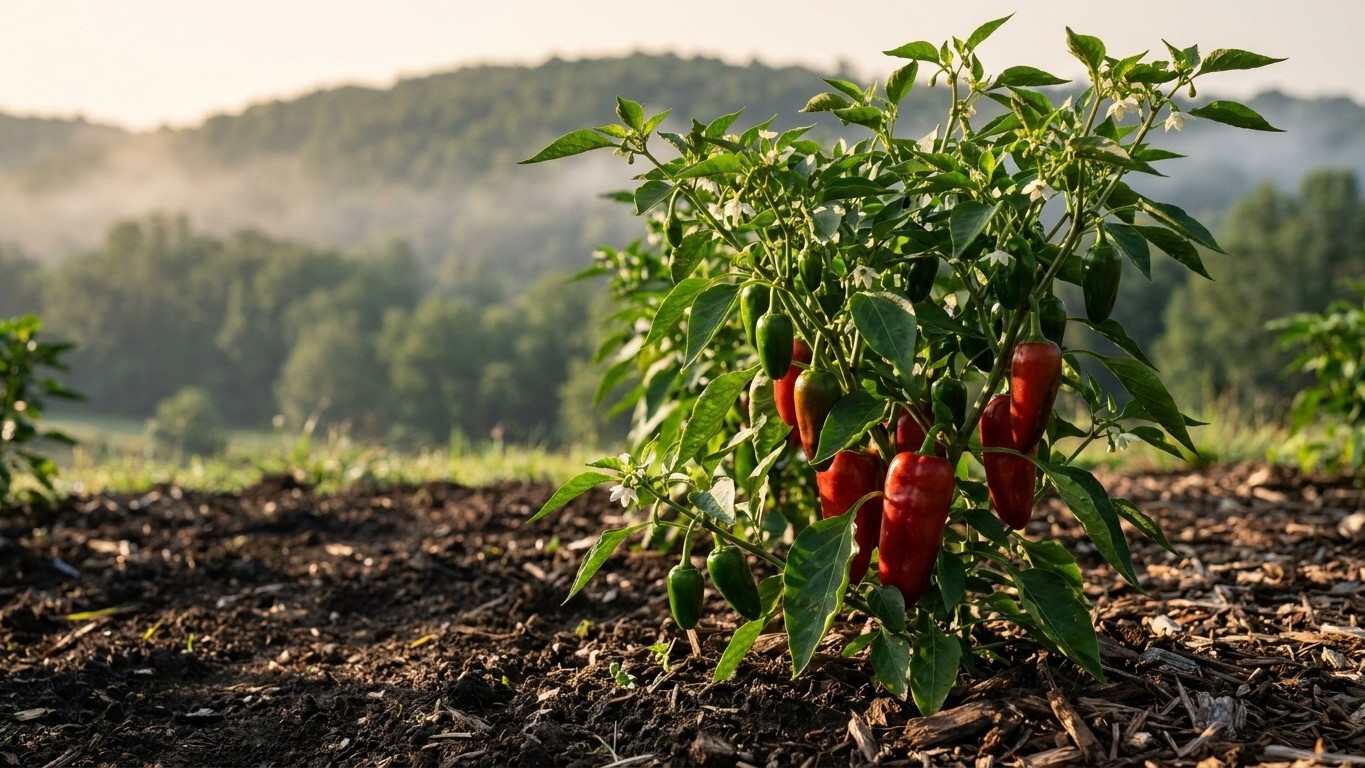

Pick peppers when the fruit reaches full size and the skin is firm. Clemson Extension puts that at about 70 to 85 days after transplanting. Then keep them out of the refrigerator. A domestic fridge runs colder than peppers tolerate, and below about 45 °F they pit and soften. The storage range that works is warmer, and even there the best a harvest will do is two to three weeks.
Keeping them, and for how long
What temperature and humidity do picked peppers need?
The clearest guidance comes from the Clemson Cooperative Extension Home & Garden Information Center. Its pepper factsheet says the optimal storage conditions are temperatures of 45 to 50 °F and 80- to 90-percent relative humidity, for two to three weeks. Both numbers matter. A pepper is mostly water held in a thin skin, and dry air pulls that water out fast, which is why the wrinkled, shrunken fruit on a kitchen counter looks so tired. High humidity slows that loss.
The temperature floor is where most people go wrong. Peppers come from warm climates, and the fruit is injured by cold even when nothing freezes. Below about 45 °F the tissue suffers chilling injury. The skin develops small sunken pits, the flesh goes soft, and decay organisms move into the damaged spots. The damage often shows up after the pepper warms back up, so a fruit can look fine in the fridge and fall apart on the cutting board two days later.
A domestic refrigerator sits below that line. Its job is to hold milk and meat safely, and it does that by running colder than 45 to 50 °F. A bell pepper in the main compartment is being stored under the wrong conditions, however tidy it looks in a crisper drawer.
How long do peppers keep at 45 to 50 °F?
Two to three weeks is a ceiling. It describes peppers in good shape, held in the right range with the right humidity. Fruit with a crack, a sunscald patch, or a bug bite starts to rot sooner, and a pepper picked a little past its prime has less time left in it. Treat the figure as the best case and plan to use the fruit well before it.
A few habits stretch the window toward that ceiling. Pick on a cool morning, handle the fruit gently, and keep it dry, since water sitting on the skin invites mold. A loosely closed or perforated bag holds humidity while letting some air move. Check the pile every few days and use the softest fruit first, because one rotting pepper will spoil its neighbors.
Anything beyond the window needs a different plan. Sliced raw peppers freeze well, and hot types dry easily on a string or in a dehydrator. Both give you months instead of weeks, which beats gambling on a drawer.
Where in the house that actually is
Which room comes closest to 45 to 50 °F?
No room matches the range perfectly, so the question is which one misses by the least. A heated kitchen is too warm, and peppers on the counter shrivel and soften quickly. The garage is the worst of the lot because it follows the weather. Where summers are hot and humid, the reference station at Charleston counts 55.1 days a year at 90 °F or more (NOAA NCEI Climate Normals), and a closed garage in those weeks runs hotter than the air outside. In a cold snap the same garage can drop below the damage line.
| Spot | What it does to peppers | Verdict |
|---|---|---|
| Refrigerator main compartment | Colder than 45 to 50 °F, so pitting and soft spots | Too cold |
| Kitchen counter | Warm and often dry, so fruit shrivels and softens fast | Short stays only |
| Garage or shed | Swings with the weather, hot in summer and cold in a freeze | Unreliable |
| Cool interior room, pantry, or basement | Steadiest temperature, often nearest the range | Best bet |
The best candidate is a room on the inside of the house, away from the oven, the dishwasher and sunny windows. A cool pantry works, as does an unheated spare room or a basement where the house has one. In summer, an air-conditioned house often sits above 50 °F, so even the best room may run warm. Peppers kept there should be used sooner than the two-to-three-week ceiling suggests.
Before you commit, put a thermometer in the spot you plan to use and read it morning and evening for a few days. Skipping that check costs you a harvest that looks fine going in and turns to mush a week later.
How do you know when peppers are ready to pick?
Start with the calendar. Utah State University Extension says transplants need 8 to 10 weeks indoors and should go out when the soil reaches 60 °F, after frost. NOAA NCEI’s climate normals put the last spring freeze at the Charleston airport station between February 28 and March 17, within the 30 to 70 percent probability band. Peninsular Charleston is milder than the airport, and the Upstate runs several weeks tighter at both ends. Count the 70 to 85 days from the day the transplant goes into the ground.
Weather can stretch that count. Fruit set fails at both ends of the temperature scale: nights below 55 °F and days above 90 °F. Where summers are hot and humid, the hot end is common, and the Charleston count of 55.1 days at or above 90 °F shows how often it happens. Flowers that drop in a heat spell mean a gap in the harvest weeks later. Utah State figures about 35 to 45 days from flowering to usable fruit. The cool end is something you have to watch yourself, with a thermometer that records overnight lows in your own yard. The full picture is in Why Peppers Fail to Set Fruit in South Carolina.
On the plant, a few signs say it is time:
- The fruit has reached the full size typical for its variety.
- The skin is firm and glossy, with no soft give when squeezed gently.
- It comes off cleanly when you cut the stem, with no tearing.
- If you want a fully ripe pepper, the color has turned all the way through.
Green and colored fruit are the same pepper at different stages. Picking early gives you a milder, greener fruit and encourages the plant to keep producing. Waiting for color gives sweeter flavor but leaves the fruit exposed longer to heat and to whatever is feeding on it, a problem laid out in What Eats Pepper in South Carolina, and When. Use pruners or scissors and leave a short stub of stem, because the branches snap easily if you pull. The wider growing picture is in Growing Peppers in South Carolina.
Common questions
Can peppers go in the refrigerator at all?
Whole fresh peppers shouldn’t stay there for days, because the main compartment is colder than the 45 to 50 °F range and below about 45 °F they pit and soften. Peppers that are already sliced or cooked are a different case. They are meant to be used within a few days, and the fridge is the safe place for them.
How long do picked peppers last?
Clemson Extension gives two to three weeks at 45 to 50 °F and 80- to 90-percent relative humidity. That is a maximum under good conditions. Fruit that was damaged on the plant, or that sits in a warm room, will last a shorter time.
Should I pick peppers green or wait for color?
Either works, and both are safe to eat. Pick green when the fruit is full-sized and firm if you want a milder pepper and more fruit later. Wait for color if you want sweetness, and accept that the fruit stays exposed to heat and pests longer.
What if nights turn cool before frost arrives?
Fruit set fails when nights drop below 55 °F, so watch your own overnight lows rather than guessing from the calendar. Pick mature fruit as the nights cool, and ask your county extension office for local frost timing, since the Upstate and the coast differ by several weeks.