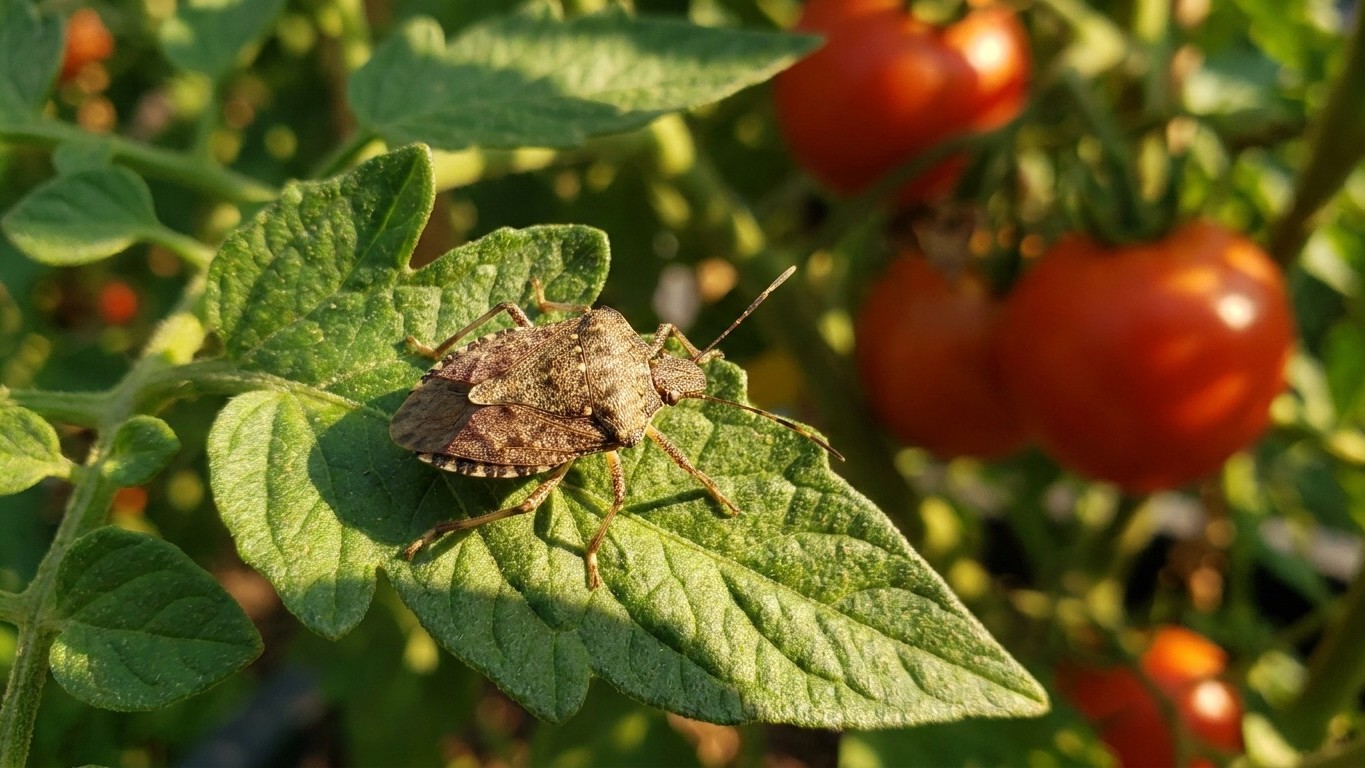

Stink bugs turn up in Oklahoma gardens from late spring through the first fall frost, but there’s no single day when they “arrive.” Numbers build gradually as the season warms, with the heaviest feeding pressure usually settling in during mid-to-late summer once several generations have overlapped. Early plantings often dodge the worst of it simply by finishing before populations peak.
The weeks to watch

Stink bugs don’t follow one marked calendar window in Oklahoma; their numbers climb steadily from late spring into fall rather than spiking on a fixed date. Oklahoma State University Extension’s home vegetable garden pest fact sheet (EPP-7313) doesn’t name a specific stink bug window the way it does for a few other pests, but it lays out the same seasonal logic that applies here: garden pest pressure is relative to the calendar, not fixed to it, and early-planted crops frequently escape the worst damage simply by maturing before populations catch up.
Early season: lower numbers, more escape
In the same fact sheet, OSU notes that corn earworm and squash bug are “less numerous early,” which is why an early planting often gets through untouched. Stink bugs behave the same way in most Oklahoma gardens: overwintering adults emerge slowly as the weather warms, and the first weeks of the growing season simply don’t have enough of them around to do visible damage.
Midsummer to fall: population catches up
By the time crops are flowering and setting fruit, stink bug numbers have usually built to their highest point of the year, fed by weedy field margins and multiple overlapping generations. This is also when thrips, mentioned in the same fact sheet as “very abundant early season on cotyledons and first true leaves,” have already peaked and faded, showing how different pests on the same plant can be on completely different clocks within one Oklahoma growing season.
Reading the calendar from your last frost

Oklahoma gardeners plan almost everything around one date, the last spring frost, and it’s a useful anchor for stink bugs too, even though the insect itself responds to soil warmth and plant growth stage, not the printed date on a calendar. NOAA’s 1991-2020 climate normals put the last spring freeze near Oklahoma City somewhere between March 28 and April 10. That’s a station reading from one airport gauge; suburban and rural gardens across the state typically see their own last frost later, sometimes by one to two weeks, and more at higher elevation, so check your own county before setting anything by it.
- Mark your own local last frost, using March 28 to April 10 as the reference range, then adjust later if your yard tends to stay cooler.
- Count forward not to a fixed number of weeks, but to the point your warm-season crops begin flowering and setting fruit. That’s the growth stage, more than any specific week count, when stink bug feeding damage typically becomes visible.
This is also the point where row covers earn their keep or stop helping. Covers protect seedlings well before flowering, but they have to come off once blossoms open, both because pollinators need access and because by then stink bugs are usually already moving in from surrounding weeds and field edges anyway.
What it attacks, and what the damage looks like

Most gardeners spot the damage before they ever spot the bug. Tomatoes develop cloudy, discolored spots under the skin and sometimes a puckered, “catfaced” scar where feeding happened while the fruit was still small. Beans and southern peas show shriveled, deformed pods with sunken pits. Okra pods can look pitted or twisted. New growth on stressed plants may wilt or die back where a cluster of bugs has been feeding steadily in one spot.
The crops most commonly affected in Oklahoma home gardens include:
- Tomatoes
- Peppers
- Beans and southern peas
- Okra
- Sweet corn (ears near the tip)
Both nymphs and adults do the damage, using piercing-sucking mouthparts to draw sap or juice directly from fruit, pods, and stems, unlike borers that tunnel inside plant tissue. That distinction matters for treatment: because stink bugs feed from the outside rather than burrowing in, there’s no stage where the insect becomes physically out of reach the way a squash vine borer larva does once it’s inside a stem. The tradeoff is that stink bugs are highly mobile at every stage past the earliest instar, so once adults have flown in from a nearby field or fencerow, removal has to keep pace with new arrivals rather than a single, containable population.
How Oklahoma sits in this pest’s range

Stink bugs, including the brown, green, and southern green species most common in vegetable gardens, are widespread across the central and southern United States, and Oklahoma sits well within that range rather than near an edge of it. That matters because widespread presence means the real difference between states isn’t whether stink bugs show up, it’s when their numbers peak and how many generations fit into a single growing season. Farther south, warmer springs and longer falls tend to let populations build earlier and run through more generations; farther north, the season compresses that timeline.
The OSU Extension fact sheet used for this page draws on the university’s own trial and observation data for Oklahoma gardens, and it doesn’t cite a neighboring state’s figures or name a border-state source for its seasonal guidance. That’s worth flagging simply because some pest guidance leans on a neighboring extension office’s data when local trials are thin; here, the recommendation stands on Oklahoma’s own published pattern.
What actually works against it

Cheapest and least labor-intensive options come first, since most gardeners want to try the free fixes before spending money or spraying anything.
- Plant early. Getting warm-season crops in the ground as soon as the frost risk clears takes advantage of the fact that stink bug numbers are lowest early in the season, letting fast-maturing crops finish before populations build.
- Use row covers until flowering. A floating row cover physically blocks adults and nymphs from reaching seedlings. It has to come off once flowers open, both for pollination and because by then bugs are usually already moving in from outside the covered area.
- Hand-pick adults and destroy egg masses. Stink bugs are sluggish in cool morning air, which makes early-day hand removal more effective. Egg masses, laid in tidy clusters on leaf undersides, can simply be crushed or removed before they hatch. This works best while numbers are still low; once adults are flying in steadily from field margins, hand-picking can’t keep pace on its own.
- Clear garden debris and weedy borders in fall. Overwintering adults shelter in leaf litter, weeds, and plant debris left standing through winter. Removing it reduces the local population that emerges the following spring, though it won’t stop bugs migrating in from a neighbor’s untended yard.
- Rotate crops, with modest expectations. Because stink bugs fly readily between plants and yards, rotation has a smaller effect on them than it does on soil-borne pests, but it still avoids concentrating a favored host crop in the same spot year after year.
- Trap crops, watched closely. Some gardeners plant sorghum or sunflowers along a border to draw stink bugs away from the main crop. It’s a commonly used tactic, but it only helps if the trap planting is monitored and the bugs on it are removed or destroyed before they move on to the vegetables nearby.
Home remedies like kaolin clay particle films or soap sprays show up often in gardening circles. Some growers report fewer feeding marks after applying them; controlled trials on their effectiveness against stink bugs specifically are mixed, so treat them as something to test on a few plants rather than a guaranteed fix.
Common questions
Do stink bugs bite people or pets?
No. Stink bugs feed on plant tissue with piercing-sucking mouthparts and have no interest in biting humans or animals. The main nuisance is the odor released when they’re crushed or disturbed.
Can stink bug numbers be predicted from one year to the next?
Not with much precision. Population size depends heavily on winter survival and spring weather, so a mild winter or an early warm spell can shift both the timing and size of that year’s buildup, which is part of why OSU Extension frames its guidance around relative seasonal patterns rather than fixed dates.
Does clearing weeds around the yard really reduce stink bugs the following spring?
It reduces the local overwintering shelter available to adults, which can lower the number emerging from that specific spot. It won’t stop bugs flying in from a neighboring property or nearby field edge, so it works best as one part of a broader routine rather than a stand-alone fix.