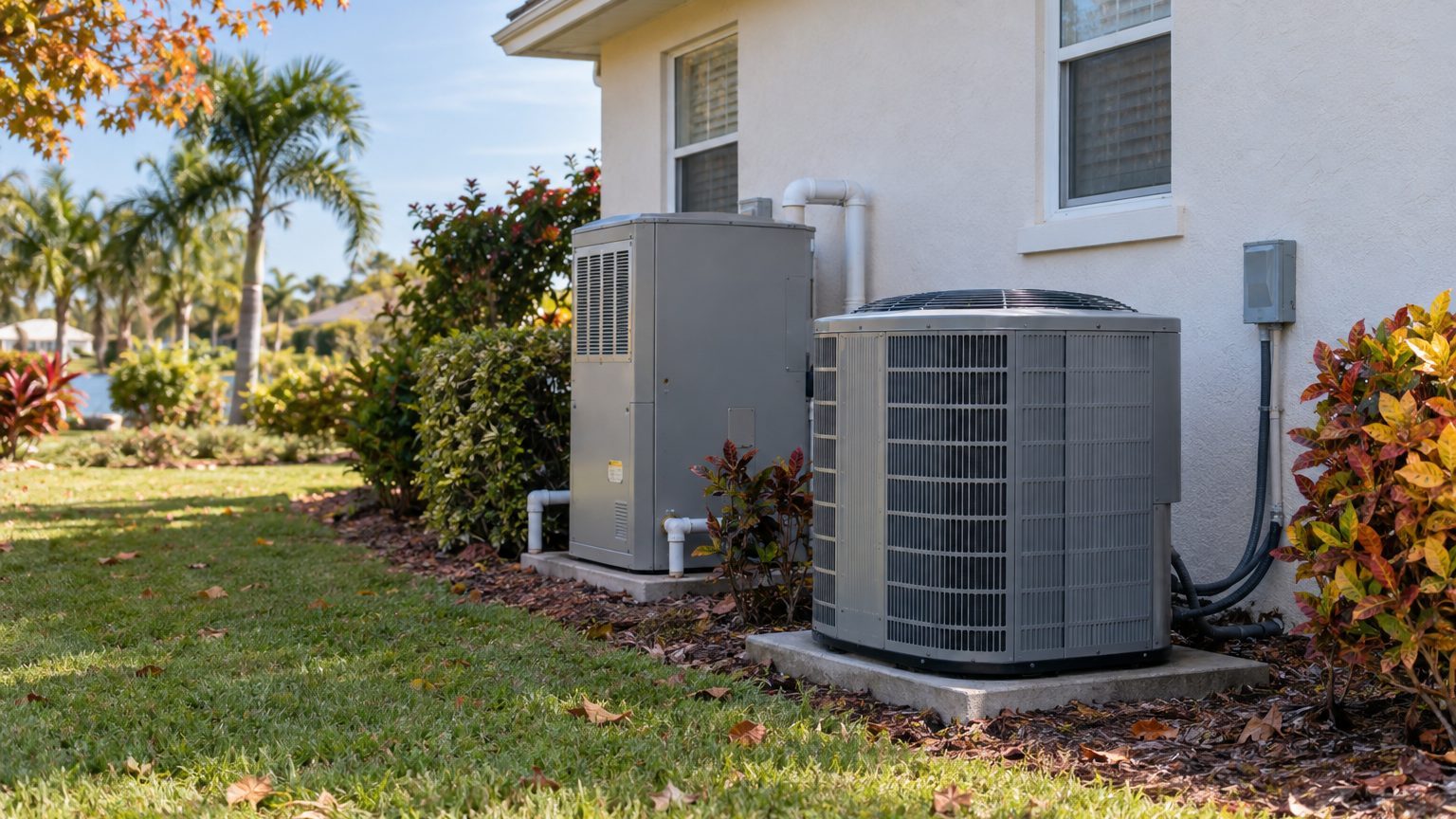

A heat pump costs far less to run than electric baseboard in Ontario, and the gap is wide. Against a gas furnace, the answer hangs on one number that varies by utility and by month: your price per cubic meter of gas. Below, the heat pump side comes in hard figures, along with a way to test the gas side with your own bill and a look at the homes where the cheaper option still loses.
The short answer for Ontario
Between the two electric options, the heat pump is clearly cheaper. Delivering one million Btu of heat costs C$19.22 with a heat pump at 8.1 HSPF2 (seasonal COP about 2.4), against C$45.63 with electric baseboard. That is C$26.41 less per million Btu. The figures are computed from Hydro-Québec’s comparison of average residential electricity prices (Toronto) and ENERGY STAR efficiencies.
Natural gas is the missing piece. The data behind these figures carries no gas price for Ontario, so there is no honest dollar figure to put next to C$19.22. The gas price has to come from the local utility, and it is printed on every bill. Once you have it, converted to a cost per million Btu delivered, the comparison takes a couple of minutes.
Two limits matter. These numbers are running cost on the same unit of heat, not a yearly bill, which depends on house size, insulation, windows and thermostat habits. And they say nothing about the price of buying and installing equipment. If you heat with baseboard, a heat pump is the cheaper system to run here; if you heat with gas, set your utility’s gas cost per million Btu against C$19.22 before deciding.
What each option costs to run in Ontario
| System | Efficiency used | Cost per million Btu delivered |
|---|---|---|
| Electric resistance (baseboard) | 100% | C$45.63 |
| Heat pump | 8.1 HSPF2 (seasonal COP about 2.4) | C$19.22 |
| Gas furnace | Rated on the unit’s label | No gas price in the data; get it from your gas utility |
Behind the table sits one electricity price: 15.57 cents per kWh in Canadian dollars. It is an average residential price before taxes, for 1,000 kWh a month, under rates in effect April 1, 2025, measured in Toronto (source: Hydro-Québec, comparison of electricity prices in major North American cities). It is a city average, useful for comparing fuels, and it is not your bill. It should never be set against a U.S. price either, since the currency differs.
The heat pump row uses 8.1 HSPF2, the ENERGY STAR minimum for ducted split and single-package systems. ENERGY STAR asks 8.5 of non-ducted systems for the same label, because a ductless unit has no duct losses and starts with an edge. The full logic is in What HSPF2 Measures, and Why Ductless Asks for More. These are minimums to earn the label, not typical values for a given house.
Efficiency moves the result as much as the fuel price does. One kWh carries 3,412 Btu (EIA conversion). Baseboard turns all of it into heat, one for one. A heat pump moves heat from outside instead of making it, so the same kWh delivers about 2.4 times as much at the seasonal average, which is why the same electricity price yields a bill less than half as large. Gas works the same way: a price per cubic meter means little until you account for how much of the fuel’s energy a furnace turns into heat in the rooms. Compare fuels per million Btu delivered, never per kWh or per cubic meter.
How cold it gets, and what that does to a heat pump
Toronto Buttonville A, the station used here, logs about 4,004 heating degree days a year below 18 °C (Environment and Climate Change Canada, Canadian Climate Normals 1981-2010). Degree days turn climate into cost: twice the degree days means roughly twice the fuel for the same house. That count cannot be set beside a U.S. figure. The base differs (18 °C is 64.4 °F, not 65 °F), the unit differs, and so does the period.
The coldest month adds texture. The mean daily minimum in the coldest month at the Toronto reference station is -10.2 °C. That is an average of the night lows, not a record, so the worst nights run colder. It is one station too. Farther north in the province, winters are harder and the heating season runs longer.
Here is where the C$19.22 needs a caveat. It rests on a seasonal efficiency, an average across the whole winter. In deep cold a heat pump’s efficiency drops, and the coldest nights are usually carried by backup: resistance strips built into the system, or a furnace in a dual-fuel setup. Expect the cost advantage to narrow during those hours, and the backup’s own fuel price to apply then. For more on how output and efficiency change as temperatures fall, see How Cold Is Too Cold for a Heat Pump.
The practical reading for Ontario: a winter this long gives a heat pump plenty of hours in its efficient range, and a handful of very cold nights do not erase that. Treat C$19.22 as a seasonal average, not a promise for every night, and plan the backup for the coldest stretch before you buy.
What homes in Ontario already heat with
Statistics Canada (table 38-10-0286, 2023) reports the main heating system across the province: forced-air furnace 66%, boiler with hot-water or steam radiators 7%, electric baseboard heaters 7%, heat pump 4%, heating stove 1%. The remaining homes fall into other categories. These are province-wide shares, not a count for one town. They also describe what was installed, which tells you which fuel was cheap when houses were built, and they are not a recommendation.
Forced-air homes are the majority, and they have an advantage: the ducts are already there. A ducted heat pump can often take over the same distribution, so the comparison is mostly about the fuel and the equipment. Heating a Home in Ontario goes through the broader options for these houses.
A house without a gas line changes the math. There, the relevant comparison is heat pump against baseboard or another fuel, and that is the comparison with figures above: C$19.22 against C$45.63 per million Btu. The 7% of homes on baseboard are the ones where the running-cost gap is widest.
Boiler homes are a different conversion altogether. Radiators have no ducts to reuse, so the choice becomes ductless units, a new duct system, or a heat pump that feeds water. The trade-offs are laid out in Ductless or Central. If your house has no gas line, compare a heat pump with baseboard, where the gap is C$26.41 per million Btu.
When the other choice wins
The heat pump is the cheaper system to run on these figures, yet it is not always the right call. The first case is an existing gas furnace with years of service left. If your gas cost per million Btu lands below C$19.22, you are already running the cheaper system, and replacement is a decision about repair bills and age. Repairing a Furnace or Replacing It covers that call.
Dual fuel is the second case. A heat pump paired with a furnace lets the heat pump work through most of the season, and the furnace takes the coldest nights. That setup trades some equipment cost for protection against the deep-cold drop in efficiency described above.
Cooling is the third. The data here carries no cooling degree days figure for Ontario, so the size of the summer load has to come from your own experience of the house. A heat pump also cools, and ENERGY STAR sets a 15.2 SEER2 minimum for it. If you were going to buy central air anyway, one machine doing both jobs changes the total picture. If you never run air conditioning, that half of the machine earns you nothing.
Last, no gas service. Some homes simply cannot choose a gas furnace, and for them the alternatives are propane, oil or electricity. This is where the heat pump’s lead over baseboard matters most. Keep a working furnace until your gas cost per million Btu, or a big repair bill, tips the math. Rebates change over time and are not covered here, so check current programs before you commit.
Common questions
Is a heat pump cheaper than gas in Ontario?
That depends on your gas price, which is not in the data used here. A heat pump at 8.1 HSPF2 costs C$19.22 per million Btu delivered, so a gas cost per million Btu below that means gas is cheaper to run. Above it, the heat pump wins.
Does C$19.22 include the cost of buying the system?
No. It covers only the cost of electricity needed to deliver one million Btu, at average Toronto residential prices before taxes. Equipment, installation, ductwork and maintenance are separate.
Do heat pumps work in an Ontario winter?
Yes, with a caveat. The mean daily minimum in the coldest month at the Toronto reference station is -10.2 °C. Efficiency drops in deep cold, so the coldest nights are usually carried by backup heat, either resistance strips or a furnace.
How do I check the gas side myself?
Take your utility’s price per cubic meter and ask for the gas’s energy content per cubic meter. Divide the price by the Btu it holds, multiply by one million, then divide by your furnace’s efficiency rating. The result is comparable to the heat pump’s C$19.22.