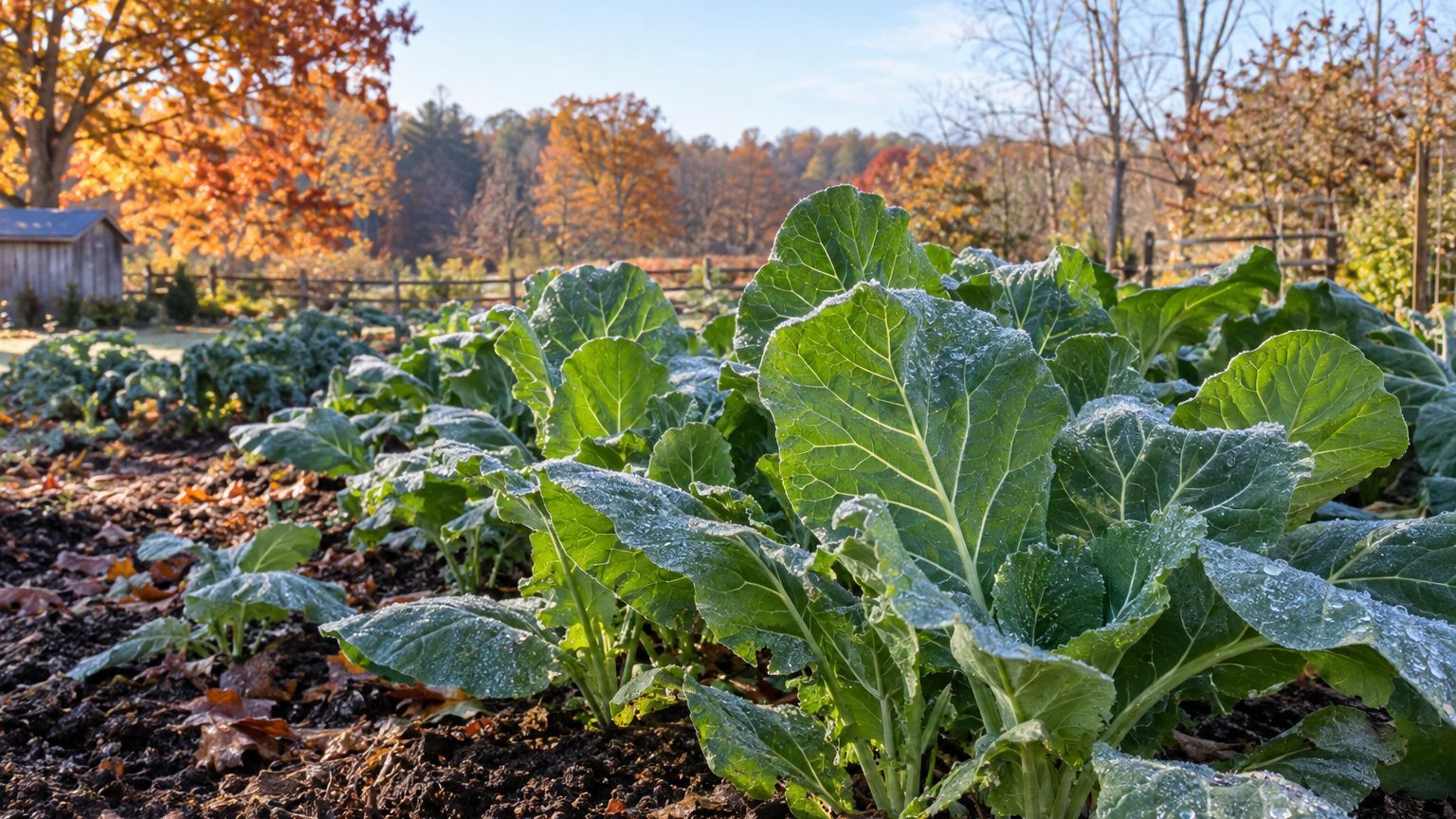

Start collard seed indoors from mid-March to early April, set the plants out from late April to mid-May, and sow again from mid-June to mid-July for a fall crop that finishes under October frost. Those windows come from average frost dates at Toronto’s Pearson airport station. Treat them as the middle of a range, and push them later the farther north or higher you garden.
The short answer for Ontario
Environment and Climate Change Canada’s 1981-2010 normals for the Toronto Pearson station put the average last spring frost at April 30 and the average first fall frost at October 16. The station’s frost dates mark the window between spring and fall. Both dates are means, so in one spring out of two the last frost falls after April 30, and in one fall out of two the first frost arrives before October 16. A mean is the midpoint of a window. It does not mark a safe date.
Collards are forgiving on both ends. They are a cool-season brassica that shrugs off light frost, and the leaves taste better after a few cold nights. That is why the calendar can start before the last frost and end after the first one.
When do you start collards indoors in Ontario?
Sow seed in pots four to six weeks before the transplant date. For plants going out in the last week of April or the first half of May, that means mid-March to early April. Keep the seedlings in strong light so they stay stocky. A windowsill that leans toward the glass produces leggy plants that flop in the first wind.
Plants can go out a week or two before the average last frost, once they have been hardened off for several days. A late frost will bite the leaf edges but rarely kills a hardened collard. Keep a bedsheet or a row cover handy for the nights when the forecast drops well below freezing.
When do you sow collards for a fall harvest?
Work backward from the average first frost of October 16. A variety that needs a long season from seed to a full harvest has to be sown early enough to mature before the fall frost. Young leaves can be picked earlier, so a sowing in the first half of July still gives a worthwhile crop.
| Task | Window at the Toronto reference station |
|---|---|
| Start seed indoors | Mid-March to early April |
| Transplant hardened-off plants | Late April to mid-May |
| Direct sow outdoors | Early to mid-May, once the soil is workable |
| Sow or start plants for fall | Mid-June to mid-July |
Gardeners who want to match varieties to these windows can start with The Best Collards and Greens for Ontario. The broader growing guide is at Growing Collards in Ontario.
What will not work here
Planting out on April 30 and assuming the danger has passed will fail in about half of all years. The average last frost leaves a coin-flip chance of freezing weather afterward. Collards take that better than tomatoes would, but small unhardened seedlings straight from a warm room can be killed by a hard freeze. The fix is hardening off and a cover, not a later date for everything.
Why won’t collards overwinter in Ontario?
The mean daily minimum of the coldest month at the reference station is -10.2 °C (13.6 °F). Collards handle frost well, but a winter of nights at that level, with no steady snow cover, kills the plants in most gardens. In the southern United States gardeners leave collards standing all winter. In Ontario they are an annual. A thick mulch or a low tunnel may carry a few plants into a mild winter, but nobody should count on it for a second spring harvest.
What happens if you sow too late or too early?
A short season punishes late sowing. Seed sown in early August rarely gets a full-size plant before October frosts. It gives you baby greens at best, and growth slows sharply as days shorten and nights cool in the fall. A long-season variety sown after mid-July runs out of time for the same reason.
Sowing too early outdoors fails for a different reason. Soil in April stays cold and wet, and seed sits in it, germinating slowly or rotting. Direct sowing in early April is a gamble that the transplant method avoids.
Humid Ontario summers also change how you space plants. Collards set close together look fine in June, but by August the leaves form a dense canopy that stays wet after rain or dew. That invites disease and gives pests good cover. Give plants room between them and pick the lower leaves as they age, so air moves through the row.
A hot, dry spell in July is the other trap for the fall crop. Seedlings need frequent watering until they root in. Weekly watering that works for established plants will not keep a newly set transplant alive in midsummer.
What changes across Ontario
The reference station is in the Greater Toronto Area, and the Canadian hardiness zone for that reference city is 7a. That is the Canadian system from Natural Resources Canada, which draws on seven climate variables. It does not convert to a USDA zone, so US readers should not compare the two numbers directly. Ontario covers several zones, from milder lakeshore and southwestern districts to much colder country in the north. No single calendar fits all of it.
The practical rule is to move the dates by the same number of weeks that your frost dates differ from Toronto’s. Where the last spring frost comes two weeks later, start seed two weeks later and transplant two weeks later. Where the first fall frost comes two weeks earlier, sow the fall crop two weeks earlier, and use a faster variety. Northern and upland districts run weeks behind the reference station in spring and weeks ahead of it in fall, so the season for a long-maturing variety can be squeezed out entirely.
Large lakes soften both ends of the season along their shores, with later fall frosts and cooler springs. Inland hollows and higher ground behave the opposite way, since cold air settles into low spots on clear nights. A garden a few kilometres from the lake can differ noticeably.
To find the zone for your municipality, use Natural Resources Canada’s Plant Hardiness Zone by Municipality map. Look up your town, not the reference city, and let that guide how far to shift the dates above.
Where to check this for your own county
The government of Ontario’s agriculture and food pages are the starting point for provincial guidance on vegetable growing. Look there for a regional planting calendar and for any variety trial results from your part of the province. Trial notes are worth more than a seed catalogue, because they report what grew in your kind of soil and season.
Your local agricultural office, conservation authority, or master gardener group may also publish calendars for your county or region. Ask which brassica varieties have been tried locally, how they handled pests, and when the fall frost normally arrives in your area.
A county or regional recommendation beats a provincial one. The dates in this article are provincial in scope, drawn from one Toronto station, and they say nothing about how your valley, hillside, or lakeshore behaves. Canadian normals cover 1981-2010, and recent decades have usually run a little milder, so a local source with newer records will tend to be closer to what you will see.
Checking this against your own garden
Your own observations outrank every date above. Three things are worth watching each spring and fall.
- Soil warmth by feel. Push your bare hand into the bed. If it feels cold and sticky, or a handful clumps wet, wait. Soil that crumbles and feels cool but not cold is ready for direct-sown seed. A bed against a south wall warms days ahead of one in a shaded corner.
- First true leaves on your seedlings. Seedlings that show their first true leaves, the ones after the round seed leaves, and have been outside for a week of hardening off are ready to plant. If they yellow or stall in the cold, your site is colder than the calendar assumes.
- Frost on your lawn and beds. Notice where the white rime appears first and where it lingers. The spot that frosts earliest in fall is your cold pocket, and it sets the last date for the fall crop. Beds that stay green after the neighbours’ have frosted have a longer season.
Dandelions blooming along the road or lilac leaves opening are old signs that the ground has warmed. Neither replaces the soil test, but they track local conditions more closely than any regional average.
If you follow the almanac, here is when to plant collard greens by the moon. It is a tradition, not a proven method.
Common questions
Can you sow collards directly in the garden in Ontario?
Yes, from early to mid-May when the soil is workable and no longer cold and sodden. Thin seedlings to the spacing the variety needs. Starting indoors gains time and gives plants a head start on the first pests, so it is the better choice for the spring crop.
Do collards survive an Ontario winter?
Rarely. The mean daily minimum of the coldest month at the reference station is -10.2 °C (13.6 °F). Collards stand up to hard frost in fall but will usually die over a full winter, so plan on replanting each year.
How late can you plant collards for fall?
Sow or set out plants by mid-July for a full harvest before the average first frost of October 16. Plantings in late July and August give smaller plants and tender young leaves instead of full-size ones. In a cold northern district, move all of these dates a week or two earlier.
Does frost hurt collards?
Light frost does little harm and improves flavour. A hard freeze can damage young transplants that have not been hardened off, so cover them if the forecast calls for a sharp drop.