
In the Toronto area, pumpkin seed goes into the ground once soil holds steady at 65°F, typically well after the average last spring frost of April 30. Work the calendar backward from the average first fall frost of October 16, and the flowers that will become harvestable pumpkins need to open by roughly the third week of August. Miss that window and the fruit runs out of season before it colors.
The short answer
Start with the frost date itself, because everything else on this page hangs off it. Environment and Climate Change Canada’s 1981-2010 normals put the average first fall frost at the Toronto Pearson station on October 16. That is a mean, not a guarantee. In one year out of two, frost actually arrives later than that date, and in the other half it arrives earlier. Treat October 16 as the middle of a window, not a line you can plan against with confidence, and remember that a province-wide average from one airport station tells you nothing about a colder valley or a higher-elevation county thirty miles away.
Utah State University Extension’s guidance on pumpkin timing gives the number that actually matters for scheduling: a pumpkin needs 45 to 55 days from the moment its flower opens to reach maturity. Not from the day you drop the seed. Not from the day the vine sprouts. From flowering. That distinction changes the whole calculation, because sowing date and flowering date can sit weeks apart depending on the season and the variety.
Run the arithmetic backward from the average frost date. Forty-five days before October 16 lands on September 1. Fifty-five days before lands on August 22. That gives a flowering window of roughly August 22 to September 1 as the latest point a bloom can open and still have a realistic shot at finishing before frost shuts the season down. A flower that opens after that window is racing a clock it can’t win in an average year, and in a late-frost year it might just squeak by, while in an early-frost year it won’t come close.
That single fact, that the clock starts at flowering and not at seeding, is the reason so many pumpkin timelines go wrong. Gardeners count backward from their sowing date and assume 45 to 55 days gets them to harvest. It doesn’t. It gets them roughly to the point where the vine is still setting fruit and hasn’t flowered a second or third time yet. The real countdown only starts once you see open blossoms in the patch, and from there the fruit needs those 45 to 55 days of frost-free growing to size up, harden its shell, and turn from green to its finished color.
When to sow here
- Let the last spring frost pass first. The average last spring frost at Pearson station is April 30, but that figure carries the same caution as the fall date: it’s a mean, so frost arrives later than April 30 in about half the years on record. Sowing before that average has passed risks losing the whole planting to a late cold snap.
- Then wait again, because soil is slower than air. Utah State University Extension is clear that pumpkin seed wants soil at 65°F before it goes in the ground, and soil doesn’t warm at the same pace as the air above it. A sunny afternoon can push the thermometer well past the frost mark while the top few inches of ground are still cold from weeks of overnight chill. That lag means the 65°F sowing point in this region falls a real stretch of time after April 30, not on it and not shortly after it.
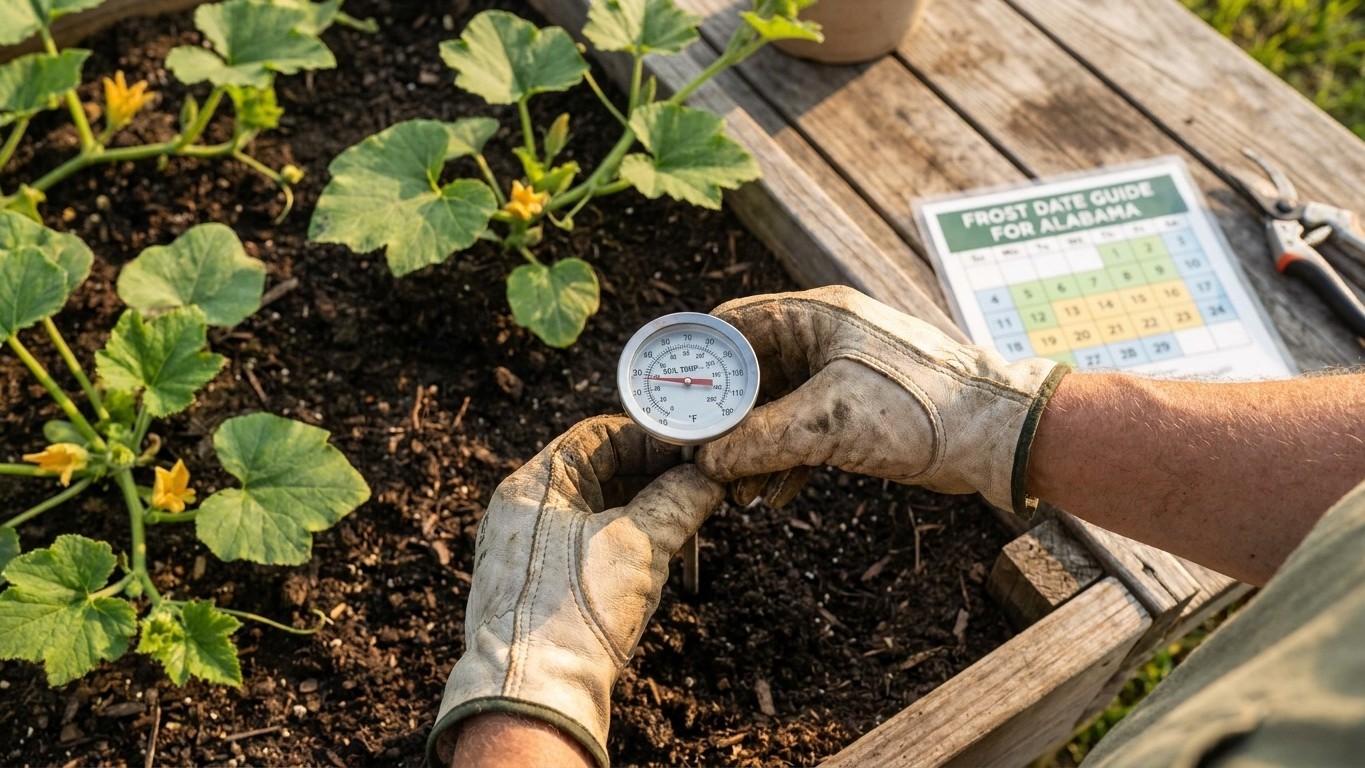
- Check the ground, not the calendar. A simple soil thermometer pushed a few inches down, checked in the morning before the sun has warmed the surface, tells you more than any date on a seed packet. Sow when that reading holds at 65°F for several consecutive days, not on the first warm afternoon that nudges it there briefly.
- Use row cover to buy roughly two weeks. Clear or lightweight row covers trap daytime heat against the soil and can advance that 65°F threshold by about two weeks compared with bare, uncovered ground. In a region where the flowering deadline sits in late August, two extra weeks of head start can be the difference between a vine that flowers comfortably inside the window and one that’s still pushing out its first blossoms as the deadline arrives.
- Count forward, then check the math backward. Once seed goes in, the vine still needs time to grow, vine out, and set its first flowers before the 45 to 55 day ripening clock even starts. Sowing later in the recommended range, rather than earlier, still needs to leave enough runway for flowering to happen well ahead of the September 1 outer edge calculated above.
What goes wrong here
- A flower opens too late and the fruit never colors. If blossoms don’t appear until mid-September, the 45 to 55 day window runs straight into the average frost date with no margin left. The fix is on the front end: get soil to 65°F as early as the ground allows, and use row cover to pull that date forward by the roughly two weeks it typically saves, so flowering happens comfortably inside the August 22 to September 1 window rather than after it.
- Frost catches the fruit mid-ripen. A pumpkin that’s sizing up but hasn’t finished its 45 to 55 days when a hard frost hits will stop developing and can suffer skin damage. Utah State University Extension’s guidance is to harvest with the stem attached before frost arrives, rather than leave fruit exposed hoping for a few more warm days that, given the mean frost date, are not a safe bet in most years.
- The vine collapses before the rind hardens. Vines weakened by pests can die back weeks ahead of a natural end-of-season decline, cutting the ripening clock short even when frost isn’t the culprit. Squash bugs and cucumber beetles are the usual suspects behind this kind of early vine failure; this site’s pages on squash bugs and
Want more of this in your Google feed?