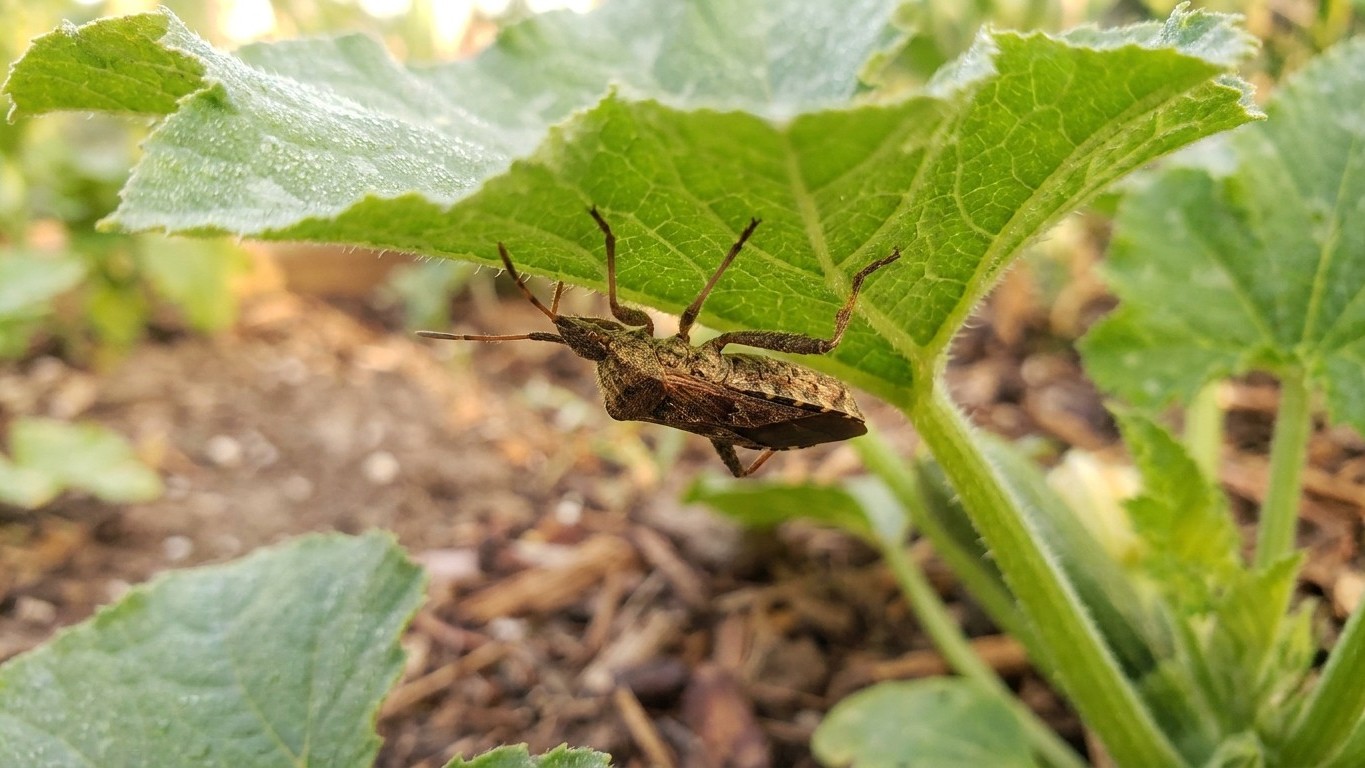

Squash bugs show up in Ontario gardens right around the same time squash and pumpkin vines start sprawling, typically late May through June, once daytime temperatures hold steady above 70°F. Once they arrive, the fastest way to stop them is a mix of daily hand-removal, wood-board trapping, and destroying garden debris before the adults have a chance to overwinter nearby. Timing matters more than any single product you spray.
Squash Bug Life Cycle and Timing in Ontario

Anasa tristis, the species behind nearly every squash bug complaint in Ontario, survives winter as an adult, tucked under leaf litter, mulch, fence posts, or stacked firewood. Unlike many garden pests, it doesn’t overwinter as an egg or pupa. That single fact shapes almost every control strategy that works.
Adults wake up when soil and air temperatures climb into the high 60s and low 70s, usually the last week of May or the first two weeks of June across southern Ontario. They fly or walk into garden beds looking for young squash, pumpkin, and zucchini plants, though cucumbers and melons get hit occasionally too. Mating starts almost immediately.
Females lay clusters of bronze-colored eggs, usually 15 to 40 at a time, glued to the underside of leaves in the V formed by leaf veins. Eggs hatch in seven to ten days. Nymphs pass through five stages before becoming winged adults, a process that takes roughly five to six weeks depending on heat.
In most of Ontario, this adds up to one full generation per year, with new adults appearing by mid-to-late August. In unusually warm seasons, particularly in the Niagara region or along Lake Erie’s warmer microclimates, a partial second generation can sneak in before frost. Either way, by September and October those late-season adults are already searching for winter shelter, which means fall cleanup timing is just as important as spring prevention.
Why the One-Generation Pattern Matters
Compare Ontario’s pattern to states like Georgia or Texas, where squash bugs can push out two or even three generations a year. Ontario gardeners actually have an advantage here: break the cycle once, in spring or early summer, and you’ve dealt with the bulk of the season’s damage. Miss that window and you’re managing five nymph stages and overlapping adult waves through August.
Spotting an Infestation Before Vines Collapse
The first sign is rarely the bug itself. Squash bugs feed by piercing plant tissue and sucking sap, which causes leaves to develop yellow speckling that turns brown and crispy within days. Growers often mistake this for drought stress or powdery mildew, especially since the bugs themselves hide near the base of the plant or under leaves during the hottest part of the day.
A heavier infestation causes entire leaves to wilt and blacken, a symptom sometimes called “anasa wilt.” That name comes directly from the bug’s genus, and it happens because saliva injected during feeding disrupts the plant’s ability to move water through its vascular tissue. Unlike simple sunburn, this wilting doesn’t recover overnight or after watering.
Checking for eggs is the most reliable early-warning method. Flip three or four leaves per plant, focusing on the ones closest to the base of the vine, every four to five days starting in early June. The bronze egg clusters are easy to spot against green leaf tissue once you know what you’re looking for, and squashing them between two fingers or scraping them into soapy water takes seconds.
Adult squash bugs themselves are roughly 5/8 inch long, flat-backed, and grayish-brown with orange or gold striping along the abdomen edges. They move fast when disturbed and often play dead, dropping into mulch, which makes them harder to catch than the slower-moving gray nymphs.
What Actually Stops Squash Bugs
No single method eliminates squash bugs completely, but stacking three or four of these together brings populations down to a level that doesn’t threaten the harvest.
Cultural and Preventive Steps
Fall sanitation is the single highest-leverage move available to Ontario gardeners. Removing squash and pumpkin vines, dropped leaves, and any wood or straw mulch from the bed right after harvest eliminates the overwintering shelter adults depend on. Leaving debris in place through winter is essentially rolling out a welcome mat for next year’s population.
Rotating cucurbit crops to a different part of the yard each year also reduces pressure, since adults emerging from nearby overwintering sites tend to search close to where they woke up before flying further. Combine that with resistant or tolerant varieties, butternut squash and some other winter squash types generally suffer less damage than zucchini or yellow summer squash, and the starting population drops before the season even begins.
Row covers placed over young transplants in late May physically block adults from reaching the plants during their peak emergence window. Covers need to come off once flowering starts so pollinators can reach the blossoms, which does leave a short exposure gap, but by then plants are established enough to tolerate light feeding.
Trapping and Hand Removal
The board trap trick has been used by home gardeners for generations, and it still works. Lay a flat piece of scrap wood or a shingle on the soil near the base of squash plants in the evening. Squash bugs seek shelter overnight and cluster underneath by morning. Flip the board at sunrise and knock the bugs into a bucket of soapy water.
Hand-picking adults and nymphs directly off plants, ideally in the early morning when the bugs are sluggish from overnight cool temperatures, remains one of the most effective non-chemical tactics for small to mid-sized garden plots. A five-minute check every other day through June and July catches most of the population before egg-laying peaks.
Trap cropping is another option worth trying. Planting a few Blue Hubbard squash plants along the garden perimeter draws squash bugs away from the main crop, since Hubbard squash is highly attractive to them. Treat or remove the trap plants once they’re heavily colonized rather than letting the population build up and spread back.
Treatment Options When Populations Spike
Insecticidal soap and neem oil sprays work reasonably well against young nymphs but have little effect on hardened adults, so timing sprays to coincide with egg hatch (roughly seven to ten days after you spot egg clusters) gets the best results. Spinosad-based products offer another option labeled for use on cucurbits in home gardens, and they tend to have less impact on pollinators than broad-spectrum pyrethroids when applied in the evening after bees have finished foraging.
Broad-spectrum insecticides do knock down adult populations, but they also wipe out the natural predators that would otherwise help keep squash bug numbers in check season after season. That tradeoff matters more in a backyard garden than in a commercial field, since home growers rarely need to eliminate every last bug, just enough to protect the harvest.
Natural Predators Worth Protecting
Tachinid flies lay their eggs directly on adult squash bugs, and the developing larvae eventually kill the host. Gardeners sometimes notice small white dots on the bug’s back, that’s the fly egg, and it’s a sign the pest is already on a countdown. Avoiding insecticide applications when tachinid activity is visible lets this natural control run its course.
Parasitic wasps target the egg clusters themselves, and ground beetles feed on nymphs that fall or get knocked into soil litter. Encouraging these predators means limiting insecticide use to spot-treatments rather than blanket spraying, and leaving small patches of undisturbed soil or leaf litter nearby, ironically the opposite of the total cleanup recommended for squash bug overwintering sites, but the tradeoff tends to favor predator habitat in beds not used for cucurbits.
Straw and thick mulch, while helpful for moisture retention, also create the same hiding spots squash bugs prefer for daytime shelter. Swapping to a thinner mulch layer or bare soil directly around cucurbit stems during peak squash bug season, then adding mulch back later, splits the difference between weed control and pest prevention.
One detail that surprises a lot of Ontario growers: squash bug damage often looks worse on plants that are otherwise stressed by uneven watering or poor soil drainage. A vine that’s already struggling wilts faster and more visibly under squash bug feeding than a vigorously growing plant nearby, even with similar bug counts on both. Keeping cucurbits on a consistent watering schedule through July and August, when squash bug pressure typically peaks, won’t stop the bugs, but it buys the plant enough resilience to outlast a moderate infestation and still produce a decent harvest.