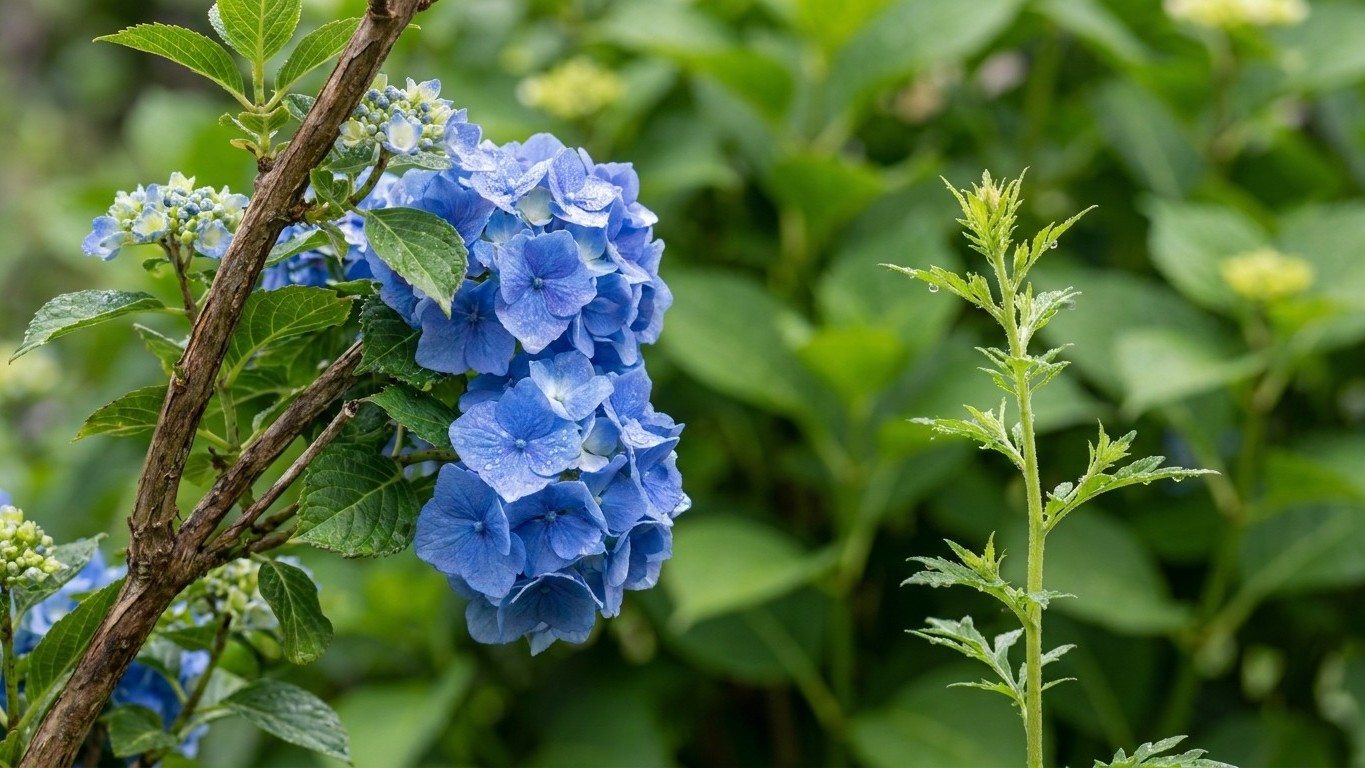

In the Portland area, the best window for putting hydrangeas in the ground runs from the last spring freeze, which falls between March 6 and March 21, through about the end of September for fall planting. West of the Cascades the plants thrive. On the high-desert east side the season is shorter and winters are harder, so type choice matters more there. This guide covers timing, soil, varieties, color control, and the pests that show up in Oregon. More state guides sit under Oregon guides.
When to plant Hydrangeas in Oregon

The reference city and the dates
Every date in this article comes from one place: Portland, using NOAA NCEI U.S. Climate Normals for 1991-2020. Their 32F freeze probability data put the last spring freeze (the 30-70% probability band) between March 6 and March 21. The first fall freeze lands between November 11 and November 27. That is a long, mild shoulder season, and it explains why Willamette Valley gardeners can plant hydrangeas nearly any time the ground is workable.
Portland sits west of the Cascades. Central and eastern Oregon are high desert, with a far shorter season, and this window should not be applied there. Gardeners in Bend, Sisters, or the Columbia Basin, and anyone above a few hundred feet in the foothills, should plan for later spring planting and an earlier fall deadline. Ask your county extension office for the numbers. Cold-climate gardeners east of the mountains can also learn from the Growing Hydrangeas in Idaho: Types, Colour and Winter guide, since conditions in southern and eastern Oregon are similar.
Seed, cuttings, and starting hydrangeas indoors
Hydrangeas are not usually started from seed. Seedlings vary widely from the parent, and they can take several years to bloom, so almost nobody grows them this way. The practical routes are a nursery plant in a 1-gallon to 3-gallon pot, or softwood cuttings taken in early summer and rooted indoors or in a shaded frame. A rooted cutting needs the rest of the season in a pot and should go into the ground the following spring.
Hardening off and transplanting
Hardening off applies to any hydrangea raised indoors or bought from a greenhouse. Count back seven to ten days from your planting date. If you want to plant on March 21, the late edge of the freeze band, start setting the pots outside in shade between March 11 and March 14. Give them a little more sun and wind each day. Skip this and a soft, greenhouse-grown plant can scorch in its first afternoon of real light.
Fall planting works just as well, and often better in Oregon. Count back about six weeks from November 11, the early end of the first-freeze band, and you land on September 30. That gives roots time to establish before the soil cools. Fall rains arrive around the same time and cut your watering work. Summer planting is the one to avoid, since a new root system can’t keep up with July heat.
Soil and site preparation
Sun exposure decides more than most gardeners expect. Hydrangeas want morning sun and afternoon shade. West of the Cascades, bigleaf and oakleaf types handle that arrangement well on an east-facing wall. Panicle hydrangeas tolerate far more sun, including all-day sun in the cooler Willamette Valley, as long as the soil stays moist. In the dry Rogue Valley or east of the mountains, afternoon shade is not optional for any type.
Texture and drainage come next. Hydrangeas drink heavily, yet standing water rots roots. Heavy clay, common in parts of the valley, holds water in winter and cracks in August. Dig a test hole 12 inches deep, fill it with water, and see whether it empties by the next day. If it doesn’t, plant on a low mound or choose another spot. Sandy soil has the opposite flaw and drains fast, so it needs organic matter to hold moisture.
Start prep three to four weeks before planting. Remove sod and weeds, then spread 2 to 3 inches of compost over the bed and work it into the top 8 to 10 inches. Doing it early lets the compost settle, and weed seedlings you disturbed will sprout and can be pulled before the hydrangea goes in. Dig the hole twice as wide as the root ball but no deeper, and set the crown level with the surrounding soil.
Spacing depends on the type. Give compact bigleaf and mountain hydrangeas about 3 to 4 feet, and big panicle and smooth types 5 to 6 feet. Crowded plants get less airflow, which invites mildew in the damp months. A soil test is worth the small fee here because pH controls flower color on bigleaf types. Western Oregon soils often lean acidic, but your yard may not, and a test beats guessing. Blue flowers need acidic soil, while pink needs a pH closer to neutral or above. Whites and greens ignore the chemistry entirely. A wider look at the crop is in How to Grow Hydrangeas: The Complete Guide.
Varieties that suit Oregon
Start with the trait that matters most in Oregon: which wood the flower buds form on. Bigleaf and oakleaf hydrangeas set next year’s buds in late summer, on old stems. A hard freeze or a wrong pruning cut can wipe out the whole season’s bloom. Panicle and smooth hydrangeas bloom on the current year’s growth, so cold costs them only a few inches of stem. That single difference shapes every recommendation below.
| Type | Blooms on | Best for in Oregon | Watch for |
|---|---|---|---|
| Bigleaf (macrophylla) | Old wood, though reblooming selections also flower on new growth | Mild areas west of the Cascades, coast, color change with pH | Bud loss in hard freezes, afternoon scorch |
| Panicle (paniculata) | New wood | Colder or sunnier sites, reliable bloom, east side | Heavy flower heads can flop |
| Smooth (arborescens) | New wood | Cold tolerance, cut back hard each year | Weak stems after rain |
| Oakleaf (quercifolia) | Old wood | Partial shade, fall leaf color, tolerates dry spells better | Needs room to spread |
Varieties that carry these traits are easy to find at Oregon nurseries. ‘Limelight’ is a widely sold panicle with sturdy stems and lime-to-pink flowers, and a good choice for a sunny, cold-prone spot. ‘Annabelle’ is the classic smooth hydrangea, tough in cold and shade, though its large white heads often bend after rain. ‘Incrediball’ is a smooth hydrangea bred for stronger stems. ‘Endless Summer’ is a reblooming bigleaf, which gives a second chance when winter kills the old-wood buds. ‘Snow Queen’ is an oakleaf with upright flower spikes that handles drier summer weather than a bigleaf.
Match the plant to your place. A Portland or Eugene yard can grow all four types. The coast adds salt and wind, which favor panicle and oakleaf. High-desert gardeners should lean on panicle and smooth types, which regrow from the base after a hard winter. The Quebec guide, Growing Hydrangeas in Quebec: Types, Colour and Winter, covers cold-hardiness tactics that apply to Oregon’s eastern side too.
What to plant alongside
The best companions share hydrangeas’ needs: moist, humus-rich soil and light afternoon shade. Ferns, hostas, astilbe, and Japanese forest grass all fit, and their foliage covers bare ground under the shrub, which holds moisture and keeps the shallow roots cooler. Sweet woodruff and other low shade groundcovers do the same. Rhododendrons and azaleas like the same acidic soil, which makes them natural neighbors west of the Cascades.
Pollinator draw is real, but it depends on the type. Lacecap bigleaf hydrangeas and wild-type smooth and panicle forms carry small fertile flowers that bees visit. Many mophead selections have mostly sterile florets and offer little. Mix a few lacecaps or a panicle with early spring bulbs, and late bloomers like Japanese anemone, to keep something flowering around the shrub.
Some pairings cause trouble. Hostas are slug magnets, and a hosta planted at the base of a hydrangea concentrates the very pest this state’s gardeners fight most. It’s still a classic pairing, but expect to bait or trap. Thirsty shallow-rooted trees such as birch and maple pull water away from hydrangeas in August. Lawn grass at the drip line does the same. And Mediterranean plants like lavender and rosemary want dry soil, so watering them for the hydrangea’s sake invites root rot.
One caution on folklore. Garlic, chives, and marigolds get credit for repelling aphids and other pests around ornamentals. The evidence for that is thin. Plant them if you like them, but not as pest control.
Watering, feeding and support
Water deeply and less often. A new hydrangea needs a slow soaking about twice a week during the first summer, enough to wet the top 8 to 10 inches. Established plants do better with a weekly deep soak than daily sprinkles, which wet only the surface and keep the roots shallow. Oregon summers are dry from July through September, so that is when the work lands. Midday wilting on a hot afternoon is the plant’s defense, not necessarily a call for water. Check the soil at 2 inches deep, and water if it is dry. If the leaves are still limp by evening, give it a drink.
Mulch with 2 to 3 inches of bark, compost, or leaf mold, kept a few inches from the stems. It keeps soil temperatures down, cuts evaporation, and suppresses weeds. Refresh it each spring. Hydrangeas are heavy mulch lovers because their roots sit near the surface.
Feeding should stay light. One application of a balanced slow-release fertilizer in early spring is enough for most plants, and a second light dose in early summer helps reblooming types. Stop by midsummer. Late feeding pushes soft growth that freezes in fall. Too much nitrogen gives big leaves and few flowers, a common mistake with lawn fertilizer that drifts into beds.
For support, panicle and smooth types with heavy heads benefit from a peony ring or a few stakes placed in spring before the stems fill in. Slender stems that flop after rain are best caught early. Other types rarely need help.
Pruning follows the wood rule from the varieties section. Prune old-wood bloomers (bigleaf, oakleaf) right after flowering, removing only spent heads and dead stems in spring once buds swell and you can see what survived. Prune panicle and smooth types in late winter, before new growth starts, and cut smooth types back hard if you like. Hydrangeas don’t sucker the way some shrubs do, but you can remove crowded stems at the base to open up the center and improve airflow.
Common problems

No flowers is the top complaint. For bigleaf and oakleaf types, the cause is usually a freeze that killed buds, or spring pruning that cut them off. The plant leafs out well and just never blooms. If it happens after a mild winter, look at fertilizer and shade next. Heavy nitrogen and deep shade both give you leaves instead of flowers. Panicle and smooth types rarely have this problem, which is why they’re good insurance.
Leaf scorch shows up as brown, crispy edges after a hot spell. It means too much afternoon sun or too little water, and it won’t heal on damaged leaves. Fix the site or the watering rhythm, then ignore the cosmetic damage. Wilting that continues into the cool evening after a deep soak is different. It points to root trouble, either rot from poor drainage or damage from digging.
Yellow leaves with green veins mean iron chlorosis, which happens when the soil pH is too high for the plant to take up iron. A soil test confirms it. Sulfur or an iron chelate product works, but follow label directions and retest rather than keep adding.
Powdery mildew appears as a white dust on leaves, mostly in late summer on crowded plants. Spacing and thinning prevent it, and it rarely kills a shrub. Leaf spot appears as small brown or purple blotches that spread in wet weather. Clean up fallen leaves in fall and avoid wetting the foliage when you water. Gray mold (botrytis) can rot flower heads in a rainy fall, and it responds to the same cleanup. Cut off affected heads and bin them.
Flower color fading to green or tan in late summer is normal aging, not a problem.
Pests that actually show up in Oregon
Oregon State University Extension lists several pests as the ones that matter for Oregon home gardens, including slugs, the brown garden snail, aphids, the European earwig, and the brown marmorated stink bug. The list also names cucumber beetles, imported cabbageworm, cabbage maggot, carrot rust fly, and symphylans. Those are mostly vegetable-garden pests, and they’re not the ones to watch on a hydrangea bed. Pressure varies, so take any unfamiliar bug to your county office for identification.
Slugs and snails
The first sign is ragged, irregular holes in leaves, plus slime trails in the morning. The gray field slug and the brown garden snail feed at night above 50F in moist conditions, so mild wet spells matter most. Slugs lay eggs when the rains begin, at the end of September or early October, which gives two control windows: September to October, and early spring. Pick one method and apply it in those windows, such as slug bait labeled for home gardens or nightly hand-picking with a flashlight. Control before the eggs hatch beats chasing adults all summer.
Aphids
You’ll see clusters of tiny insects on new shoots and flower buds, with sticky honeydew and curled new growth. They are most troublesome in July and August. A strong blast of water from the hose, repeated every few days, knocks them off and is usually all a healthy shrub needs.
European earwigs
Earwigs leave ragged chewing along petal edges and leaf margins. You’ll find them hiding in flower heads at dawn. The one control that works is trapping: a rolled damp newspaper or a shallow tin set near the plant overnight, shaken into soapy water each morning.
Brown marmorated stink bug
This pest is mostly a nuisance on hydrangeas, though it can feed on stems and buds. Reports peak in fall, when adults look for shelter and gather on walls and shrubs. Hand-pick into soapy water, and seal gaps around the house before cold weather.
Cutting Flowers and Preparing for Winter
Hydrangeas make good cut flowers, and timing decides whether stems last. Cut in the cool of the morning when the heads are about three-quarters open, and drop the stems straight into water. Smooth and bigleaf types wilt fast. Searing the cut ends in boiling water for 30 seconds, or recutting them under water, often helps.
For drying, let the flowers age on the plant. By late summer or early fall the heads turn papery and shift to dusky green, burgundy, or tan. That is the moment to cut. Strip the leaves, hang the stems upside down in a dark, dry spot, and they hold their form for months. Cutting too early gives limp, brown flowers.
As the first fall frost approaches, between November 11 and November 27 in the Portland reference window, keep stopping fertilizer and let the plant harden naturally. Add a fresh 3 to 4 inches of mulch around the base after the ground cools. In colder or higher-elevation parts of the state, where the date comes earlier, bigleaf types benefit from a loose wire cage filled with leaves, or a frost cloth thrown over the plant when a freeze is forecast. Leave the spent flower heads on through winter, since they shelter the buds below, and prune off the damaged tips only in spring.
Local help
Climate varies sharply across Oregon, from the wet coast to the Cascades to the high desert. For county-level frost dates, soil testing, and help identifying a pest or disease, contact Oregon State University Extension and your local county office.
Common questions
When is the last frost in Oregon?
For Portland, NOAA NCEI 1991-2020 normals put the last spring 32F freeze between March 6 and March 21. That does not apply statewide. Central and eastern Oregon are high desert with a far shorter season, and the dates come later there.
Can I grow hydrangeas from seed in Oregon?
You can, but it’s rarely worth it. Seedlings vary from the parent plant and take years to flower. Nursery plants or rooted cuttings give you a known variety and a much faster start.
How do I change hydrangea color in Oregon?
Color change works on bigleaf types only. Acidic soil gives blue flowers and a pH nearer neutral or higher gives pink. Test the soil first, adjust gradually, and retest. White hydrangeas won’t change.
Do hydrangeas survive Oregon winters?
West of the Cascades, most do without help. Panicle and smooth types handle cold best because they bloom on new growth. In colder or higher-elevation areas, bigleaf types may lose flower buds, so mulch, protect, or choose a different type.
What eats my hydrangea leaves?
Slugs and snails are the usual culprits for holes, especially in mild, wet weather. Earwigs chew petal edges and aphids cluster on new shoots in July and August. Check for slime trails and night feeders before you reach for a spray.