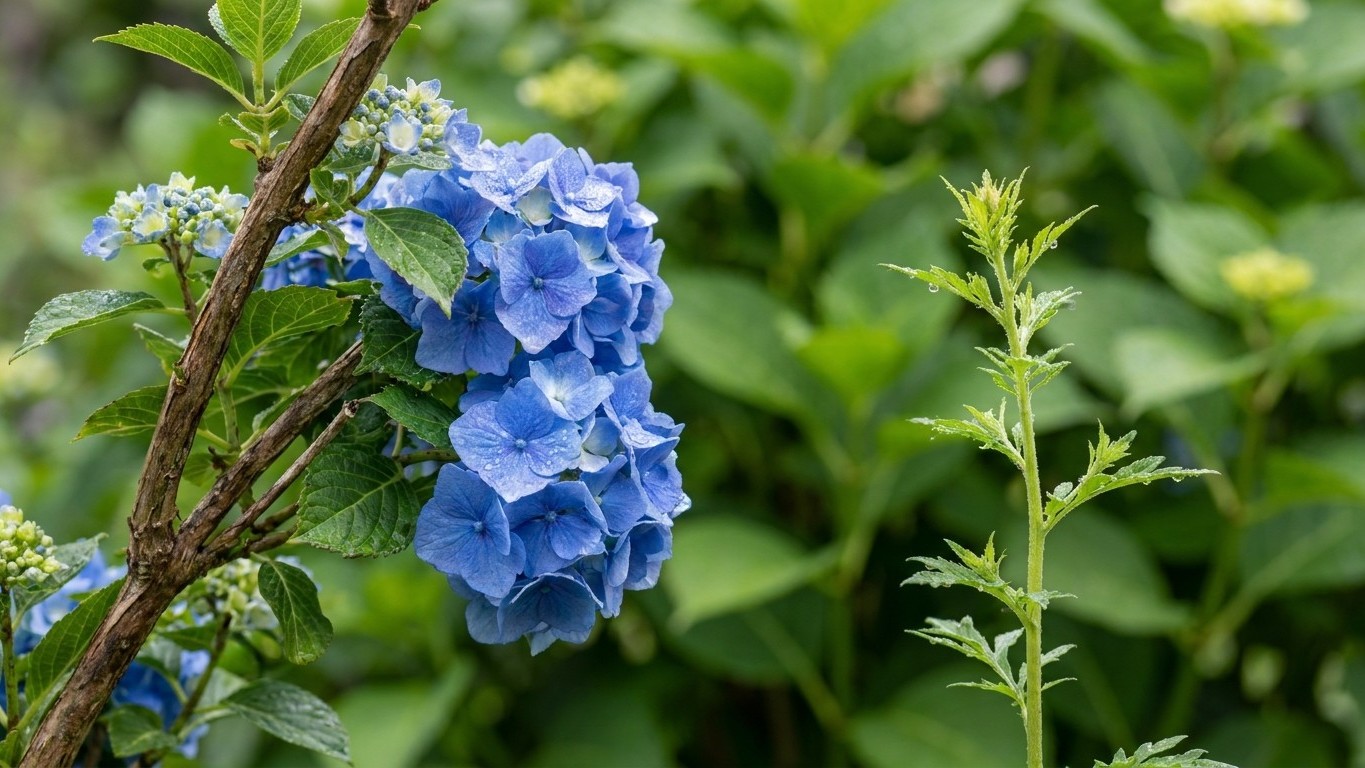

Hydrangeas can absolutely thrive in Idaho, but the state’s dramatic range of elevation and frost timing means the answer changes depending on where you garden. Panicle and smooth hydrangea types handle Idaho winters reliably; bigleaf types need a sheltered spot and extra patience. Plant after your local last frost, site for morning sun and afternoon shade, and mulch heavily before the ground freezes.
When to plant Hydrangeas in Idaho

In Boise, the last spring frost falls somewhere between April 23 and May 7, based on NOAA’s 1991-2020 Climate Normals for station USW00024131. That’s a two-week window built on 30-70% freeze probability, not a hard cutoff, so treat early May as the safer bet in the Treasure Valley rather than the earliest date on the range.
Boise sits in a low, warm valley. Most of Idaho does not. Higher elevations in the Panhandle, the mountain valleys around Sun Valley and Stanley, and the eastern plateau near Idaho Falls run considerably colder, with frost lingering weeks past what Boise experiences and returning weeks earlier in fall. If you garden outside the Treasure Valley, add real buffer to any date built on the Boise figures. Your county extension office holds the local numbers.
Nursery stock, not seed
Unlike vegetables, hydrangeas aren’t started from seed on a windowsill. Garden centers sell them as potted nursery stock or bare-root plants, usually appearing on shelves in early spring. That plant has been greenhouse-grown, so it needs the same kind of acclimation a seedling does before it goes in the ground.
Give a newly purchased hydrangea seven to ten days outside in a sheltered spot, shielded from wind and direct midday sun, before planting it in open ground. Bring it in in on any night frost is forecast during that stretch. This hardening-off period matters more in Idaho than in milder states, because a plant rushed straight from a warm greenhouse into a 38-degree night can suffer setback that shows up as leaf scorch or stunted growth weeks later.
Count backward from your expected planting date: if you’re aiming to plant the week after the Boise frost window closes, buy your plant roughly two weeks earlier so it has time to adjust outdoors first. Gardeners at higher elevation should push both the purchase date and the planting date later to match their own, longer frost season.
Spring versus fall planting
Fall planting is possible in the Treasure Valley, ideally six to eight weeks before the first fall frost (October 7 to October 21 in Boise) so roots establish before winter. But spring planting is the safer default across most of Idaho, since a young hydrangea entering its first winter without a full growing season behind it faces real risk of dieback, especially at elevation.
Soil and site preparation
Hydrangeas want morning sun and afternoon shade almost everywhere in Idaho. That’s especially true in the high desert stretches of the Snake River Plain, where afternoon heat and low humidity stress the big, thin leaves fast. In the wetter, cooler Panhandle, full sun is more forgiving, but afternoon shade still reduces water stress and keeps blooms from fading.
Soil texture matters more than most gardeners expect. Hydrangeas want soil that holds moisture without staying waterlogged, something closer to a loam than heavy clay or fast-draining sand. Idaho’s irrigated valley soils often run toward clay, which drains slowly and can suffocate roots after a wet spring. If your soil forms a dense, sticky ball when squeezed, plan on amending it.
Bed prep, done early
Work two to three inches of compost or well-aged organic matter into the planting bed several weeks before you actually put the plant in the ground, not on planting day itself. This gives the amendment time to integrate into the existing soil structure rather than sitting as a separate layer that water skips around. In heavy clay, consider building a raised bed or mounded berm six to eight inches high so roots stay above the saturated zone after spring runoff or a heavy irrigation cycle.
Space plants according to their mature spread rather than their nursery-pot size. Panicle hydrangeas commonly reach four to eight feet wide at maturity; smooth hydrangeas run smaller, often three to five feet. Crowding plants close together to fill a bed quickly sets up competition for water and airflow problems later, which in turn invites the powdery mildew covered further down.
Soil pH gets a lot of attention because it shifts bloom color on bigleaf hydrangeas, but most of the varieties that actually perform well in Idaho’s climate don’t respond to pH in that way. Test your soil before planting if you want a baseline, but don’t expect a pH adjustment alone to solve a struggling plant. A soil test through your local extension office is the one number here worth having in hand before you dig.
Varieties that suit Idaho
The trait that matters most in Idaho isn’t heat tolerance or days to bloom, it’s whether a variety flowers on old wood or new wood. Old-wood bloomers set their flower buds the previous summer, and those buds sit exposed through winter. A hard freeze, or a late spring frost hitting right as buds swell, can wipe out the whole season’s flowers even though the plant itself survives fine. New-wood bloomers build fresh flower buds each spring after the plant leafs out, so winter damage to the stems doesn’t cost you the blooms.
Types worth considering
- Panicle hydrangea (Hydrangea paniculata), including widely sold cultivars like ‘Limelight,’ ‘Little Lime,’ and ‘Quick Fire’: blooms on new wood, tolerates cold down into zone 3-4 territory, and is the most forgiving choice for higher-elevation Idaho gardens.
- Smooth hydrangea (Hydrangea arborescens), including ‘Annabelle’ and ‘Incrediball’: native to North America, extremely cold hardy, also blooms on new wood, so a rough winter just means pruning back dead stems in spring rather than losing the flower show.
- Bigleaf hydrangea (Hydrangea macrophylla): the classic mophead look sold everywhere, but mostly an old-wood bloomer and more winter-tender. Reblooming series bred to flower on both old and new wood offer more forgiveness if a cold snap takes out the old-wood buds, though results still vary by microclimate.
- Oakleaf hydrangea (Hydrangea quercifolia): attractive foliage and fall color, but less reliably hardy in Idaho’s colder zones; best reserved for the mildest valley locations with good winter shelter.
None of this is an endorsement from any institution, just a plain read of which growth habit survives an Idaho winter with the least drama. If in doubt, a new-wood bloomer removes the guesswork entirely.
What to plant alongside
Shade-tolerant perennials make the easiest companions because they share the same light and moisture needs without competing hard for either. Hostas, astilbe, and ferns fill the ground beneath a hydrangea’s canopy and don’t fight it for root space the way another thirsty shrub would. Spring bulbs like daffodils work well too, since they finish their growth cycle and go dormant before the hydrangea leafs out fully, so the two never actually compete for the same resources at the same time.
For pollinator interest, catmint and coneflower planted a few feet out (not crowded against the base) extend the bloom season in the same bed without drawing on the hydrangea’s root zone. That’s a real, observable benefit, not a folk claim.
Some pairings sound reasonable but don’t hold up. Marigolds are often pitched as a general pest deterrent in companion-planting lore, but there’s no solid evidence they reduce aphid pressure on hydrangeas specifically, that claim comes from vegetable garden tradition and doesn’t transfer cleanly here.
Keep hydrangeas well away from shallow-rooted trees like maples and birches, which will out-compete a young shrub for water and nutrients within a few seasons. Black walnut is a harder no: its roots release juglone, a compound toxic to many ornamental shrubs, and hydrangeas planted within a black walnut’s root zone often decline for no obvious reason until you trace it back to the tree. Roses planted right at the hydrangea’s base cause the same problem in miniature, both are heavy feeders competing for the same narrow patch of soil.
Watering, feeding and support
Hydrangeas want roughly one to two inches of water a week during the growing season, delivered deeply rather than in frequent shallow sips. Check soil moisture two to three inches down before watering again; if it’s still damp, wait. First-year plants need closer attention, often two waterings a week through their initial establishment, since their root systems haven’t spread far enough yet to pull moisture from a wider area.
A two- to three-inch mulch layer of shredded bark or pine needles does real work here: it slows evaporation in Idaho’s dry, low-humidity air and buffers soil temperature swings between hot afternoons and cool nights. Keep the mulch pulled back an inch or two from the stem itself, piling it against the base traps moisture against the bark and invites rot.
Feed with a balanced, slow-release fertilizer as new growth starts in early spring. Skip heavy nitrogen applications late in the season, that pushes soft new growth right when an early fall frost is most likely to catch it, based on the October 7 to October 21 window in Boise and earlier at elevation.
Large mophead blooms on bigleaf varieties sometimes need a simple stake or a loose cage, particularly in the wind-exposed high desert areas of the state, since a heavy flower head after rain can snap a stem. Panicle and smooth hydrangeas generally have sturdier stems and stand on their own. Pruning timing depends entirely on that old-wood versus new-wood distinction covered above: prune old-wood bloomers right after they finish flowering, and prune new-wood types like panicle and smooth hydrangeas in late winter before growth resumes. Deadhead spent blooms through the season for appearance, and remove any weak or crossing stems each year to keep the plant’s structure open.
Common problems

Wilting on a hot afternoon doesn’t automatically mean the plant is thirsty. Large hydrangea leaves lose water fast in dry heat and will droop temporarily as a normal response, then perk back up by evening. Check the soil before reaching for the hose, overwatering a plant that’s simply reacting to heat sets up root problems that are harder to fix than a missed watering.
Brown, crisped leaf edges usually point to too much direct sun or wind exposure rather than disease, common on plants sited in full afternoon sun across the Snake River Plain. Moving the plant, or adding afternoon shade with a taller companion shrub, resolves it over a season or two.
No blooms at all, or only a few, is often winter damage to old-wood flower buds, or a late spring frost hitting new growth right as it emerges. Given the April 23 to May 7 frost window in Boise, and considerably later dates at elevation, buds that break too early are genuinely at risk. This is the strongest practical argument for choosing new-wood bloomers in colder parts of the state.
Yellowing leaves with green veins, a pattern called chlorosis, shows up in alkaline soils that lock up iron the plant needs. It’s common enough in Idaho’s mineral-rich valley soils and is a soil chemistry issue rather than a disease.
A white, powdery coating on leaves is powdery mildew, more likely in crowded plantings with poor airflow or in the wetter microclimates of the Panhandle. Thinning out crossing stems and giving plants proper spacing from the start reduces it more reliably than any spray.
Wilting despite consistently moist soil, paired with blackened or mushy roots when you check, signals root rot from poor drainage, most common in heavy clay beds that were never amended or raised before planting.
Pests that actually show up in Idaho
University of Idaho Extension’s home garden pest list, drawn from its Insect Pest Management for the Home Vegetable Garden guide, names pests like Colorado potato beetle, cutworms, tomato hornworm, imported cabbageworm, wireworms, onion thrips, squash bug, carrot rust fly, and pea leaf weevil. Nearly all of that list targets vegetable crops specifically and rarely bothers an ornamental shrub like a hydrangea. Of the pests the extension service tracks statewide, only two show up regularly on hydrangeas.
Aphids, including the green peach aphid the extension guide names, are the one you’ll actually deal with. Look for curled or puckered new growth at the stem tips, along with a sticky residue (honeydew) that can turn black with sooty mold if left alone. They show up from spring through summer and cluster on tender new shoots first. A strong spray of water knocks most of them off, and insecticidal soap handles a heavier infestation; encouraging ladybugs in the bed keeps populations down without spraying at all.
Grasshoppers move in from dry pasture and field edges in late summer, per the extension service’s seasonal notes, and they’ll chew ragged holes in hydrangea foliage in rural properties or gardens bordering open land. There’s no great spray solution once they’ve arrived in numbers; floating row covers over young plants before grasshoppers move in is the more reliable control.
The rest of the extension’s list, the potato beetles, cutworms, hornworms, cabbageworms, thrips, and weevils, are real pressures for Idaho vegetable gardeners but not something to watch for on a hydrangea specifically. If you spot damage that doesn’t match aphids or grasshoppers, bring a sample or photo to your county extension office for identification rather than guessing.
Harvest and end of season
“Harvest” for a hydrangea means cutting blooms, either for a fresh arrangement or to dry. For fresh-cut flowers, cut stems in the morning after dew has dried, at a slight angle, and get them into water quickly. For dried arrangements, wait until the blooms feel papery and slightly stiff to the touch, typically late summer into fall, then hang the stems upside down in a dark, dry space for a couple of weeks.
As the first fall frost approaches, the schedule shifts to winter prep rather than cutting. In Boise that frost lands between October 7 and October 21; gardeners at higher elevation should expect it considerably earlier and plan backward from their own local date. Stop fertilizing six to eight weeks before your expected frost date, since fresh growth pushed too late in the season won’t have time to harden off before cold arrives.
Ease off watering slightly as nights cool, this encourages the plant to slow down and harden its stems naturally. Once the ground begins to cool but before a hard freeze sets in, lay down a thick mulch layer, four inches or more, over the root zone to buffer the coldest part of winter. Bigleaf varieties in exposed, windy sites benefit from a loose wrap or burlap cage around the whole plant, particularly where old-wood flower buds need protection to bloom the following year. Leave spent flower heads on the plant through winter rather than cutting them back, they offer a small amount of insulation to the buds beneath, and save the real pruning for spring once you can see which wood survived.
Local help
Frost dates, soil conditions, and pest pressure all shift across Idaho’s elevation range, and the figures here are built on a single Boise weather station. For county-level planting dates and an actual soil test, contact your local office through the University of Idaho Extension, which can also help identify any pest or disease symptom specific to your area.
Common questions
Can hydrangeas survive winter outdoors in Idaho without any protection?
New-wood bloomers like panicle and smooth hydrangeas generally survive fine with just a good mulch layer. Bigleaf varieties, especially at higher elevation or in exposed, windy sites, do better with a wrap or cage around the plant through the coldest months.
Why didn’t my hydrangea bloom this year even though the plant looks healthy?
This is almost always an old-wood variety that lost its flower buds to winter cold or a late spring frost. The stems and leaves survive because they regrow from new wood, but that year’s flower buds were already set the previous summer and didn’t make it through.
Do I need to change my soil pH to get blue or pink flowers?
Only bigleaf hydrangeas respond to soil pH this way, and even then results vary. Panicle and smooth hydrangeas, the varieties best suited to most of Idaho’s climate, don’t change color with pH at all.
How much sun does a hydrangea actually need in Idaho’s dry climate?
Morning sun with afternoon shade works best across the Snake River Plain and other dry, high-heat areas. In the wetter, cooler Panhandle, more direct sun is tolerated without the same leaf scorch risk.
Is it worth planting hydrangeas in fall instead of spring in Idaho?
It’s possible in the Treasure Valley if you plant six to eight weeks before the first fall frost, but spring planting is the safer default across most of the state, since a young plant needs a full growing season to establish before facing its first winter.