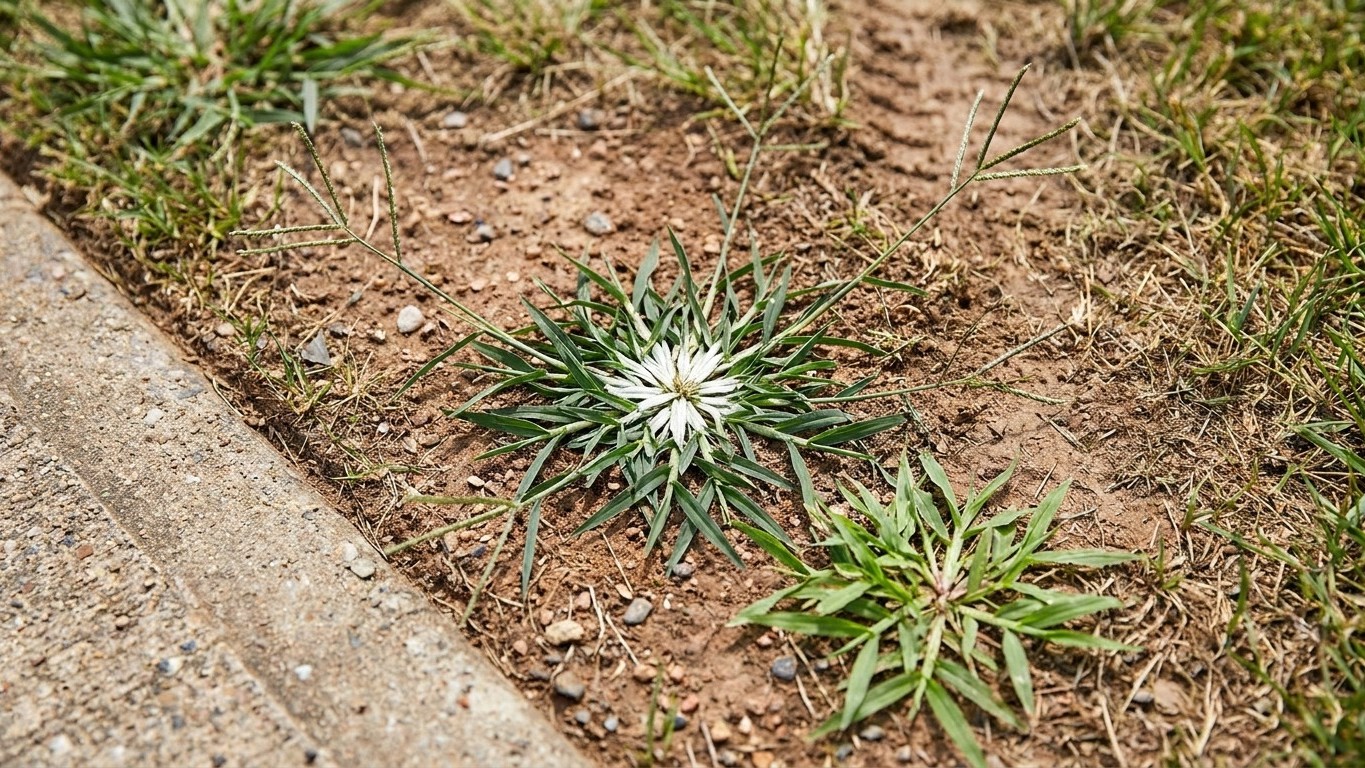

For most of western Oregon, early fall is the best time to sow grass seed, and the window closes about 45 days before the first fall freeze. In the Portland area, that puts the cutoff somewhere between late September and mid-October. East of the Cascades, the season is much shorter and Portland’s dates do not apply. Warm-season lawns follow a different calendar, tied to soil temperature rather than the month.
The best time to sow grass seed in Oregon
Soil temperature sets the calendar
Seed doesn’t read calendars. It reads soil. Cool-season grasses germinate when the soil sits between 50 and 65 °F. Warm-season grasses need 65 to 70 °F. A $10 soil thermometer pushed a couple of inches down tells you more than any date printed in an article, this one included.
Fall suits cool-season seed because the ground is still holding summer heat while the air cools and the rains return. Seedlings get warm roots, mild days and natural moisture, and they have months to thicken before the next summer tests them. Spring sowing works too, but the young grass hits its first July with shallow roots. Weeds also germinate in spring, and they compete with the seedlings from day one.
The frost data gives the outer boundaries. At Portland, NOAA NCEI U.S. Climate Normals for 1991-2020 put the last spring freeze between March 6 and March 21, and the first fall freeze between November 11 and November 27. Those are the dates when the chance of a 32 °F freeze falls in the 30 to 70 percent band. Portland sits west of the Cascades, though. Central and eastern Oregon are high desert, with a far shorter season. Use your own local dates.
Cool-season or warm-season: pick your trade-off
Oregon gardeners can plant either family, and neither one wins outright. This is transition-zone thinking, and the honest answer is a trade-off, not a champion.
- Cool-season lawns (Tall Fescue, Kentucky Bluegrass, Perennial Ryegrass) stay green through the mild months. They suffer in July.
- Warm-season lawns (Zoysiagrass, Bermudagrass) handle summer heat but turn brown from October to April.
Which cost is easier to live with? A household that waters through July may be happy with fescue. Someone who wants a low-maintenance summer and doesn’t mind a straw-colored lawn all winter may lean the other way. Both choices are legitimate, and the seeding dates differ for each. Cool-season seed goes down in early fall, once the soil has dropped into its 50 to 65 °F range. Warm-season seed waits for soil to climb to 65 to 70 °F, which means a late-spring start, and it still needs time to establish before the cold returns.
Either way, the lawn needs about 45 days of growing weather before the first fall freeze. That requirement drives the last date that still works, covered next.
The last date that still works
Count backward. Take your first fall freeze date and subtract 45 days. That’s the latest day to sow. Seed that goes down after that point often germinates, then dies over winter because the seedlings never built enough root to survive.
For Portland, the NOAA band for the first fall freeze runs November 11 to November 27. The arithmetic gives you a range instead of a single deadline:
| First fall freeze (Portland band) | 45 days earlier |
|---|---|
| November 11 | September 27 |
| November 27 | October 13 |
Today is October 2. In a Portland-area yard, that falls inside the range. If the freeze lands at the early end of the band, the window has already closed. If it lands at the late end, there are about eleven days left. Nobody knows which way it will go, so a lawn sown this week is a modest gamble, and one sown after mid-October is a larger one. If you are on the fence, sow now and keep the ground moist, rather than waiting for a perfect weekend that may not arrive.
A missed window is not a disaster. Waiting for spring costs you one season of growth, not the lawn. Sowing late costs you the seed, the water and the effort, and you start over anyway.
The same subtraction works anywhere, but the answer shifts with the climate. Eastern Oregon has a shorter growing season than Portland, so its cutoff arrives earlier, and the arithmetic in When to Plant Grass Seed in Idaho shows how a high-desert calendar compresses. For a much colder extreme, When to Plant Grass Seed in Quebec runs the same math with a freeze that arrives far sooner. Find your local first fall freeze date, subtract 45 days, and you have your deadline.
Seed rate and soil preparation
What Oregon’s state soil suggests about your ground
Oregon’s official state soil, named by law in 2011, is the Jory series. USDA NRCS records for its surface layer show a pH of about 5.6 (slightly acid), a clayey texture of 14 percent sand, 34 percent clay and 52 percent silt, and organic matter around 5.0 percent. It is well drained. It is also an Ultisol, an old, heavily weathered and leached soil that is naturally acid and low in nutrients.
That is the soil that represents the state, not the soil in every yard. Oregon spans hundreds of soil series. River bottoms, hill country and any lot a builder has scraped or filled can look nothing like Jory. Use it as a hint about what western Oregon ground tends to do: run acid, stay low on nutrients, and pack down if you work it wet. Your own pH is a different number, and the only way to learn it is a soil test. Your county office of Oregon State University Extension is a sensible place to start for testing and for advice specific to your area.
Once you have results, you will know whether the soil needs lime or fertilizer before seeding. Loosen the top few inches, rake out stones and debris, and level the surface. The full sequence is covered in Starting a New Lawn From Seed.
How much seed, and how deep
These rates are for a new lawn, in pounds per 1,000 square feet:
| Grass | Family | Seed per 1,000 sq ft |
|---|---|---|
| Tall Fescue | Cool-season | 6 to 8 lb |
| Kentucky Bluegrass | Cool-season | 1 to 3 lb |
| Perennial Ryegrass | Cool-season | 4 to 10 lb |
| Zoysiagrass | Warm-season | 1 to 2 lb |
| Bermudagrass | Warm-season | 1 to 4 lb |
If you are overseeding an existing lawn, use half those rates. More seed is not insurance. Crowded seedlings compete for light and water, and the weaker ones thin out anyway.
Depth matters more than most people expect. Cover the seed with no more than 0.25 inch of soil, and press it down so the seed touches the ground. Seed buried deeper often never emerges, and that is the single most common reason a new lawn comes up patchy. A light raking after spreading, then a pass with a roller or even a careful walk-over, does the job.
Watering a new lawn until it holds
The seed has to stay damp from sowing until the seedlings are established. Dry out a germinating seed and it stalls, sometimes for good. Because the seed sits within a quarter inch of the surface, the top layer of soil dries first, and that is the layer you are really managing.
Early on, that means short, light waterings, more than once a day if the weather is dry or breezy. The goal is a surface that looks darker and feels damp, never soggy. Puddles wash seed into low spots and leave bare patches on slopes. A fine spray beats a heavy stream. If the soil is clayey, as the Jory series is, go easy: clay absorbs slowly, and water that can’t soak in runs off and carries seed with it.
Western Oregon’s fall rain does part of the work, but don’t count on it. A dry spell of a few days in October can undo a week of progress. Check the surface by hand each day, and add water when it starts to look pale or crusty.
Once the seedlings are up and growing, taper off. Water less often but longer, so moisture reaches deeper and roots follow it down. A lawn kept shallow and constantly wet stays dependent on you. One trained to reach for water becomes more resilient in the dry months that follow.
Watch for the first sign that the grass has settled in: the blades stand up, the patches of bare soil fill in, and the lawn survives a day without water without wilting. That is when you can step back from the daily routine.
Common questions
Can I sow grass seed in spring in Oregon instead?
Yes, though fall is the better bet for cool-season seed. In Portland, the last spring freeze falls between March 6 and March 21 (NOAA NCEI, 1991-2020 normals), and cool-season seed germinates once soil reaches 50 to 65 °F. Spring-sown grass faces weeds right away and a hot July before its roots are deep. Warm-season seed needs soil at 65 to 70 °F, so it goes in later.
Is it too late to sow in early October?
In the Portland area, not necessarily. The 45-day rule points to a cutoff between September 27 and October 13, depending on when the first freeze arrives. Beyond that, seed that germinates risks dying over winter. Higher or drier parts of Oregon have an earlier cutoff, so check your local first fall freeze date.
Which grass should I choose?
No single type wins. A cool-season lawn (Tall Fescue, Kentucky Bluegrass, Perennial Ryegrass) suffers in July. A warm-season lawn (Zoysiagrass, Bermudagrass) is brown from October to April. Pick the problem you can tolerate.
Will extra seed make the lawn thicker?
Not reliably. Seedlings crowd one another and the weaker ones die back. Stay within the ranges in the table above, and use half those rates if you are overseeding an established lawn.
Some gardeners also time this by the Moon: when to plant grass seed by the moon, as almanac tradition rather than fact.