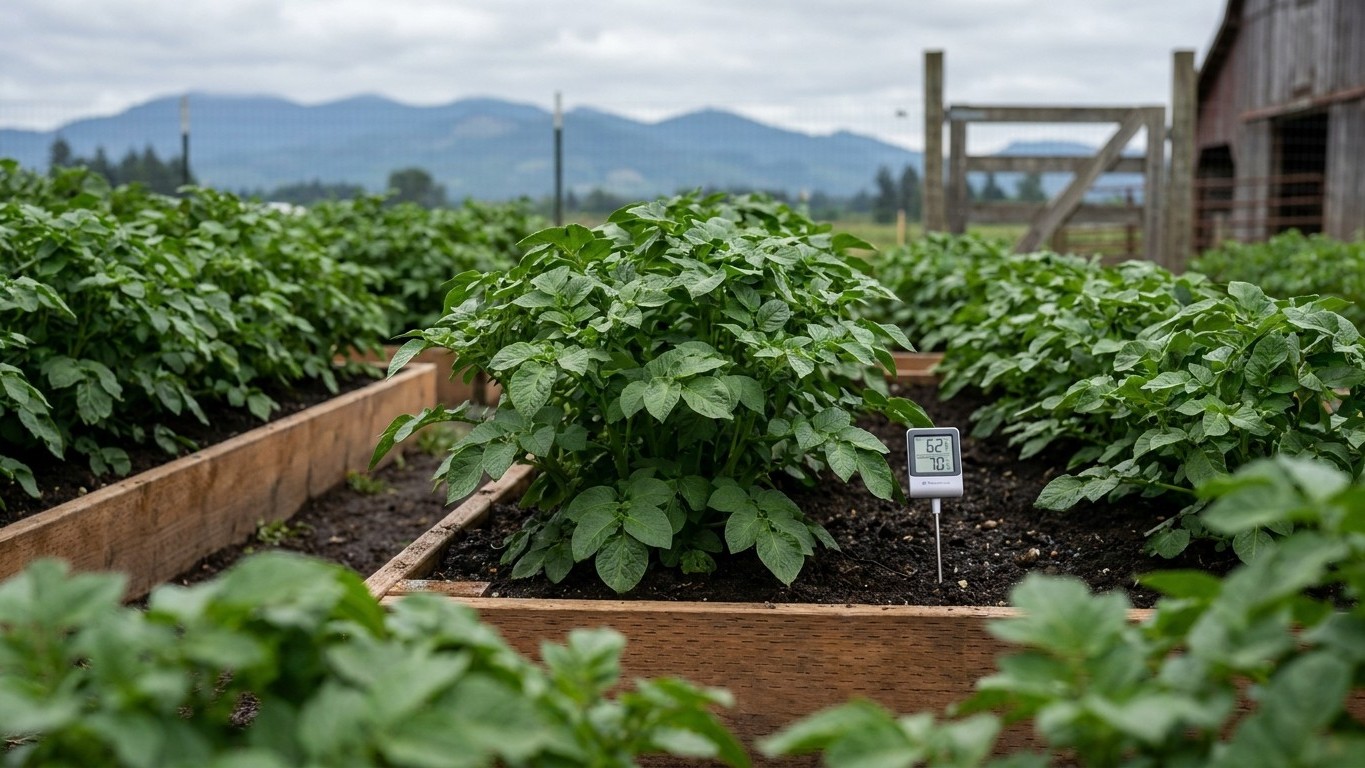

West of the Cascades, Oregon rarely gets hot enough to shut down a potato crop. Portland averages just 11.9 days a year at 90°F or above, and the last spring frost falls between March 6 and March 21. That combination means most home gardeners in the Willamette Valley can run a full-season potato crop without the heat stress that ruins tuber set in hotter states. Central and eastern Oregon play by different rules.
The short answer

Two numbers decide whether a state can grow potatoes through the summer or has to dodge the heat with an early spring crop. The first is how many days a year the soil and air climb past 90°F, because Utah State University Extension identifies that threshold as the point where tuber set and fill shut down. The second is the last spring frost date, which sets how early you can get seed potatoes into the ground in the first place.
For Oregon, using Portland as the reference station, the 90°F count sits at 11.9 days a year on average. That is a low number. States in the Southwest or the Deep South can rack up 60, 80, even more than 100 days above that mark, forcing gardeners there to plant as early as possible and pull the crop before summer really lands. Oregon’s climate west of the Cascades doesn’t put that kind of pressure on the season. A potato planted in late winter or early spring has a wide stretch of mild weather to bulk up tubers before any heat spike shows up, and even when a hot spell does arrive, it’s brief and infrequent enough that it rarely coincides with the exact window when tubers are actively sizing.
The last spring frost window, March 6 to March 21 for the Portland area, according to NOAA NCEI’s 1991-2020 climate normals, gives a workable starting line for When to Plant Potatoes in Oregon. Combined with the low heat-day count, it means gardeners in the valley have more flexibility than most of the country: plant a bit early and you’re fine on frost risk, and even if the calendar slips a couple of weeks, the heat ceiling isn’t close enough to punish you for it. That flexibility also makes it worth choosing from Potato Varieties That Suit Oregon to get the most out of the long, mild growing window.
That flexibility disappears once you leave the valley floor. Higher elevations and the high desert east of the Cascades run on a completely different clock, with shorter frost-free windows and their own heat patterns that this Portland-based figure does not describe. The mechanism stays the same everywhere: tuber set and fill inhibited above 90°F in the soil. What changes from region to region is how many days a year that threshold actually gets crossed, and that’s the number worth checking locally before you plan a season around this one, along with local guidance on Harvesting and Storing Potatoes in Oregon once your crop is ready to come out of the ground.
When to plant here
Instead of counting forward from a fixed date, work backward from the last frost window and the soil temperature target. Here’s the sequence, using the Portland reference figures as the example a gardener elsewhere in the state can adapt with their own county’s numbers.
- Start with the last spring frost window. For the Portland reference station, NOAA NCEI puts that at March 6 to March 21. That’s the anchor point for every other calculation.
- Subtract 14 to 21 days. Potatoes go in the ground when soil temperature reaches 50°F, and University of Maine Cooperative Extension notes that point typically lands 14 to 21 days ahead of the last frost date, not after it. Counting back from March 6 puts the earliest planting window in mid-to-late February; counting back from March 21 pushes it toward early March.
- Check the soil, not the calendar. A soil thermometer pushed 4 inches deep gives the real answer. Calendar dates shift year to year with how wet or cold a particular spring runs, and the 50°F mark is what actually triggers sprout growth, not the date on a seed packet.
- Adjust for your own county. A gardener in a colder pocket or at higher elevation needs to redo this math against their own last frost date, which may fall weeks later than Portland’s.
This backward count matters more in Oregon than in states fighting a short window against a hard heat ceiling. Because the summer heat load here is so light, there’s little downside to planting a touch later than the earliest possible date if a cold, wet spring delays soil warming. The bigger risk in this state isn’t running out of season before the heat hits. It’s putting seed potatoes into soil that hasn’t warmed up yet.
What the heat does to the crop
The mechanism is simple and it doesn’t bend to good intentions or a hose. Once soil temperature climbs above 90°F, tuber set and fill stop. That’s not a slowdown that recovers once temperatures drop back down. It’s a hard pause on the plant’s ability to bulk up the tubers already forming underground, and if that pause lands during the critical window when tubers are sizing, the crop underneath the foliage stays small no matter how green the plant looks above ground.
In a state with 11.9 average days a year above 90°F at the reference station, that pause is a rare event rather than the defining feature of the growing season. Compare that to a desert climate racking up two or three months of 90°F-plus days every summer, where the entire strategy has to shift toward planting as early as frost allows and digging a spring crop before the heat season even starts. Oregon’s Willamette Valley gardener doesn’t need that strategy. A full-season crop, planted in late winter or early spring per the backward count above, has a realistic shot at running through summer without hitting that heat ceiling more than once or twice, if at all.
Watering more during a hot stretch does not fix this. The limitation isn’t drought stress in the usual sense, it’s a temperature-driven shutdown at the tuber level, and no amount of irrigation reopens that door once soil temperature crosses the line. The only real defense is timing: getting the crop planted early enough that tuber set and fill happen during the mild stretch of the season, before any heat spike has a chance to interfere. Gardeners in hotter regions of the state, or in a particularly hot year, may still want to plant on the early side of the window and treat the crop as done once foliage starts dying back, rather than waiting on a calendar date.
What goes wrong here
- Uncertified seed potatoes. Seed saved from a grocery store potato or an unlabeled bag from a neighbor often carries viral disease that won’t show up until the plant is already struggling. Buying certified seed potatoes from a reputable source is the single biggest guard against a season that looks fine at planting and fails by midsummer.
- Planting into cold, wet soil. Getting seed into the ground before soil hits 50°F, chasing an early calendar date instead of checking the actual soil temperature, invites rot rather than an earlier harvest. The backward count from frost date is a starting estimate, not a substitute for checking the soil itself.
- Skipping the hilling. Tubers that develop too close to the surface turn green when exposed to sunlight, and green potato skin contains compounds that make the tuber unsafe to eat. Mounding soil or mulch over the row as the plants grow keeps developing tubers covered and prevents this.
- Digging too early. Pulling the crop as soon as it “looks done” often means harvesting before the tubers have finished filling out, especially with mid-season and late varieties. Waiting until the foliage yellows and dies back naturally gives the crop the time it needs to reach full size.
Checking this against your own county
Every figure in this article is anchored to a single reference station: Portland, for both the frost dates and the 90°F day count. That’s a reasonable starting point for the Willamette Valley, but Oregon’s geography swings wide. Elevation gain pushes frost dates later by weeks, and the high desert east of the Cascades runs a shorter, harsher season than anything this Portland data describes. A gardener in Bend or in the Rogue Valley is working with a different set of numbers entirely.
The fix is straightforward: check the actual figures for your county rather than assuming a statewide average applies. Oregon State University Extension, at extension.oregonstate.edu, publishes local planting guidance by county and is the right place to confirm frost dates and soil conditions specific to where you’re actually gardening.
Common questions
Do I need to worry about summer heat killing my potato crop in Oregon?
West of the Cascades, generally not. With only 11.9 average days a year above 90°F at the Portland reference station, the heat ceiling that stops tuber set and fill rarely gets crossed for long stretches. Central and eastern Oregon should check their own local figures rather than assume this applies statewide.
What variety should I plant if I want a full-season crop?
Neither Utah State University Extension nor University of Maine Cooperative Extension publishes days-to-maturity numbers, so match your choice to season class instead: early, mid-season, or late. Early varieties are typically grown for boiling and fresh eating soon after harvest, while late varieties are more often grown for baking and storage. Check with a local nursery or Oregon State University Extension for specific variety recommendations suited to your region.
How do I know when my soil has actually reached 50°F?
A soil thermometer inserted about 4 inches deep is the reliable method. Calendar guesses shift year to year depending on how cold or wet a particular spring runs, and 50°F is the actual trigger point Utah State University Extension and University of Maine Cooperative Extension both point to for planting.
Why does my potato crop have green tubers even though it looked healthy all season?
Green tubers happen when developing potatoes are exposed to sunlight near the soil surface, usually from skipping or under-doing the hilling process. Mounding soil or mulch over the row as plants grow keeps tubers covered and prevents the greening, which makes the affected portion of the tuber unsafe to eat.