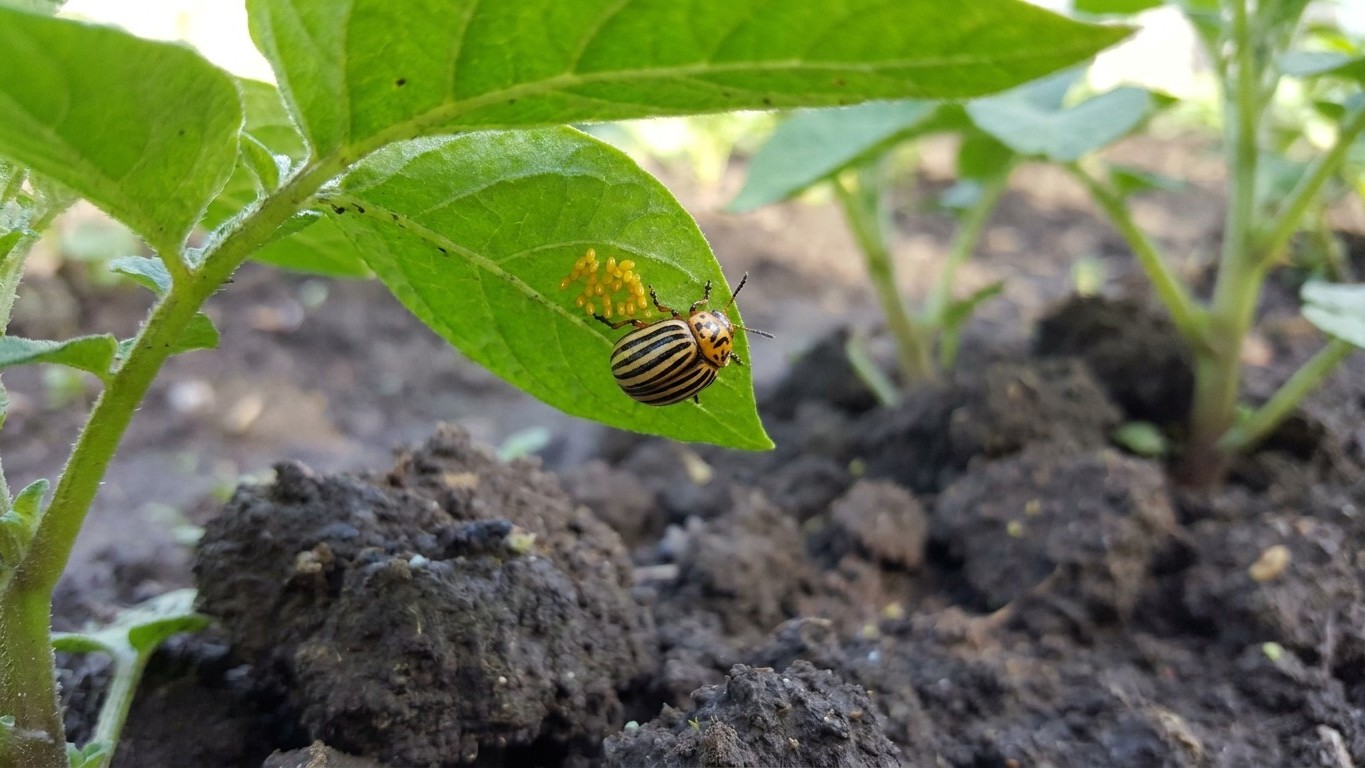

Oregon State University Extension documents four pests that actually feed on potato foliage or tubers in home gardens across the state: aphids, European earwig, slugs (the gray field slug, Deroceras reticulatum), and symphylans. Each one has its own entry point into a potato patch, and its own calendar tied to how early the soil warms up after the last frost.
Which pests attack potato in Oregon

Oregon State University Extension’s list of documented garden pests for this territory runs longer than the four above. It also includes brown garden snail, brown marmorated stink bug, cabbage maggot, carrot rust fly, cucumber beetles, and imported cabbageworm. None of those six belong on a potato damage checklist, and lumping them in is how a gardener ends up treating the wrong problem.
Cabbage maggot larvae tunnel into the roots of cabbage, broccoli, and radish, not potato tubers. Carrot rust fly targets carrot and parsnip roots specifically, following the scent of that plant family. Imported cabbageworm caterpillars feed exclusively on brassica leaves. Cucumber beetles concentrate on cucurbit foliage and flowers, cucumbers, squash, melons, and rarely bother a potato hill. Brown marmorated stink bug pierces fruit and seed pods with a needle-like mouthpart; a potato plant offers it nothing to pierce. Brown garden snail sticks to tender ornamental foliage and citrus in landscape settings, a different habitat than a vegetable row.
That leaves four species that do feed on potato specifically. Aphids colonize the undersides of leaves and matter beyond their own feeding because they spread potato leafroll virus. European earwig chews on soft new growth and will scar a tuber if it pushes up near the soil surface. Slugs, especially the gray field slug, rasp holes in both leaves and tubers, and thrive in the same cool, damp conditions Oregon’s spring provides. Symphylans live underground year-round and feed directly on roots and seed pieces before a plant even breaks the surface.
The one habit that separates a real potato problem from a misdiagnosed one is checking the seed piece and root zone, not just the leaves, because two of these four pests, symphylans and earwig, do meaningful damage below ground where a quick glance at foliage won’t catch them.
When each one shows up, and what it does first
Timing here follows the ground, not the calendar. Oregon’s last spring frost window runs March 6 to March 21 for the Portland area, based on NOAA NCEI’s 1991-2020 climate normals. That’s the reference most west-side gardeners plant around. Central and eastern Oregon sit in high desert country with a much shorter, later season, so that window does not carry over east of the Cascades.
Symphylans are the earliest problem, and the hardest to catch. They attack seed pieces and young roots underground before or right at emergence, so the first sign is often a gap in the row or a plant that comes up stunted and pale next to healthy neighbors, weeks before anyone spots an actual insect.
Slugs move in during the same cool, wet stretch that follows planting. The first visible sign is ragged, irregular holes in young leaves, usually discovered in the morning because slugs feed at night and hide during the day. Later in the season, once tubers sit closer to the surface or the soil stays damp through harvest, slugs shift to rasping holes directly into the tubers themselves.
European earwig damage tends to follow a few weeks behind, once there’s enough soft new growth to interest them. Look for ragged notches along leaf margins rather than the smooth holes slugs leave, and later in the season, shallow gouges on any tuber that’s been exposed to light and pushed up through cracked soil.
Aphids build up gradually as the foliage canopy fills in and warm days become more consistent. The first sign is usually curled or puckered new leaves and a sticky residue (honeydew) on the foliage below, well before colonies are dense enough to spot at a glance. Because aphids carry potato leafroll virus, foliage symptoms that show up weeks after an aphid presence, yellowing and rolling starting at the base of the plant, are worth flagging separately from simple feeding damage.
Telling the damage apart from everything else
A hole in a potato leaf is not automatically an insect’s work. Herbicide drift, sunscald, nutrient deficiency, and plain drought stress all leave marks that get blamed on bugs. The detail that decides is where the damage sits and whether anything is actually feeding, not just the shape of the mark.
| Symptom | Likely cause | What tells them apart |
|---|---|---|
| Ragged, irregular holes in leaves, worse after rain | Slug feeding | Slime trails nearby; damage concentrated low on the plant and near soil |
| Stunted, uneven emergence in a row | Symphylans, or simply cold soil | Dig near the seed piece; symphylans are tiny, white, and fast-moving when soil is disturbed |
| Notched leaf margins, gouges on exposed tubers | European earwig | Check at night with a flashlight; earwigs hide in soil cracks and mulch by day |
| Curled, yellowing new leaves with sticky residue | Aphids, or nitrogen excess | Turn the leaf over; aphid colonies are visible on the underside |
| Uniform yellowing starting from lower leaves, whole plant | Nutrient deficiency or drought stress, not an insect | No feeding marks, no residue, no insects present on close inspection |
Mechanical damage from a hoe or cultivator can also mimic an earwig gouge on a tuber, and disease lesions (like common scab) can look like feeding scars but show a corky, sunken texture rather than a clean bite mark. When the cause isn’t obvious after checking for the signs above, a local Extension office can look at an actual sample rather than a description.
What actually works here, and what is a waste of time
Oregon’s growing season is short enough that timing beats almost everything else. Planting after the soil has warmed rather than right at the edge of the last frost window gives seedlings a head start over symphylans, which do the most damage to slow, cold-stressed emergence. Starting with certified seed potatoes, not saved tubers from a previous crop, is the single decision that matters most here, because uncertified seed can already carry the virus that aphids then spread through the rest of the row.
Physical barriers placed early do more than most gardeners expect. Shallow, wide furrows that let hilling soil fully cover developing tubers cut down both earwig scarring and slug access, since both pests favor tubers that have pushed up into light. Copper barriers or diatomaceous earth around a bed edge, refreshed after rain, work against slugs when they’re placed before slug activity starts, not after leaves are already full of holes. Clearing mulch and plant debris close to the row in fall reduces the overwintering spots earwigs and slugs use to survive the winter.
What doesn’t work: treating the whole garden after damage is already visible and widespread. By the time leaf damage is obvious, symphylans have already been feeding underground for weeks, and a surface treatment won’t reach them. Broad, generic pest sprays applied without identifying the actual culprit first waste both money and a narrow spray window, and this site doesn’t prescribe specific products or active ingredients. A state Extension office is the only source that can say what’s currently registered and legal to use in Oregon for a confirmed pest.
Where to check this for your own county
Oregon State University Extension is the source behind every pest listed on this page, and it’s organized by county office, not by a single statewide hotline. A pest documented at the state level doesn’t mean it’s present in a specific garden, since soil type, elevation, and local moisture all shift which of these four species actually shows up on a given property.
A county office can also confirm a suspected pest from an actual sample or photo, something a statewide list can’t do. That matters most for symphylans, since they’re easy to miss without digging, and for distinguishing early aphid colonies from a plain nutrient issue on the same leaf.
The next step for anyone seeing damage right now is straightforward: dig near the affected plant, note whether the damage sits above or below ground, and bring that observation, or a sample, to the local OSU Extension county office rather than guessing from a symptom list alone.
Common questions
Do all four pests show up in every Oregon garden?
No. Oregon State University Extension documents these four as present across the state’s gardens generally, but local soil, moisture, and elevation determine which ones actually turn up on a given property. A county office can confirm what’s active locally.
Can symphylans be seen without digging?
Rarely. They’re tiny, white, fast-moving, and live in the soil around roots and seed pieces. Stunted or uneven emergence is usually the first visible clue, well before the insect itself is spotted.
Does aphid feeding always mean virus spread?
No. Aphid feeding alone causes curled, puckered leaves and honeydew residue. Leafroll virus symptoms, yellowing that starts at the base of the plant, show up separately and later, and not every aphid population is carrying it.
Is a barrier around the bed enough on its own?
It helps most against slugs and earwig when placed before activity starts, but it won’t reach symphylans feeding underground on seed pieces. Timing planting to warmer soil and starting with certified seed matter just as much as any physical barrier.