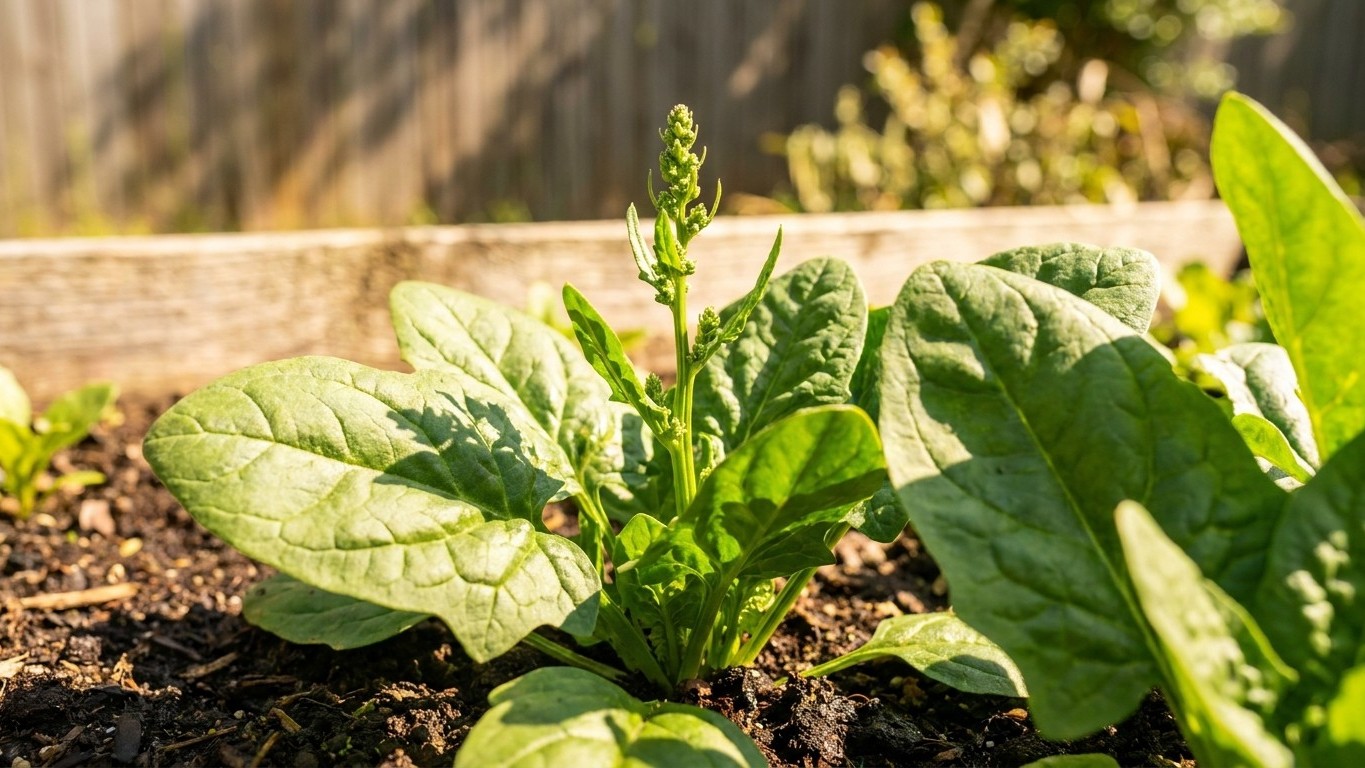

Spinach in Oregon gets eaten by a short list of small feeders: slugs and snails, aphids, leaf miners and flea beetles. Browsing animals add to the damage in some yards. Which ones show up depends on the county and on how the season runs. Cool, damp weather favors the slugs. Warming weather brings the sap-suckers and the tunnelers. Timing against the frost-free window matters more than any single product.
Which pests attack spinach in Oregon
The Oregon State University Extension Service is the group that documents garden pests for the state, and its county offices are where a species name gets confirmed. The groups that chew, suck or tunnel in cool-season greens are slugs and snails, aphids, leaf miners and flea beetles. Those four account for most of the holes, curls and trails a spinach grower brings in.
Statewide lists also include insects that have nothing to do with a vegetable bed. Pests of fruit and nut trees, of conifers and of grass seed fields feed on wood, fruit, needles or grass, and spinach offers none of those. If a county list names one of them, it is not your problem. Ignore it and look at your leaves instead.
Spinach is easy prey for a plain reason. It is a cool-weather crop that grows best where temperatures stay at or below 75 F, according to Utah State University Extension. Its leaves are at their tenderest during the same cool, damp weeks when slugs are most active and aphids are building up. Past that 75 F ceiling the leaves turn bitter and the plant heads toward flowering, so a stressed, rushed crop is a poor one to defend.
Larger animals belong on the list too, though they are a different problem. Browsers clip leaves cleanly at the base or pull up seedlings. A fence or cover handles them, and no identification is needed beyond a clean cut with no slime and no tunnels.
When each one shows up, and what it does first
Start from the frost-free window. At the reference station in Portland, west of the Cascades, the mean last spring frost falls between March 6 and March 21. The mean first fall frost falls between November 11 and November 27, per NOAA NCEI U.S. Climate Normals. Central and eastern Oregon is high desert with a much shorter season, so shift everything below to your own frost dates.
Slugs and snails come first in spring, in the cool, wet weeks after the last frost when seedlings are up. The first sign is ragged holes in the leaves with silvery trails across them, or seedlings that vanish overnight. Flea beetles hit the same young plants. They leave a scatter of tiny round holes, and they matter most while the leaves are small.
Aphids build as spring warms toward the 75 F mark. The first thing you see is not the insect. It is leaves that curl or look sticky, usually at the center of the plant or on the underside. Leaf miners work inside the leaf after the plant has put on real leaves, and they show up as pale, winding trails or blotches that you can see when you hold the leaf to the light.
Heat and day length run the clock on a spring crop. The reference station averages 11.9 days a year at 90 F or higher, which is a mild summer heat load. Mild heat does not save spinach, though. The longest day brings 15 h 30 of daylight, and long days trigger flowering as well as warmth. A cool summer does not buy extra weeks. Will Spinach Bolt Early in Oregon? covers that side in detail.
Fall brings a second round. Warm soil, not cold, blocks the autumn sowing, because germination drops once soil passes 80 F. When the weather turns damp again, slugs return, and young seedlings are at risk first. The sowing window is laid out in When to Sow Autumn Spinach in Oregon.
Telling the damage apart from everything else
Many spinach problems look like insect damage and are not. Water stress, a nutrient shortage, a leaf disease or a hailstorm can each leave marks that send a gardener for the wrong remedy. The table pairs each symptom with its common look-alike and with the sign that tells them apart.
| What you see | Possible causes | What settles it |
|---|---|---|
| Ragged holes, slime trails | Slugs or snails, or mechanical damage from hail, wind or foot traffic | Trails on the leaf or soil point to a feeder. Mechanical damage hits many leaves on the same day and leaves no trail. |
| Tiny round holes in young leaves | Flea beetles, or a leaf spot disease | Tiny beetles jump when you brush the leaf. Disease spots usually have a ring or a dark margin. |
| Pale winding trails or blotches | Leaf miners, or a leaf disease | Hold the leaf to the light. A miner leaves a hollow tunnel with a small larva or dark specks inside. |
| Curled, sticky leaves | Aphids, or water stress | Turn the leaf over. Clusters of insects, sticky residue and pale shed skins point to aphids. Water-stress curl recovers after a good soak. |
| Yellow leaves, no holes | Nutrient shortage or soggy soil | Nothing living on the leaves and an even yellowing, usually starting on older leaves, points away from insects. |
| Tall center stalk, narrow leaves | Bolting | Flowering is set off by long days and warmth. No insect is involved. |
Turn the leaf over and look again after dark before you decide on a cause. Slugs feed at night and hide by day, so a daytime inspection of a chewed bed often finds nothing.
Only a county extension office can say what is on your plants. A clear photo and the planting date usually tell them more than a description of the holes.
What actually works here, and what is a waste of time
A physical barrier set at the right moment beats any treatment. Floating row cover laid at sowing, with the edges buried or pinned tight, keeps flea beetles, leaf miner adults and aphids off the plants before they arrive. The timing is the whole point. Cover laid over a bed that already has insects or eggs on it only shelters them.
Slugs need a different approach, because they come up from the soil and under the edges. Hand-picking at dusk, boards laid on the soil to collect them by day, and clearing damp debris from around the bed all cut their numbers. Watering in the morning lets the surface dry before night. Aphids often wash off with a strong stream from the hose. Mined leaves go in the trash, not the compost, so the larvae do not finish their cycle.
On a short season, the calendar does more than any product. A spring crop sown early finishes before warm weather pushes the plants toward flowering and the aphids build up. A fall crop sown once the soil has cooled below 80 F germinates evenly and gets ahead of the autumn slugs. Spinach does not wait for you to catch up.
Several things waste time. Spraying after a leaf miner has tunneled in does nothing for the larva, which is protected inside the leaf. Delaying the sowing to dodge insects drives the crop into the long days and warm weather that trigger bolting. Thick, damp mulch against the stems gives slugs a daytime home. A spray bought without a firm identification is a gamble.
Any pesticide decision belongs with the county extension office, which knows what is registered for home use in the state and which products match which pest.
Where to check this for your own county
Your county office of the Oregon State University Extension Service is the right place for a local answer. The staff know which pests are active in your valley or on your side of the mountains this season. A statewide list shows only what is documented somewhere in Oregon. It does not show what is feeding in your bed.
Pest pressure varies a great deal inside the state. The frost dates above come from a Portland station west of the Cascades. The high desert of central and eastern Oregon has a far shorter season, so the timing, and which pests appear when, shifts with it. Do not apply the Portland window outside the Willamette Valley and the nearby lowlands.
For the broader picture of the crop, Growing Spinach in Oregon covers sowing, varieties and care. Ask your local county extension office which spinach varieties they recommend for your area.
To get a useful answer, bring a sample or clear photos. Seal a damaged leaf in a bag, or photograph both sides of it, and note your sowing date and whether you used cover. Tonight, take the flashlight to the bed and write down what you see, then take it all to the county office.
Common questions
Why do my spinach leaves have winding trails inside them?
Pale trails that you can see through the leaf when you hold it to the light are worth checking for leaf miners. A tunnel with a larva or dark specks inside is the sign. A disease spot has defined edges and no tunnel.
Does heat or day length end the spinach season first?
Both do. Long days trigger flowering as well as warmth, and the longest day brings 15 h 30 of daylight. The reference station sees only 11.9 days a year at 90 F or higher, but a cool summer does not stop bolting.
Will row cover keep pests off spinach?
It works against flea beetles, leaf miner adults and aphids if you lay it at sowing and seal the edges. It does not help once insects or eggs are already on the plants, and it does not stop slugs coming up from the soil.
Should I spray spinach when I see aphids?
Try a strong stream of water first. For any spray, ask your county extension office, which knows what is registered for home use in the state and whether the problem calls for it.