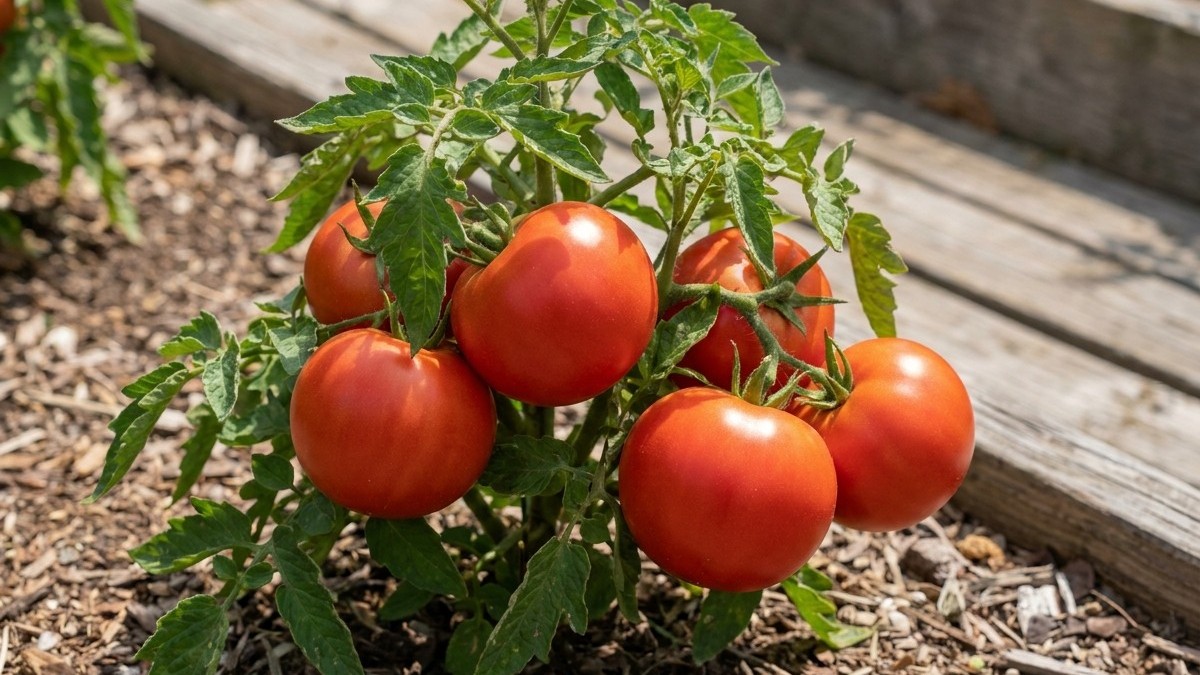

Pick when the fruit tells you, not when the calendar does: full color, slight give under gentle pressure, and no green shoulder left. In Oregon that target date moves with your local frost line, and it isn’t the same target on both sides of the Cascades. Get the timing wrong and you either waste weeks of ripening on the vine or lose a full crate to an early freeze.
When to pick tomatoes in Oregon
The number that actually drives your picking decision is the first fall frost, not some fixed day on a seed packet. For Portland, NOAA NCEI’s 1991-2020 climate normals put that window between November 11 and November 27, based on a 30-70% probability of a 32F freeze. That’s a two-and-a-half-week band, not a single date, which is why growers who wait for “the frost date” often get caught off guard. The safer habit is watching the extended forecast starting in late October and picking hard as soon as a freeze warning shows up, rather than trusting a printed date.
Ripening itself has its own mechanics separate from frost risk. Tomatoes stop developing flavor and color once temperatures drop consistently below the mid-50s F, even without a hard freeze. So a string of cold, wet nights in early November in the Willamette Valley can stall a fruit at the same shade of pale orange for a week or more, frost or no frost. That’s the real signal to start clearing the vine: not the date, but a stretch of nights that never warm the fruit back up.
Why the same calendar doesn’t work statewide
Oregon spans USDA Plant Hardiness Zones 4a to 9b, a range built entirely on average annual extreme minimum winter temperatures. That’s a huge spread for one state, and it maps almost exactly onto the divide between the wetter west side and the high desert east of the Cascades. Portland’s frost windows above come from a station west of the mountains; central and eastern Oregon run a shorter, harsher season with earlier fall frost risk and cooler nights even in midsummer. This page doesn’t carry NOAA-sourced frost dates for those high-desert stations, so treat the Portland numbers as a west-side reference only, not a statewide rule.
| Frost milestone | Portland window (NOAA NCEI, 1991-2020 normals) |
|---|---|
| Last spring frost | March 6 to March 21 |
| First fall frost | November 11 to November 27 |
If you garden east of the Cascades, your local Oregon State University Extension office is the better source for a station-specific frost window, since the figures above don’t apply to that side of the state.
What to do with the green ones
Once a hard freeze is forecast, the vine is done producing anything useful, and the question shifts to what’s already hanging on it. Not every green tomato is worth saving. Split the harvest into two piles: fruit that has started to lighten in color or feels slightly waxy and firm (these are “mature green” and will ripen off the vine), and fruit that’s still small, hard, and dark green all over (these rarely ripen well and are better used cooked green rather than saved for ripening).
A mature green tomato has usually reached its full size for that variety and shows a pale, almost white-green cast at the blossom end, sometimes with a faint pink or yellow blush starting. Cut these with a short stem still attached rather than snapping them off. The stem scar is an entry point for rot, and a clean cut heals faster than a torn one. Immature green fruit, by contrast, still has a glossy, dark skin and a hard, unyielding feel all the way through. Pulling the whole plant and hanging it upside down in a garage or shed is a common shortcut, but it only works well for the mature fruit; the immature ones on the same plant still won’t ripen properly no matter how long they hang.
Sorting before you store
Before bringing anything indoors, check each tomato for cracks, soft spots, or insect damage. A single damaged fruit in a box of green tomatoes can start a mold problem that spreads to the rest within days, since the moisture and enzymes from a bruise or split accelerate decay in everything nearby. Wipe off garden soil with a dry cloth rather than washing the fruit; added moisture at this stage does more harm than good. Separate by size and color stage as you sort, because it makes the next step, deciding what ripens fastest, much easier.
This sorting step belongs entirely to the harvest side of things. What varieties tend to hold their fruit longer into fall, and which pests show up on green fruit left too long on the vine, are separate questions with their own answers elsewhere; this page sticks to what to do with what’s already in your hands.
Ripening indoors, and how long they keep
Mature green tomatoes ripen best at room temperature, roughly 65 to 70F, out of direct sunlight. Contrary to a popular kitchen habit, a sunny windowsill doesn’t speed up ripening and can actually cause uneven color and softer texture on the side facing the glass. Ripening is driven by ethylene gas and ambient warmth, not light, so a paper bag on a counter works better than a bright sill. Adding a ripe banana or apple to that bag boosts the ethylene concentration and can shave a day or two off the process for fruit that’s already showing color.
Spacing matters more than most people expect. Tomatoes laid out in a single layer, not stacked, ripen more evenly and are far less likely to develop soft rot spots where two fruits touch. Check the batch every day or two and pull out anything that’s fully colored before it starts to soften past the point of good eating, since ripe tomatoes left in a warm pile will overripen and split within a day or so once they turn.
How long they actually last
Fruit picked at the mature green stage generally ripens over one to three weeks indoors, depending on how far along it was when picked and how warm the room stays. The palest, most advanced green fruit can turn in under a week; the ones that were barely starting to lighten can take the full three weeks or longer, and some never fully color at all. Once ripe, a tomato holds its best quality for only a few days at room temperature. If you’re not eating them right away, moving fully ripe fruit to the refrigerator slows further softening, though it also dulls flavor and texture somewhat, a trade-off worth knowing about rather than a mistake to avoid entirely.
What goes wrong here
The most common error is picking too early out of frost anxiety, then wondering why half the box never ripens. A tomato that’s still dark green and rock-hard when the first frost warning hits is genuinely not worth saving for ripening purposes; that fruit is a better candidate for fried green tomatoes or relish than for a ripening bag. Picking a week or two ahead of the actual frost, once nights start dropping into the 40s, gives the fruit more time to mature on the vine first and produces far better results than a last-minute scramble on the night of the freeze.
The second common mistake is storage temperature, both directions. A cold garage or unheated porch, common in the Willamette Valley shoulder season, can sit well below the ideal 65-70F ripening range, which slows ripening to a crawl and increases the chance of chilling injury: a mealy texture and dull flavor that never fully resolves even after the fruit turns red. On the other end, a warm kitchen counter near a heat vent speeds ripening but also shortens the window before the fruit goes soft, so daily checking becomes more important, not less.
Crowding is the third recurring problem. Piling green tomatoes several layers deep in a cardboard box traps moisture and heat unevenly, and one soft spot at the bottom of the pile can quietly rot two or three neighbors before anyone notices. A single layer, checked regularly, with damaged fruit removed on sight, avoids most of the loss growers report at the end of the season.
Common questions
Can I leave tomatoes on the vine until the first frost date?
You can get closer to it than most guides suggest, but the last stretch before a freeze does more harm than good once nights consistently drop into the 40s. Ripening slows sharply below the mid-50s F, so fruit left on the vine through a cold snap often doesn’t gain much even if it survives the frost itself.
Do tomatoes ripen faster in a paper bag with holes or without?
A closed or loosely folded bag traps the ethylene gas the fruit produces, which is what actually drives ripening, so holes aren’t necessary and can let that gas escape. What matters more is checking the bag daily and pulling out any fruit that’s turned before it overripens.
Is it safe to eat a tomato that ripened indoors after picking green?
Yes. Mature green tomatoes that ripen off the vine develop nearly the same color and eating quality as vine-ripened fruit, though flavor is often slightly milder. Immature green fruit that never properly ripens is still fine to eat cooked, just not as a fresh, ripe tomato.
Why did some of my green tomatoes turn red but stay hard?
That’s usually chilling injury from storing them somewhere too cold during the ripening process, often below the mid-50s F for an extended stretch. The color-producing process and the texture-softening process don’t always track together once fruit has been chilled, which is why some tomatoes look ripe but bite like they’re still green.