
Pennsylvania‘s frost-free stretch, roughly late March or early April to early-to-mid November at the reference station, gives cucumbers far more time than they actually need to mature. That means the choice here isn’t about racing a short calendar. It’s about matching plant type and training method to a humid, moderately hot summer. Trellised vining types with disease resistance, parthenocarpic types for the cooler pockets, and bush types for small plots or the state’s shorter-season corners each earn a place.
The short answer for Pennsylvania
Do the math on the frost dates and Pennsylvania’s growing window runs somewhere between 213 and 232 days, depending on where you sit in the state. Cucumbers need a fraction of that. So season length, the thing that dominates the decision in a place like northern Maine or the high Rockies, barely enters the conversation here. What does enter it: 24 days a year averaging 90°F or hotter, and roughly 12.7 inches of rain across June, July and August, both measured at the Philadelphia reference station. That combination, warm but not brutally hot, and wet enough to keep foliage damp for stretches, points toward disease pressure as the real variable, not heat stress or a truncated calendar.
That shifts the decision from “which variety matures fastest” to “which type handles humidity and manages airflow.” Vining cucumbers trained up a trellis or fence dry off faster after a rain than anything sprawled on the ground, and that single difference matters more in a Pennsylvania July than it would in a drier, hotter state. Parthenocarpic types, which set fruit without pollinator visits, are worth considering for anyone gardening at higher elevation where cool, damp stretches in late spring can slow bee activity. Bush types make sense for small raised beds or for the parts of the state where the frost-free window runs shorter than the statewide average.
| Type | Why it fits Pennsylvania’s conditions |
|---|---|
| Vining, trellised | Keeps foliage off wet ground and drying faster after summer rain |
| Bush | Suits small gardens and the shorter effective season at higher elevation |
| Parthenocarpic | Sets fruit without pollinators, useful during cool, damp spells early in the season |
| Pickling type | Bred for the smaller, frequent harvests home preservers actually want |
| Burpless/slicing | Thinner skin and milder flavor for fresh eating |
None of that replaces a local variety list. Ask your county extension office which specific cultivars within each type have performed well in trials nearby.
What will not work here
Watering on a weekly schedule is the most common failure point, and the numbers explain why. Cucumbers root shallowly, and 24 days a year at 90°F or above pull moisture out of that thin root zone fast. Summer rain here doesn’t arrive evenly across the calendar either; June averages 4.04 inches, July 4.38, August 4.29, and a fair share of that likely lands as thunderstorms that run off rather than soak in, especially on clay soil. A gardener watering once a week on a fixed day can go five or six days with the top few inches of soil bone dry between storms, and cucumbers respond to that stress with bitter fruit and blossom-end problems, not just smaller yields.
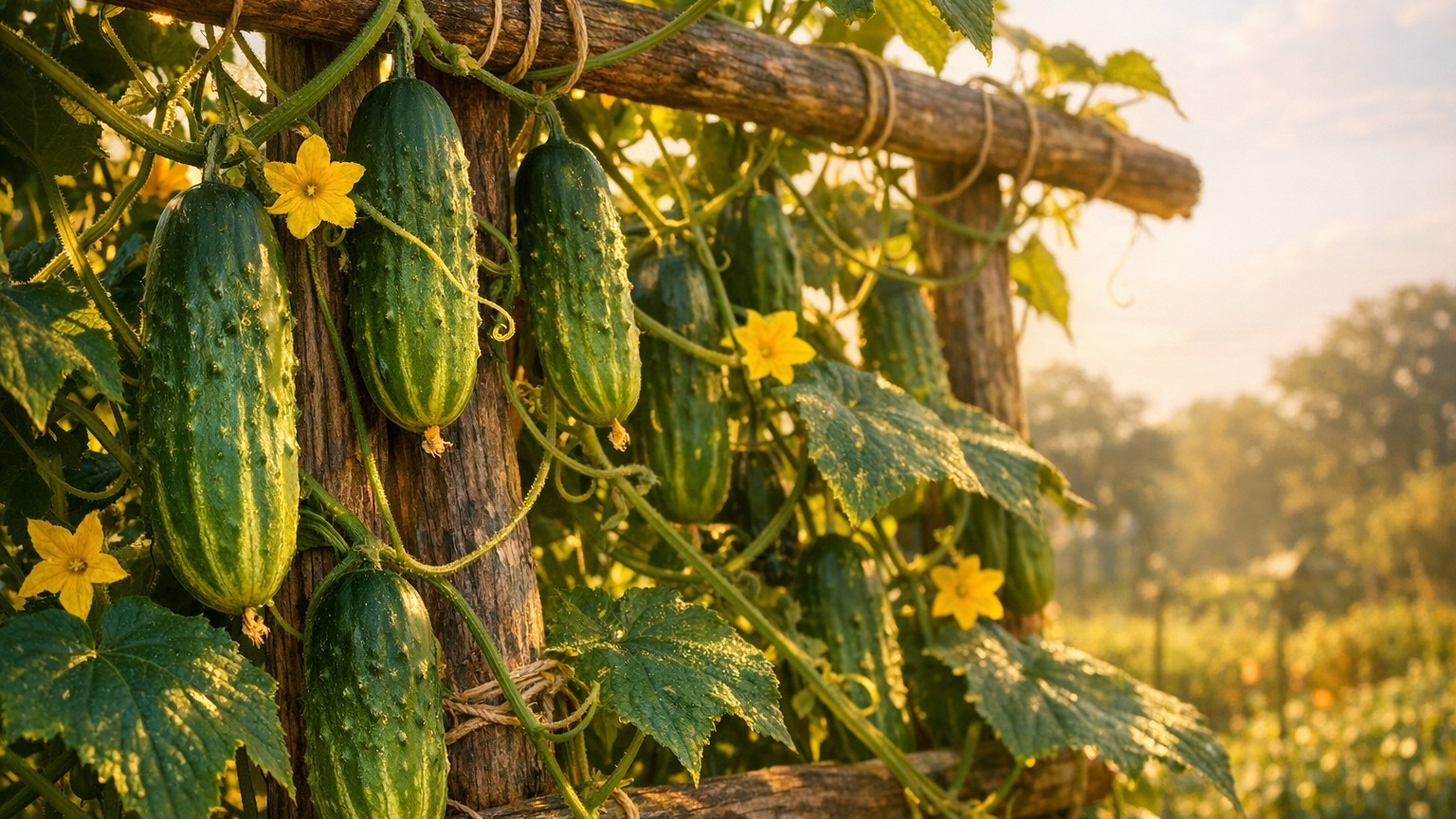
Letting vines sprawl at tight spacing is the second failure this climate punishes. With around 12.7 inches of rain landing across a humid summer, foliage that stays wet and shaded at ground level is exactly the setup that favors downy and powdery mildew. Both diseases spread fastest where leaves touch and air doesn’t move, which is precisely what happens when cucumber vines are planted close together and left to run along the soil. Trellising isn’t a cosmetic choice in Pennsylvania; it’s a direct response to how wet the summer air tends to sit.
Pushing a long-maturing type too late in the season is a narrower risk, but it’s real in the northern tier and the Alleghenies. The frost dates cited here are anchored to Philadelphia, the mildest corner of the state, and that same reference point notes those higher, more northern areas run two to four weeks later in spring. A grower there who sows on a Philadelphia-based calendar loses real time before the plant even germinates, which matters more for a cucumber that needs a long run to finish than for one already built to mature quickly.
What changes across Pennsylvania
A hardiness zone range of 5a to 7b, under the USDA Plant Hardiness Zone Map, tells you this state is not one garden with one calendar. That’s a three-zone spread built on the coldest expected winter temperature, which is a proxy for how much the growing season itself compresses at each end. The Philadelphia corner, closer to 7b, sits at the mild end. The Allegheny Plateau and the north-central highlands, running closer to 5a, sit at the other, with real elevation involved rather than just latitude.
A grower in that colder end should expect the practical effects to stack: a later last spring frost, meaning seed goes in the ground later; likely fewer of those 24 annual days above 90°F, since that count comes from the Philadelphia station and heat load drops with elevation; and less margin for a slow-to-mature type before the fall frost risk returns. None of that argues for a different plant species, just for shifting timing later, leaning toward bush or quicker-finishing types, and treating the state’s frost dates as a starting point rather than a fixed schedule.
The honest answer for anyone reading this from inside Pennsylvania is that there isn’t one number to give you. A 5a-to-7b spread means the state contains meaningfully different growing conditions under one set of averages, and flattening that into a single recommendation would misserve whichever end of the range you’re actually gardening in. The fix is checking where your county actually falls. It’s checking where your county actually falls.
Where to check this for your own county
Penn State Extension, at extension.psu.edu, is the source built to answer what this state-level page can’t: which cucumber varieties have actually performed well in trials near you, and what the planting calendar looks like once your county’s specific frost pattern and elevation are factored in. A county recommendation beats a state one every time, because it accounts for microclimate details, valley cold pockets, urban heat, ridge exposure, that a statewide average necessarily smooths over.
When you get there, look specifically for two things. First, a county or regional planting calendar that gives sowing windows tighter than the “March 29 to April 6” range cited here for the state’s reference station; that range is a starting probability, not a promise, and your local office can narrow it. Second, look for any variety trial results or extension bulletins naming cultivars that have handled your area’s disease pressure and season length well in actual field conditions, rather than in a lab or a seed catalog.
Staying at the level of type, vining versus bush, parthenocarpic versus open-pollinated, pickling versus slicing, makes sense, because naming a specific cultivar without knowing whether it’s actually been trialled in your county would be a guess dressed up as a recommendation. Your extension office doesn’t have that limitation. Use your extension office as the next step.
Checking this against your own garden
Every date and average describes what usually happens at one reference station. Your own garden will confirm or contradict it, and it’s worth paying attention to three things rather than trusting the calendar alone.
Soil warmth, checked by hand a few inches down, tells you more than any frost date about whether cucumber seed will actually germinate rather than rot in cold, wet ground. If the soil still feels cold and heavy in early April, even after the average last frost date has passed, that’s your microclimate talking, not an error in the averages.
The first flush of male flowers, which typically opens before the female flowers that actually set fruit, is a useful marker of how far along the plant is relative to a normal season in your yard. A long gap with only male flowers often points to heat or moisture stress rather than anything wrong with the variety itself.
The first true leaves, the second set that appears after the rounded seed leaves, mark the point where the plant is drawing real energy from photosynthesis rather than its seed reserves. A slow, pale appearance of that second set is often the earliest visible sign that watering or sunlight needs adjusting, well before fruit is anywhere in sight.