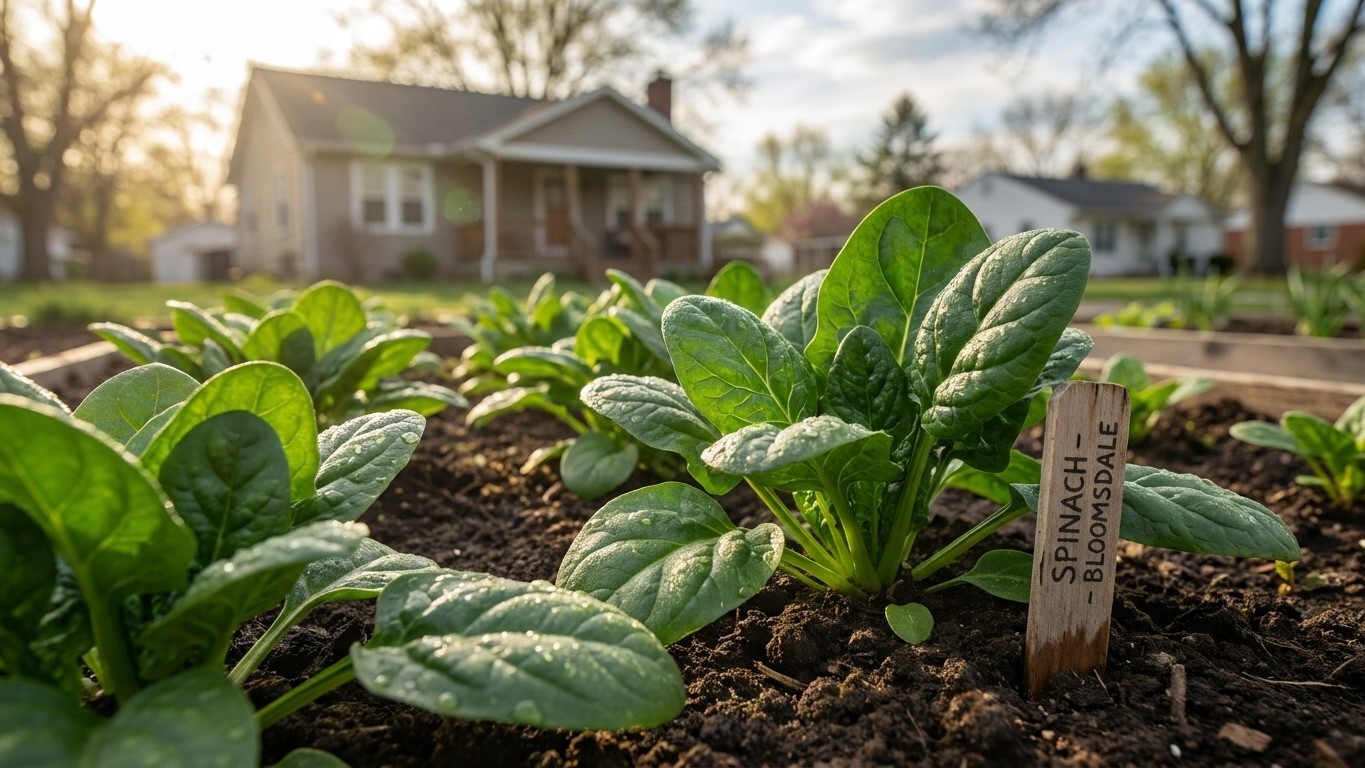

Spinach in Pennsylvania bolts once the days grow long and the air turns warm at the same time, usually as spring tips into early summer. With roughly 14 hours 50 minutes of daylight on the longest day and average highs pushing well past the crop’s 75°F comfort zone by late spring, the state’s growing window is narrow at both ends. Will Spinach Bolt Early in Pennsylvania? The real question isn’t if spinach will bolt here. It’s how many weeks you get before it does.
The short answer
Philadelphia, the reference point for Pennsylvania’s climate normals, logs about 14 hours and 50 minutes of daylight on the summer solstice. That number matters more than most gardeners realize, because spinach doesn’t wait for a hot afternoon to decide it’s done. Long days alone are enough to flip the plant into flowering mode, a process called bolting. Once the seed stalk shoots up, the leaves turn bitter and the harvest is over, whether or not the thermometer has hit anything extreme.
This is where a lot of confusion creeps in. Gardeners assume that if the summer stays mild, spinach should hang on longer. It doesn’t work that way. Day length is a signal the plant reads regardless of temperature, so a cool, cloudy June in the Alleghenies still delivers close to the same daylight hours as a scorching one in Philadelphia. A cool summer does not buy extra weeks where the days themselves run long.
Two limits, working together
Pennsylvania’s spinach season is squeezed from two directions at once. Day length climbs steadily from the spring equinox toward that 14 hour 50 minute peak, and heat climbs right along with it. Utah State University Extension notes that spinach grows best where temperatures stay under 75°F, and the same 75°F mark also triggers a bitter flavor in the leaves. So even before the plant physically bolts, warm stretches are already working against flavor and quality.
Add in the state’s summer heat load: an average of 24 days a year reaching 90°F or higher, mostly clustered in July and August. That heat doesn’t cause bolting by itself, but it arrives on the heels of the same lengthening days that do. By the time Pennsylvania gardens are hitting their hottest stretches, spinach has usually already flowered and finished. The limit here isn’t one factor. It’s day length and heat closing in from both sides, almost in lockstep.
How long the spring window really is
Working out the usable spring window means lining up the last frost date, the plant’s cool-weather preference, and the calendar’s steady march toward the solstice. Here’s how that plays out for a Pennsylvania garden using Philadelphia as the reference point, with the understanding that northern and mountain counties run two to four weeks behind. For the fall crop, the calculation runs in reverse; see When to Sow Autumn Spinach in Pennsylvania for that timing.
- Sow two to three weeks before the last frost. With the last spring frost falling between March 29 and April 6 in the milder corner of the state, that puts a realistic sowing date in mid-March for early gardeners, later for anyone farther north or at higher elevation.
- Early growth happens in genuinely cool conditions. March and much of April in Pennsylvania run well under the 75°F ceiling, which is exactly the stretch spinach uses best. This is the productive core of the spring crop, not an afterthought.
- Day length keeps climbing regardless of temperature. Every week from the equinox onward adds daylight, and by mid-to-late May the days are approaching the region’s summer peak of roughly 14 hours and 50 minutes.
- The two triggers converge. Somewhere in that late May to early June stretch, lengthening days and rising temperatures line up closely enough that bolting becomes very likely, closing the spring window.
Put together, that leaves something like eight to ten weeks of usable spring growing time from a mid-March sowing, a workable window but not a long one, and shorter still if a warm spell arrives early.
The autumn crop, and when the soil lets you sow
A fall planting sidesteps the bolting problem almost entirely, since day length is shrinking rather than growing as autumn approaches. But it trades one obstacle for two others, and both deserve their own look.
Warm soil, not cold, is what blocks the sowing
It’s tempting to think of fall sowing as a race against the cold. It isn’t, at least not at the start. Utah State University Extension is specific on this point: spinach seed germination drops off once soil temperatures climb above 80°F. In Pennsylvania, soil that’s baked through a summer averaging 24 days at 90°F or hotter often sits above that mark well into early September. The practical fix is patience: wait for the soil itself to cool below 80°F before sowing, rather than sowing by a fixed calendar date and hoping.
Then the frost that ends the season
The first fall frost across the milder part of the state arrives between November 5 and November 16, with the northern tier and the Alleghenies running two to four weeks earlier. The source gives no fixed days-to-maturity figure for spinach, only a planting rule: sow 50 to 75 days before the date you want to harvest. Aiming for a harvest around the first week of November puts the sowing window somewhere in the second half of August through mid-September, which happens to overlap nicely with the point when soil temperatures are finally dropping out of that germination-killing 80°F zone. Four named varieties, Bloomsdale, Melody, Teton, and Olympia, are sometimes discussed for fall planting, though no maturity or performance data for any of them is published in this source.
Checking this against your own county
Philadelphia sits in the mildest corner of Pennsylvania, so every date above should be treated as an early-side estimate. Gardens in the northern tier or up in the Alleghenies typically see both frosts shift, with spring arriving later and fall arriving sooner, trimming weeks off both ends of the spinach calendar. Soil warms and cools on its own local schedule too, shaped by elevation, drainage, and how much shade a particular bed gets.
The most reliable way to pin down actual dates for a specific address is to contact Penn State Extension, which maintains county-level frost and planting guidance across the state. A quick call or a look at their county office listings will translate these statewide patterns into numbers that actually apply to a specific backyard.
Common questions
Can shade delay spinach bolting in a Pennsylvania garden?
Shade can lower soil and air temperature somewhat, which helps with the heat side of the equation, but it does nothing about day length. Since long days trigger bolting on their own, shaded spinach in Pennsylvania will still flower once the daylight hours climb high enough, just possibly with slightly better leaf quality along the way.
Is a fall spinach crop more reliable than a spring one in Pennsylvania?
Many gardeners find it easier, mainly because shrinking day length in autumn removes the bolting trigger entirely. The tradeoff is timing the sowing precisely between two moving targets: soil that’s still too warm to germinate seed well, and a frost that eventually stops growth.
Does the 75°F growth ceiling mean spinach dies at that temperature?
No. It means growth quality and flavor decline past that point, and the same threshold is linked to bitterness in the leaves. It’s not a survival cutoff, it’s a comfort limit, and it applies during the plant’s growing period, not as a single calendar date.
Why do the four named spinach varieties matter if there’s no data on them?
Bloomsdale, Melody, Teton, and Olympia are commonly discussed varieties for gardeners researching spinach, but no maturity dates, heat tolerance figures, or bolt-resistance ratings for any of them appear in the data used for this guide. Anyone choosing between them should look at packet information or ask their local extension office directly rather than assume performance differences.