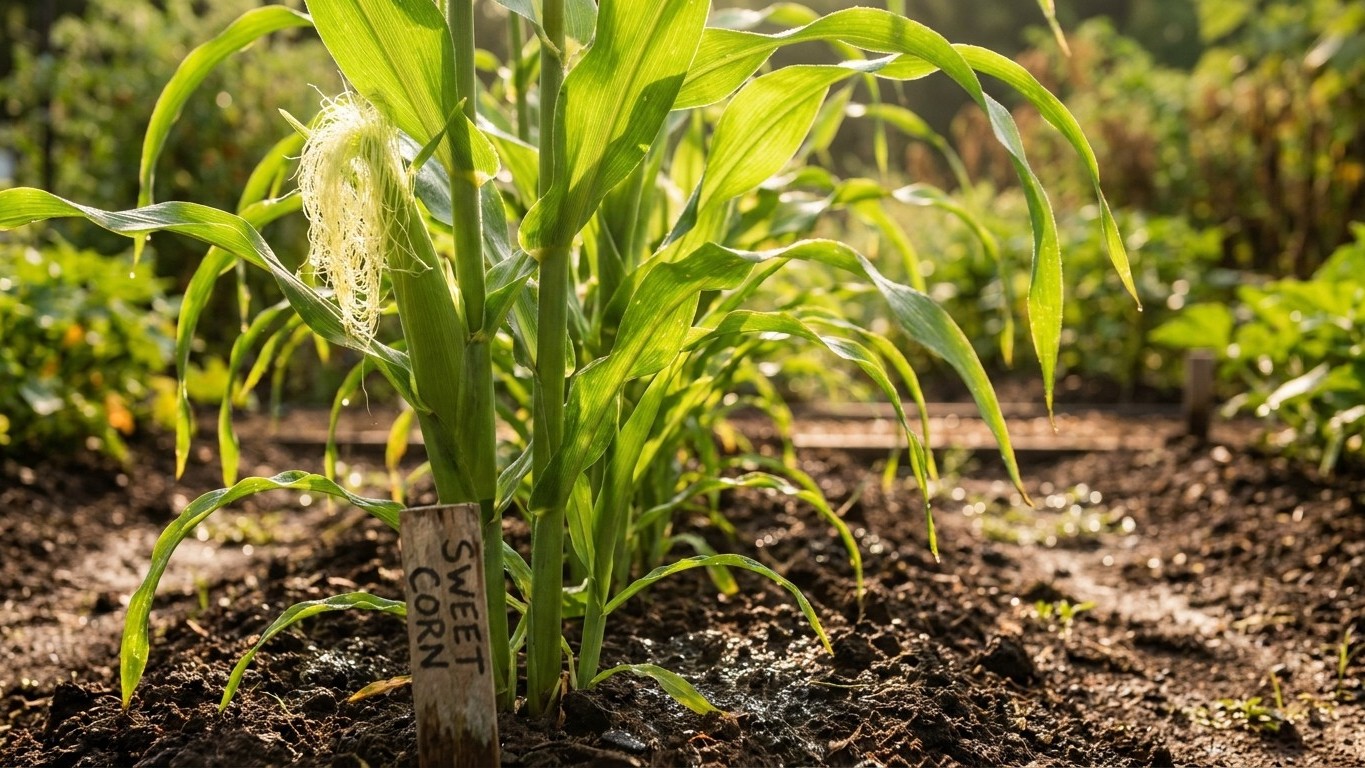

Yes, in most of Pennsylvania sweet corn ripens without much drama, but the calendar that matters isn’t the frost date most gardeners circle on their fridge. It’s soil temperature. Once the ground holds at 60°F, a 60- to 90-day variety has plenty of room to finish before the first hard frost returns in fall, at least in the milder half of the state.
The short answer
Soil hitting 60°F is a separate event from the last spring frost, and it happens later. That distinction trips up a lot of first-time growers who plant the weekend after frost danger passes and then wonder why half their seed rots in the ground. Around Philadelphia, the last spring frost falls between March 29 and April 6, according to NOAA’s 1991-2020 Climate Normals for that reference station. But cold, wet soil doesn’t warm on the same schedule as the air. It lags behind, sometimes by weeks, and corn seed sitting in soil below 60°F simply sulks: slow germination, uneven stands, seedlings vulnerable to rot before they ever push through the surface.
So the real planting clock doesn’t start on frost-out day. It starts whenever a soil thermometer, pushed a couple inches down, reads a steady 60°F. That date shifts field to field and year to year depending on drainage, sun exposure and how wet the spring has been, and it isn’t something the Climate Normals data pins down for this particular site.
What the Normals do pin down is the other end of the season. First fall frost in the Philadelphia area arrives between November 5 and November 16. Counting from the earliest possible last spring frost to the latest possible first fall frost gives a frost-free stretch of roughly 220 days, about seven months on paper. Even after losing several weeks at the front end while soil comes up to temperature, that still leaves a wide margin over the 60 to 90 days sweet corn needs from planting to harvest.
That margin, though, isn’t uniform statewide. Philadelphia is the mildest corner of Pennsylvania. NOAA’s data flags the northern tier and the Allegheny highlands as running two to four weeks later in spring, which almost certainly means the soil there takes longer to hold 60°F too, and it’s reasonable to expect the same colder pockets to lose ground on the fall end as well. Stack those weeks against each other and the workable window in the coldest counties shrinks meaningfully, even though it rarely disappears. The short answer holds across most of the state. The margin for error just gets thinner the further north or the higher up you plant.
Does a late variety fit here?
A 60-day variety
A 60-day type is the safe bet almost anywhere in Pennsylvania. Even accounting for a soil-warming delay that pushes actual planting several weeks past the last frost date, a crop that only needs 60 days has enormous slack before the November frost window closes. In the Philadelphia corner, that slack could run two months or more. In the northern tier and the Alleghenies, where the season on both ends is shorter, a 60-day variety is still the one that reliably gets home before the cold returns. If there’s one piece of advice worth repeating for anyone gardening above the milder southeastern counties, it’s to lean toward the shorter clock rather than the longer one.
A 90-day one
In the Philadelphia area, a 90-day variety still fits inside that roughly 220-day frost-free stretch, even after subtracting weeks for soil warm-up. There’s less margin than with a 60-day type, so a late, wet spring that delays planting matters more, but under normal conditions the math works. In the northern tier and the Allegheny highlands, it’s a different story. Those regions start later in spring and, going by the same regional pattern NOAA flags for frost timing, likely lose ground on the fall side too. Compress both ends by weeks and a 90-day variety loses its cushion fast. In those colder parts of the state, a 90-day type does not reliably fit the season, and gardeners there are better off treating the shorter varieties as the default rather than the exception.
What goes wrong here
- Soil sown too cold. Planting the weekend frost danger passes, before the ground has actually warmed, is the most common failure. Seed sits in cold, damp soil and rots, or germinates so unevenly that the stand never fills in. The fix is simple: check soil temperature directly rather than counting days from the frost date, and hold off until it’s reliably above 60°F.
- A variety too late for the season. Gardeners in the northern tier or the Allegheny highlands sometimes plant a 90-day variety because it’s what was on hand, then watch it get caught by an early fall frost before the ears finish filling. The remedy is choosing a variety suited to the local window, which in the colder parts of Pennsylvania usually means staying closer to the 60-day end of the range.
- Sweetness lost to timing, not weather. This one has nothing to do with soil or frost. Standard (su), sugary-enhanced (se) and supersweet (sh2) types cross-pollinate if their tassels shed pollen at the same time, and the result is starchy, disappointing ears even in a garden with perfect climate conditions. There’s no published isolation distance for this, so the fix isn’t measured in feet. It’s measured in timing: stagger plantings, or stick to one type, so the different kinds are never tasseling in the same window. Planting in blocks of three or more rows, rather than one or two long rows, also helps each block pollinate itself properly.
Common questions
How do I know sweet corn is actually ready to pick? Look for three signs together, not just one: silks that have gone dry and brown, husks that are still moist and green, and juice that runs milky white when a kernel is punctured. Any one sign alone can be misleading; all three together mean it’s time.
Is the 60-to-90-day figure the same as the countdown after the silks appear? No, and mixing them up is a common mistake. The 60-to-90-day figure counts from planting and tells you whether the crop fits the season at all. A separate count, roughly 17 to 24 days after silks first emerge, tells you which week to start checking ears for ripeness. They answer different questions.
Can gardeners in the northern tier or the Alleghenies grow sweet corn at all? Yes, but the margin is tighter. With a later spring warm-up and, by the same regional pattern, likely an earlier fall frost, a 60-day variety is the more dependable choice there rather than a 90-day one.
Why does the planting layout matter, not just the date? Sweet corn is wind-pollinated, and a single long row often pollinates poorly no matter when it’s planted. Blocks of three or more rows side by side give pollen a better chance of reaching every ear, which is a matter of garden shape, not timing.