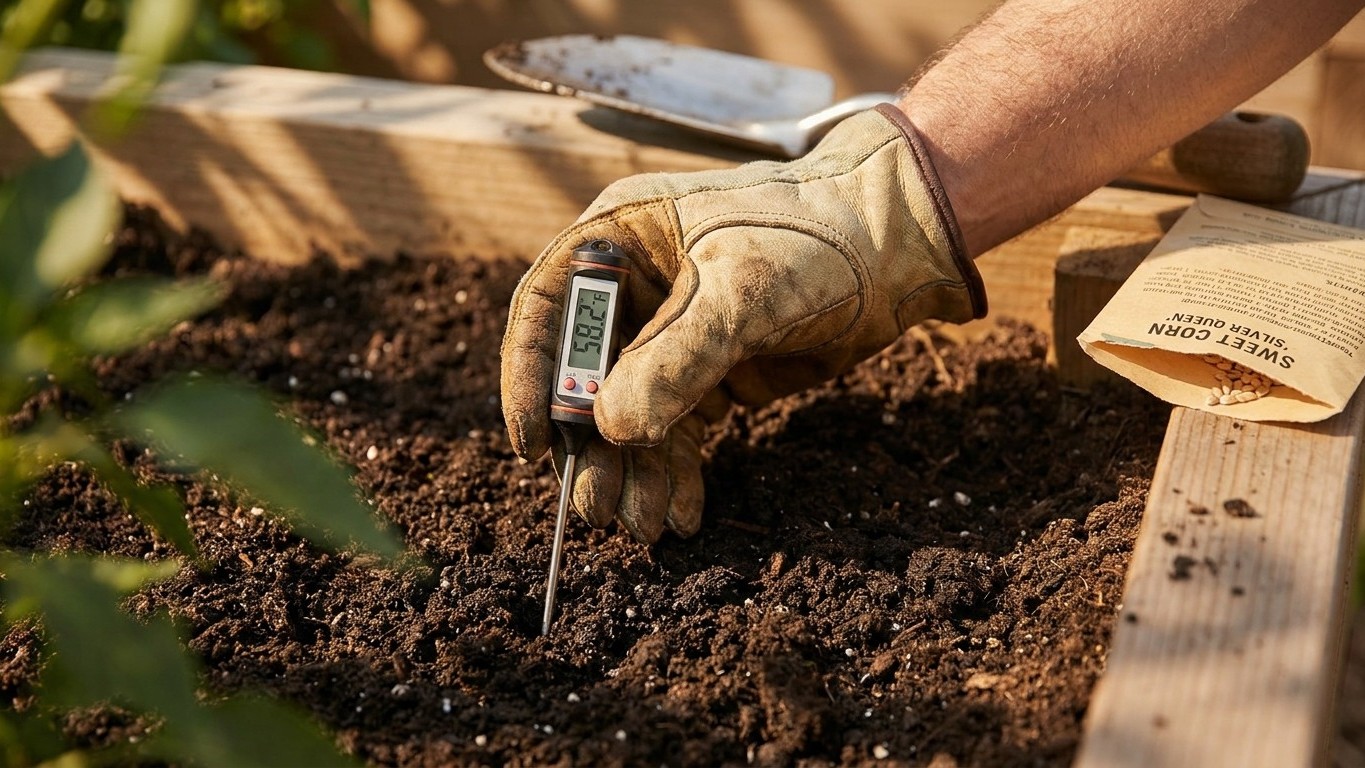

Sweet corn goes into Pennsylvania ground once the soil sits above 60 degrees Fahrenheit, not simply once frost risk passes. That threshold usually arrives weeks after the last spring freeze, which itself lands between March 29 and April 6 in the mildest parts of the state. From there, a 60 to 90 day variety has plenty of room before the first fall frost shows up between November 5 and November 16.
The short answer
Frost date and planting date are two different things, and mixing them up is one of the main reasons sweet corn struggles in Pennsylvania gardens. The last spring frost lands between March 29 and April 6 in the Philadelphia area, according to NOAA’s 1991-2020 climate normals. But sweet corn seed does not respond to frost risk directly. It responds to soil temperature, and soil needs to hold above 60 degrees Fahrenheit before germination happens reliably. That 60-degree mark shows up well after the last frost date, sometimes by three to five weeks, because bare soil in early spring warms slowly even once the air stops freezing at night.
That gap matters more in Pennsylvania than it might in a state with a flatter, faster-warming spring. The northern tier and the Alleghenies run their last frost two to four weeks later than the Philadelphia reference point, which pushes the soil-warming clock back even further in those counties. A gardener checking a calendar keyed to Philadelphia dates while living near Erie or in Potter County risks planting into cold, wet soil and watching the seed rot before it sprouts.
Once soil clears 60 degrees, the math shifts to the other end of the season. Sweet corn needs 60 to 90 days from planting to harvest, depending on variety. The first fall frost across the reference data runs from November 5 to November 16, so even a planting delayed into early June has a comfortable stretch of months before frost risk returns in the mildest zones of the state. That cushion shrinks in the higher, cooler counties, where the first freeze likely arrives earlier than the November window recorded at the reference station, though no specific date for that difference is published here.
Heat during the growing season plays a role that soil temperature and frost dates do not capture on their own. The reference station averages 24.0 days a year at 90 degrees Fahrenheit or above, a heat load that speeds corn’s growth once it is established and raises water demand at the same time. That means the real planting decision in Pennsylvania is a sequence, not a single date: wait for soil to clear 60 degrees, count 60 to 90 days forward depending on the variety chosen, and check that the total lands before the first fall frost for your specific county rather than for the state as a whole.
Does a late variety fit here?
“Late” in sweet corn terms just means the seed needs more days between planting and harvest, usually because the variety trades speed for flavor or ear size. Whether that trade works in Pennsylvania depends on how much room sits between the soil-warming date and the first fall frost, and that room is not the same in Philadelphia as it is in the Alleghenies.
A 60-day variety
A variety that matures in about 60 days from planting has the easiest path in this state. Even accounting for soil that reaches 60 degrees weeks after the last frost, and even in the counties where that warming runs two to four weeks behind the Philadelphia reference point, a 60-day crop planted anywhere from mid-May to mid-June still finishes well before the first fall frost recorded between November 5 and November 16. The margin runs to two months or more across most of the state, leaving buffer room for a cool, slow spring or a stretch of overcast weather that pushes maturity back by a week or two. This is the safer choice for a first attempt at sweet corn in Pennsylvania, and the type most likely to succeed on the first try in a northern-tier or high-elevation garden.
A 90-day variety
A 90-day variety asks for three months of frost-free, warm-soil growing time, and that is where Pennsylvania’s regional split starts to matter. In the Philadelphia area, soil that clears 60 degrees in mid-to-late May paired with a fall frost that holds off until early-to-mid November leaves close to six months of room, plenty even with a slow start. Ninety days from a late-May planting lands harvest around late August, well ahead of the earliest recorded fall frost date at the reference station.
The picture changes in the northern tier and the Alleghenies. Soil there warms two to four weeks later, which can push planting into early or mid-June, and the same regional pattern suggests the first fall frost in those higher, colder counties arrives earlier than the November window measured at the milder reference station, though the data available here does not give an exact date for that difference. Stack a later start against an earlier finish and the ninety-day window gets tight fast. A gardener in one of those counties who wants a longer-season variety should treat it as a gamble rather than a routine choice, and should plant at the earliest date the soil allows rather than count on an average year to cooperate.
What goes wrong here
Three mistakes account for most sweet corn failures in Pennsylvania gardens, and only one of them has anything to do with the state’s climate patterns.
- Soil sown too cold. Planting on the calendar date of the last frost rather than waiting for the soil itself to clear 60 degrees is the most common climate-driven failure. Seed sits in cold, wet ground, rots before it germinates, or sprouts weak and stunted. The remedy is simple: check soil temperature directly with a thermometer a few inches down rather than trusting a frost-date calendar, and wait until it holds above 60 degrees for several consecutive days before planting.
- A variety too late for the season. A 90-day variety planted in a county where soil warms late and fall frost arrives early can run out of season before the ears fill out. The remedy is matching variety to region: reserve longer-season types for the milder southeastern counties, and lean toward a 60-day type in the northern tier and the Alleghenies unless planting happens at the earliest possible date the soil allows.
- Sweetness lost to tasseling nearby. This failure has nothing to do with frost dates or soil temperature. Standard (su), sugary enhanced (se), and supersweet (sh2) sweet corn types cross-pollinate if they tassel at the same time, and the result is starchy, tough kernels instead of the sweetness the variety promised. The remedy is timing, not distance: stagger planting dates so different types do not tassel in the same window, or grow only one type in a given season if the garden is small and separation is hard to manage.
Common questions
What if I don’t have a soil thermometer to check the 60-degree mark?
A soil thermometer is inexpensive and worth the small cost, since it removes the guesswork this crop depends on. Without one, the rough substitute gardeners use is waiting until daytime air temperatures are reliably running warm for a week or more, but that is a proxy for soil warmth, not a direct measurement, and it will run less accurate than checking the ground itself a few inches down.
Can sweet corn be started indoors to get ahead of the soil-warming wait?
Corn is grown from direct-seeded plantings in most home gardens because its root system does not take well to the disturbance of transplanting. Waiting for the soil itself to warm past 60 degrees, rather than trying to outrun that wait indoors, keeps the crop on the schedule it actually needs.
Does the planting window really shift that much across Pennsylvania?
Yes. The gap between the Philadelphia reference station and the northern tier or the Alleghenies runs two to four weeks in the spring frost date alone, and that gap carries through to when the soil clears 60 degrees. A planting calendar built for one corner of the state should not be applied to the other without adjusting for that lag.
What happens if two types of sweet corn tassel at the same time in a small garden?
The kernels lose the sweetness the variety was bred for, turning starchy and tough instead. This is a pollination issue tied to timing, not to the state’s climate, and the fix is staggering planting dates or growing a single type in seasons when garden space makes separation difficult to manage.