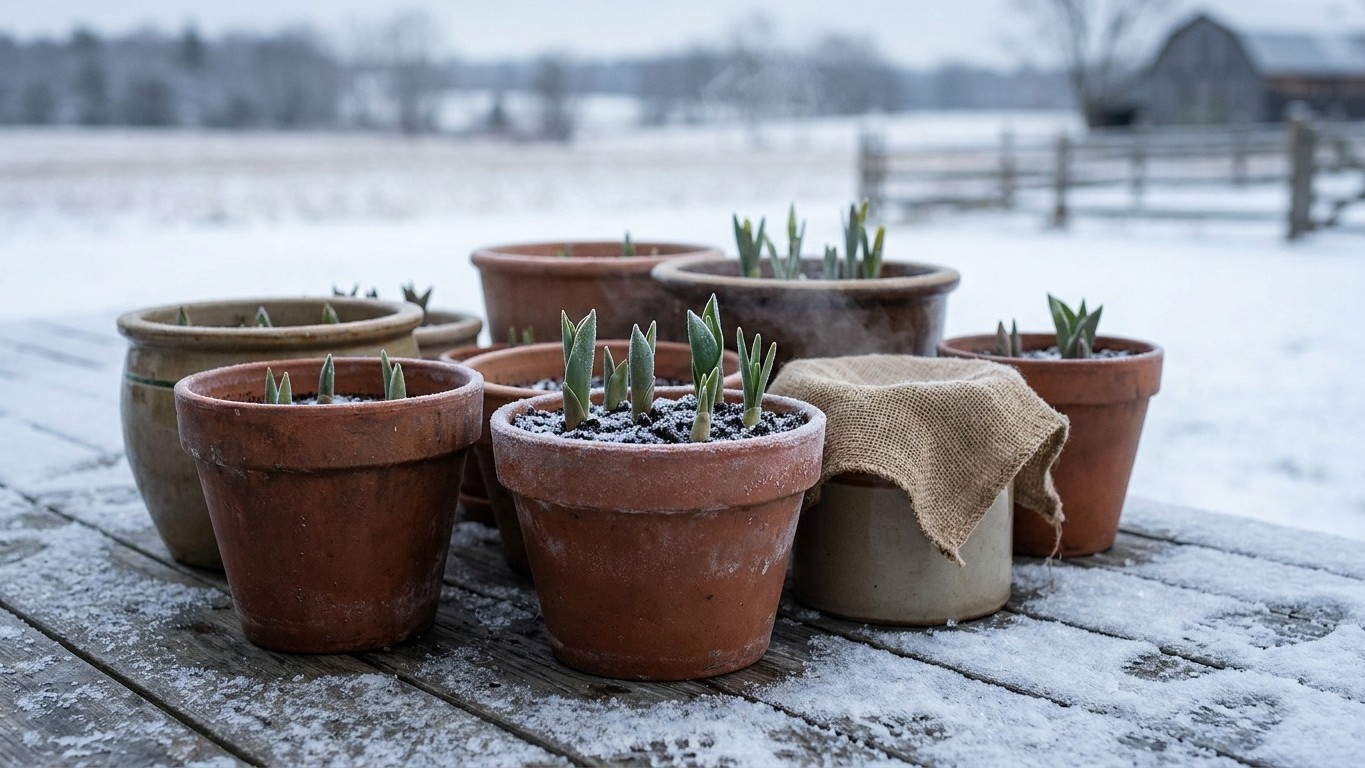

Lift dahlias, cannas and gladiolus in Prince Edward Island after the first frost that blackens the foliage, which means mid-October at the earliest and often into early November. At Charlottetown A, the average first fall frost is October 17, and in one year out of two it arrives later. Wait for the leaves to turn black, cut the stems back, dig with a fork, and get everything indoors before the soil hardens. The reasoning, and the storage that follows, matter as much as the date.
Do you have to dig them up in Prince Edward Island?
Yes, all three come up every fall. Prince Edward Island sits in Canadian hardiness zone 5b, and the decision is to dig dahlias, cannas and gladiolus each year rather than leave them under mulch. That zone comes from Natural Resources Canada’s Plant Hardiness Site, which lists it for Charlottetown on 1991-2020 normals. It is a Canadian zone, not a USDA zone, and the two systems do not convert.
Why the zone number needs care
The Canadian system is built on seven climate variables, while the USDA system uses one: the average coldest winter temperature. Natural Resources Canada says plainly that there are no simple conversions between them. Its own example is Canadian zone 4a, which overlaps nine different USDA zones, from 3a to 7a. So advice written for a USDA zone, such as “zone 7 gardeners can leave dahlias under a thick mulch,” cannot be carried over by matching numbers. The reliable figure here is the temperature itself.
Environment and Climate Change Canada puts the mean daily minimum of the coldest month at Charlottetown at -12.1 °C (10.3 °F), using its 1981-2010 normals. That is an average of the nightly lows, not the record cold. Individual nights run well below it. Ground that spends weeks under that kind of cold does not leave tender storage organs alone. A dahlia tuber or a canna rhizome that freezes thaws in spring as gray, water-logged mush.
Where mulch does work, and where it does not
Leaving them in the ground works where the soil does not freeze deeply, so the tubers sit in cold but unfrozen earth. That describes mild coastal climates, not an island where January lows average -12.1 °C. Mulch slows the cold, but it does not stop it. Hardy tulips and daffodils, covered under Spring Bulbs, can take that freeze because they evolved for it. Which Spring Bulbs Survive Your Winter sorts out the hardy ones from the tender ones.
One caution on geography. The zone and the temperature figures describe Charlottetown, not the whole province. Colder, higher or more exposed districts run behind it, with an earlier first fall frost, so the verdict only gets firmer as you move away from the Charlottetown station. Nothing in the climate record here supports gambling a prized dahlia on one mild winter.
When to lift them
The signal is not a date on the calendar. It is the first frost that turns the foliage black and limp. A light frost that merely nips a few leaf edges is not the cue, because the plant is still feeding its tubers. Once a hard frost kills the top growth, the underground parts get the message to shut down, and that is when you lift. Lift in the days after the first foliage-blackening frost, which in most years means mid-October into early November.
Reading the average first frost
Environment and Climate Change Canada’s 1981-2010 normals for the Charlottetown A station give an average first fall frost of October 17. That is a mean date, the midpoint of a spread, and not a safe date. In one year out of two, the frost comes later than October 17. So the October 17 figure tells you when to start watching the forecast, not when to start digging. The detail on typical spreads is in First and Last Frost Dates in Prince Edward Island.
The direction matters across the island. A colder district, farther from the water or higher up, gets its first frost earlier than Charlottetown, so the whole lifting window moves earlier there. A garden in a sheltered, built-up spot can slip later. Watch your own plants instead of borrowing a neighbor’s date. Black stems and slumped leaves tell you more than any average.
Gladiolus follow a slightly different cue. Their leaves often yellow and brown on their own as the corms finish maturing, so you are looking for browning foliage rather than the sudden collapse a frost causes in dahlias and cannas. If a frost arrives first, the same rule applies: lift in the days that follow.
Why lifting early backfires
It is tempting to dig the moment the nights turn cold, especially with a busy fall. The tubers pay for it. Right up to the killing frost, the foliage is still moving sugars down into the roots. Dig early and the tubers are underfed, with thin skins and a lot of moisture inside. Dahlias are the worst for this because the hollow stem stub left on the crown acts like a straw. Water travels down into the crown, and rot sets in during storage, often not showing until midwinter.
The short wait after frost lets the skins firm up and the crown settle into dormancy. Do not wait too long either. Soil that freezes around the tubers causes damage as well. The practical approach is to cut stems back to a short stub, loosen the soil well out from the plant with a fork so you do not spear the tubers, and lift gently. If an early hard freeze is forecast before you are ready, a sheet or blanket over the plants for a night or two can buy time.
Storing them over winter
All three need the same basic treatment: let them dry briefly, clean them lightly, and keep them cool, dark and just barely moist. Too wet, and they rot. Too dry, and they shrivel into wrinkled husks that will not sprout. Most of the work is in avoiding both of those at once. Check every box or bag once a month through the winter, because that single habit is what saves most of them.
Curing and cleaning
Curing means letting the surfaces dry in a sheltered, airy spot out of rain and frost, such as a garage bench, a porch or a covered shed in the fall. Give them a few days. Shake off the loose soil with your hands. Do not scrub them or blast them with a hose, which can leave moisture in the crevices where rot starts. Any broken or mushy piece should be cut away or tossed, since one rotting tuber can spoil a whole box.
How the three differ
Dahlia tubers, canna rhizomes and gladiolus corms are different organs, so they want different handling.
| Plant | What you store | Packing | Moisture | Main risk |
|---|---|---|---|---|
| Dahlias | Clumps of tubers with the crown | Boxes or crates with barely damp peat, sawdust or shavings, or loosely wrapped | Slightly moist | Shriveling if too dry, rot at the crown if too wet |
| Cannas | Fleshy rhizome clumps, with some soil left on | Cardboard or crates with lightly damp packing | Slightly moist | Drying out, then rot if packed wet |
| Gladiolus | Corms, with the old shriveled base removed after curing | Paper or mesh bags, open trays, airy | Dry | Mold and rot from damp air |
In short, dahlias and cannas tolerate and need a little moisture around them, while gladiolus corms store best dry, with air moving around them. Treat all three like dahlias and the gladiolus will likely mold. Treat all three like gladiolus and the dahlias and cannas will probably shrivel.
Where to keep them
The target is a cool, dark, frost-free place. An unheated but frost-proof basement or cellar suits most homes. A detached garage or shed will likely track outdoor temperatures too closely on an island where the coldest month averages a nightly low of -12.1 °C, so freezing is a real risk there. Warm, bright rooms are the opposite problem: tubers wake up early and sprout in the dark, growing weak and pale. A monthly check lets you re-dampen a bag that has dried out or pull a soft tuber before it spreads. Fall is also when hardy bulbs go into the ground instead, and Planting Spring Bulbs in Prince Edward Island covers that side of the season.
What goes wrong
Most losses come from four mistakes, and each one leaves a recognizable sign. Catching the sign early is usually enough to save the rest of the stock.
- Rot. Tubers turn soft, dark and sour-smelling, sometimes with gray or white mold on the surface. It comes from storing them too wet, packing them before they have cured, or leaving a damaged piece in the box. Cut off small affected patches with a clean knife, discard anything that has gone to mush, and loosen the packing so air can move.
- Shriveling. Tubers and rhizomes feel light, wrinkled and leathery. The storage is too dry or too warm. Mist the packing lightly, or switch to a slightly damper medium, and move the box somewhere cooler. A plump tuber that has wrinkled a little can usually recover. One that has turned hollow and papery cannot.
- Lifting too early. Tubers dug before the foliage was killed are immature, with thin skins and soft necks, and they tend to rot by midwinter. Wait for the blackening frost.
- Leaving them in the ground one zone too far north. Gardeners who read about overwintering dahlias elsewhere sometimes assume it carries over. It does not, because Canadian zone 5b is not a USDA zone, and a mean coldest-month low of -12.1 °C (10.3 °F) is too cold to trust.
The last one is the costliest, because you only learn it in spring, when nothing comes up and the digging reveals jelly. If you are unsure whether a spot in the island’s colder districts is mild enough, dig anyway. A few hours of work each fall is cheap compared with replacing a lost collection. For other seasonal tasks on the island, the Prince Edward Island guides cover the rest of the year.
Common questions
Can I leave dahlias in the ground under heavy mulch in Prince Edward Island?
Not safely. Charlottetown’s coldest month averages a daily minimum of -12.1 °C (10.3 °F), and a mulch layer slows the cold without stopping it. Frozen tubers rot when the soil thaws. Digging them is the dependable choice, and the monthly storage check is far less risky than hoping a mulch holds.
Is Canadian zone 5b the same as USDA zone 5b?
No. Natural Resources Canada states that there are no simple conversions between the two systems. The Canadian one uses seven climate variables and the USDA one uses a single winter-cold measure. Canadian zone 4a overlaps nine USDA zones, from 3a to 7a, so matching the numbers gives you misleading advice.
What if there is no frost by early November?
October 17 is a mean, so half of all years see the first frost later. If frost has not come, keep watching the forecast, and do not dig a healthy, green plant just to meet a date. Foliage that is still green is still feeding the tubers. Once a hard frost blackens it, lift within days. If you must dig before frost, expect lower storage success, especially with dahlias.
Do colder parts of the island lift earlier than Charlottetown?
Yes. The first fall frost figure comes from the Charlottetown A station, and Environment and Climate Change Canada notes that northern or upland districts run weeks behind it. Colder places get frost sooner, so the lifting window opens earlier there. Let the blackened foliage in your own garden set the timing.